Cherry Eye in a Bullmastiff
Finding out your beloved Bullmastiff has a strange red lump popping out of their eye can be incredibly alarming. It looks painful, unsightly, and as a devoted owner, your immediate thought is probably, "What on earth is that, and how do I fix it for them?" This guide is here to walk you through everything you need to know about cherry eye in Bullmastiffs, from understanding what it is and why it happens, to the treatment options available and how to provide the best care for your big, gentle companion.
What is Cherry Eye in a Bullmastiff?
Cherry eye, medically known as a prolapse of the nictitating membrane gland, is a common eye condition that many Bullmastiff owners unfortunately encounter. It's not just a cosmetic issue; it's a condition where an important gland in your dog's eye has literally popped out of place. It can be quite a shock to see, but understanding the anatomy involved helps demystify this concerning sight.
Understanding the Nictitating Membrane
Dogs, unlike humans, have a third eyelid, also called the nictitating membrane. It's typically tucked away in the inner corner of their eye, near the nose. This membrane isn't just for show; it houses a vital tear-producing gland. Its main job is to protect the eye, sweep away debris, and produce a significant portion of the watery part of your dog's tears, keeping the eye properly lubricated and healthy. When everything is working as it should, you rarely even notice it's there. It's a silent worker, essential for eye health.
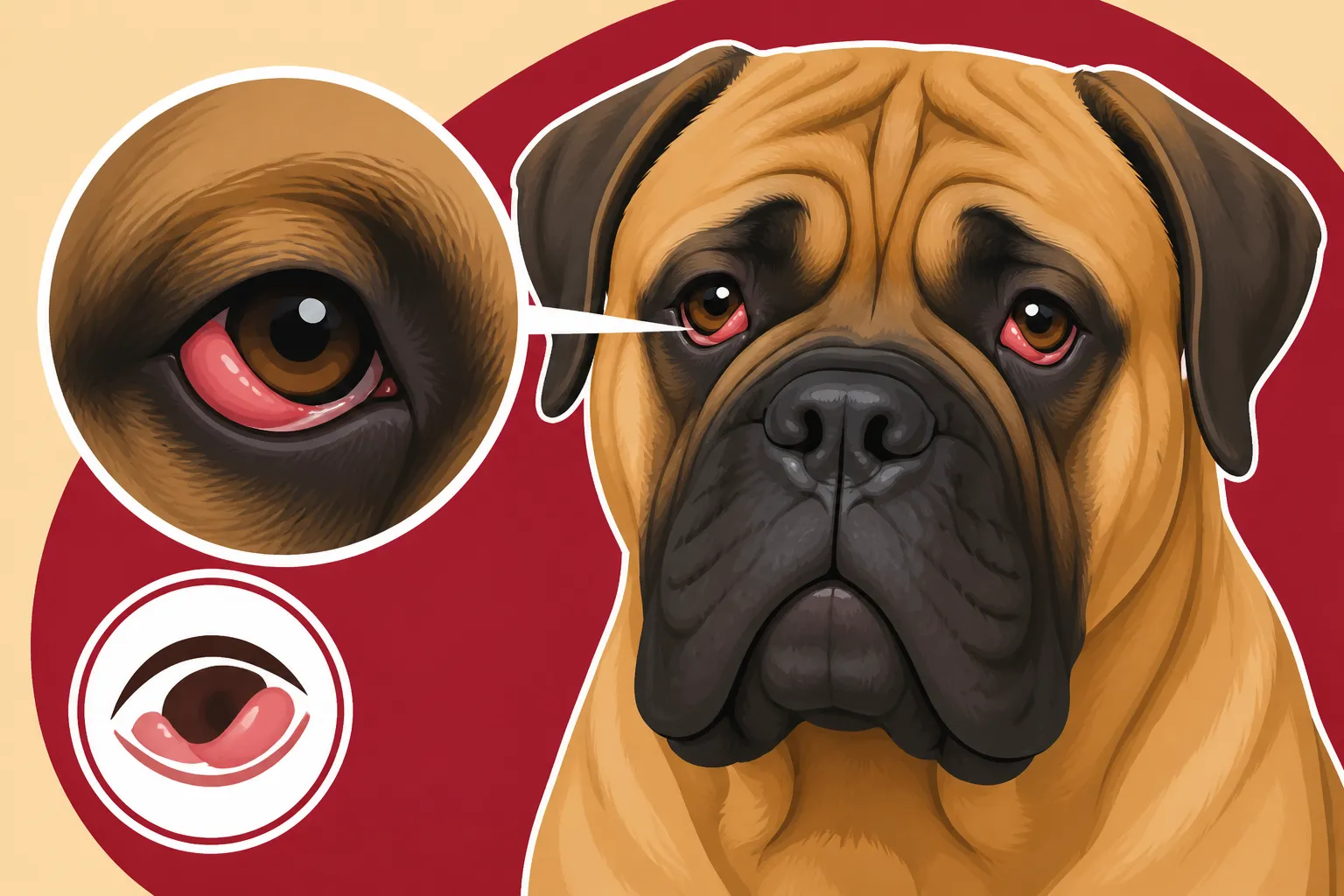
Imagine this third eyelid as a tiny, hidden shield. Inside this shield, there's a small gland that is responsible for producing about 30-50% of the eye's tear film. This gland is normally anchored by a small ligament. When this ligament weakens or tears, the gland can detach from its normal position and protrude from behind the third eyelid, looking like a small, red, swollen mass – hence the nickname "cherry eye." It's an internal structure that has simply become external, and while it looks alarming, your dog isn't necessarily in excruciating pain, though it is certainly uncomfortable and irritating.
Why Bullmastiffs Are Prone to Cherry Eye
The truth is, certain breeds are just more predisposed to cherry eye, and our beloved Bullmastiffs are among them. Their genetic makeup seems to contribute to weaker connective tissue that holds that important tear gland in place. It's not something you did wrong in their care; it's often just an unfortunate roll of the genetic dice.
While the exact genetic mechanism isn't fully understood, breed standards and cranial structure likely play a role. Brachycephalic breeds (those with short, broad heads and short muzzles), like Bulldogs, Pugs, and some Mastiff-type breeds, are notoriously prone to cherry eye. Bullmastiffs, with their distinctive broad heads and moderate muzzles, often inherit this susceptibility. The structure of their orbits (eye sockets) and the surrounding tissues might put additional stress on the ligament that holds the gland, making it more likely to prolapse. Environmental factors or minor trauma can sometimes be a trigger, but the underlying predisposition is often genetic. It's just one of those health quirks that comes with loving a specific breed, much like their susceptibility to certain joint issues that might require discussing Hip Dysplasia in a Bullmastiff or Elbow Dysplasia in a Bullmastiff.
Symptoms and Diagnosis of Cherry Eye
Recognizing cherry eye early can help you seek prompt veterinary attention and prevent further complications. While the prolapsed gland is quite distinctive, there can be other, more subtle signs that precede or accompany it.
Recognizing the Early Signs
The most obvious sign of cherry eye is the appearance of a small, red, fleshy mass in the inner corner of your Bullmastiff's eye. It might look like a small cherry or a pink bubble. This mass is the exposed tear gland. Sometimes, it pops out and then retracts, only to pop out again, especially during excitement or straining. You might notice your dog rubbing or pawing at their eye, blinking excessively, or showing signs of discomfort.
Beyond the visible "cherry," watch for subtle changes in your Bullmastiff's eye. Increased tearing or discharge can be a sign, as the exposed gland can become irritated and inflamed. Conversely, if the gland remains prolapsed for a long time, it can lead to reduced tear production, making the eye dry and prone to other issues. The whites of the eye might appear redder than usual, indicating inflammation. If you notice any redness, swelling, or persistent discharge around your Bullmastiff's eye, it’s always best to consult your vet. This kind of vigilance is part of being a Bullmastiff owner, as their health needs often require a keen eye for detail and understanding. It's also why regular check-ups are so vital, as discussed in Whether a Bullmastiff's Eyes Should Be Checked Yearly.
When to See the Vet
If you see what looks like cherry eye, don't delay in scheduling a vet appointment. While it's not usually an immediate emergency unless your dog is in severe pain or the eye is very swollen, it's a condition that needs professional assessment and intervention. The longer the gland remains prolapsed and exposed to the environment, the higher the risk of inflammation, infection, and damage to the gland itself, which can lead to chronic dry eye later in life.
During the veterinary visit, your vet will perform a thorough eye examination. They'll confirm that it is indeed a prolapsed nictitating membrane gland and rule out other conditions that might look similar, such as tumors or cysts. They might also perform a Schirmer Tear Test to assess the tear production from the affected eye and the unaffected eye, which helps determine if tear production is already compromised. This information is crucial for deciding the best course of action. It's important to be prepared for potential costs, as specialty visits can add up, making conversations about What a Bullmastiff's Annual Checkup Costs and potential insurance a good idea. Many owners find peace of mind knowing that pet insurance providers like Healthy Paws can help cover unexpected vet bills for conditions like cherry eye.
Treatment Options for Cherry Eye
Once cherry eye is diagnosed, the conversation usually turns to treatment. For Bullmastiffs, as with most breeds, surgical correction is almost always the recommended and most effective path.
Surgical Correction: The Gold Standard
The vast majority of cherry eye cases in Bullmastiffs require surgical intervention. Simply put, medication or massage rarely works to permanently reposition the gland, and leaving it untreated can lead to serious long-term eye problems. The goal of surgery is to reposition the gland back into its normal anatomical position and secure it there so it can continue to produce tears.
There are several surgical techniques, but the most common and successful involve creating a small pocket or tucking the gland into a new position and then suturing it in place. One popular method is the "pocket technique" or "conjunctival imbrication," where the surgeon creates a small pocket in the conjunctiva (the pink tissue lining the eyelid) and tucks the prolapsed gland inside, then sutures the tissue over it. This technique aims to restore the gland's function and prevent future prolapse. It's a delicate procedure that requires a skilled veterinary ophthalmologist or an experienced general practitioner. While the thought of surgery is daunting, especially considering how a giant breed dog tolerates anesthesia (you can read more about that in How a Bullmastiff Tolerates Anesthesia), it's generally a very successful procedure for resolving cherry eye.
Post-Operative Care and Potential Complications
After surgery, your Bullmastiff will need diligent post-operative care to ensure proper healing and minimize complications. This usually involves administering prescribed eye drops or ointments, oral anti-inflammatory medications, and sometimes antibiotics. Your vet will likely recommend an Elizabethan collar (the "cone of shame") to prevent your dog from rubbing or scratching the surgical site, which could lead to infection or reopening the sutures.
Recovery typically takes a couple of weeks, and you'll need to follow your vet's instructions carefully for cleaning the area and administering medication. Regular follow-up appointments will be necessary to monitor healing. While surgery is highly successful, it's not without potential complications. The most common is recurrence, meaning the gland can prolapse again, although this is less likely with experienced surgeons and proper technique. Other potential issues include infection, suture reactions, or, in rare cases, the development of dry eye if the gland's function is severely impaired during the prolapse or surgery. It’s crucial to understand that even with successful surgery, keeping an eye on their health and being prepared for potential issues is part of the lifelong commitment. This is where pet insurance, like a plan from Healthy Paws, can truly be invaluable, helping to ease the financial burden of unexpected surgeries and follow-up care.
Preventing and Managing Cherry Eye in Bullmastiffs
While cherry eye often feels like it comes out of nowhere, understanding if there are any proactive steps you can take, and how to manage the condition long-term, is key.
Can Cherry Eye Be Prevented?
Honestly, preventing cherry eye in a Bullmastiff, given their genetic predisposition, is incredibly challenging. Since it's often rooted in weak connective tissue, there isn't a specific diet, supplement, or exercise regimen that has been proven to reliably prevent it. It’s generally considered a hereditary condition. This means that if you're acquiring a Bullmastiff puppy, choosing a reputable breeder who screens their breeding dogs and can provide a history of cherry eye in their lines might be beneficial. However, even with the best breeding practices, genetic predispositions can sometimes surface. It's similar to how breeders try to screen for other genetic conditions, as highlighted in guides like What a Bullmastiff Breeder Should Have Screened.
What you can do is focus on general eye health. Keep your Bullmastiff's eyes clean, gently wiping away any discharge with a soft, damp cloth. Avoid harsh chemicals or irritants near their eyes. Regular vet check-ups, where your vet examines their eyes, are important for catching any issues early. While you can't prevent the genetic predisposition, maintaining overall excellent health can help your dog be in the best possible condition should a health issue like cherry eye arise.
Living with a Bullmastiff Prone to Eye Issues
If your Bullmastiff has experienced cherry eye, or if you know they come from lines prone to it, being extra vigilant about their eye health is essential. Even after successful surgery, there's a small chance of recurrence in the same eye or a prolapse developing in the other eye. Keep an eye out for any redness, swelling, increased discharge, or changes in how they blink or react to light.
Long-term, some Bullmastiffs who've had cherry eye may be more prone to developing dry eye (keratoconjunctivitis sicca or KCS) later in life, especially if the tear gland was significantly damaged or removed (which is now rarely done in modern surgery). This would require lifelong daily eye drops to maintain lubrication. Regularly performing a [Schirmer Tear Test] can monitor tear production. This ongoing care emphasizes the importance of budgeting for potential long-term medical needs, a topic deeply explored in Eight and a Half Years of a Bullmastiff, Priced Out. Having a solid pet insurance plan from a provider like Healthy Paws can make a real difference here, providing financial support for both the initial surgery and any subsequent management or treatment of related eye conditions.
Here's a quick reference for common symptoms and when to act:
| Symptom | Description | Urgency Level | What to Do |
|---|---|---|---|
| Red, Fleshy Mass | A pink or red "cherry-like" lump in the inner corner of one or both eyes. | High (Vet visit ASAP) | Contact your vet immediately for an appointment. Do not try to push it back yourself. |
| Excessive Tearing/Discharge | Constant watery eyes or thick, colored discharge around the affected eye. | Moderate to High | If accompanying a visible cherry eye, see the vet. If isolated, monitor for other signs and consult vet if persistent or worsens. |
| Rubbing/Pawng at Eye | Your Bullmastiff frequently rubs their face on furniture or paws at their eye. | Moderate to High | Indicates discomfort. Combine with other symptoms, this warrants a vet visit. May need an Elizabethan collar to prevent self-trauma. |
| Redness of Whites of Eye | The normally white part of the eye appears noticeably red and inflamed. | Moderate | Can indicate irritation or infection. If it persists for more than a day or two, or is accompanied by other symptoms, contact your vet. |
| Squinting or Holding Eye Shut | Your dog is visibly uncomfortable, trying to keep the eye closed. | High (Vet visit ASAP) | This indicates significant pain or irritation. Seek immediate veterinary attention to rule out corneal ulcers or severe inflammation. |
| Sudden Appearance/Disappearance | The cherry eye appears and then occasionally retracts, only to reappear. | High (Vet visit ASAP) | Even if it retracts, the underlying problem remains. Seek vet advice for permanent correction. |
It's a lot to take in, but remember, being informed is your best defense. With prompt veterinary care and a little extra attention, your Bullmastiff can recover well from cherry eye and continue to be the wonderful, loving companion you know and adore.
Disclaimer
This article is intended for informational purposes only and does not constitute veterinary advice. Always consult with a qualified veterinarian for any health concerns or before making any decisions about your Bullmastiff's care.