Where a Bullmastiff’s Mast Cell Tumors Appear
Bullmastiff mast cell tumors are unpredictable cancers originating from immune cells that can appear almost anywhere on the body.
Know what to watch for.
Breed-specific conditions, screening and DNA tests, what surgery actually costs, and the daily habits that stretch a healthy lifespan.
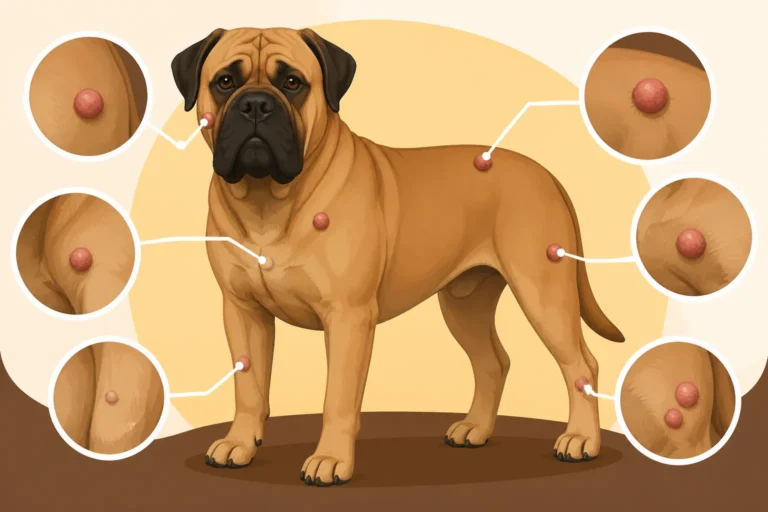
Bullmastiff mast cell tumors are unpredictable cancers originating from immune cells that can appear almost anywhere on the body.
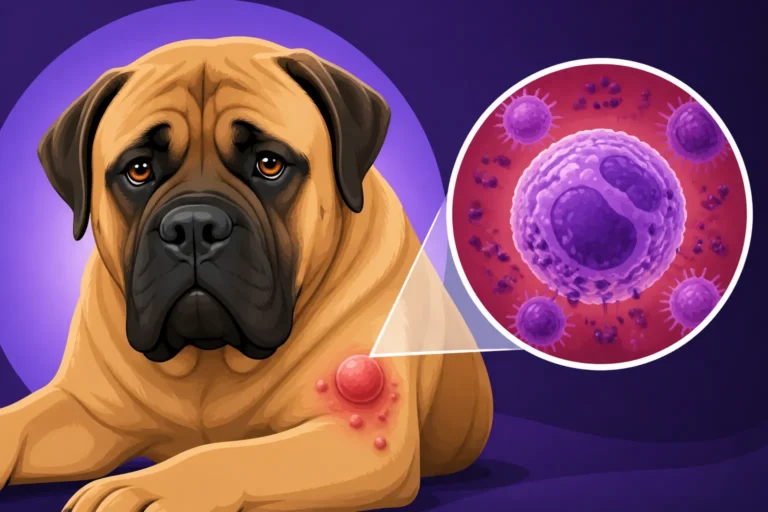
Mast cell tumors in Bullmastiffs involve runaway immune cells that release histamine and heparin, impacting overall dog health.
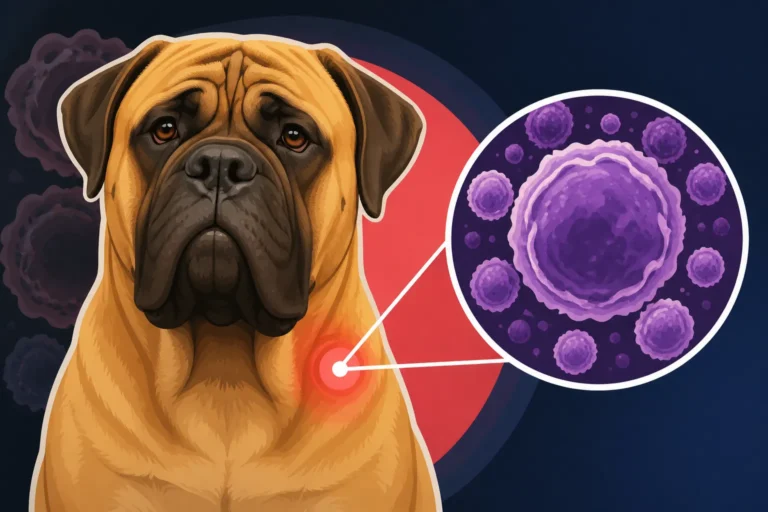
Bullmastiff lymphoma risks stem from a closed gene pool, inherited vulnerabilities, and complex polygenic factors without DNA tests.

Bullmastiff lymphoma diagnosis and staging from stage one to five explain expected lifespans, treatments, and comfort options.

Bullmastiff lymphoma treatment options, staging methods, and the differences between B-cell and T-cell types are explained clearly.

Lymphoma diagnosis in a Bullmastiff involves recognizing swollen lymph nodes, subtle behavioral changes, and thorough veterinary examinations.
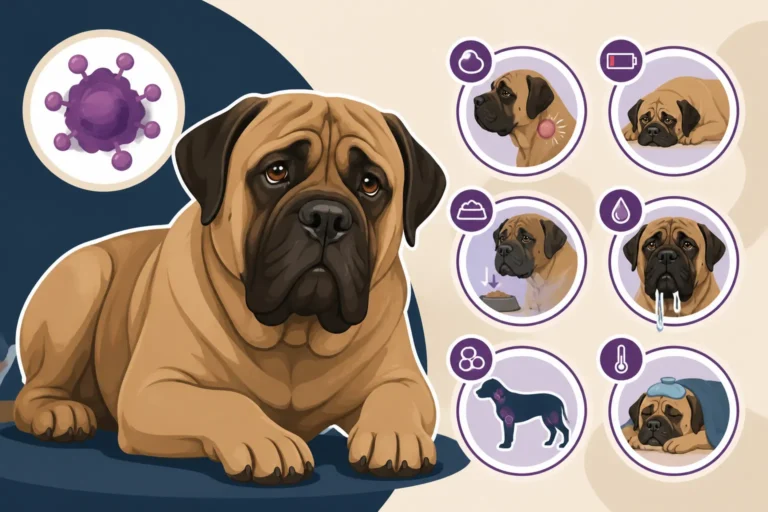
Bullmastiff lymphoma symptoms and swollen lymph nodes explained, detailing where to feel for firm lumps under the jaw and knees.

Bullmastiff lymphoma typically appears in middle-aged to older dogs, most commonly between the ages of six and nine years old.
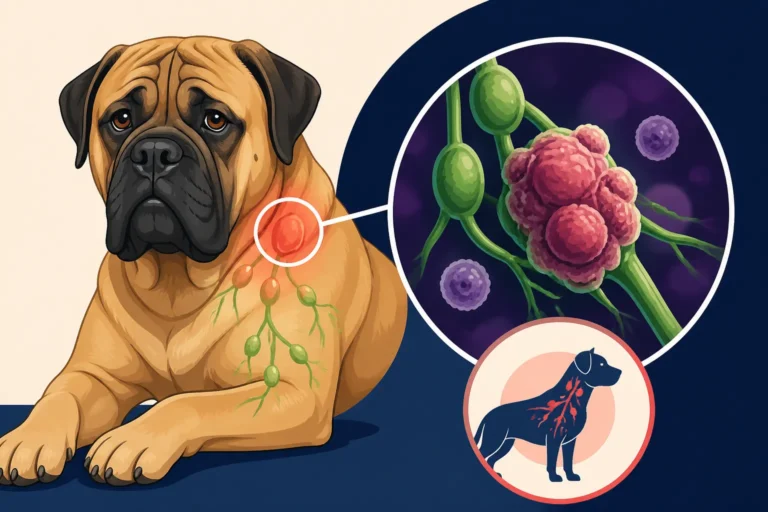
Lymphoma in Bullmastiffs is an aggressive white blood cell cancer that progresses rapidly, causing significant mortality in this breed.

Bullmastiff average lifespan is eight to ten years because rapid growth rates and serious health issues cause shorter lives.