How Trainable a Bullmastiff Is
Bullmastiff trainability relies on understanding their independent mindset, historical problem-solving instincts, and strong motivational triggers.
Work with the temperament you have.
House-training and crate work, recall, leash manners, separation anxiety, and the behaviors this breed is wired for.
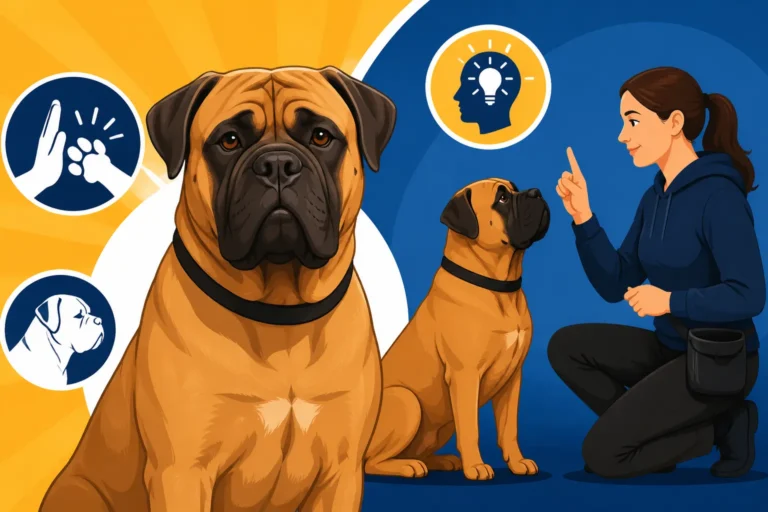
Bullmastiff trainability relies on understanding their independent mindset, historical problem-solving instincts, and strong motivational triggers.

Bullmastiff guarding traits, history, and instincts explain how the breed protects families through physical presence rather than aggression.
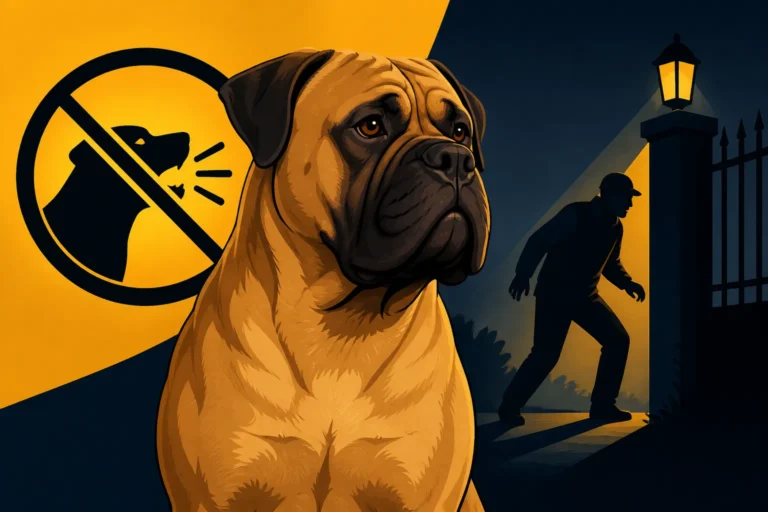
Bullmastiff breeding history reveals why Victorian estate gamekeepers required silent guard dogs to catch poachers.
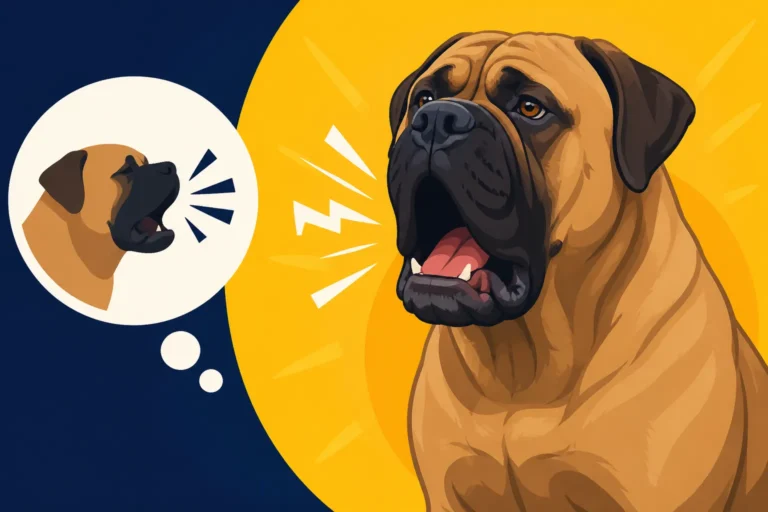
Bullmastiff barking habits stem from nineteenth-century English gamekeepers breeding silent guard dogs to capture poachers.
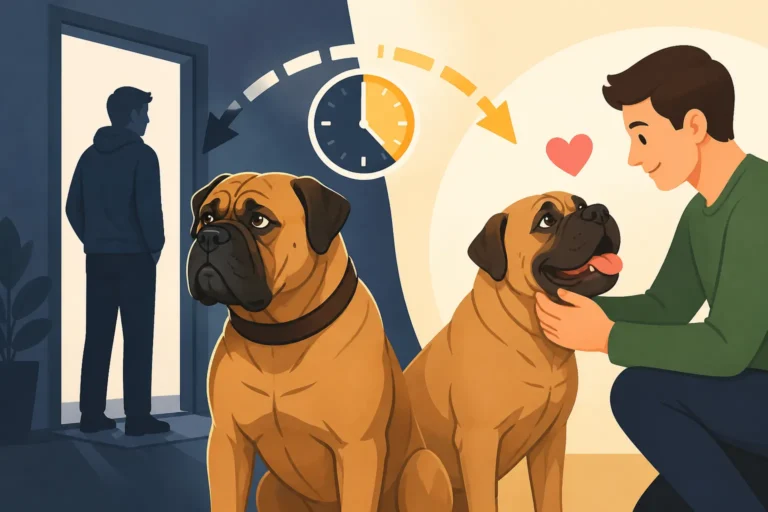
Bullmastiff warm-up time depends on guardian instincts and body language, explaining how introductions work for visitors.

Bullmastiff greeting behaviors involving strangers, guardian instincts, deliberate assessment, and safe social interactions.
Bullmastiff protective instincts and guarding history explained, detailing how these dogs hold intruders instead of biting.
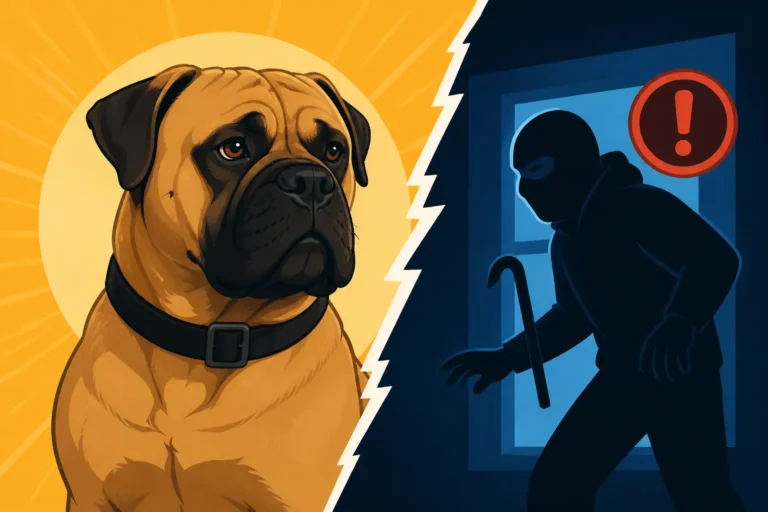
Bullmastiff protective instincts and historical breeding focus on knocking down intruders and pinning them without causing fatal injury.

Nineteenth-century gamekeepers in England bred Bullmastiffs to immobilize poachers without biting, utilizing strength and control.
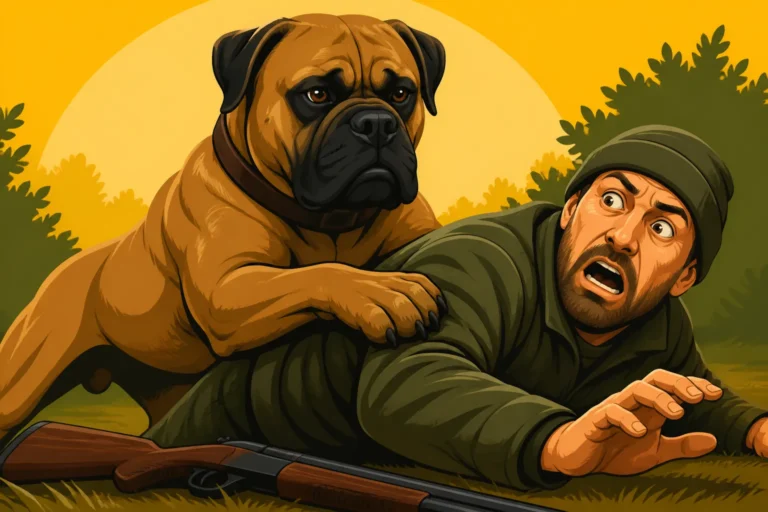
Bullmastiffs were bred in 19th-century England to silently track, apprehend, and hold human poachers without causing fatal harm.