Why a Bullmastiff Was Bred to Work Silently
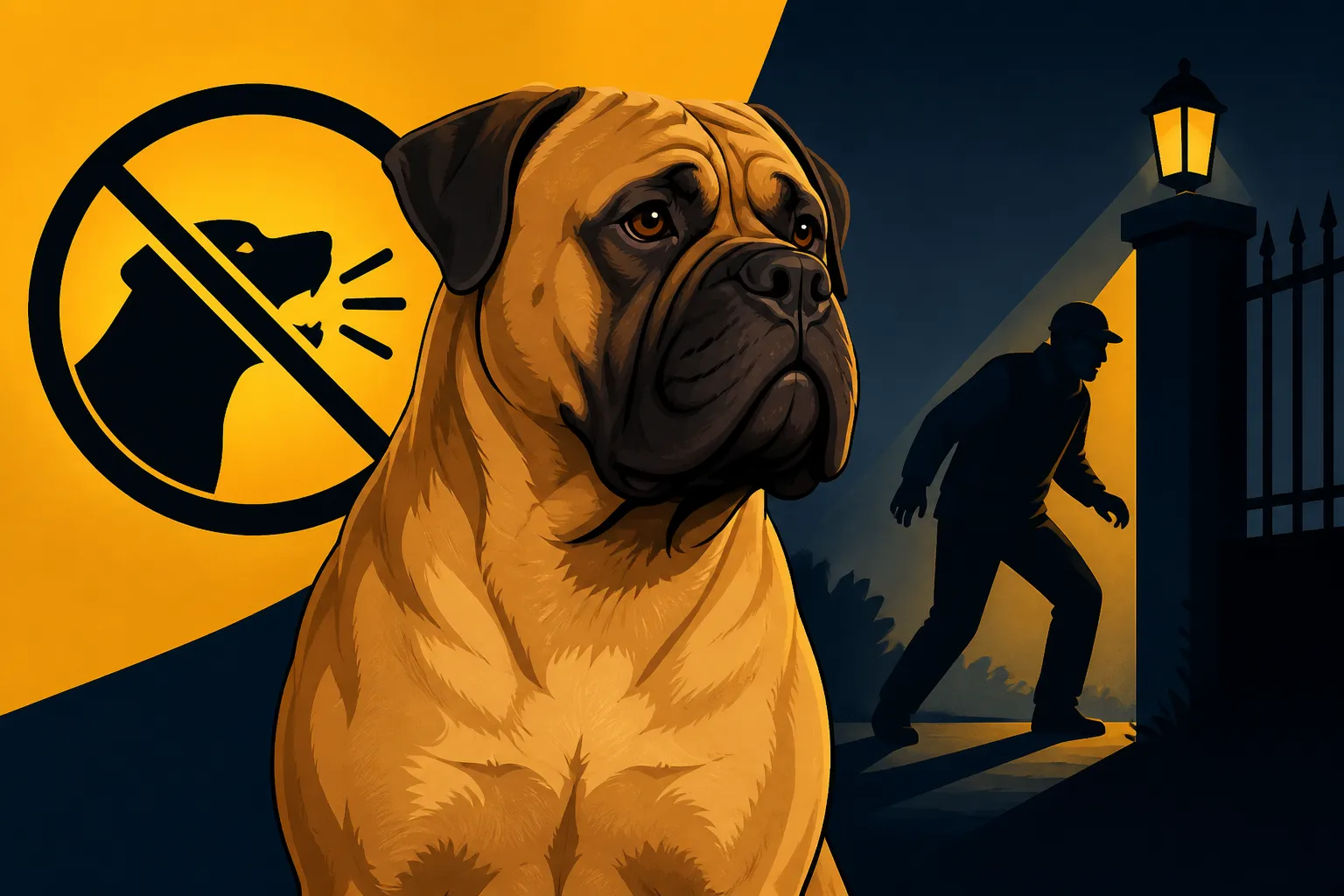
It’s a common misconception that a good guard dog is one that barks incessantly, announcing every leaf that blows by. Many new Bullmastiff owners, or those considering bringing one of these magnificent dogs into their home, might even feel a pang of worry if their giant doesn't sound the alarm at every perceived threat. However, this guide will explain why the Bullmastiff was intentionally bred for silent work, what that means for their natural guarding instincts, and how this unique trait sets them apart from other protective breeds.
The Bullmastiff's Original Job Description: Silent Guardian of the Estate
To truly understand why your Bullmastiff often prefers quiet observation to loud proclamations, we need to take a trip back in time to their origins. These dogs weren't just created; they were engineered for a very specific, high-stakes job in rural England. Their development was less about aesthetics and more about supreme functionality in a challenging environment.
The Victorian Poaching Problem
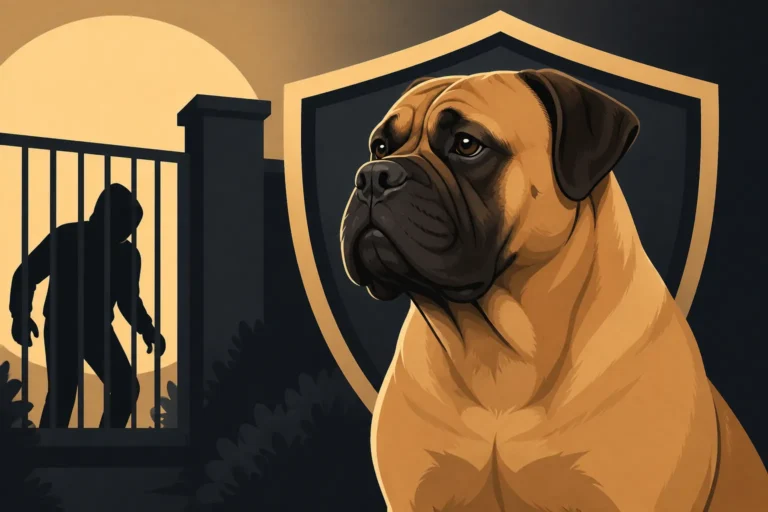
Imagine the sprawling estates of Victorian England, vast tracts of land owned by the wealthy elite, teeming with game like deer, pheasant, and rabbit. This game was not just for sport; it represented significant wealth and a symbol of status. However, poaching was a rampant and serious problem. Desperate individuals, often driven by poverty, would sneak onto these estates under the cover of darkness to illegally hunt. Gamekeepers, employed to protect these valuable assets, faced a formidable challenge. They needed a deterrent that was effective, could cover ground quickly, and, crucially, wouldn't give away their presence. A barking dog was, quite simply, a liability. It would alert the poachers, giving them precious time to escape or, worse, prepare for confrontation. The gamekeeper's life, and the estate's security, depended on surprise.
The Gamekeeper's Silent Partner
This critical need for stealth shaped the very essence of the Bullmastiff. Gamekeepers desired a dog that could track silently, move swiftly through the underbrush without a sound, and then apprehend a poacher without causing fatal injury. They needed a dog that was fearless, powerful enough to hold a grown man, but intelligent and controlled enough to do so without mauling them. The Bullmastiff Was Built to Catch Poachers in the Dark. The success of their nightly patrols hinged on the element of surprise. A dog that barked loudly upon scenting an intruder would negate this advantage entirely, turning a covert operation into a chaotic chase. This specialized role demanded a quiet, watchful companion, not a vocal alarm system.
Blending Breeds for Purpose: Mastiff Meets Bulldog
The creation of the Bullmastiff wasn't a happy accident; it was a deliberate and calculated crossbreeding to achieve a specific set of traits. The gamekeepers selectively bred for qualities that would best suit their silent, watchful guardians. They sought a balance of power, speed, intelligence, and, of course, a quiet demeanor. The Bullmastiff Is Sixty Percent Mastiff and Forty Percent Bulldog, a formula that blended the best aspects of two formidable breeds.
The Mastiff's Temperament Contribution
The Mastiff brought to the table its immense size, imposing presence, and a generally calm, watchful temperament. Mastiffs are known for being quiet, observant guardians who often assess situations before reacting. They are naturally territorial and protective, but not typically "barky" dogs. This quiet strength was a crucial component. A Mastiff could intimidate by sheer bulk and presence, acting as a silent deterrent. However, they were sometimes considered too slow for the chase and lacked the quick agility needed for apprehension. Their tendency towards quiet vigilance, however, was a perfect foundation for the silent guardian role, contributing the gravitas and a reserved nature that eschewed unnecessary noise.
The Bulldog's Stealth and Resolve
The "old-style" Bulldog, quite different from the modern show Bulldog, contributed tenacity, athleticism, and an impressive grip. These Bulldogs were agile, powerful, and known for their courage and unwavering resolve. More importantly for the Bullmastiff's purpose, they were also relatively quiet. Their hunting style often involved silently stalking and pinning prey, rather than barking and chasing. This blend infused the Mastiff's calm power with the Bulldog's determined, silent, and formidable gripping ability. The forty percent Bulldog influence provided the necessary quickness and stealth, ensuring the resulting Bullmastiff could not only track silently but also move rapidly to intercept a fleeing poacher without making a sound until contact was made. This combination created a dog that was perfectly equipped for the quiet, decisive work of apprehending intruders.
Silent Detection and Restraint: The Bullmastiff's Unique Approach
Understanding the historical breeding of the Bullmastiff helps us appreciate their unique guarding style. Unlike many breeds that use their voice as their primary alert system, a Bullmastiff's detection and restraint methods are far more subtle and, arguably, more effective in certain situations. They weren't just bred not to bark; they were bred to work without barking.
The Instinct to Observe, Not Announce
A Bullmastiff's natural instinct is to observe first. They are highly attuned to their surroundings and possess keen senses, but their initial reaction to something unusual is often to process the information silently. This isn't laziness; it's a deeply ingrained trait from their gamekeeping days. Why waste energy barking when you can quietly assess the threat, gather more information, and then act decisively? You might notice your Bullmastiff's ears perk up, their head tilt, or their body subtly tense, long before they emit a sound. They are calculating, evaluating whether a situation truly warrants their intervention. This quiet assessment allows them to determine if a squirrel is merely passing through the yard or if there’s a genuine concern at the perimeter. This deliberation is a hallmark of the breed's intelligence and their history as a guardian that prioritizes effectiveness over immediate vocalization.
Holding, Not Harming
The most distinctive aspect of the Bullmastiff's original job was their method of apprehension: they were bred to hold, not to bite and maim. A gamekeeper's objective was to catch the poacher, not to inflict severe injury that would lead to legal trouble or even death. The Bullmastiff's strength and substantial build meant they could physically block, pin, or hold a person down, using their sheer mass and determined grip without resorting to a violent attack. Why a Bullmastiff Was Not Bred to Maul. This "catch and hold" technique required immense physical power and an even greater degree of control and discrimination. A barking frenzy would have been antithetical to this controlled apprehension. The dog needed to be silent to approach unseen, and then silent in its restraint, preventing escape until the gamekeeper arrived. This quiet, controlled power makes them formidable protectors without being inherently aggressive barkers.
Implications for the Modern Bullmastiff Owner
What does this rich history mean for you, the modern Bullmastiff owner? It means that many of the breed's characteristics, especially their quiet nature, are not flaws but rather deeply ingrained traits that make them unique companions and protectors. Your Bullmastiff isn't broken if it doesn't bark at every delivery person!
Low Barking Tendencies in the Home
For most Bullmastiff owners, this historical predisposition translates into a remarkably quiet household companion. These dogs are generally not nuisance barkers. They don't typically bark out of boredom, loneliness, or just to hear themselves. This makes them surprisingly adaptable to various living situations, including homes with close neighbors or even apartments, provided they get sufficient exercise and mental stimulation. Their silence is often a comfort; when a Bullmastiff does bark, you know there’s usually a legitimate reason for it. It signals a higher level of alert or concern, rather than a casual greeting or a reaction to a leaf blowing by. This can be a huge advantage for owners who appreciate a peaceful home environment and want a dog whose vocalizations carry real weight. You'll find that their quiet nature contributes to a serene home, often making them excellent companions for those who might otherwise be put off by constantly barking dogs.
When a Bullmastiff Does Bark
While generally quiet, a Bullmastiff is still a dog, and they will bark when they feel it's truly necessary. Their bark tends to be deep, resonant, and purposeful, often surprising people because it's heard so infrequently. What a Bullmastiff's Bark Sounds Like. Common reasons for a Bullmastiff to bark might include:
- Genuine Threats: If they perceive a real threat to their family or home, they will certainly sound the alarm. This isn't a casual "hello" bark; it's a serious warning.
- Territorial Imperatives: They might bark to alert you to someone approaching your property, even if they aren't hostile. This is their way of saying, "Someone is here, and I've noticed."
- Excitement or Play: In moments of high excitement, such as during intense play or when a beloved family member returns home, they might offer a few celebratory barks.
- Demand Barking: Though less common, a Bullmastiff might occasionally bark to demand attention, food, or to be let outside. This is where consistent training, perhaps with resources like BAXTER & Bella online classes, can help channel their communication more appropriately.
- Separation Anxiety: While generally not prone to excessive vocalizations, a Bullmastiff suffering from separation anxiety might bark, howl, or whine when left alone. This would be a symptom of a deeper issue, not their typical behavior.
It's important to interpret your Bullmastiff's barks. Because they are generally quiet, any vocalization usually has more significance. If you notice a sudden increase in barking, especially without an obvious trigger, it might be worth investigating if there's an underlying issue, such as pain or illness.
Comparing to Other Guard Breeds: The Bullmastiff's Unique Silent Role
When we think of "guard dogs," often images of Dobermans, German Shepherds, or Rottweilers come to mind, breeds known for their powerful, alerting barks. However, the Bullmastiff offers a distinctly different, yet equally effective, approach to protection. Their historical role as a silent guardian positions them uniquely in the world of working dogs.
The Roaring Guard vs. The Silent Watchman
Many traditional guard breeds are what we might call "roaring guards." Their primary method of defense often involves a loud, intimidating bark that serves as both a warning to intruders and an alert to their owners. Think of a German Shepherd at the fence, barking fiercely at an approaching stranger, clearly communicating: "Stay back!" This is an effective strategy for deterrence. The Bullmastiff, on the other hand, is a "silent watchman." Their presence alone is often enough to deter, but their method of engagement, if necessary, relies on quiet detection followed by physical restraint. Whether a Bullmastiff Makes a Guard Dog is often debated in terms of their vocalizations, but their effectiveness as a deterrent and protector is undeniable, even without the loud fanfare.
Here's a quick comparison of their typical approaches:
| Trait | Traditional "Roaring" Guard Breeds (e.g., German Shepherd) | Bullmastiff: The "Silent Watchman" |
|---|---|---|
| Primary Alert | Loud, sustained barking to announce presence | Silent observation, physical presence, deep bark as a last resort |
| Approach to Threat | Often vocal from a distance, then engages if ignored | Silent approach, assesses, then moves to physically deter/restrain |
| Deterrent | Vocal warning, perceived aggression, physical size | Imposing physical size, quiet intensity, element of surprise |
| Reaction Time | Immediate vocalization, then physical action | Deliberate assessment, then swift, silent action |
| Noise Level | Generally higher, often bark at minor stimuli | Very low, barks reserved for serious situations |
The Advantage of Surprise
For the gamekeeper, the advantage of a silent dog was paramount. An intruder who didn't know they had been detected until a massive, powerful dog was already upon them had little time to react or escape. This element of surprise is a Bullmastiff's historical superpower. In a modern home protection scenario, this translates into a dog that might not bark until an actual threat is already at the threshold, or even inside. This isn't to say they don't give warnings, but their warnings might be subtle—a change in posture, a deep rumble, or a quick, authoritative bark that means business. This unique capability is why owners who value a truly dedicated, discerning protector often gravitate towards the Bullmastiff.
For those looking to reinforce their Bullmastiff’s natural protective instincts in a controlled way, or simply ensure they are well-socialized and understand their boundaries, professional training resources can be invaluable. Even though they are naturally quiet, clear communication and consistent boundaries are crucial for a giant breed. Platforms like BAXTER & Bella offer comprehensive online programs that can help guide you through these stages, ensuring your Bullmastiff understands their role without becoming overly aggressive. You can also find durable training equipment, such as heavy-duty leashes and harnesses suitable for their strength, on sites like Amazon, which are essential tools for managing such a powerful and deliberate dog during walks and public outings. Ultimately, the Bullmastiff's quiet nature is a testament to its purposeful breeding, making it a truly unique and effective guardian.
Disclaimer
This article is for general informational purposes only and does not constitute professional advice. Laws, prices and regulations vary by location and change over time. Consult a qualified professional for guidance on your specific situation.