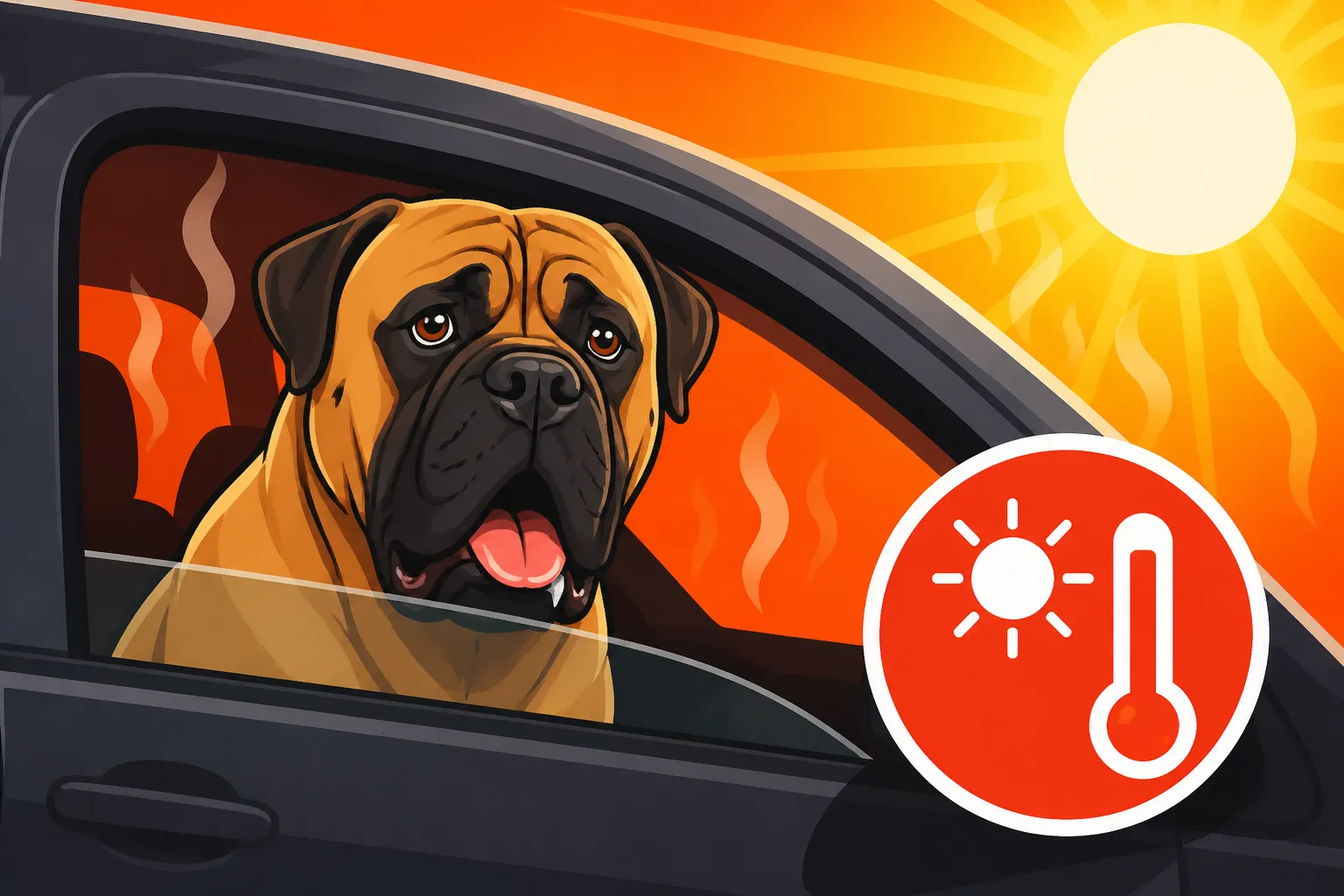
How Fast a Bullmastiff Overheats in a Car
Leaving your beloved Bullmastiff in a car, even for what seems like "just a minute," is one of the quickest and most dangerous mistakes a dog owner can make. These magnificent, loyal companions are incredibly susceptible to heatstroke, and a seemingly mild day can turn into a deadly oven inside a vehicle faster than you might ever imagine. This guide will walk you through exactly why Bullmastiffs are at such high risk, the terrifying speed at which danger escalates, and critical steps you must take to protect them.
The Alarming Speed of Overheating for Bullmastiffs
It's a common misconception that cracking a window or parking in the shade makes a car safe for a few minutes. For a Bullmastiff, this couldn't be further from the truth. Their unique physiology, combined with the rapid temperature rise inside a vehicle, creates a perfect storm for life-threatening heatstroke in a shockingly short amount of time.
Why Bullmastiffs Are Exceptionally Vulnerable to Heat
Bullmastiffs are built for strength and imposing presence, not for hot weather. Their very design, which we adore for its majestic qualities, becomes a significant health liability when exposed to heat. First and foremost, they are a brachycephalic breed, meaning they have a relatively short muzzle. This short muzzle significantly restricts their ability to cool themselves efficiently through panting, which is a dog's primary cooling mechanism. Unlike humans who sweat profusely to regulate body temperature, dogs rely on panting to exchange hot air for cooler air and evaporate moisture from their tongues and respiratory tracts. A Bullmastiff's compromised airway makes this process much less effective.
Beyond their short snout, consider their sheer size and musculature. These are massive dogs, typically weighing between 100 to 130 pounds, often even more. This large body mass generates a lot of internal heat, and there's simply more of them to warm up. Coupled with their dense, short double coat – even if it feels short to the touch – it acts as an insulator, trapping heat rather than allowing it to dissipate easily. This combination means that their core body temperature can rise dangerously fast, leading to an inability to shed excess heat. If you've ever wondered Why a Bullmastiff's Short Muzzle Cannot Cool It, you're already on the right track to understanding this critical vulnerability.
The "Greenhouse Effect" in a Vehicle
The inside of a car is a notorious heat trap, and it's essential to understand the science behind it to truly grasp the danger. Even on a day that feels comfortable to us, say 70°F, direct sunlight passing through the car windows heats up the interior surfaces – seats, dashboard, floor mats. These surfaces then radiate heat, turning the car into a miniature oven. This phenomenon is known as the "greenhouse effect." The windows allow solar radiation to enter but largely prevent the heat from escaping, causing a rapid and continuous temperature increase.
Researchers and veterinarians have demonstrated this alarming rate repeatedly. The temperature inside a parked car can rise by 20°F in just 10 minutes, and by over 40°F within an hour, even on relatively mild days. And this isn't just theory; it's been proven with scientific studies. A recent study found that on an 85°F day, the interior of a car could reach 102°F in 10 minutes and 120°F in 30 minutes. Think about that: a sweltering 120°F in half an hour. Cracking the windows provides minimal relief, usually only lowering the interior temperature by a few degrees, which is completely insufficient to protect a dog as vulnerable as a Bullmastiff.
Real-World Scenarios and Temperature Spikes
Let's put this into perspective with some real-world scenarios that often lead to tragic outcomes. Imagine a beautiful spring day, around 75°F outside, sunny with a light breeze. You think, "It's not that hot, I'll just run into the grocery store for five minutes." In those five minutes, your car's interior could easily climb to 90°F. By ten minutes, it could be well over 100°F. For a Bullmastiff, who already struggles with heat, this is rapidly approaching critical levels.
The danger isn't limited to sunny days, either. Humidity plays a huge role. If it's a humid 70°F day, your Bullmastiff will struggle even more to cool down because the air is already saturated with moisture, making evaporative cooling through panting even less effective. This means that a temperature that might feel tolerable to you for a short time can be incredibly dangerous for your dog. For more context on the general risks, consider reading Why a Bullmastiff Overheats So Easily and What Temperature Is Dangerous for a Bullmastiff. The takeaway is clear: any time you are considering leaving your Bullmastiff in a car, assume the worst, because for them, the worst can happen very, very quickly.
Here's a quick look at how car interior temperatures can skyrocket:
| Outside Air Temperature | Car Interior Temperature (10 mins) | Car Interior Temperature (20 mins) | Car Interior Temperature (30 mins) | Car Interior Temperature (60 mins) |
|---|---|---|---|---|
| 70°F (21°C) | 89°F (32°C) | 99°F (37°C) | 104°F (40°C) | 113°F (45°C) |
| 75°F (24°C) | 94°F (34°C) | 105°F (41°C) | 110°F (43°C) | 118°F (48°C) |
| 80°F (27°C) | 99°F (37°C) | 109°F (43°C) | 115°F (46°C) | 123°F (51°C) |
| 85°F (29°C) | 104°F (40°C) | 114°F (46°C) | 120°F (49°C) | 128°F (53°C) |
(Temperatures are approximate and can vary based on vehicle color, humidity, and sun exposure)
Recognizing the Early Warning Signs of Heatstroke
Because Bullmastiffs can succumb to heatstroke so rapidly, recognizing the signs early is absolutely critical. It's not enough to know that they can overheat; you need to know what it looks like so you can act immediately. Their large, stoic nature can sometimes mask discomfort until it's severe, so being vigilant is your best defense.
Subtle Indicators That Demand Immediate Attention
The earliest signs of heatstroke can be subtle, especially in a dog like a Bullmastiff that might already be prone to panting or drooling. However, it's about context and severity. If your Bullmastiff is typically a bit slobbery, you'll need to pay attention to excessive drooling, far more than their usual happy dribble. This might manifest as foamy drool around the mouth or a steady stream. Their panting will also become noticeably more rapid and labored, even when they haven't been exercising. It's a shallow, quick pant that just doesn't seem to get enough air.
Beyond the obvious, look for changes in behavior. A Bullmastiff experiencing early heat stress might become restless, constantly shifting positions, or trying to move to a cooler spot in the car, even if one doesn't exist. They might seem agitated or anxious, pacing or pawing at the windows. Their gums might appear darker red than usual, signaling increased blood flow to the surface in an attempt to cool down. Their heart rate may also be noticeably faster. These are all urgent signals that their body is struggling to regulate its temperature, and it’s time to intervene.
Advanced Stages and Critical Symptoms
If these early warnings are missed, heatstroke can progress to truly life-threatening levels at an alarming rate. At this stage, symptoms become much more pronounced and frightening. Your Bullmastiff might begin to stagger, appearing disoriented or weak, and could even collapse. Vomiting and diarrhea are common as their internal organs begin to suffer damage. The vomit might contain blood, and the diarrhea could be bloody, signaling severe internal distress.
Muscle tremors and seizures can occur as brain function is affected by the extreme heat. Their gums, which were once dark red, might become bright cherry red, then quickly shift to a pale or even bluish-purple hue as their circulatory system starts to fail. Eventually, they may become unresponsive or lose consciousness. At this point, irreversible organ damage is often occurring, and the situation is dire. This is why acting at the first subtle signs is so vital. If you want to learn more about recognizing these critical moments, refer to our comprehensive guide on Signs a Bullmastiff Has Heatstroke.
Immediate Action and Prevention Strategies
The most critical thing to understand about heatstroke in Bullmastiffs is that prevention is paramount. Once it sets in, it’s a race against time, and even with the best veterinary care, the outcome isn't always favorable.
What to Do If Your Bullmastiff is Overheating in a Car
If you suspect your Bullmastiff is overheating, whether in a car or any other hot environment, you need to act immediately. Every second counts. First, get them out of the hot car and into the coolest environment you can find – ideally, an air-conditioned building or deep shade. Time is of the essence. Next, begin active cooling. Do not dunk them in ice water; this can cause their blood vessels to constrict, trapping heat inside, and can lead to shock. Instead, use cool (not freezing cold) water to wet their fur, focusing on areas with less fur and major blood vessels close to the surface, like their paw pads, armpits, and groin area. You can also use wet towels draped over these areas, continuously re-wetting them. A fan directed at them will help with evaporative cooling.
Offer them small amounts of water to drink, but don't force it. If they are unresponsive or collapsing, they might aspirate water, which can cause other serious issues. As you are cooling them, call your veterinarian or the nearest emergency veterinary clinic. Even if your Bullmastiff seems to recover and perk up, a vet visit is absolutely non-negotiable. Heatstroke can cause damage to internal organs that isn't immediately visible, and they need professional assessment and potentially intravenous fluids or other supportive care. For a deeper dive into these urgent steps, check out What to Do When a Bullmastiff Overheats. The emergency vet bill can be substantial, and this is where having a good pet insurance plan like Healthy Paws can truly provide peace of mind, allowing you to focus on your dog's care without financial stress.
Never Leave a Bullmastiff Unattended in a Car
Let me be unequivocally clear: you should never, ever leave a Bullmastiff unattended in a car, even for a moment, regardless of the outside temperature or whether you've cracked a window. There's no such thing as "just a quick errand" when it comes to your Bullmastiff's life in a vehicle. The risks are too high, and the consequences are too severe. Bullmastiffs cannot tell you they're too hot until it's often too late.
Plan your outings accordingly. If you're going somewhere that isn't pet-friendly, leave your Bullmastiff comfortably at home in an air-conditioned space. If you're traveling, ensure your stops are only in places where your dog can exit the vehicle with you. Many states and municipalities have laws against leaving pets in hot cars, and bystanders are often empowered to break windows to rescue distressed animals. While this might seem extreme, it underscores the gravity of the situation. Your Bullmastiff is a beloved family member, and their safety is your responsibility. This unwavering rule of never leaving them in a car is a simple, non-negotiable act of responsible ownership. This applies even on days where you might consider walking them, as explained in Whether a Bullmastiff Should Be Walked in Summer.
The Long-Term Impact of Heatstroke
Surviving a heatstroke incident is a victory, but it's often not the end of the story. The extreme stress on the body can have lasting repercussions, impacting your Bullmastiff's health for the remainder of their life. Understanding these potential long-term effects further emphasizes the importance of prevention.
Potential Health Complications After a Heatstroke Incident
When a Bullmastiff's body temperature rises to dangerous levels, it causes a cascade of internal damage. The initial signs like vomiting and diarrhea are just the beginning. The intense heat can damage vital organs, including the kidneys, liver, and brain. Kidney damage can lead to acute kidney failure, requiring intensive medical intervention and potentially lifelong dietary changes and medication. Liver damage can impair the body's ability to detoxify and produce essential proteins, leading to a host of other health issues. Brain damage can manifest as seizures, neurological deficits, or permanent behavioral changes.
Beyond these major organs, heatstroke can also cause disseminated intravascular coagulation (DIC), a severe bleeding disorder where the blood's clotting ability is compromised, leading to uncontrolled internal bleeding. This is a life-threatening complication that requires immediate and aggressive treatment. Even the heart can be affected, with damage to the heart muscle or irregular heart rhythms. The recovery period can be long and challenging, often requiring ongoing veterinary care, medication, and close monitoring to manage these potential long-term complications. This is a stark reminder of why we say The Median Bullmastiff Lives Eight and a Half Years – every healthy year free of such trauma is precious.
The Costly Reality of Emergency Care
Dealing with an emergency situation like heatstroke is not only emotionally draining but also incredibly expensive. When your Bullmastiff is rushed to the emergency vet, they will likely require immediate hospitalization, diagnostic tests like blood work to assess organ damage, and intravenous fluid therapy to rehydrate and support organ function. They might need medications to control vomiting, seizures, or manage blood clotting issues. In severe cases, they could require plasma transfusions or specialized care in an intensive care unit.
The cost for such emergency care can quickly climb into thousands of dollars, easily reaching $3,000 to $10,000 or even more, depending on the severity of the heatstroke and the extent of organ damage. This is a financial burden that many families are not prepared for, especially if it leads to chronic health issues requiring ongoing treatment. This is precisely why so many Bullmastiff owners find a comprehensive pet insurance plan invaluable. Companies like Healthy Paws can cover a significant portion of these unexpected emergency bills, allowing you to make medical decisions based on what's best for your dog, not your wallet. It's similar to planning for other significant health events, as discussed in What a Bullmastiff's Emergency Fund Should Hold – preventative measures and financial preparedness go hand in hand with responsible Bullmastiff ownership.
Disclaimer
The information provided in this article is for general informational purposes only and is not a substitute for professional veterinary advice. Always consult with a qualified veterinarian for any health concerns or before making any decisions about your Bullmastiff's health or treatment.