Signs a Bullmastiff Is Bloating
Few things strike as much fear into the heart of a Bullmastiff owner as the word "bloat." It's a sudden, devastating condition that can turn a perfectly normal afternoon with your beloved companion into a life-or-death emergency in a matter of hours, sometimes even minutes. This guide is here to help you recognize the critical signs that your Bullmastiff might be bloating so you can act swiftly and potentially save their life.
Understanding Bloat and Its Urgency in Bullmastiffs
Bloat, medically known as Gastric Dilatation-Volvulus (GDV), isn't just an upset stomach; it's a terrifying medical crisis where your dog's stomach fills with gas, food, or fluid, and then often twists upon itself. This twisting, or volvulus, traps the gas and can cut off blood supply to the stomach and other vital organs, leading to shock, tissue death, and ultimately, a rapid, agonizing death if not treated immediately. For deep-chested breeds like our magnificent Bullmastiffs, the risk is alarmingly high, and every second truly counts. It's a sad reality that these beautiful dogs, already prone to health issues like Lymphoma Kills More Bullmastiffs Than Anything Else, face unique challenges that demand our vigilance.
The Silent Threat: Why Bloat Is So Dangerous
The sheer speed at which GDV can progress is what makes it so terrifying. One minute your Bullmastiff might seem a little restless, and the next they could be in full-blown shock. When the stomach twists, it not only traps gas but also prevents blood from returning to the heart from the rear of the body, leading to circulatory collapse. The distended stomach also puts immense pressure on the diaphragm, making it incredibly difficult for your dog to breathe. This cascade of events can lead to severe pain, irreversible organ damage, and metabolic disturbances that are difficult to correct, even with surgical intervention. It's a stark reminder of why The Median Bullmastiff Lives Eight and a Half Years – these breeds, for all their stoic nature, are susceptible to sudden, serious conditions.
Anatomical Predisposition in Deep-Chested Breeds
Our Bullmastiffs, with their broad chests and relatively narrow waists, are unfortunately built in a way that makes them prime candidates for bloat. The deep chest provides ample room for the stomach to expand and rotate. While the exact trigger isn't always clear, factors like eating a large meal quickly, drinking excessive water before or after exercise, stress, or even genetics can play a role. It’s not just about size; it’s about that specific conformation that allows the stomach to swing and twist like a pendulum. As responsible Bullmastiff owners, understanding this inherent risk is the first step in being prepared.
Recognizing the Early Warning Signs of Bloat
Spotting bloat early is your Bullmastiff's best chance. While some signs are more obvious, others can be subtle and easily missed, especially if you're not specifically looking for them. Remember, a Bullmastiff can be quite stoic and might not always vocalize their discomfort as clearly as other breeds. Pay close attention to any changes in behavior or physical appearance, no matter how minor they seem.
Obvious Physical Changes
When bloat truly takes hold, certain physical signs become quite pronounced. These are the red flags that demand immediate action.
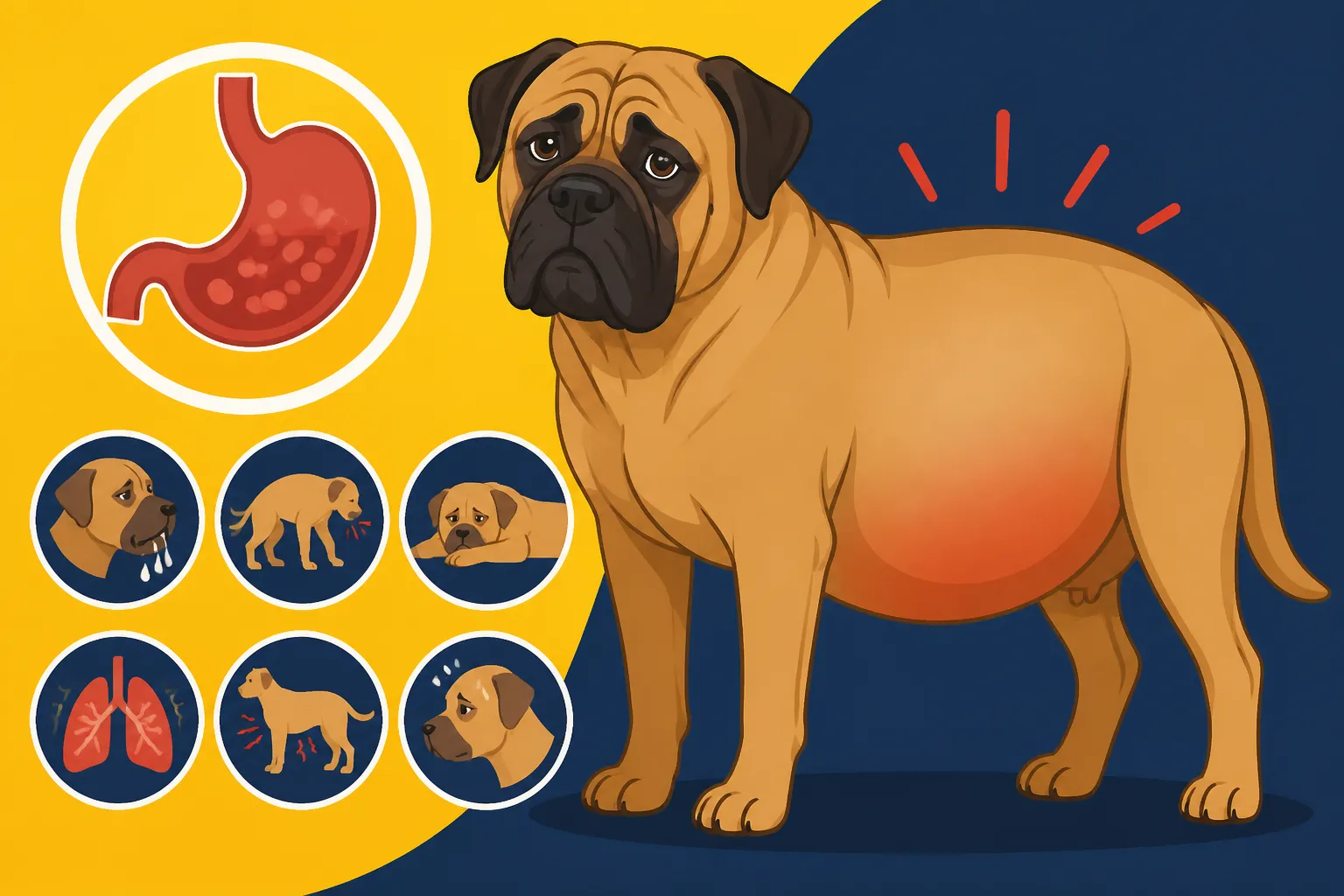
- Abdominal Distension: This is often the most iconic sign, though it might not be obvious in the very early stages or on a heavily muscled or overweight dog. Your Bullmastiff's abdomen, especially the area behind the ribs on their left side, might appear swollen, tight, and hard to the touch. It can feel like a taut drum. This swelling can progress rapidly. If you see this, do not delay.
- Non-Productive Retching (Trying to Vomit Without Success): This is perhaps the most critical and consistent sign. Your dog will repeatedly try to throw up, often gagging and heaving, but little to nothing comes out. They might produce some foamy saliva, but no stomach contents. This happens because the twisted stomach entrance prevents anything from passing through. This is an absolute emergency.
- Excessive Drooling: As they struggle and gag, many Bullmastiffs will start drooling profusely. Their jowls, which already have a tendency to hold saliva, might be soaking wet, and they might leave puddles of drool wherever they move. This is a sign of extreme discomfort and nausea.
Behavioral Clues That Signal Distress
Sometimes, the behavioral changes precede the more obvious physical symptoms. Knowing your Bullmastiff's normal demeanor is crucial here, as subtle shifts can be the first clue.
- Restlessness and Pacing: Your typically calm Bullmastiff might become agitated, unable to settle down. They may pace endlessly, shift positions frequently, and seem generally uncomfortable. This restlessness comes from the intense pain and pressure they are experiencing.
- Looking at Their Side or Belly: Many dogs with abdominal pain will repeatedly glance at their flank or belly, seemingly trying to understand or alleviate the discomfort. They might also try to bite or lick at their side. This self-directed attention to the abdomen is a significant warning sign.
- Unwillingness to Lie Down or Getting Up and Down Repeatedly: The pressure from the distended stomach makes lying comfortably very difficult. Your Bullmastiff might try to lie down, only to get back up almost immediately, repeating this cycle. They might prefer to stand or sit hunched.
- Grunting, Whining, or Panting: While Bullmastiffs are known for their grunts and snores, any new, excessive, or pain-driven vocalization, especially in conjunction with other symptoms, should raise alarms. Panting, even when not hot or exercised, is a common sign of pain and anxiety in dogs.
- Anxiety and Depression: Your usually confident Bullmastiff might appear anxious, fearful, or even withdrawn. They might seek comfort or hide away, depending on their personality. A sudden shift in mood or interaction level, combined with physical discomfort, is a serious indicator.
Systemic Symptoms Indicating a Critical Situation
If you observe these signs, your Bullmastiff is likely already in a state of shock, and you need to get them to an emergency veterinary clinic immediately. There is no time to waste.
- Weakness and Lethargy: Your dog might become profoundly weak, struggling to stand or walk. They might appear sluggish, unresponsive, and simply not themselves. This is a sign their body is shutting down due to shock.
- Pale Gums: Check your Bullmastiff's gums. If they are normally pink and healthy, but now appear pale, white, or even bluish-gray, it indicates poor circulation and shock. Press your finger firmly on their gum for a moment; if the color doesn't return quickly (within 1-2 seconds), it's another sign of circulatory distress.
- Rapid, Shallow Breathing and Heart Rate: The pressure on the diaphragm makes deep breathing difficult, leading to rapid, shallow breaths. Their heart rate will often increase as their body tries to compensate for the lack of oxygen and blood flow.
- Collapse: In the most severe and advanced stages, your Bullmastiff may collapse and be unable to get up. This is a dire sign and means their life hangs by a thread. At this point, the likelihood of a positive outcome decreases dramatically.
What to Do If You Suspect Bloat (and Why Time is Everything)
When it comes to bloat, hesitation is deadly. If you suspect even for a moment that your Bullmastiff is experiencing GDV, you must act decisively and quickly. This isn't a situation where you "wait and see" if they improve.
Immediate Action Steps
The most crucial step is getting your Bullmastiff to an emergency veterinary clinic without delay.
- Call Ahead: As you're heading out the door, call your nearest emergency veterinary hospital. Tell them you suspect your Bullmastiff is bloating and you are on your way. This allows them to prepare their team and equipment for your arrival, saving precious minutes.
- Go Immediately: Do not try to treat it at home. Do not offer food or water. Do not try to induce vomiting. The stomach is twisted, and anything you give them could worsen the situation. Every minute that passes increases the risk of irreversible damage and reduces the chance of survival.
- Be Prepared for Emergency Surgery: The definitive treatment for GDV is emergency surgery to de-rotate the stomach and, in most cases, perform a gastropexy. During the gastropexy, the stomach is surgically tacked to the abdominal wall to prevent future twisting. While this is an expensive procedure, often costing thousands, it's the only way to save a dog with full-blown GDV. It's a bill that can hit hard, making pet insurance providers like Healthy Paws a godsend for many owners facing these sudden, catastrophic events. Knowing What Bloat Surgery Involves on a Bullmastiff can help you understand the process.
| Symptom Category | Early Warning Signs (Urgent Vet Visit) | Advanced Signs (Emergency Vet Visit NOW) |
|---|---|---|
| Physical | Restlessness, pacing, panting, excessive drooling | Distended, hard abdomen; repeated non-productive retching |
| Behavioral | Looking at sides, getting up/down, anxiety, discomfort | Extreme lethargy, collapse, unresponsive |
| Systemic | Mild discomfort, possibly pale gums | Pale/white/bluish gums, rapid/shallow breathing, weak pulse |
Preventative Measures and Discussing a Gastropexy
While no measure is 100% foolproof, there are things you can do to reduce your Bullmastiff's risk of bloat, and one major surgical option to consider.
- Meal Timing and Exercise: Avoid strenuous exercise an hour before and at least two hours after meals. A full stomach bouncing around during activity is a known risk factor. Make sure your Bullmastiff has time to digest quietly. You can learn more about this in Why a Bullmastiff Should Rest After Eating.
- Slow Down Eating: If your Bullmastiff inhales their food, consider using a slow feeder bowl or spreading their food on a flat baking sheet. Smaller, more frequent meals (two or three times a day) instead of one large meal can also help.
- Manage Stress: Stress can contribute to bloat. Try to keep your Bullmastiff's environment calm and predictable.
- Consider a Prophylactic Gastropexy: For a high-risk breed like the Bullmastiff, a prophylactic gastropexy is often recommended. This is a surgical procedure where the stomach is tacked to the abdominal wall before bloat occurs, preventing the dangerous twisting. While it won't prevent the stomach from dilating with gas, it dramatically reduces the risk of the fatal volvulus. This procedure is often done at the same time as spaying or neutering. Discuss Whether a Bullmastiff Should Have a Gastropexy with your veterinarian, especially if you have a young Bullmastiff. Insurance plans, like those offered by Healthy Paws, often cover preventative procedures like gastropexy, which can be a huge relief if you're concerned about Why a Bullmastiff's Bills Come Early. It’s certainly a consideration for any owner, knowing the dire statistics for How Often a Bullmastiff Survives Bloat once it progresses.
Remember, the vast bulk of a Bullmastiff means a significant investment in their care, and being prepared for emergencies like bloat is part of that commitment. Recognizing the signs early is quite literally the best gift you can give your faithful companion.
Disclaimer
The information provided in this article is for educational and informational purposes only and does not constitute veterinary advice. Always consult with a qualified veterinarian for any health concerns or before making any decisions about your Bullmastiff's medical care. In case of a suspected emergency, seek immediate veterinary attention.