Why Early Bullmastiffs Were Bred Dark Brindle
If you've ever looked at an old photograph of a Bullmastiff, or read early accounts of the breed, you might notice a striking difference: many of those dogs were a deep, dark brindle. Today, fawn and red Bullmastiffs are incredibly popular, but there was a very specific, practical reason why the original gamekeepers who developed this magnificent breed prized the dark brindle coat above all others. This guide dives deep into the historical necessity, genetic background, and eventual evolution of the Bullmastiff's coat colors, explaining why the dark brindle was once the ultimate stealth uniform for these "Gamekeeper's Night Dogs."
The Genesis of the Gamekeeper's Night Dog
Imagine the vast estates of 19th-century England, teeming with game – deer, pheasants, rabbits. These valuable resources were, unfortunately, a tempting target for poachers. Estate owners and their gamekeepers needed a solution, a deterrent that was effective, silent, and capable of apprehending a man without mauling him. This pressing need gave birth to the Bullmastiff, a dog purpose-bred for a very specific, nocturnal role. The requirements for this job were rigorous, and every aspect of the dog, from its temperament to its coat color, was carefully considered.
The Silent Guardian's Need for Stealth
A gamekeeper's night dog couldn't be flashy or easily spotted. Its entire purpose was to work under the cloak of darkness, surprising intruders. A bright white or pale fawn dog would have been a beacon in the moonlit fields or shadowy woods, immediately alerting a poacher to its presence. The element of surprise was paramount; a dog that could melt into the background was a far more effective tool for apprehending someone without incident. The Bullmastiff's ancestors, the Old English Mastiff, were often massive but perhaps too slow, and early bulldogs, while tenacious, lacked the size and ground-covering ability. The blend needed to be just right, not just in strength and speed, but in camouflage. The Bullmastiff Was Built to Catch Poachers in the Dark is an excellent resource for understanding this historical role.
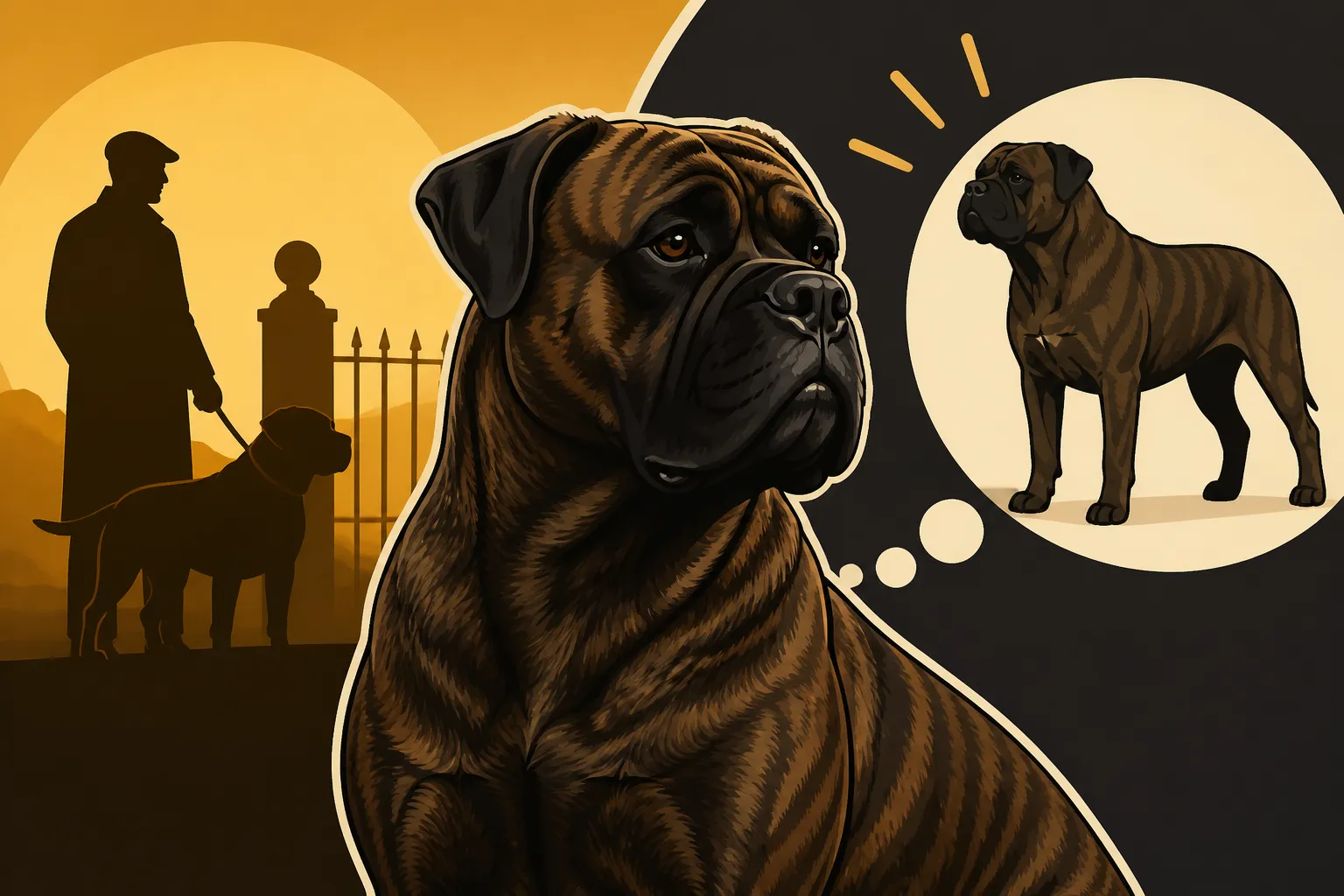
This wasn't about simply having a dark dog; it was about having a dog that was virtually invisible. Poachers were often desperate men, and confronting them could be dangerous. The Bullmastiff's job was not to initiate a violent attack, but to disable and hold. Its presence needed to be felt suddenly, decisively, and unexpectedly. A dark brindle coat, with its intricate stripes of black and brown, provided an unparalleled advantage in achieving this stealth. It broke up the dog's outline, making it incredibly difficult to discern against varied natural backdrops like trees, shadows, or even uneven terrain. The contrast between light and dark stripes created a visual disruption that foiled the human eye, especially in low light conditions.
Blending into the Night Landscape
Think about a dense forest at dusk or a moonless night in open fields. The varying shades of brindle perfectly mimicked the natural environment. The darker stripes would merge with deep shadows cast by trees or thickets, while the lighter brown or red stripes could blend with fallen leaves, earth, or patches of drier grass. This natural camouflage was an inherent part of the Bullmastiff's working uniform. What a Gamekeeper Needed a Night Dog For further explains the specific environmental challenges these dogs faced. A dog that could be seen coming a mile away was useless; a dog that could appear seemingly out of nowhere was invaluable.
This intentional breeding for camouflage wasn't merely an aesthetic choice; it was a matter of practical utility and efficacy in the Bullmastiff's critical mission. The gamekeepers understood that every detail counted when their dogs were out patrolling in often treacherous conditions. If a dog could move silently and remain unseen until the very last moment, it dramatically increased its chances of successfully cornering a poacher, giving the gamekeeper the upper hand. It was a testament to the intelligent design of the breed, a subtle yet powerful advantage that contributed directly to its success in its intended role.
The Mastiff and Bulldog Influence on Coat Color
The Bullmastiff, as its name suggests, is a combination of the powerful Old English Mastiff and the tenacious Bulldog. This genetic cocktail brought together a specific set of physical traits, including the foundation for its coat colors. Understanding the genetic contributions of these foundational breeds helps us appreciate why brindle became such a prevalent and prized color. The Bullmastiff Is Sixty Percent Mastiff and Forty Percent Bulldog provides excellent detail on the breed's lineage.
Tracing the Genetic Roots of Brindle
Both the Mastiff and the Bulldog contributed to the Bullmastiff's color palette. Old English Mastiffs traditionally came in fawn, apricot, or brindle. Bulldogs, especially the older types used in the Bullmastiff's development, also carried brindle, often a very dark, dense brindle. When these two breeds were crossed, the brindle gene was certainly present and often expressed. The specific ratio of Mastiff to Bulldog — approximately 60% Mastiff and 40% Bulldog — meant that while the Mastiff's size and guarding instinct were dominant, the Bulldog's athleticism and tenacity, along with its color genetics, were also strongly represented.
The brindle pattern itself is created by a specific gene called the K-locus, with the K^Br allele being responsible for brindle. When a dog inherits this gene, it causes stripes of black or very dark brown pigment to appear on areas that would otherwise be red or fawn. The intensity and distribution of these stripes vary, leading to different shades of brindle. In the early Bullmastiffs, the goal was often a very dark brindle, sometimes called "reverse brindle," where the black stripes were so wide and dense that the underlying fawn or red was barely visible, making the dog appear almost black from a distance. This dense brindle was particularly valued for its camouflage capabilities.
How Brindle Manifests in Early Crosses
The goal of the early Bullmastiff breeders was not just to produce brindle dogs, but dark brindle dogs. They selectively bred for the darkest possible brindle patterns, where the black streaking was heavy and dominant. This often meant choosing breeding dogs that exhibited intense pigmentation. The initial generations of crosses might have shown a wider variety of brindle intensities, but through careful selection by gamekeepers, the preference for darker, more disruptive patterns quickly solidified.
This selective breeding wasn't just about color; it was intertwined with the dogs' overall health and working ability. Breeders likely noticed that dogs with strong, rich pigmentation tended to be robust and healthy, leading to an unconscious association between dark brindle and desirable traits. As the breed became more established, and particularly when the breed standard began to take shape, the dark brindle became a hallmark of the true "gamekeeper's night dog," a visual representation of its specialized role. This was long before the breed was formally recognized, even before official records were kept, highlighting the practical, utilitarian approach to breeding these dogs.
Why Other Colors Were Less Desirable in Early Days
While fawn and red Bullmastiffs are common and beloved today, in the formative years of the breed, these lighter colors were simply not fit for purpose. The practical demands of the gamekeeper's work dictated a strong preference for colors that offered superior camouflage under specific conditions.
The Disadvantage of Fawn and Red in Darkness
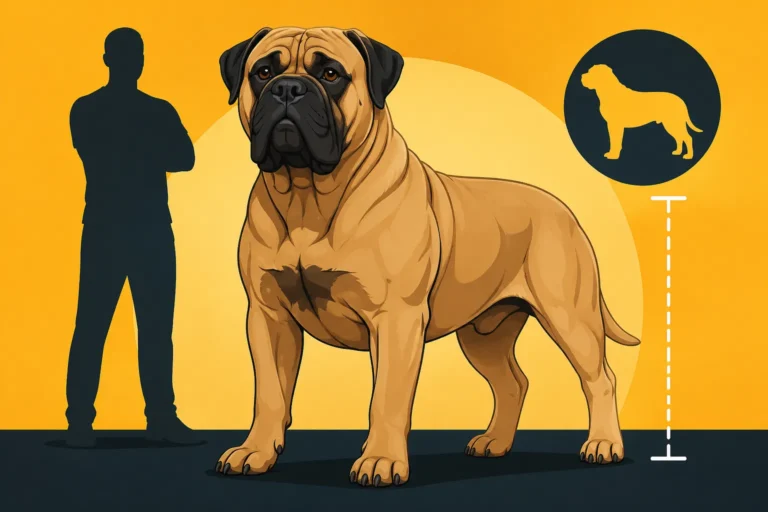
Imagine a Bullmastiff patrolling a moonlit field with a fawn coat. Even a deep fawn would stand out quite dramatically against the darker ground and shadows. Red, while darker than fawn, still presented a clear, solid silhouette that would be easily picked out by a human eye accustomed to scanning for movement. The gamekeepers needed their dogs to be as imperceptible as possible, and a solid, lighter color simply betrayed that need. This is why Why Dark Brindle Hid a Bullmastiff at Night is a critical piece of the puzzle.
The practical reality was that a lighter-colored dog gave away its position too soon, losing the crucial element of surprise. If a poacher spotted the dog before it could close the distance, they might have time to flee, or worse, arm themselves and become a direct threat to the dog and handler. The stakes were high on these nocturnal patrols, and every advantage counted. Choosing a dark brindle coat was a deliberate, strategic decision that directly contributed to the success and safety of the gamekeepers and their canine partners. It wasn't about personal preference; it was about operational effectiveness.
The Rarity and Visibility of Other Markings
Beyond fawn and red, other markings or colors were either rare or equally impractical. White markings, for instance, would have been an absolute giveaway in the dark. While some white on the chest is allowed in the modern standard, extensive white patches would have been highly undesirable in the early working dogs. Even subtle patches could catch the faint moonlight, alerting a keen-eyed poacher. This focus on solid, dark camouflage meant that any deviation was seen as a flaw in a working dog.
Even today, while breed standards are more flexible, you won't find solid black or white Bullmastiffs, as these colors fall outside the established genetic and historical norms. The early breeders were not experimenting with novelty colors; they were ruthlessly selecting for traits that made their dogs more effective at their demanding job. Any trait that hindered their ability to disappear into the night was systematically bred out or strongly discouraged. The genetic pool was shaped by function, prioritizing the practical over the purely aesthetic.
The Evolution of the Bullmastiff Standard
As the Bullmastiff transitioned from a purely working dog of unrecorded crosses to a recognized breed, its appearance, including coat color, became formalized. This shift brought about changes in preference and acceptance, moving beyond the strict utilitarian needs of the gamekeeper.
Formalizing the Breed and its Appearance
The Bullmastiff was formally recognized by The Kennel Club in England in 1924, and subsequently by the American Kennel Club. With official recognition came a breed standard, a detailed description of the ideal Bullmastiff. This standard outlined acceptable colors, among other physical attributes. While dark brindle was initially the most prized color for its working function, the standard gradually broadened to include fawn and red. When the Kennel Club Recognized the Bullmastiff marked a significant turning point for the breed.
The shift to a formal standard meant that dogs were now judged on conformation and adherence to an idealized type, not just their ability to catch a poacher. This opened the door for other acceptable colors to gain popularity. While dark brindle retained its historical significance and was still highly regarded, fawn and red, being natural colors derived from the Mastiff lineage, were also included. The emphasis moved from pure camouflage to a broader appreciation of the breed's overall aesthetics, provided the dogs still met the general requirements for a strong, well-built animal with a distinctive "black mask."
The Shift in Preference Towards Lighter Colors
Over time, particularly as Bullmastiffs moved from working dogs on large estates to companions in family homes, the practical need for camouflage diminished. People started appreciating fawn and red coats for their warmth, their visual appeal, and simply because they offered variety. When Fawn Bullmastiffs Became Popular chronicles this trend. A lighter dog could be just as much a beloved family member and guardian as a dark brindle one.
This change in preference reflects the breed's evolving role. No longer exclusively operating under cover of darkness, Bullmastiffs were admired for their majestic presence, their imposing size, and their loyal, protective nature, regardless of their exact shade. While the historical significance of the dark brindle remains a fascinating part of their story, the contemporary breed standard embraces the full spectrum of fawn, red, and brindle, often with a preference for richness and clarity of color. You can find many beautiful examples of all accepted colors on sites like Chewy, where responsible breeders often share photos of their dogs and puppies.
Understanding Brindle Patterns
Brindle is a captivating coat pattern, often described as tiger-striped, but it can manifest in a surprising variety of intensities and appearances. For the Bullmastiff, understanding these variations helps clarify why the "dark brindle" was so specific to its working heritage.
The Genetic Mechanism Behind Brindle
As mentioned, the brindle pattern is governed by the K-locus. The K^Br allele essentially lays down black or very dark stripes over a base coat of red or fawn. The base coat color itself is determined by other genes, primarily the A-locus (agouti series) and E-locus (extension series). So, a Bullmastiff might have a fawn base coat with black stripes, or a red base coat with black stripes. The overall intensity and appearance of the brindle will depend on the interaction of these genes.
A "dark brindle" or "reverse brindle" implies that the black stripes are very wide and densely packed, often merging together so that the underlying fawn or red only shows through in narrow streaks. This creates the illusion of a nearly black dog with lighter brindle markings, which was incredibly effective for camouflage. Conversely, a "light brindle" would have narrower black stripes with more of the fawn or red base coat showing. This variation is why two brindle Bullmastiffs can look quite different, even if both are technically brindle.
Variations in Brindle Intensity
The spectrum of brindle in Bullmastiffs ranges from a very subtle, almost ghost-like streaking to the dense, dark "reverse brindle" that was so prized by gamekeepers. Some brindle dogs might have stripes that are almost imperceptible until viewed in specific lighting, while others have bold, clear, well-defined stripes. The shade of the underlying fawn or red also influences the overall look; a rich red base with dark brindle will look quite different from a pale fawn base with the same brindle pattern.
Consider the practical implications once more: a subtle brindle might still stand out in the deepest night, whereas a powerfully dark, almost "black" brindle would be nearly impossible to detect. This wasn't just about having stripes; it was about the density and darkness of those stripes, specifically engineered through generations of selective breeding to achieve maximum invisibility. This explains why phrases like "dark brindle" or Why Dark Brindle Hid a Bullmastiff at Night were so important in historical context.
The Black Mask and Its Importance
Beyond the brindle coat, another defining feature of the Bullmastiff is its iconic black mask. This mask, while seemingly aesthetic, also played a subtle but important role in the working appearance of the early dogs and remains a non-negotiable part of the breed standard today.
Enhancing the Stealthy Appearance
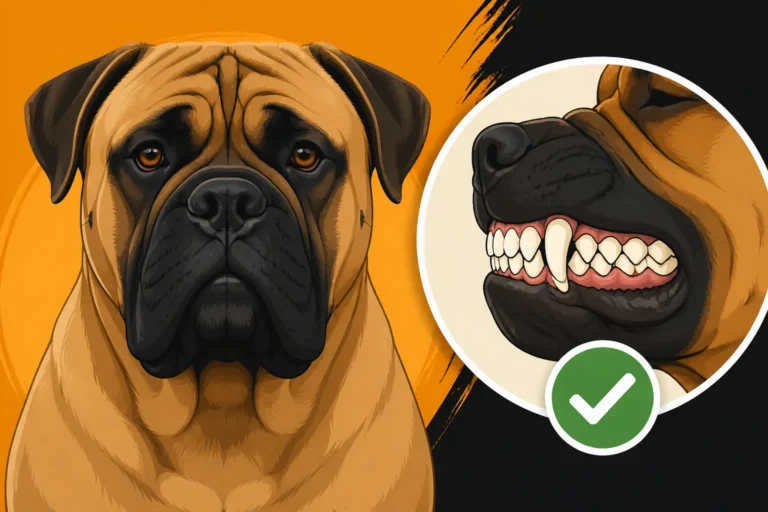
A black mask, covering the muzzle and often extending around the eyes, served to further break up the dog's facial features. In low light, the eyes and muzzle are often the most discernible parts of an animal's face. A dark mask effectively obscured these features, making the dog's expression and exact orientation harder to read from a distance. This contributed to the overall stealth, presenting a less defined, more menacing silhouette to an unsuspecting poacher.
The black mask also added to the imposing, serious demeanor of the Bullmastiff, a look that conveyed strength and purpose. It completed the picture of a dog built for business, a silent, powerful presence emerging from the shadows. It wasn't just a pretty marking; it was part of the whole package that made the Bullmastiff an effective guardian of game. You can find detailed descriptions of this feature in resources like The Black Mask Every Bullmastiff Must Have.
A Defining Feature of the Breed
Even as preferences shifted and fawn and red Bullmastiffs gained popularity, the black mask remained a mandatory characteristic of the breed standard. It is one of the most identifiable traits of a Bullmastiff, regardless of its primary body color. This speaks to its deep roots in the breed's history and its significance in defining the Bullmastiff's unique look. Whether the body is fawn, red, or brindle, that intense black muzzle and eye-rims are universally expected.
The strength of the mask's presence can even influence how a dog's primary color appears. A very strong, dark mask can make a fawn Bullmastiff appear more serious and formidable, tying it back to its dark-brindled ancestors. It's a testament to the consistency of breeding efforts that this feature has been so carefully preserved, even when other aspects of color preference have evolved. When considering a Bullmastiff puppy, reputable breeders will always emphasize the importance of a well-defined black mask, often checking for it even in young pups.
Modern Perspectives on Bullmastiff Color
Today, the reasons for choosing a Bullmastiff are far more diverse than simply needing a night dog for poaching. As a result, the emphasis on coat color has also evolved, balancing historical significance with modern aesthetics and genetic health.
Color in Today's Show Ring
In the modern show ring, all three accepted colors – fawn, red, and brindle – are judged equally, provided they meet the specific requirements of the breed standard. This means a dog's placement is based on its overall conformation, temperament, movement, and adherence to the standard's physical description, not just its color. Judges look for clear, rich colors, well-defined black masks, and strong pigmentation. While brindle is still admired for its historical connection, a well-structured, healthy fawn or red Bullmastiff is just as likely to win.
Breed standards are living documents that reflect both history and the current direction of a breed. While the gamekeeper's night dog needed to be dark brindle for survival, the modern Bullmastiff needs to embody the ideal physical and mental traits of its breed, which can come in various hues. It's a balance of honoring the past while allowing for healthy genetic diversity within the accepted color palette. Many modern breeders continue to track historical color trends and strive to produce dogs across the acceptable range, including beautiful brindles, as outlined by Which Colors the Bullmastiff Standard Accepts.
Pet Owners' Preferences and Genetic Health
For the average pet owner, personal preference often plays a significant role in choosing a Bullmastiff puppy's color. Some may gravitate towards the striking dark brindle, appreciating its historical roots and unique pattern. Others might prefer the warm, classic look of a fawn or the bold presence of a deep red. Regardless of color, the primary concerns for most discerning owners are health, temperament, and a reputable breeder who prioritizes these factors. A puppy from healthy, well-tempered lines is far more important than a specific shade of coat.
When looking for a Bullmastiff puppy, you'll see all these colors advertised by breeders. Ethical breeders focus on breeding healthy dogs with sound temperaments first and foremost, regardless of color. They will be transparent about the health screenings of their breeding stock and aim for overall excellence. While a puppy's color might draw you in, always prioritize meeting the parents, seeing the living conditions, and understanding the breeder's health guarantee. You can find a lot of essential supplies, from high-quality large breed puppy food to sturdy leashes and beds, on sites like Chewy, ensuring your new family member, whatever their color, has everything they need. It's worth remembering that a Bullmastiff's lifespan is relatively short, so focusing on health is paramount. The Median Bullmastiff Lives Eight and a Half Years highlights the importance of making every year count.
Bullmastiff Coat Colors: A Comparative Look
To illustrate the practical advantages of different coat colors in specific environments, let's consider a simple comparison:
| Coat Color | Visibility at Night (Historical Context) | Visibility in Daylight (Modern Context) | Historical Preference | Modern Popularity |
|---|---|---|---|---|
| Dark Brindle | Extremely Low (Excellent Camouflage) | Moderate (Striking Pattern) | High (Working Dog) | High |
| Fawn | High (Stands out in shadows) | Moderate (Classic, widely recognized) | Low (Not ideal for work) | Very High |
| Red | Moderate (Clear silhouette) | Moderate (Bold, strong presence) | Low (Not ideal for work) | High |
This table clearly shows why early gamekeepers made their choices. The darker colors were not just a fashion statement but a fundamental aspect of the Bullmastiff's success as a working animal. Today, while fawn and red are incredibly popular, the brindle still carries that rich history of stealth and purpose. When selecting a harness for your brindle Bullmastiff from, say, Chewy, you might even find yourself appreciating how the black straps blend with their natural pattern!
The Lasting Legacy of the Brindle Bullmastiff
The story of the dark brindle Bullmastiff is a powerful reminder that every aspect of a breed's development is often tied to its original purpose. The gamekeepers who created this formidable yet gentle giant meticulously selected for traits that would ensure its success in protecting their estates. The dark brindle coat was not merely an aesthetic choice; it was a tactical one, ensuring the dog could disappear into the shadows and fulfill its role as the silent guardian of the night.
While the Bullmastiff's role has largely transitioned from patrolling vast estates to guarding family hearths, its historical colors continue to tell a tale of dedication, purpose, and intelligent breeding. Whether you share your home with a striking dark brindle, a warm fawn, or a bold red Bullmastiff, you're welcoming a descendant of those noble "Gamekeeper's Night Dogs" into your life. Understanding their origins only deepens the appreciation for these magnificent animals.
Disclaimer
This article is for general informational purposes only and does not constitute professional advice. Laws, prices and regulations vary by location and change over time. Consult a qualified professional for guidance on your specific situation.