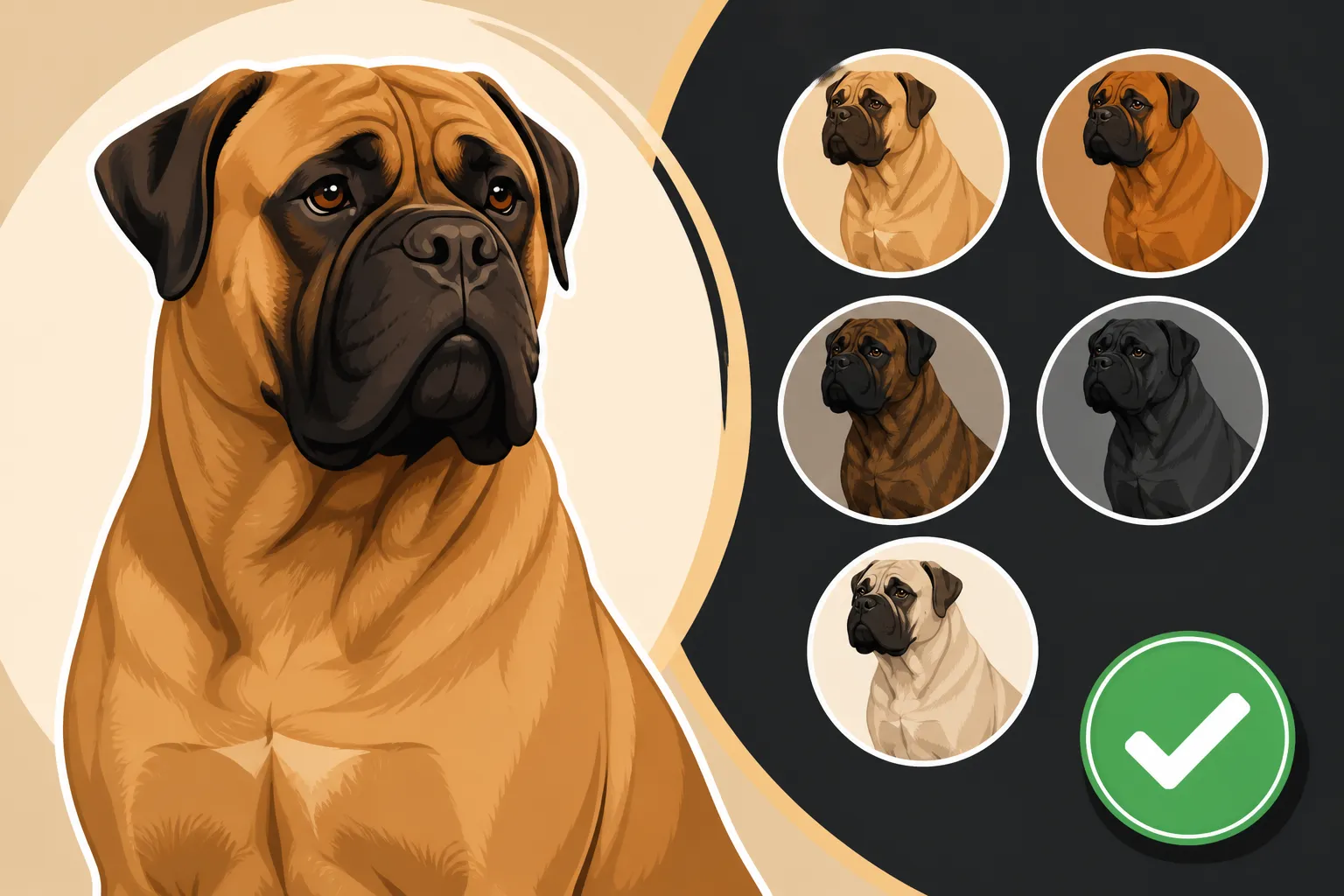
Which Colors the Bullmastiff Standard Accepts
A Bullmastiff’s accepted coat colors are easy to confuse with the black mask, dark brindle striping, and small white chest markings that can appear on some dogs. If you are comparing puppies or wondering whether your dog’s color fits the breed standard, this guide explains the recognized colors, how markings are treated, and what to ask a breeder or show official.
The three Bullmastiff colors accepted by the standard
Fawn, red, and brindle are the recognized colors
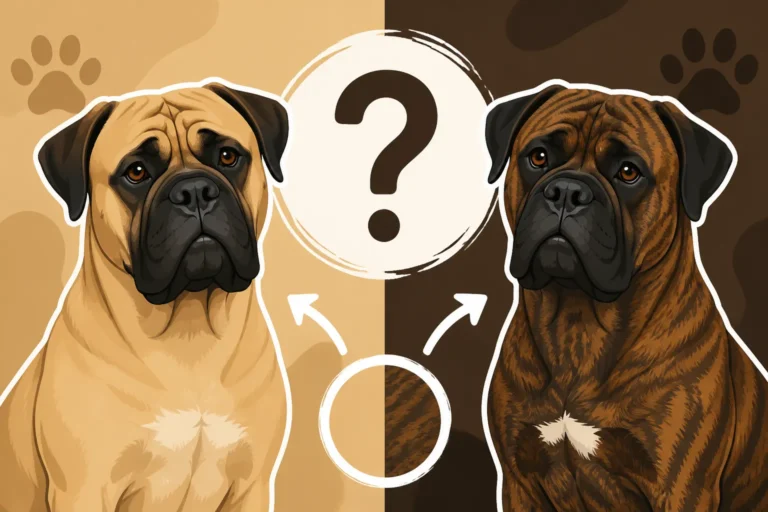
Bullmastiff standards generally recognize three coat colors: fawn, red, and brindle. The coat should look clear and characteristic of its color rather than mottled with unrelated shades. Standards can differ in their wording between kennel clubs, so if you plan to show a dog, check the rules of the registry where the dog will be entered.
Fawn ranges from a pale, sandy shade to a deeper golden tone. Red can appear from warm reddish-brown to a richer, darker red. Brindle is a striped pattern in which darker bands show over a lighter base coat. A brindle Bullmastiff may look quite dark at first glance, especially if the striping is close together, but the pattern is still brindle rather than a solid black coat.
These colors can look different under indoor lighting, in photographs, or as a dog’s coat changes with age. A fawn dog photographed in shadow may look much darker than the same dog standing outdoors. For more examples of how the three categories are described, see Fawn, Red or Brindle: the Only Colors a Bullmastiff Comes In and Which Colors a Bullmastiff Comes In.
| Standard color | What it generally looks like | Common point of confusion |
|---|---|---|
| Fawn | Light tan through deeper golden shades | A dark mask can make the face seem like a different coat color |
| Red | A richer reddish-brown shade | The shade may look brown or coppery in different lighting |
| Brindle | Dark stripes over a lighter base coat | Heavy striping can make the coat look nearly black from a distance |
The color name alone does not tell you whether a Bullmastiff is a good match for your home, or whether the dog comes from careful breeding. Health, temperament, structure, and the breeder’s practices matter much more than whether a puppy is a particularly dark red or strikingly patterned brindle.
Why a black mask does not make the coat black
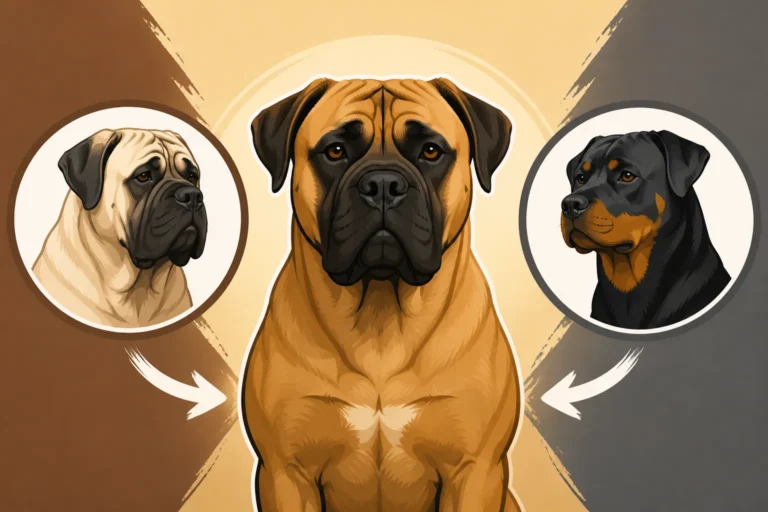
A black mask is a characteristic facial marking, not a fourth standard coat color. It covers the muzzle and may extend around the eyes, creating the dark facial expression associated with the breed. The mask can make a fawn or red dog’s face look dramatically darker than the rest of its body.
Brindle dogs also have the mask, but it can be less obvious against a dark face. People sometimes describe a dog as “black” when they are noticing the mask, dark brindle stripes, or the way the coat looks in shade. Look at the body coat in natural light and check whether lighter areas or brindle striping are present before assuming it is a solid black dog. The Black Mask Every Bullmastiff Must Have and What a Bullmastiff's Black Mask Should Look Like explain this feature in more detail.
The black mask is about appearance, not a sign of a dog’s temperament or guarding ability. A dramatic mask does not predict that a Bullmastiff will be more protective, and a lighter-looking mask does not mean the dog is less typical as a companion. Color is only one small part of the breed picture.
How white markings and unusual colors are treated
A small white chest mark is different from a white coat
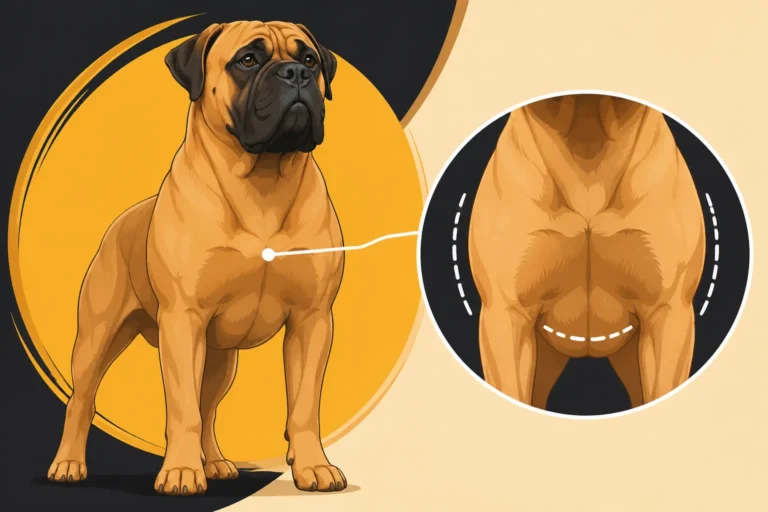
A small white mark on the chest is permitted in some Bullmastiff standards. That allowance does not mean white is a recognized overall coat color. A Bullmastiff with a fawn, red, or brindle body and a modest chest marking is very different from a mostly white dog.
The exact treatment of white markings can depend on the registry’s wording. If you are considering conformation showing, ask the breeder which standard they are using and have them explain how the marking would be evaluated. A pet owner may care more about the dog’s health and personality than a minor marking, while a show prospect is judged against specific written requirements.
People also tend to overinterpret a small patch in puppy photos. A white spot can be hard to see beneath a curled puppy or in a low-quality picture. Ask for clear photographs of the puppy standing and, if the marking matters to you, ask the breeder to describe its size and location. For a closer look at what markings may mean in the ring, read Whether White Markings Disqualify a Bullmastiff.
Black, white, blue, and other advertised shades
A solid black Bullmastiff is not one of the three standard colors. A dog marketed as “black” may actually be a very dark brindle, or it may not be a purebred Bullmastiff. The same caution applies to advertisements for unusual shades such as blue, lilac, or merle: those are not among the standard Bullmastiff colors.
This does not automatically tell you everything about a dog’s ancestry. A color description in an online listing is not proof of a particular breed or a cross. Ask for pedigree information, registration details where applicable, and health information for the parents. Be cautious if a seller focuses heavily on a rare color while providing little information about health screening, temperament, or the dogs’ living conditions.
White is not a standard Bullmastiff coat color either, though a small white chest marking may be allowed. If a listing calls a mostly white dog a “rare white Bullmastiff,” do not let the word rare substitute for clear documentation. Whether a Bullmastiff Can Be Black and Whether a Bullmastiff Can Be White cover these questions from the buyer’s perspective.
Brindle can look almost black without being a solid black coat
Brindle can be especially confusing because the dark stripes may cover much of the dog’s body. In some lighting, the lighter background is subtle, and the overall coat can seem nearly black. Look closely along the shoulders, sides, and legs, where the contrast between stripes and base color may be easier to see.
Brindle patterns vary. The stripes may be fine or broad, widely spaced or close together, and the base color may be lighter or deeper. Those variations are part of how brindle appears; they do not create a separate standard color category. The history of the pattern is also closely tied to the breed’s development, as discussed in Why Brindle Was the Original Bullmastiff Color.
How Bullmastiff coat color can change as a puppy grows
Puppy photos do not always show the adult shade
A young Bullmastiff’s coat can appear to shift as the puppy matures. The adult coat may look richer, lighter, or more defined than it did in early photographs. Brindle contrast can become easier to notice as the coat develops, while a puppy’s face and mask may also look different as its features grow.
Photographs make these changes harder to judge. Camera exposure, indoor lighting, phone filters, and the color of the floor or wall can all alter how fawn or red appears. If you are choosing between puppies, ask for recent pictures taken in ordinary daylight rather than relying on a heavily edited image or a single photo from a breeder’s website.
A color change does not automatically indicate a problem. Still, sudden changes in the skin or coat—such as patchy hair loss, redness, persistent itching, or a new discolored area—are different from normal variation in coat shade and are worth discussing with a veterinarian. For puppy-to-adult color development, see How a Bullmastiff Puppy's Color Changes.
Color does not predict character, health, or quality
It is tempting to connect a striking brindle pattern or particularly deep red coat with a stronger, healthier, or more desirable dog. That is not a sound way to evaluate a Bullmastiff. Coat color does not tell you whether the puppy has been well socialized, whether the parents have had appropriate health evaluations, or whether the dog’s temperament suits your household.
Instead, ask to meet the mother if possible, learn how the puppies are being raised, and request relevant health records for the parents. A responsible breeder should be willing to discuss the dogs’ health and behavior without making color the centerpiece of the conversation. What a Bullmastiff's Black Mask Should Look Like can help you distinguish a defining breed feature from assumptions about what that feature means.
Choosing and caring for a Bullmastiff coat
Questions to ask when a puppy’s color matters to you
If you have a preference for fawn, red, or brindle, it is reasonable to ask a breeder what colors are expected in a litter. Just keep the question in perspective. A breeder may be able to describe the parents’ coats and likely patterns, but a puppy’s final appearance can be difficult to judge from an early photo.
Useful questions include:
- Which registry’s breed standard do you follow?
- How would you describe each puppy’s color and markings?
- Can you share current photographs in natural light?
- Are the puppies registered as Bullmastiffs, and can you explain the pedigree?
- What health evaluations have been completed for the parents?
- How are the puppies being socialized and cared for?
A careful breeder should answer without pressuring you to pay more for an allegedly rare shade. If the seller’s main selling point is an unusual color, ask the same questions you would ask of any breeder and make your decision based on the whole dog and the breeding program.
Everyday coat care is much the same across colors
Fawn, red, and brindle Bullmastiffs have short coats, but short does not mean no maintenance. Routine brushing helps lift loose hair and gives you a chance to check the skin for irritation, small lumps, or scratches. A grooming mitt or soft brush may be enough for many dogs; choose a tool that feels comfortable on your dog’s skin rather than one marketed as a color-enhancing treatment.
If you are browsing supplies through a retailer such as Chewy, focus on the brush’s intended use and whether its texture suits a short coat. Color-safe shampoos or dyes are not needed to make a Bullmastiff’s natural coat fit the standard. A bath is for cleanliness, not for changing a fawn coat into a deeper red or making brindle stripes more pronounced.
Brindle coats can make loose pale hairs more noticeable on dark furniture, while darker hairs may stand out on light upholstery. A regular brushing routine and washable covers can help keep everyday shedding manageable. If you use Chewy to look for basic grooming tools, compare the product descriptions with your dog’s coat and skin needs rather than relying on claims about changing coat color.
A Bullmastiff’s facial folds and lips also deserve routine attention, especially if moisture or food residue collects there. Wipe gently as needed and dry the area rather than leaving it damp. Chewy may carry ordinary grooming supplies such as soft cloths or dog-safe wipes, but avoid using scented household products or anything that irritates your dog’s skin.
What matters most when the color is not show-standard
For a family companion, a coat marking that does not meet a show standard is not, by itself, a measure of affection, trainability, or suitability as a pet. A dog with a nonstandard color or marking may still be a treasured companion. The key is to understand what the breeder is representing, get accurate records, and avoid paying a premium based solely on a claim of rarity.
For show participation, standards matter more. A dog may be eligible for everyday life as a Bullmastiff while a color or marking affects its assessment in conformation. If the distinction matters to you, check the relevant registry’s written standard and consult an experienced breed mentor or show official before making assumptions based on internet photos.
Ultimately, the standard colors are fawn, red, and brindle, with a black mask as a defining feature and a small chest marking allowed under some standards. Once you know those basics, it becomes easier to spot misleading color claims and focus on the questions that matter for the dog’s lifelong well-being.
Disclaimer
This article is for general informational purposes only and does not constitute professional advice. Laws, prices and regulations vary by location and change over time. Consult a qualified professional for guidance on your specific situation.