Why Brindle Was the Original Bullmastiff Color
It's quite a fascinating journey when you dig into the history of our beloved Bullmastiffs, especially when you start wondering about their origins and why certain traits, like coat color, became prevalent. For many Bullmastiff owners, the fawn coat with its striking black mask is the iconic look, almost synonymous with the breed. But did you know that the fawn we see so much today wasn't always the primary or even preferred color for these powerful guardians? In fact, the original Bullmastiffs, those brave dogs bred for a very specific and dangerous job, were almost exclusively brindle. This choice wasn't about fashion or personal preference; it was about survival, purpose, and blending seamlessly into the shadowy world they inhabited. This guide will explore the deep historical roots behind the brindle Bullmastiff and how this protective camouflage became the breed's foundational color.
The Genesis of the Bullmastiff: A Night Watchman's Companion
To truly understand why brindle was the original Bullmastiff color, we need to transport ourselves back to 19th-century England, to the vast estates and game preserves that were often plagued by poachers. The creation of the Bullmastiff was a direct response to a very real, very dangerous problem.
The Urgent Need for a Poacher's Dog
Imagine expansive woodlands and fields, rich with deer and game birds, representing a landowner's wealth. These estates were prime targets for poachers, often desperate and dangerous individuals looking to illegally harvest game. The gamekeepers, whose job it was to protect these assets, found themselves in a constant battle of wits and strength. They needed a dog that could track silently, hold an intruder without mauling them, and most importantly, remain undetected in the dark of night. The existing breeds weren't quite cutting it. The old English Mastiff was powerful, yes, but perhaps a bit too slow and conspicuous for silent night work. Bulldogs of the era, while tenacious, lacked the sheer size and speed for covering large tracts of land.
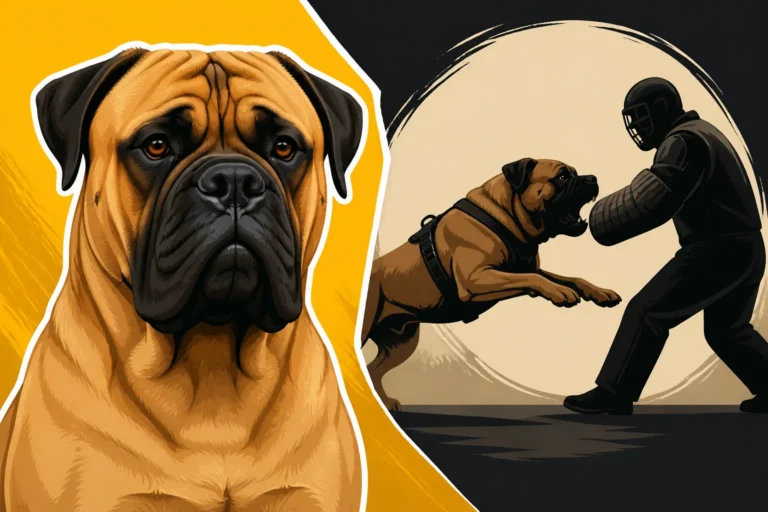
This dire need sparked the intentional breeding program that would eventually give us the Bullmastiff. Gamekeepers began to cross Mastiffs with Bulldogs, aiming for a hybrid that combined the Mastiff's bulk and guarding instinct with the Bulldog's tenacity, agility, and powerful bite. The goal was a "Gamekeeper's Night Dog" – a formidable, intelligent, and above all, covert companion. This new breed needed to be a shadow, an unseen force that could surprise and apprehend. The aesthetics of the dog were secondary to its function. The Bullmastiff Was Built to Catch Poachers in the Dark is a testament to this foundational purpose.
Blending Brawn and Stealth
The vision for the Bullmastiff was a dog that could navigate the dark, often densely wooded landscape without giving away its position until it was too late for the poacher. This meant an animal that wasn't just quiet and agile for its size, but also visually indistinct in low light. A large, lighter-colored dog would stand out like a beacon under moonlight or against the dim outlines of trees. What was needed was a coat that would absorb shadows, break up the dog's outline, and make it virtually disappear until it was upon its target.
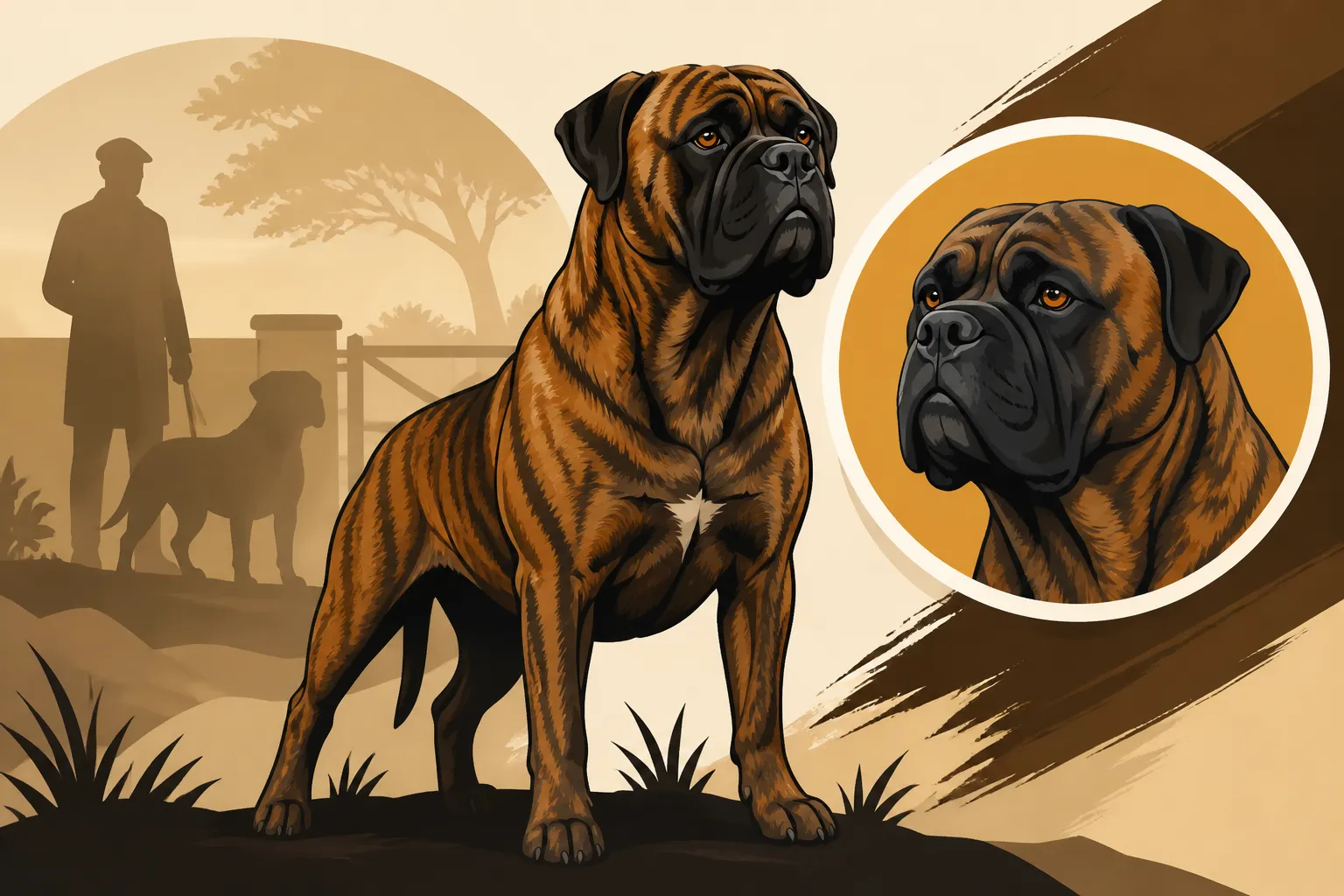
This requirement for stealth directly influenced the preference for brindle coats. Brindle, with its tiger-stripe pattern of dark and lighter streaks, is a master of camouflage. In the shifting light and shadows of a forest at night, a brindle dog's outline is broken up, making it incredibly difficult to spot. This wasn't just a slight advantage; it was a critical component of the Bullmastiff's effectiveness. The ability to approach a poacher silently and unseen was paramount, allowing the dog to close the distance and execute its holding task with maximum surprise and minimal risk to the gamekeeper.
Brindle: The Camouflage of Choice for Night Patrols
The choice of brindle wasn't accidental; it was a deliberate and highly effective tactic employed by the gamekeepers who first envisioned and developed the Bullmastiff. This pattern wasn't just pretty; it was part of their working uniform.
Blending into the Victorian Landscape
Imagine a Victorian-era estate at night. No streetlights, no glaring floodlights, just the soft glow of a distant farmhouse, the faint shimmer of moonlight filtering through dense tree canopies, or perhaps the oppressive darkness of a moonless night. In such an environment, solid colors, especially lighter ones, would create a distinct silhouette. A fawn dog, while beautiful, would have been a visible target, easily spotted by a wary poacher scanning the perimeter.
Brindle, on the other hand, excels at disruption. The irregular stripes and patches of dark and light hairs break up the dog's form, making it appear less like a solid object and more like a part of the uneven, shadowy terrain. Think of dappled sunlight through leaves, or the textured bark of old trees; a brindle coat mimics these natural patterns perfectly. This natural camouflage allowed the Bullmastiff to move silently and remain undetected until the crucial moment of apprehension. It was a dog-shaped shadow, an indistinct menace that emerged from the gloom. For the gamekeepers, selecting brindle-coated dogs for breeding wasn't merely a preference; it was a strategic choice for maximum operational effectiveness.
Beyond Aesthetics: Practicality in the Field
While we might appreciate a dog's coat for its beauty today, for the early Bullmastiff, it was a piece of essential equipment. The practicality of a brindle coat extended beyond just visual camouflage. The hard, short coat characteristic of the Bullmastiff, regardless of color, was also practical for working in rugged outdoor environments, resisting burrs and dirt, and being relatively easy to maintain. But the color itself was the true advantage.
Consider the mental aspect for a poacher. If they knew a large, silent, powerful dog was patrolling, the element of surprise was the gamekeeper's greatest weapon. A dog that could suddenly materialize out of the darkness, apprehending them before they even knew it was there, instilled a far greater deterrent than one they could spot from a distance. The brindle pattern contributed significantly to this psychological advantage. It turned the Bullmastiff into a ghostly presence, a silent enforcer emerging from the very fabric of the night. This functional aspect was so vital that early breeders prioritized the brindle color, recognizing its undeniable value in the Bullmastiff's primary role. This focus on utility over mere appearance is a hallmark of many working breeds.
The Mastiff and Bulldog Influence on Early Bullmastiff Colors
The Bullmastiff's coat colors, particularly the early prevalence of brindle, are a direct inheritance from its foundational breeds: the English Mastiff and the Old English Bulldog. Understanding their genetic contributions is key to tracing the Bullmastiff's visual identity.
Tracing the Ancestral Coat Patterns
When gamekeepers set out to create the Bullmastiff, they weren't just looking for physical traits like size and strength; they were also inadvertently selecting for genetic predispositions in coat color. The parent breeds offered a palette from which the Bullmastiff's early appearance would be drawn.
The Mastiff, a truly ancient breed, has always come in a range of colors, including fawn, apricot, and indeed, brindle. The brindle pattern has a long history within the Mastiff lines, making it a readily available trait to pass on. The Old English Bulldog, while visually different from its modern descendant, also carried a variety of coat colors, with brindle being quite common and prized for its tough, no-nonsense appearance. The combination of these two breeds, both of which had strong brindle genetics in their populations, naturally meant that a significant number of their offspring would display the brindle pattern. This wasn't a mutation; it was a reliable outcome of combining two breeds known for carrying the brindle gene. This intermixing of specific types of dogs is why The Bullmastiff Is Sixty Percent Mastiff and Forty Percent Bulldog.
The Role of Genetics in Breed Development
Genetics play a profound role in how a breed develops, and coat color is a prime example. The brindle pattern is typically governed by a dominant gene, meaning that if a dog inherits even one copy of the brindle gene, it will express the brindle pattern. This made it relatively easy for early breeders to consistently produce brindle offspring when breeding Mastiffs and Bulldogs that carried the gene.
Breeders, even those without a formal understanding of Mendelian genetics, observed that "like produced like." If they bred two brindle parents, or a brindle parent with one carrying the brindle gene, they were very likely to get brindle puppies. This predictability, combined with the functional benefits of the color for night work, made brindle an obvious and desirable trait to perpetuate. While other colors would have appeared in litters (fawn, red), the brindle pups would have been the most prized for their intended role. This is also why many breed standards, when they were eventually formalized, would originally list brindle as a key, or even the sole, acceptable color, recognizing its historical significance and practical value. When the Kennel Club Recognized the Bullmastiff, the standards reflected these early preferences.
The Evolution of Bullmastiff Color Preferences Over Time
While brindle held an undeniable practical advantage and historical significance for the early Bullmastiff, breed preferences rarely remain static. As the breed transitioned from a pure working dog to a companion and show dog, other colors began to gain traction.
From Function to Form: The Rise of Fawn
As the rigid requirements of gamekeeping began to wane with changing laws and societal structures, the Bullmastiff's role evolved. It transitioned from a pure "Gamekeeper's Night Dog" to a cherished family guardian and a contender in the show ring. With this shift, the emphasis moved slightly from pure utility to a combination of temperament, conformation, and aesthetics. Suddenly, a fawn coat, which might have been a liability in the dark woods, became a striking and elegant feature under the bright lights of a show ring or in a suburban backyard.
Fawn Bullmastiffs, always present in the gene pool due to the Mastiff ancestry, began to gain popularity. Their solid, often rich golden-tan color, particularly when paired with the iconic black mask, presented a very noble and distinguished appearance. Breeders and the public alike started to appreciate this color for its beauty. The fawn coat also offered a stark canvas for the powerful musculature and impressive head of the Bullmastiff to stand out. This preference shift wasn't a rejection of brindle's history, but rather an expansion of appreciation for the breed's diverse aesthetic possibilities. You can often find a variety of coat colors represented when searching for Bullmastiff-related items on sites like Chewy, reflecting today's broader acceptance.
The Enduring Place of Brindle in the Standard
Despite the rise in popularity of fawn and red coats, brindle has never lost its official recognition or its place of honor within the Bullmastiff breed standard. It remains one of the three officially accepted colors, alongside fawn and red. This continuity is a direct nod to the breed's foundational purpose and its history. While perhaps not as numerically dominant in current show rings as fawn, brindle continues to be bred and appreciated by enthusiasts who value the breed's heritage.
The brindle pattern serves as a living reminder of the Bullmastiff's origins as a silent guardian of the night. It connects the modern Bullmastiff back to those courageous dogs who patrolled lonely estates, protecting game and deterring poachers. For many purists and those deeply knowledgeable about the breed's history, a brindle Bullmastiff embodies the true spirit of its ancestors. The pattern, often referred to as "tiger brindle" or "reverse brindle" depending on the density of the dark stripes, offers a unique beauty that still captures the imagination of many. Its permanence in the standard ensures that a piece of the Bullmastiff's unique working past remains visible today.
Understanding Bullmastiff Coat Colors Today
Today's Bullmastiff owners have a choice of beautiful, distinctive coat colors, each with the hallmark black mask. While personal preference plays a huge role, understanding the accepted colors and their genetic underpinnings helps appreciate the breed even more.
The Accepted Colors of the Modern Bullmastiff
The official breed standards for the Bullmastiff generally recognize three primary coat colors: fawn, red, and brindle. Each of these colors, crucially, must be accompanied by a black mask. This mask, extending around the muzzle, eyes, and often covering part of the ears, is a non-negotiable trait, defining the breed's classic expression. What a Bullmastiff's Black Mask Should Look Like is just as important as the body color.
- Fawn: This color ranges from a very light, sandy fawn to a deeper, more golden hue. It is arguably the most common color seen today and is incredibly popular. The contrast between the light body and the strong black mask is particularly striking.
- Red: A rich, deep reddish-brown, often described as a vibrant auburn. Red Bullmastiffs carry a commanding presence, and this color also provides a strong contrast to the black mask.
- Brindle: As discussed, brindle consists of a patterned overlay of dark stripes over a lighter background (which can be fawn or red). This creates a striking, sometimes subtle, "tiger-stripe" effect. The intensity and density of the stripes can vary greatly from dog to dog.
Beyond these accepted colors, any other coat color or pattern (such as black, white, or merle) is considered a disqualifying fault in the show ring and is not characteristic of the purebred Bullmastiff. These specific color guidelines ensure the preservation of the breed's traditional appearance and genetic integrity. You can see many examples of Which Colors a Bullmastiff Comes In by looking at photos of champions and working dogs.
| Accepted Bullmastiff Coat Colors | Description | Historical Significance | Modern Popularity |
|---|---|---|---|
| Brindle | Dark stripes on a fawn or red base | Original camouflage for night work | Moderate |
| Fawn | Light tan to golden-tan | Emerged as popular aesthetic as role shifted | High |
| Red | Rich reddish-brown, often deep auburn | Also became popular for its striking appearance | High |
Note: All accepted colors must have a distinct black mask.
Why Brindle Remains a Revered Option
While fawn might dominate in terms of sheer numbers, brindle holds a special place in the hearts of many Bullmastiff aficionados. It's not just a color; it's a testament to the breed's robust origins and its unique history. For those who appreciate the story behind the dog, a brindle Bullmastiff carries an air of authenticity, a direct link to the brave "gamekeeper's night dog."
Furthermore, a well-defined brindle pattern is genuinely beautiful and eye-catching. The varying intensity of the stripes can create a dynamic and powerful look that stands out in a crowd. It's a coat that speaks of strength and wildness, while still framing the gentle, loyal eyes of a devoted companion. Many breeders dedicated to preserving the historical accuracy and genetic diversity of the breed continue to champion brindle lines. Whether you're considering a brindle, fawn, or red Bullmastiff, understanding the story of their coats only deepens the appreciation for these magnificent dogs. Regardless of color, proper care, including good nutrition and comfortable bedding found on Chewy, is essential for a Bullmastiff's long-term health. The practical needs of grooming What a Bullmastiff's Coat Should Feel Like are the same across all colors; a good brush is always handy.
Disclaimer
This article is for general informational purposes only and does not constitute professional advice. Laws, prices and regulations vary by location and change over time. Consult a qualified professional for guidance on your specific situation.