Whether a Bullmastiff Cross Keeps the Short Lifespan
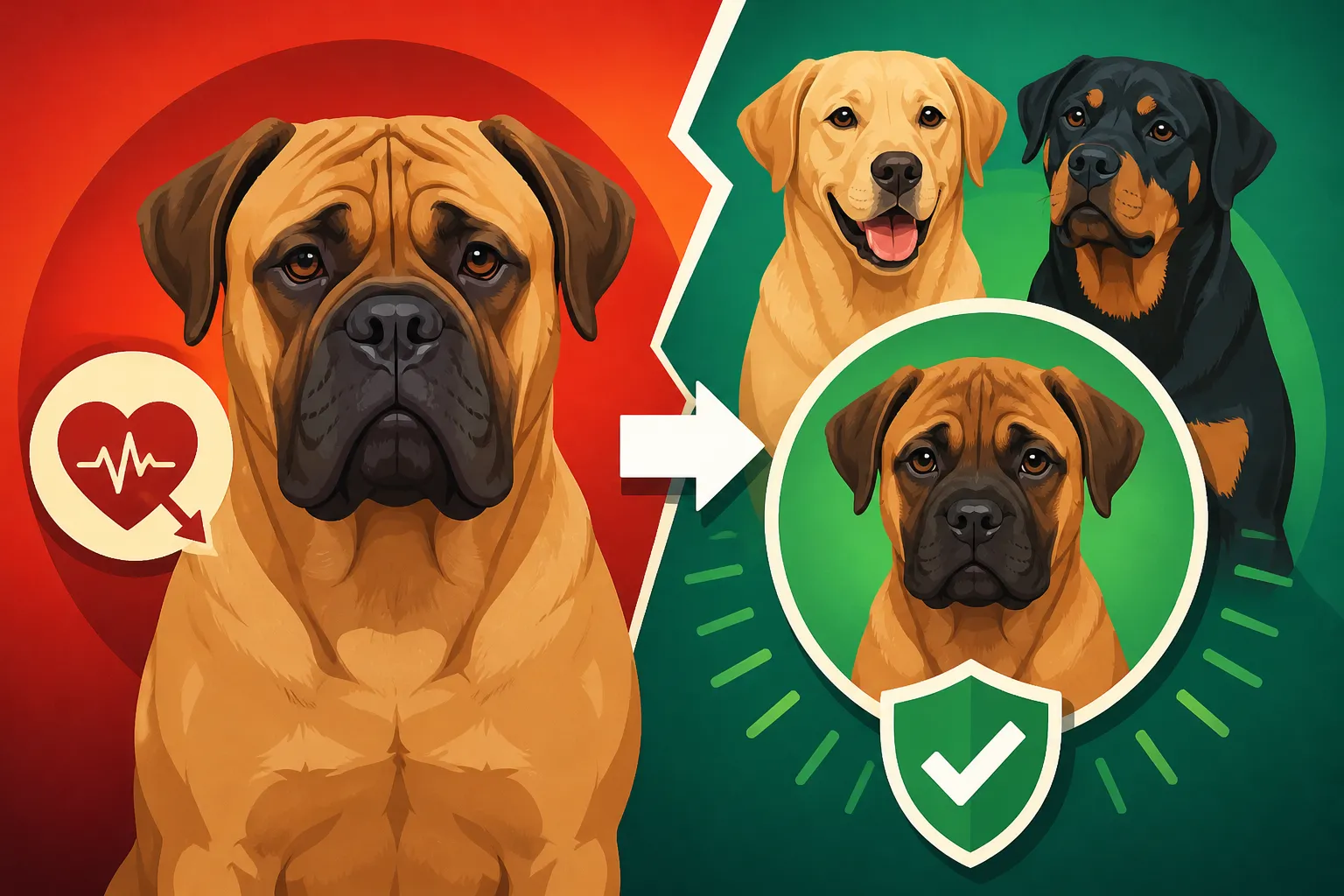
A Bullmastiff cross may live longer than a purebred Bullmastiff, but the mix alone does not promise extra years. The result depends on which breed is in the cross, the dog’s inherited health risks, adult size, and everyday care. This guide explains what a mixed pedigree can and cannot tell you—and how to assess an individual dog more realistically.
Does a Bullmastiff cross keep the breed’s shorter lifespan
A cross does not come with a guaranteed lifespan
Bullmastiffs are large dogs, and large size is one reason the breed’s typical lifespan is shorter than that of many smaller dogs. A Bullmastiff cross may inherit the breed’s build, growth pattern, and some health risks even if one parent belongs to a breed with a longer average lifespan. On the other hand, the dog may inherit a smaller frame or a different combination of genes. There is no dependable rule that says a cross will land halfway between the two parent breeds.
That uncertainty is why the label “mixed breed” is not enough to predict how long an individual dog will live. Two puppies from the same litter can inherit different combinations of traits, and a cross with a large, short-lived breed may face some of the same broad challenges as a purebred Bullmastiff. A smaller cross could have a different outlook, but size alone does not settle the question.
For a broad benchmark, see How Long a Bullmastiff Lives on Average and The Median Bullmastiff Lives Eight and a Half Years. Those figures describe a population, not a countdown for a particular dog. An individual may live less or more time, and a cross should not be assigned a precise lifespan estimate based only on its breed mix.
Genetic diversity may help, but it is not a shield
Crossbreeding can increase genetic diversity, and in some circumstances that may reduce the chance that a puppy inherits two copies of a harmful recessive variant. But the benefit depends on the actual parents and the diseases involved. If both parents carry the same risk, or if a health problem is influenced by many genes and environmental factors, crossing breeds does not make that problem disappear.
It is also possible for a cross to inherit health risks from both sides. For example, one parent may contribute a large, heavy build while the other contributes its own inherited heart, joint, or cancer risks. A cross can be healthy, but “hybrid vigor” is not a personal health guarantee, nor does it automatically extend life.
For that reason, Whether Mixed Breeding Adds Years to a Bullmastiff and Whether a Bullmastiff Mix Is Healthier are best understood as questions about probability, not a promise of extra years. The most useful clues are the health and ages of close relatives, the dog’s physical traits, and veterinary findings—not the word “cross” by itself.
What influences a Bullmastiff cross’s expected lifespan
The other breed and the dog’s adult size matter
A cross with a smaller breed may grow into a dog that is lighter and less bulky than a purebred Bullmastiff. That can change practical considerations, including how much strain the dog’s joints experience and how much food or medication it needs. Still, adult size is only one factor. A smaller dog can inherit serious disease risks, while a large dog can remain active and well cared for into old age.
The identity of the other breed matters because it helps identify which inherited conditions might be relevant. A cross with a breed that has its own known heart, joint, breathing, or cancer concerns may need attention to those risks as well as Bullmastiff-associated ones. If a dog’s background is uncertain, avoid treating a guessed breed mix as a diagnosis. The vet can focus on the dog in front of them and recommend checks based on its examination and history.
If you’re comparing a cross with a purebred Bullmastiff, think in terms of a range rather than a formula. A Bullmastiff crossed with a smaller dog is not automatically expected to live a specific number of years longer. A Bullmastiff crossed with another giant breed may remain large and may retain many of the same size-related considerations.
Family health history is more useful than a breed label
When a breeder or rescue can provide reliable history, ask about the parents and close relatives. How old did they live? What conditions were diagnosed? Were there sudden deaths, repeated joint problems, or cancers among relatives? Answers may be incomplete, but a candid history is more useful than a claim that a cross is “healthier by nature.”
For a puppy from a breeder, ask what health evaluations were performed on both parents and whether the results can be reviewed. The exact screening needs depend on the breeds involved. What a Bullmastiff Breeder Should Have Screened is a helpful starting point for understanding why screening matters on the Bullmastiff side; the other parent’s breed should be considered separately.
For an adult rescue dog, ask for veterinary records, previous diagnoses, medication history, and any information about the parents if it is known. Records cannot reveal everything about the future, but they can prevent avoidable surprises. If the dog has no known history, a thorough initial exam gives your veterinarian a baseline for future comparisons.
| Clue | What it may tell you | What it cannot tell you |
|---|---|---|
| The other breed in the cross | Which additional inherited risks may be relevant | The exact lifespan of this dog |
| Adult size and build | Whether the dog may face some size-related strain | Whether disease will or will not develop |
| Parent and relative health history | Patterns that may deserve discussion with a vet | A guarantee that the dog will have the same outcome |
| Veterinary exam and records | Current health findings and a starting baseline | Everything that may happen later |
| Lean body condition and regular care | Factors owners can often influence | A way to eliminate inherited risks |
How to assess a particular cross realistically
Look beyond the puppy’s appearance
A puppy can look robust, energetic, and healthy while still carrying an inherited risk that does not show up until later. Conversely, a puppy that is a little gangly during a growth phase is not necessarily unhealthy. Appearance offers clues about size and structure, but it cannot replace health history or veterinary care.
If you are choosing a puppy, ask for clear information about both parents rather than accepting a broad assurance that “mixes are healthier.” Find out whether the parents have had appropriate health checks, what conditions have appeared in their families, and what support the breeder offers if a health concern develops. Which Tests the American Bullmastiff Association Asks For can help explain the importance of breed-specific screening, though the needs of a cross also depend on the other parent breed.
With a rescue dog, focus on the information that is available now. A known adult dog’s current size, mobility, behavior, exam findings, and medical records can make planning more concrete than trying to infer a lifespan from a guessed mix. If the dog has a history of unexplained weight change, persistent lameness, new lumps, or reduced stamina, describe those changes to a vet rather than assuming they are simply part of getting older.
Ask the veterinarian about risks, not a prediction
It is natural to want a number. People often ask because they are trying to prepare emotionally and financially, not because they expect anyone to predict the future perfectly. A veterinarian usually cannot calculate a reliable lifespan for an individual dog from its breed mix. They can, however, help identify current health concerns, discuss screening, and set a sensible plan for monitoring.
Bring the dog’s adoption or breeder records, a list of known family conditions, and questions about its body condition and activity. For a young, rapidly growing dog, ask how to support steady growth and maintain a healthy weight. For an adult, ask which changes should prompt a recheck and how often routine exams make sense for that dog’s age and health.
It can help to track practical details at home: weight, appetite, mobility, energy, and any new lumps or persistent changes. A simple dated note is often more useful at an appointment than trying to remember when a symptom first appeared. If you are trying to understand the breed’s broader health patterns, What Most Bullmastiffs Die Of offers additional context, but it should not be treated as a prediction for a cross.
What owners can do to support a longer, healthier life
Keep the dog lean and make care consistent
You cannot control a dog’s inherited genes, but you can influence many everyday conditions. Maintaining a healthy body condition is especially important for a large dog: extra weight can add strain to joints and make activity harder. Ask your veterinarian to show you how to assess body condition rather than relying only on a number on the scale. Whether a Leaner Bullmastiff Lives Longer explores why weight deserves attention.
Choose food appropriate to the dog’s age, size, and health, and make changes gradually unless a veterinarian advises otherwise. If you shop at Chewy or another retailer, focus on matching the food and feeding plan recommended for your dog rather than selecting a product based on a broad “large breed” or “mixed breed” label alone. For a dog with a medical condition, ask the clinic before changing to a special diet or adding supplements.
Regular, moderate activity can help maintain mobility and fitness, but the right amount depends on the dog’s age, health, and build. A young dog still growing may need different limits from a healthy adult, while a dog with joint pain may benefit from a tailored plan. Rest, comfortable footing at home, and avoiding repeated high-impact exercise can also make daily movement easier.
Notice changes and keep routine veterinary care
A dog’s care should change as it ages. A sudden change in appetite, breathing, energy, movement, or body weight is worth discussing with a vet, especially if it persists or worsens. A newly noticed lump should also be assessed rather than judged by touch or appearance alone. Early investigation does not guarantee a particular outcome, but it can help clarify what is happening and what choices are available.
Keep preventive visits on the calendar, and ask what tests are appropriate for this dog rather than assuming every cross needs the same schedule. If you use Chewy for routine supplies, make a note of recurring medications or diet needs so that a missed refill does not interrupt the veterinarian’s plan. For prescription products, follow the clinic’s directions and confirm any changes with the prescribing professional.
When a dog develops a chronic condition, quality of life matters alongside lifespan. Talk through comfort, mobility, appetite, pain control, and the dog’s enjoyment of ordinary activities. Chewy may be one place owners look for practical comfort supplies, but equipment and supplements should fit the dog’s needs and should not replace veterinary assessment. A thoughtful plan is about helping the dog feel well, not chasing an exact age.
The most honest answer is that a Bullmastiff cross can inherit some of the breed’s shorter-lifespan tendencies, but its mix does not determine its whole future. The other parent, adult size, family history, current health, and daily care all contribute. Treat breed information as context, gather the best health history you can, and work with a veterinarian to make decisions for the individual dog.
Disclaimer
This article is for general informational purposes only and does not constitute professional advice. Laws, prices and regulations vary by location and change over time. Consult a qualified professional for guidance on your specific situation.