Where a Bullmastiff’s Swollen Nodes Are Felt First
Finding a mysterious lump or a swollen area on your beloved Bullmastiff can send a shiver of dread down any dog owner's spine. It's a natural reaction to worry, especially with a breed prone to certain health challenges. This guide is here to walk you through the crucial task of feeling for your Bullmastiff's lymph nodes, focusing on where these vital immune system components are most likely to swell first, offering peace of mind or prompting timely veterinary action.
Understanding Your Bullmastiff's Lymph Nodes
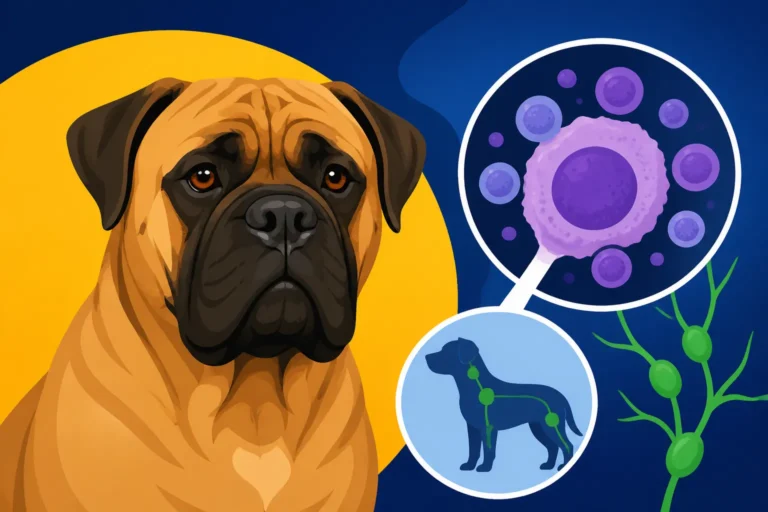
Before we dive into where to feel, it's really helpful to understand what you're feeling for and why it matters so much for our big, wonderful dogs. Lymph nodes are tiny, bean-shaped organs that play a huge role in your Bullmastiff's immune system. Think of them as little filter stations, trapping bacteria, viruses, and even cancer cells as lymph fluid circulates through the body.
What Lymph Nodes Are and Why They Swell
Normally, your Bullmastiff's lymph nodes are quite small – often no bigger than a pea, sometimes a bit larger in areas like under the jaw – and they're usually soft and movable beneath the skin. You might not even notice them unless you're really looking. Their job is to produce and store lymphocytes, a type of white blood cell essential for fighting off infections and diseases. When your Bullmastiff's body is battling something, whether it's a minor infection, inflammation, or something much more serious like cancer, these nodes spring into action. They swell as they work overtime, filling with immune cells trying to combat the threat. This swelling is your body's way of telling you something isn't quite right.
For a Bullmastiff, whose stoic nature often means they hide pain or discomfort until a condition is quite advanced, feeling for these changes becomes even more critical. You might not see other obvious signs of illness initially. A swollen lymph node might be the first, and sometimes only, early warning sign that something serious, such as lymphoma, is brewing. This is why knowing what to look for, and where, is so incredibly important for their health and longevity. It's not about being a vet yourself, but about being an informed, proactive owner.
The Importance of Regular Checks
Making a routine of checking your Bullmastiff's lymph nodes is one of the most proactive things you can do for their health. Our dogs can’t tell us when they feel unwell, and Bullmastiffs, in particular, are notorious for their tough-guy exterior, often masking symptoms until they become severe. By regularly, say once a month, giving your dog a good head-to-tail palpation, you become intimately familiar with what feels "normal" for your individual dog. This allows you to spot any deviations quickly. Imagine you're just giving them a good scratch or a loving pat, but with purpose. You're not just bonding; you're performing a vital health check.
Early detection of swollen lymph nodes can make a monumental difference in the outcome of many conditions. For instance, if you catch a potentially cancerous node early, before it has the chance to spread widely, treatment options might be more numerous and more effective. This is especially true for aggressive cancers like lymphoma, which, unfortunately, Lymphoma Kills More Bullmastiffs Than Anything Else among other health issues. When you consider the average lifespan of a Bullmastiff, every extra bit of vigilance counts. Getting into this habit means you’re not just hoping for the best; you're actively monitoring and contributing to your dog's well-being. It’s an act of love that empowers you to be their first line of defense.
Primary Locations for Palpating Lymph Nodes on a Bullmastiff
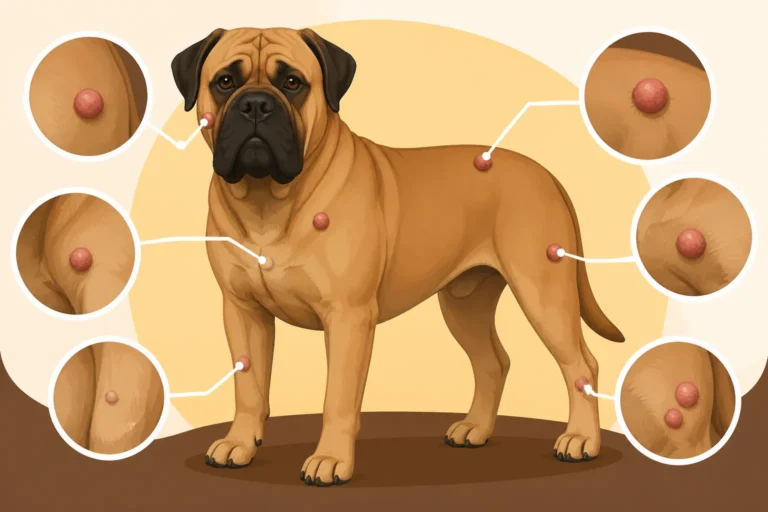
When you're checking your Bullmastiff, there are a few key areas where lymph nodes are more superficial and therefore easier to feel. These are your go-to spots for a quick but thorough check. Familiarizing yourself with these areas will give you the best chance of noticing any changes promptly.
Under the Jaw: Submandibular Lymph Nodes
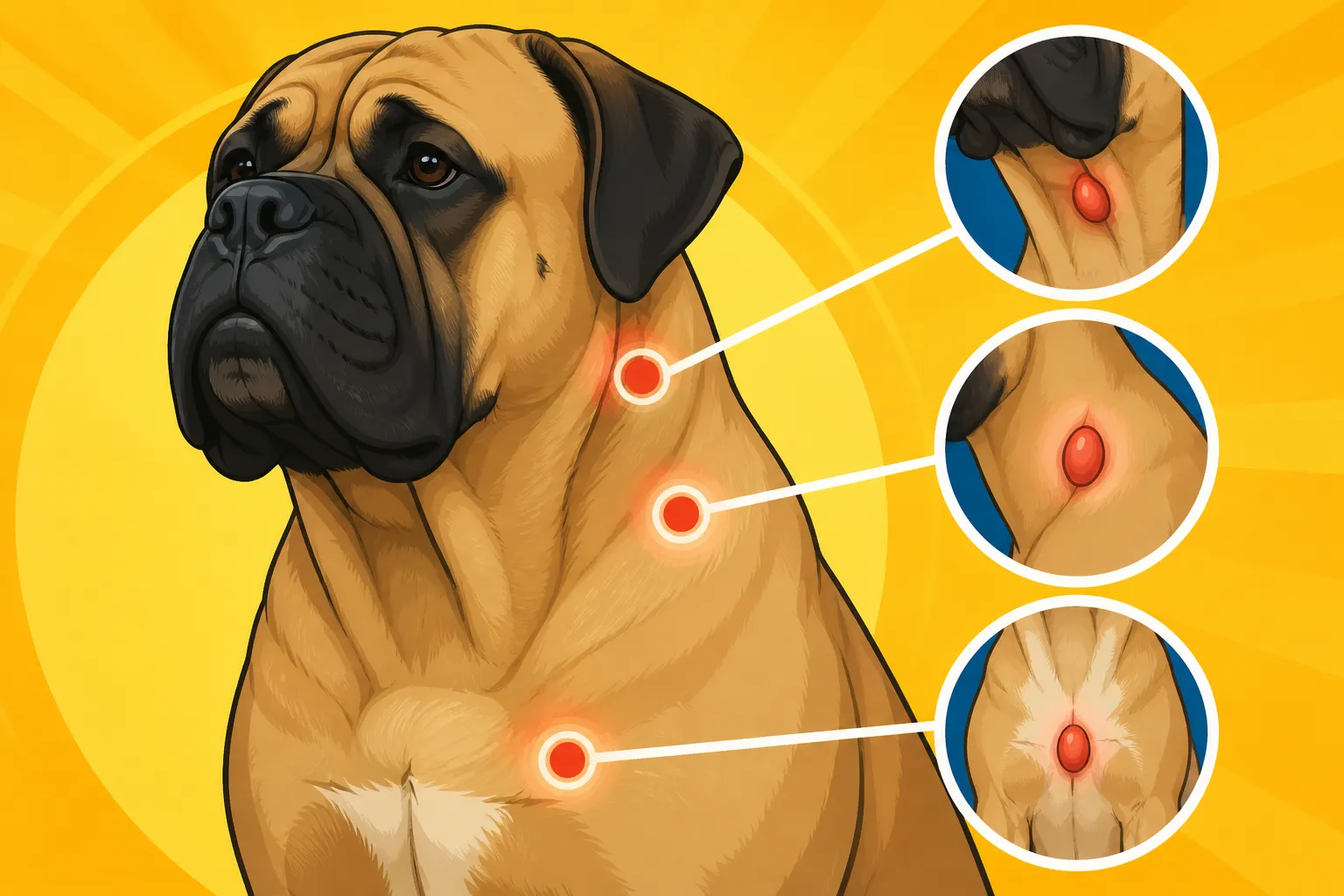
One of the most common places to feel for swollen lymph nodes on a Bullmastiff is right under their jaw, on either side. These are called the submandibular lymph nodes. To find them, gently cup your Bullmastiff's chin in your hand and run your fingers along the soft tissue underneath their jawline, just behind where their lower jaw hinges. Normally, you might feel a couple of small, oval-shaped structures, perhaps like a tiny lima bean or a small grape. They should feel soft and easily movable beneath the skin, not firmly fixed.
If these nodes are swollen, they'll often feel much larger – sometimes the size of a golf ball or even an egg in severe cases – and can feel quite firm, almost hard. They might also feel less movable, more fixed to the surrounding tissue. Swelling here can be indicative of a local infection in the mouth, teeth, or throat, but it is also a very common initial site for Signs a Bullmastiff Has Lymphoma. Because Bullmastiffs have those wonderful, jowly faces, you might have to dig your fingers in a bit to get a good feel, but be gentle. Compare what you feel on one side to the other. Symmetrical swelling can sometimes point to a more systemic issue, while a single, dramatically enlarged node might suggest a more localized problem or an early presentation of a serious disease.
Shoulder Area: Prescapular Lymph Nodes
Another critical location to check is in your Bullmastiff's shoulder area. These are the prescapular lymph nodes, and they're situated just in front of their shoulder blade, where the neck meets the shoulder. Imagine tracing a line from the top of their shoulder blade downwards and slightly forward, toward their chest. The node should be nestled in the soft tissue there. Again, normally, it might be difficult to feel unless your Bullmastiff is particularly lean, or you're very familiar with their anatomy. If you do feel it, it will be small, soft, and mobile.
When these prescapular nodes are enlarged, they become much more palpable. You might feel a distinct, firm, oval-shaped lump that wasn't there before, or one that's significantly larger than usual. Because these nodes drain lymph from the head, neck, and front limbs, swelling here could be linked to issues in those areas, or, again, be an indicator of a more widespread problem like lymphoma. It's a key spot often examined by veterinarians during a routine physical, but by knowing how to check it yourself, you can bring any concerns to their attention much sooner.
Behind the Knees: Popliteal Lymph Nodes
Don't forget the hindquarters! The popliteal lymph nodes are located on the back of your Bullmastiff's rear legs, deep in the crease behind the knee joint (what we call the stifle). To feel for these, have your Bullmastiff standing or lying down comfortably. Gently bend their hind leg slightly and run your fingers along the back of the joint, feeling for small, firm, movable structures. They're often a bit harder to isolate than the submandibular nodes because of the muscle and skin folds in this area, but with practice, you'll get a feel for them.
If the popliteal nodes are enlarged, they will feel much more pronounced, like a firm, roundish lump. They might be tender to the touch if there's inflammation or infection, but with cancer, they might not cause any discomfort at all, which is why your careful palpation is so important. Swelling in these nodes can be associated with issues in the hind limbs or lower body, or again, serve as a general indicator of systemic disease. Including these often-overlooked nodes in your regular check provides a more comprehensive assessment of your Bullmastiff's overall lymphatic health.
Less Common but Still Important Lymph Node Locations
While the submandibular, prescapular, and popliteal nodes are the most accessible and frequently checked, your Bullmastiff has other lymph nodes throughout their body. Some are harder for you to feel externally, but understanding their potential role is still valuable.
Armpits and Groin: Axillary and Inguinal Lymph Nodes
The axillary lymph nodes are located in your Bullmastiff's "armpits," and the inguinal lymph nodes are in their groin area, where the hind leg meets the body. These nodes are generally deeper set and surrounded by more muscle and fatty tissue, making them more challenging to palpate accurately compared to the ones under the jaw or by the shoulders. You might really have to gently but firmly work your fingers into these areas.
If you do feel a swollen node in the axillary or inguinal region, it's often more significant because they are typically so well hidden. A noticeable lump here should definitely raise a red flag and warrant immediate veterinary attention. Swelling in the axillary nodes could be related to issues in the chest or front limbs, while enlarged inguinal nodes might point to problems in the lower abdomen, reproductive organs, or hind legs. Because these are harder to feel, a veterinarian will almost always check them during an exam if they suspect something is amiss, especially when performing a lymphoma workup (see How Lymphoma Is Diagnosed in a Bullmastiff). Don't dismiss these areas just because they're tougher to access; persistence and careful palpation can sometimes yield crucial early findings.
Internal Lymph Nodes and Their Signs
Not all lymph nodes are external or easily felt. Your Bullmastiff also has a network of internal lymph nodes, such as the mediastinal nodes in the chest, the mesenteric nodes in the abdomen, and others located around various organs. Obviously, you can't feel these from the outside, which makes detecting their enlargement trickier for us as owners. However, their swelling can still manifest in indirect ways that you can observe.
If internal lymph nodes are significantly enlarged, they might start to press on surrounding organs, causing secondary symptoms. For instance, enlarged mediastinal nodes in the chest could lead to coughing, difficulty breathing, or exercise intolerance. Swollen mesenteric nodes in the abdomen might cause digestive upset, vomiting, diarrhea, a loss of appetite, or a visibly distended abdomen. Your Bullmastiff might seem generally unwell, lethargic, or just "off" without any obvious external lumps. This is why paying attention to any subtle changes in your Bullmastiff's behavior, appetite, or energy levels is equally important. If you notice any of these more generalized signs, coupled with the fact that Why a Bullmastiff's Lymphoma Is Found Late sometimes because internal nodes are involved first, a comprehensive veterinary exam, including imaging like X-rays or ultrasound, would be necessary to investigate further. This is where pet insurance from providers like Healthy Paws can be a lifesaver, covering the costs of advanced diagnostics.
| Lymph Node Location | How to Palpate | Normal Feel | Abnormal Feel (Indicating Swelling) |
|---|---|---|---|
| Submandibular (Under Jaw) | Cup chin, fingers along jawline. | Small, soft, movable (like a lima bean). | Larger, firm, less movable (like a grape to a golf ball). |
| Prescapular (Front of Shoulder) | Fingers in front of shoulder blade. | Often difficult to feel, if felt, small, soft, movable. | Distinct, firm, oval lump. |
| Popliteal (Behind Knees) | Fingers in crease behind stifle joint. | Small, soft, movable, deeper set. | More pronounced, firm, roundish lump. |
| Axillary (Armpits) | Gently work fingers into armpit. | Usually not palpable. | Noticeable, firm lump. |
| Inguinal (Groin) | Gently work fingers into groin area. | Usually not palpable. | Noticeable, firm lump. |
What to Do If You Find Swollen Lymph Nodes
Finding a swollen lymph node on your Bullmastiff is definitely unsettling, but it’s crucial to approach the situation calmly and proactively. Panic doesn't help anyone, especially your dog. Instead, focus on gathering information and seeking professional help.
Don't Panic, But Act Promptly
The very first thing to remember is that a swollen lymph node doesn't automatically mean cancer. There are many reasons a node might swell, including infections, allergic reactions, or other inflammatory processes. However, because Bullmastiffs are predisposed to conditions like lymphoma, it's never something to dismiss or "wait and see" about. Your Bullmastiff, being the stoic creature they are, is likely to How a Bullmastiff Hides Pain until a condition is quite advanced, so early investigation is paramount.
As soon as you notice a swollen node, make an appointment with your veterinarian. Don't delay. Note down which node is swollen, roughly how big it is, and whether it feels hard or soft, fixed or movable. Also, consider if your dog has any other symptoms, even subtle ones, like reduced appetite, lethargy, or any new coughs or lameness. This information will be incredibly helpful to your vet during the examination. Quick action means faster diagnosis, and potentially, more effective treatment options, especially if it turns out to be something serious.
Preparing for Your Vet Visit
When you call your vet, explain exactly what you've found and ask for the earliest possible appointment. Be ready to provide details about when you first noticed the swelling, if it's changed in size, and any other symptoms your Bullmastiff might be exhibiting. The vet will perform a thorough physical examination, which will almost certainly include palpating all accessible lymph nodes. They might recommend further diagnostics right away.
Common diagnostic steps for a swollen lymph node often begin with a fine needle aspirate (FNA), where a small sample of cells is taken from the node using a needle and syringe. This is usually quick and minimally invasive, and What a Needle Aspirate Shows in a Bullmastiff can often give an immediate indication of whether the cells are inflammatory, infectious, or cancerous. If the FNA is inconclusive or suggests cancer, the vet might recommend a more definitive test, such as a surgical biopsy of the entire lymph node. This is When a Bullmastiff Needs a Node Biopsy for a clearer diagnosis. These diagnostic tests can be costly, which is why having pet insurance, like a comprehensive plan from Healthy Paws, can significantly ease the financial burden, allowing you to focus on your Bullmastiff's care without added stress. Remember to discuss all options with your vet and don't hesitate to ask questions about the prognosis and treatment plans, should a serious diagnosis be made.
Disclaimer
This article is intended for informational purposes only and is not a substitute for professional veterinary advice. Always consult with a qualified veterinarian for any health concerns or before making any decisions about your Bullmastiff's care.