What Changes in a Bullmastiff After Six
Aging Bullmastiffs experience slower movement, joint stiffness, thinner coats, and increased sleep after turning six years old.
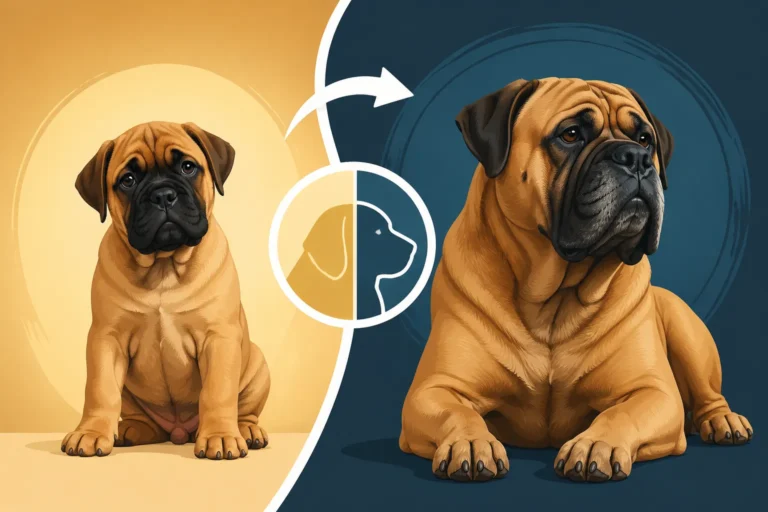
Aging Bullmastiffs experience slower movement, joint stiffness, thinner coats, and increased sleep after turning six years old.

Bullmastiff lifespan trends, historical survival rates, and common health challenges affecting the longevity of this large breed.

Mixed breeding and hybrid vigor effects on median Bullmastiff lifespan, genetics, lymphoma risk, and health conditions.
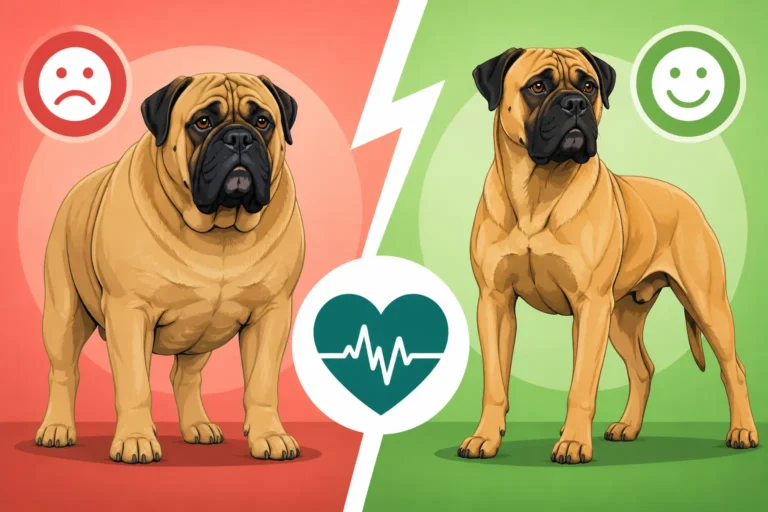
Maintaining a lean body condition for Bullmastiffs reduces joint stress and improves health, helping these dogs live longer.

Bullmastiff size variations and American Kennel Club height standards explain whether smaller dogs within standard ranges live longer.

Bullmastiff health predispositions, rapid growth, and aggressive cancers explain why some dogs face early death around age five.

Bullmastiff longevity statistics, health challenges, and typical lifespans explain why reaching twelve years old beats the odds.
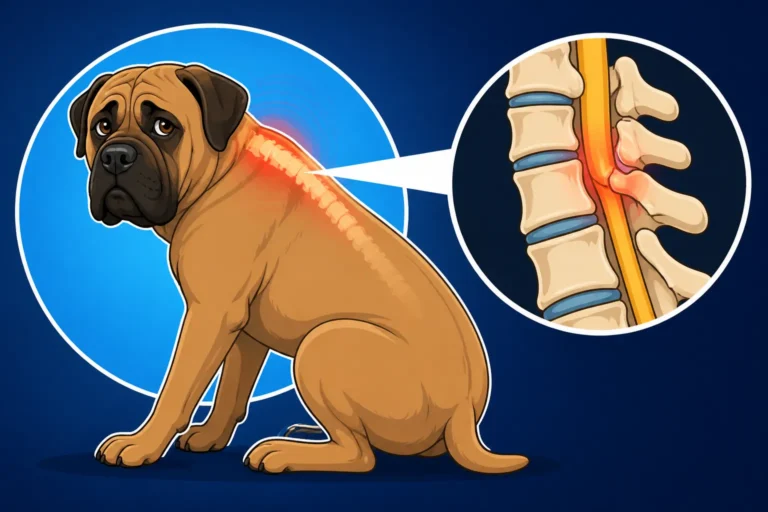
Wobbler Syndrome in Bullmastiffs causes spinal cord compression and uncoordinated movement. This condition presents diagnosis, treatment, and support options.
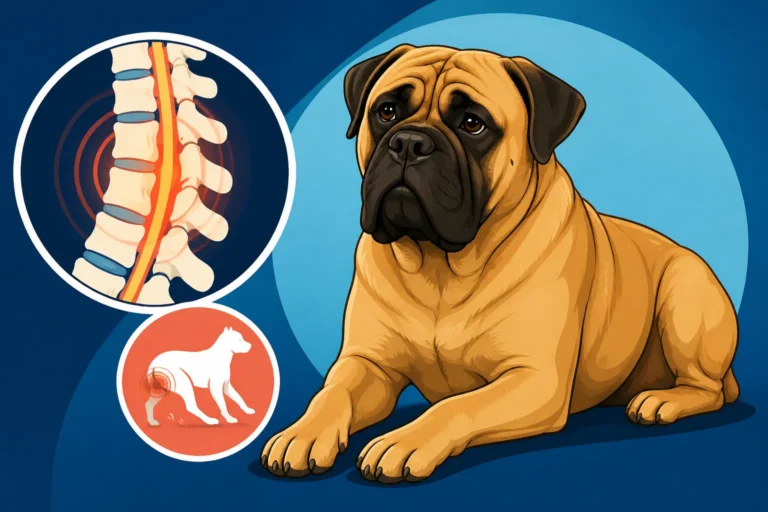
Degenerative myelopathy in Bullmastiffs explains early signs, spinal cord damage, and the SOD1 gene mutation causing paralysis.
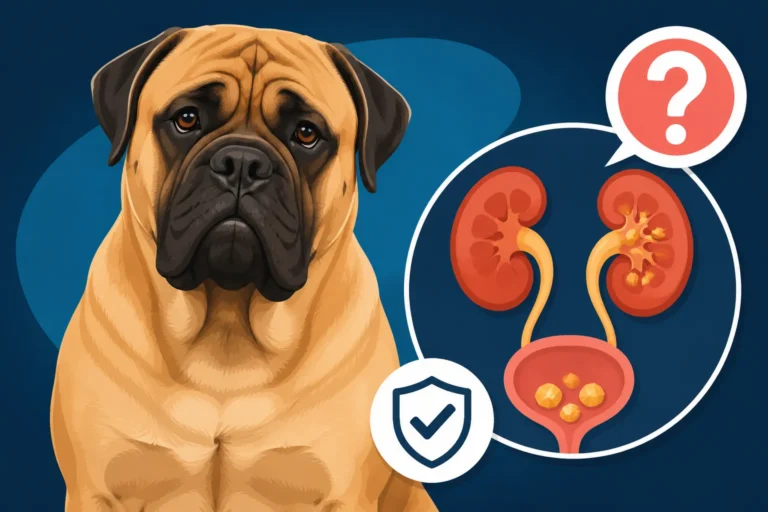
Bullmastiff cystinuria is an inherited metabolic disorder causing bladder stones, primarily affecting male dogs through Type III inheritance.