Wobbler Syndrome in a Bullmastiff
It's incredibly disheartening when your beloved Bullmastiff starts showing signs of neurological issues, especially something as confusing and scary as a wobbly gait. You might notice them stumbling, dragging their feet, or just seeming generally off-balance, and it leaves you wondering what on earth is happening and how you can help your massive, gentle companion. This guide is here to shed light on Wobbler Syndrome in Bullmastiffs, breaking down what it is, how it's diagnosed, the treatment options available, and how you can best support your dog through this challenging condition.
Understanding Wobbler Syndrome in Bullmastiffs
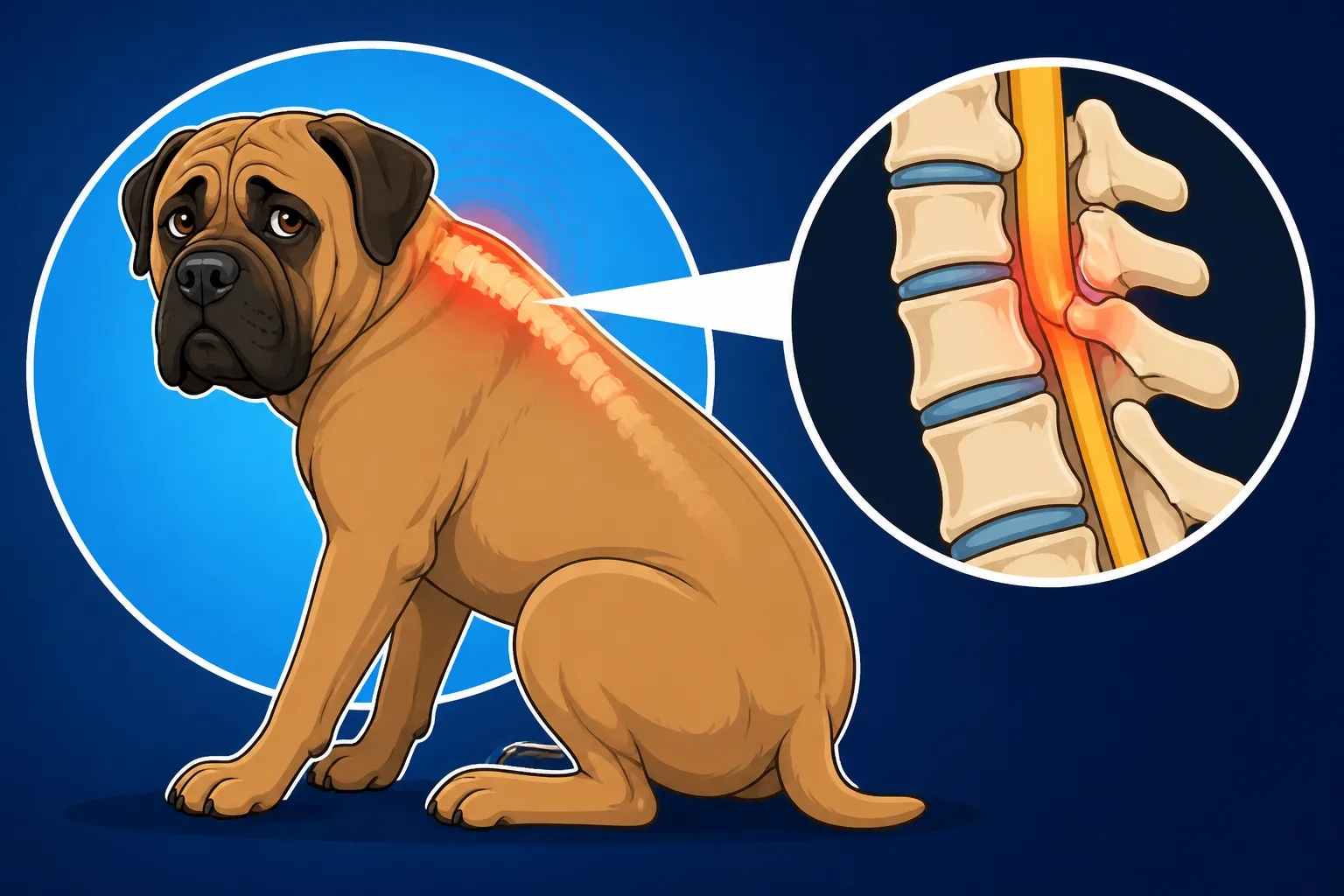
Wobbler Syndrome, formally known as cervical spondylomyelopathy (CSM), is a neurological condition that primarily affects large and giant breed dogs. It's not a single disease but rather a collection of conditions that result in compression of the spinal cord and/or nerve roots in the neck (cervical spine). This compression leads to a distinctive wobbly, uncoordinated gait, hence the common name "Wobbler Syndrome." For Bullmastiff owners, understanding this condition is crucial, as their size and rapid growth put them at a higher risk.
The Anatomy Behind the Wobble
Imagine your Bullmastiff's neck as a complex highway of nerves, with the spinal cord being the main thoroughfare. In Wobbler Syndrome, something along this highway — usually a malformed vertebra, a bulging disc, or thickened ligaments — starts to squeeze the spinal cord or the nerves branching off it. This "traffic jam" disrupts the signals traveling from the brain to the limbs, causing the uncoordinated movements you see. The Bullmastiff, being a rapidly growing, heavy-boned breed, can be particularly susceptible to the structural abnormalities in the vertebrae and discs that contribute to this compression. Their significant bulk can exacerbate the issue, putting more strain on an already compromised cervical spine.
There are generally two forms of CSM: disc-associated CSM (DACSM) and bony-associated CSM (BACSM). DACSM usually affects middle-aged to older dogs and involves a disc herniation. BACSM typically impacts younger, giant breeds like your Bullmastiff, where structural issues in the bone itself, such as vertebral malformations or thickening of joint capsules, are the primary culprits. Knowing which type your Bullmastiff might have helps veterinarians tailor treatment.
Why Bullmastiffs Face Higher Risk
It's a tough pill to swallow when you realize your breed might be predisposed to certain health challenges. For Bullmastiffs, their impressive size and the speed at which they grow are double-edged swords. The rapid growth rate can sometimes outpace the proper development of bones and soft tissues in the neck, leading to instability or malformation of the cervical vertebrae. This creates a perfect storm for the spinal cord compression that defines Wobbler Syndrome. Breeds like Doberman Pinschers and Great Danes are also known for this condition, but Bullmastiffs, with their unique structure and substantial neck musculature, can experience it in slightly different ways.
Genetics play an undeniable role here, though the exact genetic markers are still being researched. Certain bloodlines may carry a higher predisposition, making it even more important for prospective owners to ask breeders about the health history of their dogs and their ancestors. This condition often presents itself during crucial developmental stages, between one and five years of age, but it can appear later in life as well. The immense pressure placed on the neck by a 130-pound dog's head and body weight during movement and even just standing can put existing anatomical anomalies under severe stress, leading to the onset of symptoms.
Spotting the Subtle Signs of Wobbler Syndrome
The name "Wobbler Syndrome" makes it sound obvious, but the signs aren't always a dramatic stumble right from the start. Often, they begin subtly, and as a devoted Bullmastiff owner, you're usually the first to notice. You might observe a slight awkwardness in their gait, particularly in the hind limbs, almost as if they're "dancing" or carefully placing their feet. They might drag their front paws, leading to excessive wear on the nails, a symptom often described as "two-engine gait" – where the front legs seem to move differently than the back.
Look for signs like a reluctance to lower their head, especially to eat or drink from the floor, or a general stiffness in their neck. They might cry out in pain when their neck is touched or manipulated. Some Bullmastiffs might develop a loss of muscle mass in their shoulders or hindquarters due to nerve damage. Over time, these signs can progress to severe incoordination, difficulty standing up, and even paralysis in more advanced cases. It's easy to dismiss early subtle changes as just "getting older" or "being clumsy," but with a breed prone to this, any unusual gait or neck stiffness warrants prompt veterinary attention. Early intervention can make a significant difference in management and outcome.
Diagnosing and Understanding Wobbler Syndrome Severity
When you first bring your Bullmastiff to the vet with concerns about a wobbly gait or neck pain, the diagnostic process can feel overwhelming and, frankly, quite expensive. It’s a journey that involves a thorough physical exam, neurological assessment, and often, advanced imaging to pinpoint the exact cause and location of the spinal cord compression. Understanding each step can help you feel more prepared and advocate effectively for your dog.
The Initial Veterinary Examination
Your veterinarian will start with a comprehensive physical and neurological exam. This isn't just a quick once-over. They'll be looking at your Bullmastiff’s posture, how they walk, and checking their reflexes, muscle tone, and proprioception – which is their sense of body position. For example, they might flip your dog's paw over to see how quickly they correct it. A delayed or absent correction can indicate neurological deficits. They'll also carefully palpate your Bullmastiff's neck and spine, checking for areas of pain, muscle spasms, or tenderness. This part of the exam helps narrow down whether the issue is indeed neurological and where in the spine the problem might lie.
They'll ask you a lot of questions: when did you first notice the symptoms? Have they gotten worse? Does anything make it better or worse, like exercise or resting? Don't hold back any details, even if they seem minor. Every piece of information helps paint a clearer picture. While this initial exam can strongly suggest Wobbler Syndrome, it cannot definitively diagnose it or show the extent of the compression. This leads to the need for more advanced diagnostic tools. This is also where discussions about costs and potential pet insurance benefits, perhaps from a provider like Healthy Paws, often come into play, as the next steps can be substantial.
Advanced Imaging: MRI and CT Scans
To truly understand what’s happening inside your Bullmastiff’s neck, advanced imaging is indispensable. X-rays can show bone abnormalities or general alignment issues, but they don't give a clear picture of the spinal cord or soft tissues like discs and ligaments, which are often the primary cause of compression in Wobblers. This is where Magnetic Resonance Imaging (MRI) and Computed Tomography (CT) scans become critical.
- MRI: An MRI is often considered the gold standard for diagnosing Wobbler Syndrome. It provides detailed images of the spinal cord, nerve roots, discs, ligaments, and surrounding soft tissues. It can clearly show where and how much the spinal cord is being compressed, whether it's by a bulging disc, a thickened ligament, or bony abnormalities. The downside? MRIs require general anesthesia for your Bullmastiff to remain perfectly still, and they are expensive.
- CT Scan: A CT scan provides excellent detail of bone structures and is often used in conjunction with a myelogram (where a contrast dye is injected into the spinal canal) to highlight spinal cord compression. While not as good as an MRI for soft tissue detail, it can be beneficial, especially if surgery is being considered, as it gives surgeons a clear map of the bony anatomy. Like MRIs, CT scans also require anesthesia.
These imaging results, often reviewed by a veterinary neurologist, are vital for confirming the diagnosis, determining the specific type of compression, and planning the most effective treatment strategy. It’s an investment, but a necessary one to give your Bullmastiff the best chance at relief and improved quality of life. Owners are often surprised by the financial implications of such advanced diagnostics, highlighting why considering options like pet insurance from companies such as Healthy Paws early in your dog's life can be a pragmatic decision.
Grading the Severity of Wobbler Syndrome
Once your Bullmastiff has undergone advanced imaging, your veterinary neurologist will grade the severity of their Wobbler Syndrome. This grading system helps determine the prognosis and guides treatment decisions. Severity is usually assessed on a scale from 0 (normal) to 5 (complete paralysis), though specific scales can vary slightly.
A Bullmastiff with a grade 1 might show very mild neurological deficits, perhaps just a slightly awkward gait that's barely noticeable. A grade 2 might involve a more obvious "wobble" but the dog is still ambulatory. Grades 3 and 4 involve significant incoordination, difficulty rising, frequent stumbling, and severe neurological deficits, but the dog can still move to some degree. A grade 5 indicates complete paralysis, often to the point where the dog cannot stand or move its limbs. This grading, combined with the specific findings from the MRI or CT, helps your veterinary team understand the extent of the damage and formulate a personalized treatment plan, weighing the pros and cons of conservative versus surgical approaches. It's a sobering conversation, but a necessary one, giving you a clear picture of the road ahead.
Treatment Approaches for Wobbler Syndrome
Receiving a diagnosis of Wobbler Syndrome can feel like a punch to the gut. The good news is that there are treatment options available, ranging from conservative management to surgical intervention. The best approach for your Bullmastiff will depend on the severity of their condition, the specific cause of the compression, and other individual factors like their age and overall health.
Conservative Management Strategies
For Bullmastiffs with mild to moderate Wobbler Syndrome, or those for whom surgery isn't an option due to age, other health issues, or owner preference, conservative management can be a viable path. The goal here is to reduce inflammation, alleviate pain, and prevent further injury to the spinal cord.
- Strict Rest: This is often the cornerstone of conservative treatment. Limiting activity, sometimes through crate rest or severely restricted leash walks, is crucial to prevent further trauma to the neck and allow any inflammation to subside. This can be challenging with a large, active Bullmastiff, but it's vital for success.
- Anti-inflammatory Medications: Non-steroidal anti-inflammatory drugs (NSAIDs) like carprofen or meloxicam are often prescribed to reduce pain and inflammation around the spinal cord. In some cases, corticosteroids might be used, especially in the initial stages of a flare-up, but their long-term use is usually avoided due to potential side effects.
- Pain Management: Beyond NSAIDs, other pain medications like gabapentin or tramadol might be used to manage chronic pain associated with nerve compression. The correct dosage for a Bullmastiff can be substantial, influencing "What a Bullmastiff's Medication Costs by Weight."
- Physical Therapy and Rehabilitation: Once the acute pain is under control, physical therapy can be incredibly beneficial. This might include gentle range-of-motion exercises, massage, hydrotherapy (swimming in a specialized pool), and therapeutic exercises to strengthen supporting neck and core muscles. This specialized care is often ongoing and can dramatically improve your dog's comfort and mobility.
- Neck Braces: Some veterinarians may recommend a custom-fit neck brace to restrict movement and provide external support, helping to stabilize the cervical spine.
Conservative management requires dedication and patience, and while it doesn't "cure" Wobbler Syndrome, it can significantly improve your Bullmastiff's quality of life and manage symptoms for a considerable period. For many owners, the cost of ongoing physical therapy and medication is significant, and having pet insurance, such as a policy from Healthy Paws, can greatly alleviate the financial burden.
Surgical Interventions and Techniques
When conservative management isn't effective, or if the neurological deficits are severe and progressing rapidly, surgery becomes the primary treatment option. The goal of surgery is to decompress the spinal cord and stabilize the cervical vertebrae. There are several surgical techniques, and the choice depends on the specific cause and location of the compression as identified by the advanced imaging.
- Ventral Slot Procedure: This is one of the most common techniques, often used when a disc herniation is compressing the spinal cord from below. The surgeon makes an incision on the underside of the neck and removes a small section of bone from the vertebral body to access and remove the offending disc material.
- Dorsal Laminectomy: This procedure involves removing part of the bony arch over the spinal canal from the top, providing decompression when the compression is from above.
- Distraction-Stabilization Techniques: These methods involve distracting (pulling apart) the affected vertebrae to decompress the spinal cord, and then stabilizing them with implants such as plates, screws, or bone cement. This approach is often used in cases of vertebral instability or bony malformations. A common example is the "titanium cage" technique.
Each surgical procedure carries its own set of risks, including anesthesia complications, infection, and potential worsening of neurological signs post-operatively. However, for many Bullmastiffs, surgery offers the best chance for significant improvement or even resolution of symptoms. Post-surgical care is just as critical as the surgery itself, often involving strict rest, pain management, and intensive physical rehabilitation for several weeks or months. This journey of recovery can be extensive, underscoring the vital role of thorough planning and potentially insurance benefits, whether it's from a provider like Healthy Paws or another comprehensive plan.
The Role of Medication and Supplements
Regardless of whether your Bullmastiff undergoes conservative management or surgery, medication and supportive supplements will likely be a part of their ongoing care. Managing pain and inflammation is paramount, and your vet may prescribe a combination of drugs tailored to your dog's specific needs.
- Pain Relievers: Beyond NSAIDs, drugs like gabapentin (for neuropathic pain), amantadine, and even muscle relaxants can be used to control discomfort.
- Nerve Support: Some veterinarians may recommend B vitamin complexes, particularly B12, which can support nerve health, though scientific evidence for direct impact on Wobbler Syndrome is limited.
- Joint Supplements: While not directly treating the spinal cord compression, supplements containing glucosamine, chondroitin, and omega-3 fatty acids can help support overall joint health and reduce inflammation, which is beneficial for a large breed like the Bullmastiff already prone to issues like "Hips and Elbows Under a Hundred and Thirty Pound Bullmastiff."
- Anti-anxiety Medication: For dogs struggling with prolonged crate rest or discomfort, mild anti-anxiety medications might be considered to improve their comfort and compliance with treatment protocols.
It's essential to administer all medications as prescribed and never give human pain relievers, which can be toxic to dogs. Regular check-ups with your vet or neurologist will allow them to adjust medications as needed, ensuring your Bullmastiff remains as comfortable as possible.
Living with a Bullmastiff Affected by Wobbler Syndrome
The diagnosis of Wobbler Syndrome marks the beginning of a new chapter in your Bullmastiff's care. It requires commitment, patience, and often, significant adjustments to your home and daily routine. But with the right approach, you can provide your beloved companion with a comfortable and fulfilling life, even with this challenging condition.
Adapting Your Home Environment for Comfort and Safety
One of the most practical steps you can take is to make your home as safe and accessible as possible for your Bullmastiff. Their uncoordinated gait means they are at a higher risk of slipping, falling, and injuring themselves further.
- Non-Slip Surfaces: Cover slippery floors (hardwood, tile) with rugs, runners, or carpet tiles to provide better traction. This can prevent painful slips and falls that could worsen their condition.
- Ramps and Steps: If your Bullmastiff loves to get on the couch or bed, consider using pet ramps or sturdy steps. This prevents them from jumping up and down, which puts immense strain on their neck and spine. Similarly, ramps for getting in and out of the car are essential to protect their back.
- Supportive Bedding: Invest in high-quality orthopedic beds that provide excellent support for their heavy bodies. A firm, supportive bed can alleviate pressure points and help them rest comfortably, especially given their predisposition to issues like "Why an Aging Bullmastiff Struggles to Rise" and the importance of appropriate rest for "Which Bed a Bullmastiff Needs."
- Raised Bowls: Elevating their food and water bowls can significantly reduce neck strain during meal times, making eating and drinking more comfortable.
- Grooming and Handling: Be extra gentle when grooming, bathing, or putting on harnesses and leashes. Any sudden or awkward movement of their neck can cause pain or further injury.
These seemingly small changes can make a world of difference in your Bullmastiff's daily comfort and safety, helping to prevent setbacks in their recovery or management.
Ongoing Care and Rehabilitation
Living with Wobbler Syndrome is a marathon, not a sprint. Your Bullmastiff will likely require ongoing care to maintain their mobility and comfort.
- Regular Veterinary Check-ups: Scheduled visits with your general veterinarian and neurologist are crucial to monitor their condition, adjust medications, and assess the effectiveness of therapies.
- Physical Rehabilitation: This is often a cornerstone of long-term management. Beyond initial sessions, ongoing exercises, hydrotherapy, laser therapy, and massage can help strengthen muscles, improve range of motion, and reduce pain. A certified canine rehabilitation therapist can guide you through exercises you can do at home to continue their progress.
- Weight Management: Keeping your Bullmastiff lean is incredibly important. Excess weight puts additional stress on their spine and joints, exacerbating Wobbler Syndrome and other conditions. Regular monitoring of their weight and a carefully controlled diet are key. As we often discuss in "Keeping a Bullmastiff Lean Is the Best Thing You Can Do," maintaining an ideal weight is paramount for their overall health and longevity.
- Harness Use: Opt for a comfortable, well-fitting harness instead of a neck collar, as a collar can put direct pressure on the cervical spine. A front-clip harness can also help manage pulling during walks, further protecting their neck.
This dedicated, continuous care is an investment, both in time and finances. Many owners find that a robust pet insurance plan can be invaluable for covering the recurring costs of rehabilitation, medications, and specialized veterinary visits, especially with a company like Healthy Paws, which is known for its comprehensive coverage.
Long-Term Outlook and Quality of Life
The long-term outlook for a Bullmastiff with Wobbler Syndrome varies greatly depending on the severity of the condition, the chosen treatment method, and how well they respond. Some dogs, particularly those with milder forms and successful conservative management, can live comfortably for many years. For those undergoing surgery, success rates vary, but many dogs see significant improvement in their neurological signs, although a complete return to normal gait isn't always achieved.
It's a difficult journey, and sometimes, despite all efforts, the condition may progress. There will be good days and bad days. Your primary focus will always be on maintaining your Bullmastiff's quality of life. This means closely monitoring their pain levels, ensuring they can move comfortably, and allowing them to engage in activities they enjoy within their physical limitations. Conversations with your veterinary team about pain management, mobility aids, and eventually, end-of-life care are critical. It’s about making informed, compassionate decisions that prioritize your Bullmastiff's well-being. Reflecting on their lifespan, covered in articles like "The Median Bullmastiff Lives Eight and a Half Years," it’s important to make every moment count, especially when faced with health challenges.
| Feature / Treatment | Conservative Management | Surgical Intervention |
|---|---|---|
| Severity Suited For | Mild to Moderate Symptoms | Moderate to Severe, Progressive Symptoms |
| Primary Goal | Pain & Inflammation Reduction, Stabilization | Spinal Cord Decompression, Spinal Stabilization |
| Key Components | Strict rest, NSAIDs, pain meds, physical therapy, neck brace | Decompressive surgery (ventral slot, laminectomy), stabilization |
| Recovery Time | Weeks to months of activity restriction, ongoing therapy | Weeks to months post-op rest, intensive physical therapy |
| Cost | Generally lower upfront, but ongoing medication/therapy costs | High upfront cost for surgery, imaging, hospitalization |
| Risks | Progression of disease, inadequate pain control | Anesthesia risks, surgical complications, infection, no improvement or worsening |
| Prognosis | Can manage symptoms well, but underlying issue remains; variable | Often good prognosis for improvement, but not always a "cure" |
| Lifestyle Impact | Activity restrictions, home modifications, diligent care | Intensive post-op care, then similar long-term management |
Disclaimer
The information provided in this guide is for informational purposes only and does not constitute veterinary medical advice. Always consult with a qualified veterinarian or veterinary specialist for any health concerns or before making any decisions about your Bullmastiff's care.