When an Echocardiogram Is Needed on a Bullmastiff
It's incredibly worrying when your beloved Bullmastiff seems a little off, or your vet mentions something about their heart. Heart conditions can be a silent threat, often progressing unnoticed until they become serious. This guide will walk you through exactly when an echocardiogram, a specialized ultrasound of the heart, becomes a crucial diagnostic tool for your Bullmastiff, helping you understand the signs and next steps.
Understanding Bullmastiff Heart Health: The Silent Threat
As a Bullmastiff parent, you know these magnificent dogs come with their own unique set of health considerations. While their size and stoic demeanor are endearing, they can also mask underlying issues, especially when it comes to their heart. Cardiac problems are unfortunately a significant concern within the breed, and being proactive can make a world of difference.
The Prevalence of Cardiac Issues in Bullmastiffs
Bullmastiffs, like many large and giant breeds, are predisposed to certain heart conditions that can profoundly impact their health and lifespan. Two of the most common and concerning are Subaortic Stenosis (SAS) and Dilated Cardiomyopathy (DCM). SAS is a congenital condition, meaning a Bullmastiff is born with it, where a fibrous ring or ridge develops just below the aortic valve, narrowing the outflow tract from the left ventricle. This forces the heart to work harder to pump blood to the body. DCM, on the other hand, is an acquired disease where the heart muscle becomes thin and weak, leading to an enlarged heart and reduced pumping ability. The cruel reality is that these conditions often present subtly in their early stages, making them particularly insidious. It's truly heartbreaking to think your gentle giant could be struggling with something you can't see or immediately feel.
A routine check-up might reveal a heart murmur, which is simply an abnormal sound caused by turbulent blood flow. While not all murmurs indicate serious heart disease – sometimes they can be "innocent" or physiological, especially in puppies – for a breed like the Bullmastiff, any murmur warrants careful attention. We often hope for the best, but understanding the breed's predispositions means we must also prepare for the possibility of more serious underlying issues. This is why a vet's initial detection of a murmur should always be taken seriously, paving the way for further investigation.
Why a Vet Might Suggest Initial Screening
During your Bullmastiff's regular wellness exams, your veterinarian will always listen to their heart with a stethoscope. This is the first, most fundamental step in cardiac screening. For puppies, a cardiac exam is particularly important, as congenital conditions like SAS are present from birth. You can learn more about why a Bullmastiff puppy needs a cardiac exam and what to expect from these early screenings. The vet is listening for the tell-tale whooshing sounds that indicate a murmur, or any irregular rhythms that might suggest an arrhythmia.
If a murmur is detected, or if there are any other red flags like an irregular heartbeat, your vet might initially recommend additional non-invasive tests. These could include chest X-rays to check the size and shape of the heart and lungs, and an electrocardiogram (ECG or EKG) to assess the electrical activity of the heart. While these tests provide valuable information, they don't give a detailed picture of the heart's internal structures or how blood is flowing. They are crucial stepping stones, but they have limitations when it comes to truly diagnosing the intricate workings of a large breed heart.
When the Stethoscope Isn't Enough: Red Flags for an Echocardiogram
Hearing your vet say "heart murmur" can be unsettling. For Bullmastiffs, however, it's often just the beginning of the diagnostic journey. The stethoscope is a powerful tool, but it only offers an auditory glimpse. To truly understand what’s happening inside your dog’s chest, especially with a breed prone to serious cardiac conditions, more advanced imaging is frequently necessary.
Persistent or Concerning Heart Murmurs
If your vet detects a heart murmur in your Bullmastiff, their first step will be to characterize it. Murmurs are graded on a scale, typically from I to VI, with higher grades indicating a louder or more intense murmur. The location of the murmur, its timing within the heartbeat, and whether it’s present in a young puppy or develops later in life, all provide critical clues. While a low-grade murmur in a young, otherwise healthy Bullmastiff might be initially monitored, a persistent, loud, or increasing murmur is a significant red flag. It’s when a murmur is deemed "concerning" – perhaps a grade III or higher, or one that has changed – that your vet will almost certainly recommend an echocardiogram. This is because a loud murmur often signifies significant turbulent blood flow, usually due to a structural abnormality. For a deeper dive into how vets assess these sounds, you might want to read about how a vet grades a Bullmastiff's murmur. The echo will reveal the exact cause and severity, which is information a stethoscope simply cannot provide.
Clinical Signs Pointing to Heart Disease
Beyond an abnormal heart sound, your Bullmastiff might start exhibiting physical symptoms that strongly suggest underlying heart disease. These signs, unfortunately, often indicate that the condition has progressed. As a dedicated owner, you’re the best observer of your dog’s daily routine and subtle changes. Watch for signs a Bullmastiff has a heart murmur, but also keep an eye out for more overt symptoms such as:
- Lethargy or Reduced Exercise Tolerance: Your typically robust Bullmastiff might seem unusually tired, reluctant to play, or tire out quickly during walks that they once handled with ease. This is because their heart isn't efficiently circulating oxygenated blood to their muscles.
- Persistent Coughing or Gagging: A cough, especially one that sounds wet or occurs after exertion or when resting, can be a sign of fluid accumulation in the lungs, a common symptom of congestive heart failure.
- Difficulty Breathing: Shortness of breath, rapid breathing (tachypnea) at rest, or open-mouth breathing when not exercising can be alarming indicators of pulmonary edema.
- Fainting or Collapse: These dramatic events, often referred to as syncope, are caused by a sudden lack of blood flow to the brain and are very serious. If your Bullmastiff experiences a collapse, immediate veterinary attention is critical. Understanding why a Bullmastiff with severe stenosis collapses can help you recognize the gravity of such an event.
- Weight Loss or Poor Appetite: While less common initially, as heart disease progresses, dogs may lose their appetite and subsequently lose weight due to decreased energy and general malaise.
- Swelling of the Abdomen (Ascites): Fluid accumulation in the abdomen can make your dog's belly appear distended and feel firm, another sign of advanced heart failure.
Any of these clinical signs, especially if they are new or worsening, should prompt an urgent discussion with your veterinarian and will almost certainly lead to a recommendation for an echocardiogram.
Abnormalities in Other Diagnostic Tests
Sometimes, the need for an echocardiogram arises after other preliminary diagnostic tests reveal abnormalities. For instance, if routine blood work shows elevated cardiac biomarkers, it could indicate stress or damage to the heart muscle. Chest X-rays, while not providing detail on the heart's internal structures, can show overall heart enlargement (cardiomegaly) or fluid in the lungs. An electrocardiogram (ECG), which records the electrical activity of the heart, might detect arrhythmias (irregular heartbeats) that warrant further investigation.
If your Bullmastiff's chest X-rays show an unusually large heart silhouette or the ECG reveals a significant arrhythmia that isn't easily explained, an echocardiogram becomes absolutely essential. These other tests act as valuable screening tools, but they often can’t definitively tell you why the heart is enlarged or what structural defect is causing an irregular beat. The echo is the next logical and critical step to pinpoint the specific issue, guide treatment, and understand the prognosis.
The Echocardiogram: What It Is and What It Reveals
Once your vet recommends an echocardiogram for your Bullmastiff, it's natural to feel a mix of anxiety and hope. You're hoping for answers, but also bracing for what those answers might mean. The good news is that an echocardiogram is a non-invasive, painless procedure that provides an incredible amount of information, allowing your veterinary team to formulate the best possible care plan.
What Happens During a Bullmastiff Echocardiogram
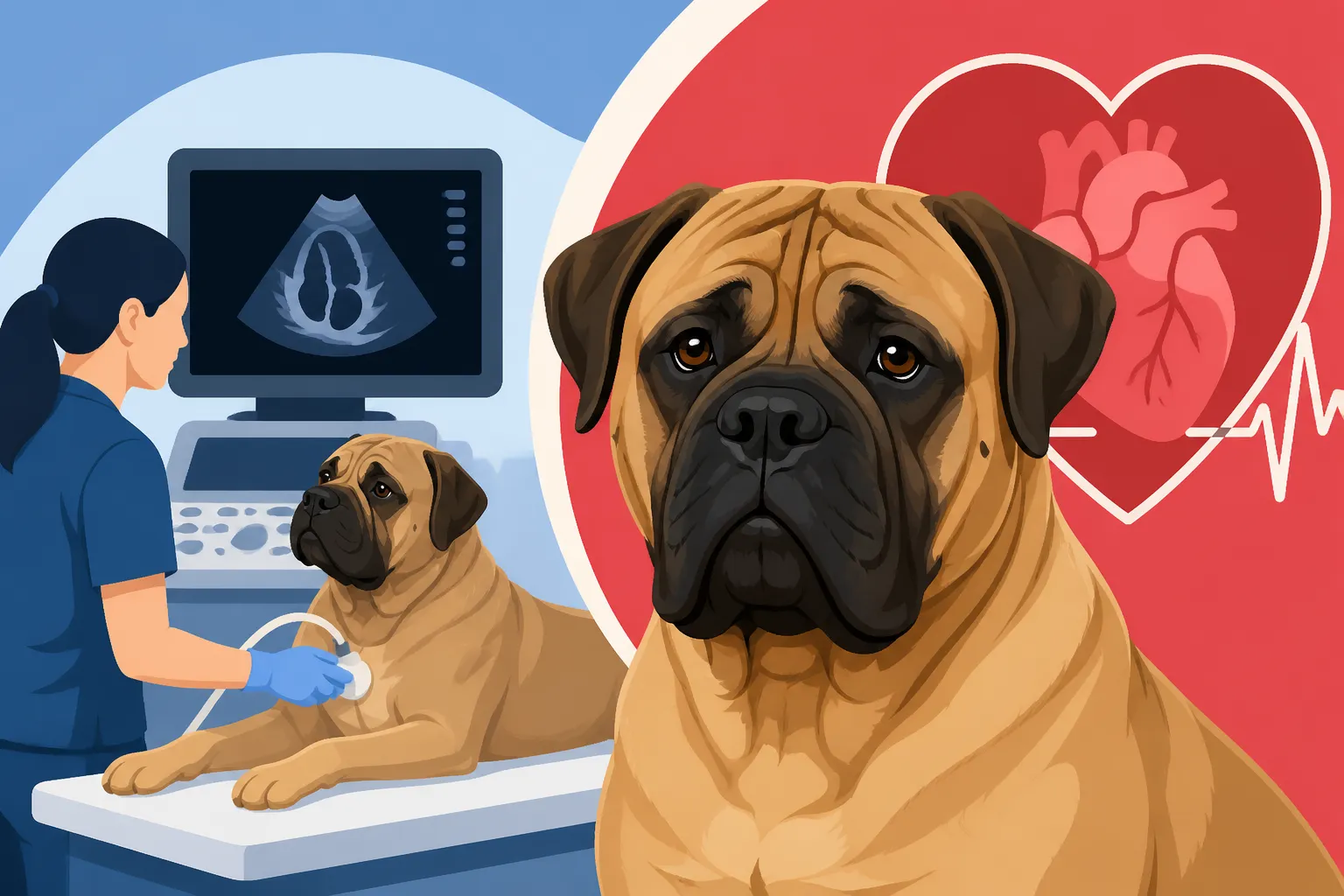
An echocardiogram is essentially an ultrasound of the heart. It uses sound waves to create real-time images of your Bullmastiff's heart as it beats. The procedure is typically performed by a veterinary cardiologist or a trained veterinarian with specialized ultrasound equipment. Most Bullmastiffs tolerate the procedure remarkably well without sedation, though a very anxious dog might benefit from a mild sedative to ensure clear images can be obtained.
Your dog will lie comfortably on their side, often on a padded table with a cutout for the ultrasound probe. A small area of fur on their chest might be clipped, and an ultrasound gel will be applied to ensure good contact between the probe and the skin. The cardiologist will then move the probe over specific areas of your Bullmastiff’s chest, capturing detailed views of the heart from various angles. They'll be looking at the size and thickness of the heart muscle walls, the dimensions of all four chambers, the integrity and function of the valves, and critically, how blood flows through the heart. The entire process usually takes 30 to 60 minutes. While the cost of specialized diagnostics like an echocardiogram can be a concern for many pet parents, this is where a good pet insurance policy, perhaps from a provider like Healthy Paws, can really alleviate the financial burden, covering a significant portion of the bill for these crucial tests.
Uncovering the Truth: Conditions Diagnosed by Echocardiography
The true power of an echocardiogram lies in its ability to visualize the heart's intricate structures and dynamic function. It provides a definitive diagnosis for many heart conditions that might only be suspected from a physical exam or X-rays. For Bullmastiffs, this is particularly vital in diagnosing and assessing the severity of conditions like:
- Subaortic Stenosis (SAS): The echo can precisely identify the location and severity of the narrowing beneath the aortic valve. It measures the velocity of blood flow through this narrowed area, allowing the cardiologist to grade the severity of the stenosis – mild, moderate, or severe. This information is crucial for determining prognosis and whether medication is warranted. You can delve deeper into what Subaortic Stenosis does to a Bullmastiff to understand its impact.
- Dilated Cardiomyopathy (DCM): An echocardiogram provides clear evidence of DCM by showing enlarged heart chambers and a weakened, less efficient pumping action. It measures the ejection fraction and fractional shortening, key indicators of the heart's ability to pump blood. This helps stage the disease and guides treatment with medications like pimobendan or ACE inhibitors. For those interested, more information on Dilated Cardiomyopathy in a Bullmastiff is available.
- Valvular Disease: The echo allows detailed inspection of the heart valves, identifying if they are thickened, leaking (regurgitation), or narrowed (stenosis), which can lead to various murmurs and heart failure.
- Pericardial Effusion: This is the accumulation of fluid around the heart, which can dangerously compress the heart and impede its function. An echocardiogram can readily detect and quantify this fluid.
- Congenital Heart Defects: Beyond SAS, other birth defects like patent ductus arteriosus (PDA) or ventricular septal defects (VSDs) can be identified.
- Cardiac Tumors: While rare, masses on or within the heart can sometimes be visualized.
The precise details gleaned from an echocardiogram enable your veterinary team to develop a targeted treatment plan, which might include specific medications or lifestyle adjustments, dramatically improving your Bullmastiff’s quality of life and potentially extending their years.
Proactive Screening and Ongoing Management
Knowing that Bullmastiffs are prone to certain heart conditions can be a heavy thought. However, understanding the risks also empowers you to be a proactive advocate for your dog's health. Early detection and consistent monitoring are your best tools in managing these potential issues effectively.
When to Consider Proactive Screening, Even Without Symptoms
For a breed like the Bullmastiff, proactive cardiac screening is not just a good idea; it's often an essential part of responsible ownership, even if your dog seems perfectly healthy. This is particularly true for Subaortic Stenosis, which is an inherited condition. Reputable breeders will often screen their breeding stock, and their puppies, for SAS. You can learn more about what a Bullmastiff breeder should have screened and the importance of choosing a breeder who prioritizes heart health. The ideal time for a first screening for SAS is typically between 8-16 weeks of age, followed by a recheck around 12-18 months of age, as the fibrous ring can develop or worsen during this growth period. Understanding how Subaortic Stenosis is inherited in Bullmastiffs underscores the importance of this early screening.
An echocardiogram can identify mild SAS before it progresses or before clinical signs become apparent. Catching a condition early allows your vet to advise on management strategies, even if it's just monitoring or adjusting exercise levels, which can potentially slow the disease's progression and prevent severe complications. While it might seem daunting to schedule a specialized test for a seemingly healthy puppy, the peace of mind – or the early intervention opportunity – it offers is invaluable. Again, comprehensive pet insurance like Healthy Paws, when started early, can be a fantastic resource, potentially covering these early diagnostic costs.
The Role of Regular Rechecks and Monitoring
Once a Bullmastiff has been diagnosed with a heart condition, whether mild or severe, ongoing management and regular rechecks become a critical part of their care. Heart disease is often progressive, and what starts as a mild issue can worsen over time. Your veterinary cardiologist will recommend a schedule for follow-up echocardiograms, which might be every 6 to 12 months, depending on the specific condition and its severity. For guidance, you might want to look into whether a Bullmastiff's heart should be rechecked yearly.
These regular rechecks allow the veterinary team to:
- Monitor Progression: They can assess if the heart chambers are enlarging, if the muscle is weakening further, or if valve function is deteriorating.
- Adjust Medication: Based on the echocardiogram findings and your Bullmastiff's clinical signs, your vet can fine-tune dosages or introduce new medications to optimize heart function and manage symptoms. This is crucial for maintaining quality of life.
- Assess Treatment Efficacy: The echo helps confirm whether the current treatment plan is working as intended or if changes are needed.
- Prognostic Information: Regular imaging helps provide an updated prognosis, allowing you to make informed decisions about your dog's care as they age.
It's a marathon, not a sprint, when it comes to managing chronic heart disease. Consistency in follow-up appointments, often involving repeated echocardiograms, is key to giving your Bullmastiff the longest, happiest, and most comfortable life possible. The financial aspect of ongoing care can be significant, but a robust pet insurance plan can help manage the expenses for these recurring diagnostic and treatment costs.
Summary of Echocardiogram Indications
To help clarify when an echocardiogram might be necessary for your Bullmastiff, here's a quick comparison of typical findings:
| Situation | Likelihood of Needing an Echocardiogram | Why It's Needed |
|---|---|---|
| Puppy with a Grade I-II Murmur | Moderate to High | Rule out congenital conditions like SAS, monitor for progression. |
| Adult with a new or loud Murmur (Grade III+) | High | Pinpoint structural cause, assess severity, guide treatment. |
| Coughing, Lethargy, Exercise Intolerance | High | Investigate for heart failure, DCM, or other advanced disease. |
| Fainting or Collapse Episodes | Very High | Identify severe underlying cardiac issues causing lack of blood flow to the brain. |
| Abnormal Chest X-ray (e.g., enlarged heart) | High | Determine the specific cause of enlargement, assess function. |
| Abnormal ECG (e.g., significant arrhythmia) | High | Visualize structural abnormalities contributing to electrical irregularities. |
| Breeding Bullmastiff | High (proactive screening) | Screen for inherited conditions like SAS before breeding, ensure cardiac health. |
| Follow-up for diagnosed heart disease | High (periodic rechecks) | Monitor disease progression, adjust medication, assess treatment efficacy. |
| Healthy puppy/adult, no murmur/symptoms | Low (unless for breeding/family history) | Not typically required, but proactive screening for SAS in young Bullmastiffs is advised. |
Disclaimer
This guide is intended for informational purposes only and does not constitute veterinary advice. Always consult with a qualified veterinarian or veterinary cardiologist regarding your Bullmastiff's specific health concerns and before making any decisions about their medical care.