Whether a Bullmastiff Steals From the Table
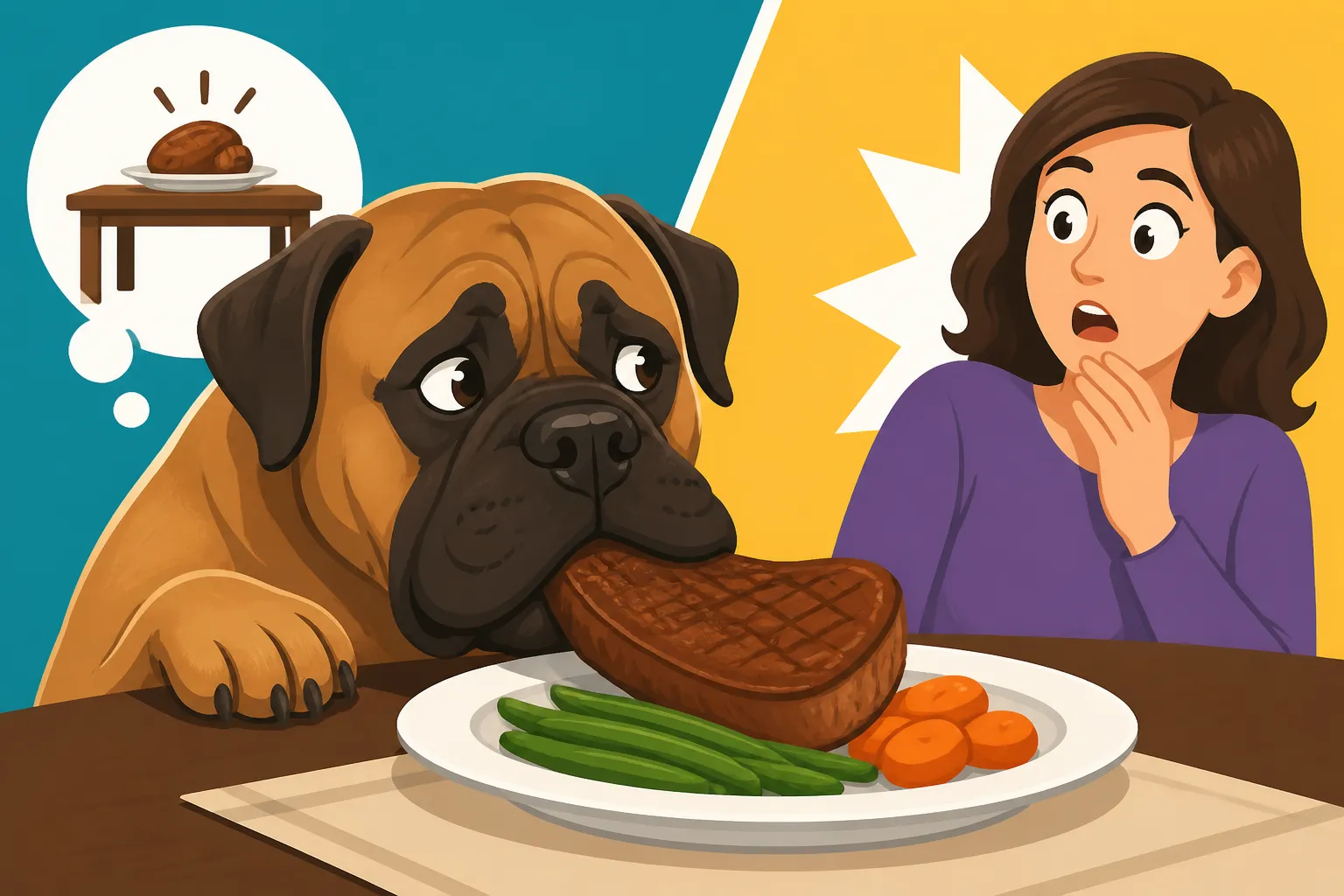
It's a familiar scenario for many Bullmastiff owners: you turn your back for just a second, and suddenly, that perfectly grilled steak or fresh-baked bread has vanished from the counter. Despite their calm demeanor, these gentle giants can be surprisingly agile and opportunistic, making food theft a common and frustrating problem. This guide will dive deep into understanding why your Bullmastiff might be raiding your kitchen and, more importantly, how to implement effective strategies to keep your food safe and your Bullmastiff's paws off the table.
The Canine Caper: Why Your Bullmastiff Becomes a Kitchen Bandit
It’s easy to get upset when your Bullmastiff snatches food, but understanding the root causes of this behavior can help you approach it with more patience and a clearer strategy. They aren't doing it to be malicious; they're simply acting on instinct and learned behavior.
Natural Instincts and Opportunistic Behavior
Think about it: dogs are natural scavengers. In the wild, any food found is food eaten. Your Bullmastiff, for all its domestication, still carries that ancient programming. To them, an unattended plate of cookies or a prime rib cooling on the counter isn't "yours," it's "available." Their incredible sense of smell acts like a homing beacon, drawing them to irresistible aromas emanating from your kitchen. The height of your counter might seem imposing to a smaller dog, but for a Bullmastiff, it's often perfectly within reach, especially if they stand on their hind legs or get a bit of a boost from a chair.
It's not just about hunger, either. Sometimes, it's the thrill of the "hunt." The act of successfully snagging something forbidden can be incredibly self-rewarding. They learn quickly that the brief window of your distraction means a potential culinary jackpot. If they've gotten away with it even once, they've learned that the reward (tasty food) outweighs any potential consequence (your scolding, which often comes too late to be effective). This reinforcement makes the behavior incredibly hard to break without consistent intervention.
Boredom, Attention, and Training Gaps
A bored Bullmastiff is a creative Bullmastiff, and that creativity often manifests in ways we don't appreciate, like exploring the forbidden landscapes of your kitchen countertops. If your dog isn't getting enough mental stimulation or physical exercise, they might turn to "counter-surfing" as a form of entertainment. It’s a puzzle to solve, a game to play, and it often results in a delicious prize. Sometimes, this behavior can even be a bid for attention. If they learn that stealing food leads to you immediately engaging with them, even if it's negative attention, they might continue the behavior just for that interaction.
Beyond boredom, a lack of clear boundaries and consistent training can also contribute significantly. If your Bullmastiff hasn't been taught a solid "leave it" command or that the kitchen is a restricted zone during meal prep, they'll naturally assume it's open season. They thrive on routine and understanding their place in the household hierarchy. When those rules are ambiguous, they're likely to test the limits, especially when high-value rewards like food are involved. It's a common challenge, especially with a breed as intelligent and sometimes as "deliberate" as a Bullmastiff. You might think they understand, but if the rules aren't reinforced every single time, they can quickly fall back into old habits.
The Stealthy Snatch: How Bullmastiffs Execute the Heist
You might wonder how a large, sometimes clumsy-looking dog can manage to swipe food so quickly and efficiently. Don't underestimate them; Bullmastiffs possess a surprising combination of agility, intelligence, and patience when it comes to their edible desires.
Their Size and Reach: A Natural Advantage
Let's be honest, a Bullmastiff isn't a Chihuahua. Their sheer size gives them a significant advantage when it comes to reaching things that other dogs could only dream of. A full-grown Bullmastiff can easily stand on their hind legs and stretch their neck to survey countertops, kitchen islands, and even dining tables. They don't need to jump high; they just need to stand up. Their long body allows them to sweep an entire section of a counter with relative ease. A quick glance, a subtle shift of weight, and poof, your sandwich is gone.
They are also incredibly strong. If something is within reach, they can often nudge it or pull it down without much effort. A tablecloth, a lightweight cutting board, or a cooling rack can become an unwitting accomplice in their mission. It’s not always a graceful leap; sometimes it's a deliberate, calculated lean and sweep. This is why just putting food "further back" on the counter often isn't enough – a determined Bullmastiff can still find a way to get at it.
Intelligence and Observation Skills
Bullmastiffs are far from dumb. They are observant creatures, constantly learning from our habits and routines. They quickly figure out who leaves food unattended, when the kitchen is bustling, and when there's a lull in activity perfect for a quick raid. They might even recognize the sounds of certain food preparations, like the opening of a chip bag or the sizzle of bacon, and start hovering. This intelligence is a double-edged sword: it makes them wonderful companions, but also formidable food thieves.
They often employ a strategy of patience. They won't always make a move the second you look away. Instead, they might wait for you to leave the room, go to the bathroom, or get engrossed in a phone call. They're watching, learning, and perfecting their timing. They might even try to distract you first with a nudge or a soft whine, only to strike when your guard is down. It's a testament to their problem-solving abilities, even if it is aimed at your dinner. This learned behavior is why consistency in prevention and training is so crucial. If they never succeed, they eventually stop trying.
Safeguarding Your Sanctuary: Practical Prevention Strategies
Preventing food theft is far easier than trying to break a well-established habit. It involves a combination of smart environmental management and consistent training.
"If I Can See It, It's Mine": Managing Your Environment
The golden rule here is simple: if you don't want your Bullmastiff to eat it, don't leave it where they can reach it. This means everything edible. It's not just about dinner; it's about groceries, kids' snacks, even dirty dishes with tempting leftovers.
Start by surveying your kitchen from your Bullmastiff's perspective. Get down on their level, or even stand up and imagine their full reach. What's on the edge of the counter? What's on the dining room table? What's in the low pantry? Consider putting child locks on accessible cabinets if your Bullmastiff is particularly crafty. Use tall, secure trash cans with locking lids, especially if you're throwing out food scraps that smell appealing. Even empty food packaging can be a temptation.
For times when you're actively cooking or eating, establish clear boundaries. Invest in baby gates or tall pet gates (you'll need robust ones for a Bullmastiff's size) to block off kitchen access when you can't actively supervise. Brands like Amazon offer a wide range of extra-tall, heavy-duty gates that can stand up to a persistent Bullmastiff. This physical barrier removes the opportunity, which is the first step in breaking the habit. Never underestimate their determination. One slip-up on your part can reinforce days of good behavior.
Feeding Habits and Mental Stimulation
Believe it or not, how you feed your Bullmastiff can influence their counter-surfing habits. Ensuring they are adequately fed and nutritionally satisfied can sometimes reduce their drive to seek out extra food. If they are constantly hungry or not getting enough calories for their large size, the temptation to steal will be even greater. Always provide a high-quality, balanced diet appropriate for their age and activity level. If you're ever unsure about their dietary needs, consult your veterinarian.
Beyond quantity, consider how they eat. If your Bullmastiff gulps down their food in seconds, they might still feel unsatisfied or restless afterward. Using a slow feeder bowl can prolong mealtime, providing a bit of mental engagement and helping them feel fuller. You can find excellent slow feeder options on Chewy that are robust enough for a Bullmastiff. Also, ensure they have appropriate chewing outlets and puzzle toys to keep their minds engaged, especially when you can't be directly interacting with them. A tired mind is often less inclined to mischief.
Here's a quick comparison of preventative methods:
| Method | Description | Effectiveness | Effort Level |
|---|---|---|---|
| Clear Counters | Absolutely nothing edible left within reach, ever. | High | Moderate |
| Secure Trash Cans | Use locking or heavy-duty bins. | High | Low |
| Baby/Pet Gates | Physically block kitchen access during unattended times. | High | Moderate |
| Slow Feeder Bowls | Prolongs mealtime, reduces food-seeking behavior. | Medium | Low |
| Mental Enrichment | Puzzle toys, long-lasting chews, training sessions. | Medium | Moderate |
| Consistent Feeding | Regular, adequate meals. | Medium | Low |
| Supervision | Actively watch your Bullmastiff when food is out. | High | High |
Training Your Bullmastiff: Teaching Boundaries and Control
Environmental management is crucial, but true success comes from training your Bullmastiff to understand and respect boundaries around food. This requires patience, consistency, and positive reinforcement.
"Leave It" and "Off": Essential Commands
Teaching a reliable "leave it" command is perhaps the most powerful tool in your arsenal against food theft. This command teaches your Bullmastiff to disengage from something tempting and turn their attention to you instead. Start in a low-distraction environment with a low-value item, gradually increasing the value of the item and the level of distraction. Reward generously with high-value treats (perhaps some delicious options from Ollie that your Bullmastiff loves) when they obey. Practice this constantly, not just when food is involved.
The "off" command is also vital, especially if your Bullmastiff likes to jump up on counters or people. This teaches them that four paws must remain on the floor. Again, practice consistently and reward when they comply. For a large breed like a Bullmastiff, physical prevention of jumping is often easier when they're young, but positive reinforcement, consistently applied, is the key to lasting change. Never use harsh physical corrections, as this can create fear or resentment without teaching the desired behavior. A simple "off!" followed by removing yourself or the item, and then rewarding when they settle, is far more effective. For more guidance on their intelligence and how they learn, consider The Bullmastiff That Pauses to Decide Whether You Are Worth It.
Crate Training and Designated "Safe Zones"
Crate training can be an invaluable tool for Bullmastiff owners, especially concerning food management. A crate provides a safe, secure den for your dog, and it also serves as a reliable way to contain them when you cannot supervise them directly, such as during meal times or when cooking a complex dinner. If your Bullmastiff is happily crate trained, you can simply have them relax in their crate with a chew toy while you prepare and eat your own meals, removing any opportunity for theft. Remember that the crate should always be a positive place, never used for punishment.
Beyond crating, consider establishing designated "safe zones" where your Bullmastiff can relax, such as a dog bed in a different room or a spot behind a baby gate. This teaches them that certain areas are off-limits during specific times. For example, during dinner, your Bullmastiff might be expected to lie on their bed in the living room. Reward them heavily for staying in their designated spot and ignoring the kitchen activities. This not only prevents food theft but also promotes a calmer, more structured household environment. Consistent enforcement of these boundaries is key; even one successful "raid" can undo weeks of training. Don't forget to look into How a Bullmastiff Behaves at a Front Door for other useful boundary training tips.
When Theft Occurs: Reacting Effectively and Safely
Even with the best preventative measures and training, there might be times when your Bullmastiff manages to snag something. How you react in these moments is crucial.
Prioritizing Safety
The absolute first priority when your Bullmastiff steals food is their safety. Many human foods are toxic or dangerous for dogs. Things like chocolate, grapes, onions, garlic, xylitol (a common sugar substitute), avocado, macadamia nuts, and certain cooked bones can be incredibly harmful. If your Bullmastiff has ingested something potentially toxic, do not hesitate – contact your veterinarian or an emergency animal clinic immediately. Have details ready about what they ate, how much, and when. Do not try to induce vomiting without veterinary guidance, as this can sometimes cause more harm.
For non-toxic items, while frustrating, try to remain calm. Yelling or chasing your Bullmastiff can inadvertently turn it into a fun game for them or cause them to resource guard their stolen prize more fiercely. If they're still in the act of taking something, a sharp, firm "No!" or "Leave it!" might stop them, but once it's in their mouth and they've run off, the moment for intervention has often passed. Your focus should then shift to future prevention. You might find more information on Whether a Bullmastiff Suits a First Time Owner helpful in managing such situations.
Discouraging Future Thefts
If your Bullmastiff has successfully stolen food, the immediate consequence should be a complete lack of reward. This means no attention, no chasing, and certainly no giving them back parts of the food. The act of stealing was the reward. The key to discouraging future thefts lies in making sure they never get to keep the stolen goods, and reinforcing that such behavior doesn't lead to positive interactions.
After a theft, take a moment to reflect on what went wrong. Was something left within reach? Was supervision lacking? Did you forget to gate off the kitchen? Use it as a learning experience to tighten your preventative measures. Increase your vigilance, reinforce your "leave it" and "off" commands more rigorously, and review your environmental setup. Remember, consistency is king with Bullmastiffs. Every successful theft strengthens the habit. Every time they are prevented from stealing, or choose to "leave it," weakens the habit. It takes dedication, but a Bullmastiff that respects kitchen boundaries is a much happier and safer companion for everyone. Understanding Why a Bullmastiff Ignores a Cue It Knows can also provide valuable insights here.
Disclaimer
This article is for general informational purposes only and does not constitute professional advice. Laws, prices and regulations vary by location and change over time. Consult a qualified professional for guidance on your specific situation.