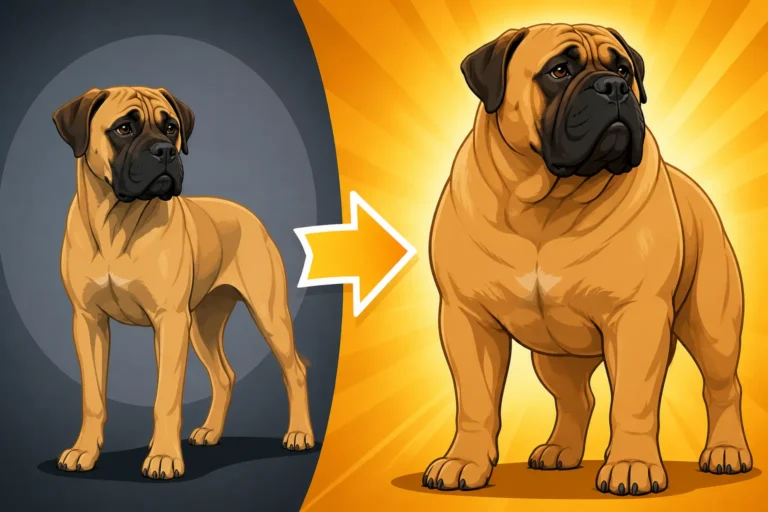
How Much a Bullmastiff Begs
Ah, the soulful eyes, the gentle nudge, the subtle lean… if you're a Bullmastiff owner, you know these maneuvers all too well, especially when food is involved. It's frustrating when your majestic companion turns into a furry, drooling statue by the dinner table, making you feel guilty for every bite. This guide is here to help you understand why your Bullmastiff begs, what those appeals really mean, and how you can manage this common, albeit sometimes overwhelming, behavior in a way that preserves both your sanity and your dog's dignity.
The Bullmastiff's Instinct to Beg: More Than Just a Cute Face
It’s easy to feel like your Bullmastiff is personally trying to manipulate you with their intense stare or a well-placed paw, but their begging behavior often stems from a combination of instinct, intelligence, and learned habits. Understanding these roots is the first step toward addressing the issue effectively. It’s not just about being "naughty"; it's a window into their world.
Bred to Be Close and Attentive
Consider the history of the Bullmastiff. They were originally developed in England to assist gamekeepers in guarding estates, quietly apprehending poachers. This meant they needed to be highly attentive to their human handler and the surroundings. They were bred to be constantly aware, observing every move, every signal. While they weren't explicitly bred to beg for food, this inherent attentiveness translates into a keen awareness of what you are doing, especially when it involves something as high-value as food. They are literally watching for opportunities, just as their ancestors watched for trespassers. This close bond and desire to be involved in your activities, even your meals, can easily morph into begging if not properly guided.
A Natural Drive for Resources
Let's be honest, Bullmastiffs are big dogs, and big dogs need a lot of fuel. While we do our best to provide them with complete and balanced meals – whether it's a high-quality kibble found on Chewy or a fresh-food option like Ollie – their internal wiring still whispers about resource acquisition. In the wild, or even in less domesticated settings, extra food, especially human food, is a valuable commodity. When they see you consuming something that smells absolutely divine, their primal instinct kicks in. They don't necessarily feel deprived if they've just eaten; it's more about the opportunity for a bonus, something different and exciting. Their sheer size also means they have a significant appetite, and they’re not shy about letting you know they could always use a little more. For more on what these big dogs need, read How Much Food a Bullmastiff Needs.
The Power of Positive Reinforcement (Accidental Edition)
This is where many of us, myself included, can sometimes go wrong. Bullmastiffs are incredibly smart, and they are masters at figuring out what works. If, even once, their persistent gaze or soft whine resulted in a tiny morsel falling from the table, or a sympathetic pat, they’ve learned a powerful lesson: begging works! It doesn't take many repetitions for a Bullmastiff to connect their behavior with a desired outcome. A little piece of dropped chicken or a bite of cheese, no matter how small, becomes a jackpot. They remember this. Even if you only cave "just this once" every few weeks, that inconsistent reinforcement is incredibly potent. It teaches them that if they just keep trying, eventually, they'll hit the jackpot again. This is why consistency in managing begging is absolutely paramount.
Decoding Your Bullmastiff's Begging Style
Begging isn't always a dramatic performance. With a Bullmastiff, it can range from incredibly subtle to overtly demanding. Learning to recognize these different "tells" can help you respond appropriately and consistently, rather than waiting for the full-blown Oscar-worthy performance.
The Silent, Staring Sentinel
Often, the most powerful form of Bullmastiff begging is utterly silent. Picture this: you're enjoying your dinner, and from across the room, you feel a presence. You look up, and there it is – your Bullmastiff, perfectly still, eyes locked onto you, or more specifically, your plate. There's no bark, no whine, just an unwavering, intense gaze that seems to bore into your very soul. It’s a classic Bullmastiff move, leveraging their imposing presence without making a sound. Their expressive faces, often with those deep, thoughtful brows, only amplify the feeling of being judged for not sharing. This silent sentinel routine can be incredibly effective at making you feel guilty, almost as if they're quietly observing your selfishness.
The Lean, the Nudge, and the Paw
As if the stare isn't enough, many Bullmastiffs will escalate to physical contact if the silent treatment isn't yielding results. This might start with a gentle lean against your leg as you sit at the table. It's a subtle way of reminding you they're there, present, and ready to participate. If that doesn't work, a soft nudge with their massive head might follow, perhaps resting their jowl on your lap. It's easy to mistake this for affection, but often, it's a calculated move. Then comes the paw. A Bullmastiff's paw is not small, and a gentle tap can quickly turn into a more insistent thud on your knee or arm. It’s a physical manifestation of "Hey, over here! Don't forget about me!" These behaviors, while endearing in other contexts, are deliberate pleas when food is present. For practical tips on training, see Training a Bullmastiff That Weighs More Than You Do.
The Drool Factor: An Unintentional Amplifier
Let's talk drool. Bullmastiffs are known for their magnificent jowls, and these jowls are fantastic at collecting saliva, especially when anticipating food. While your Bullmastiff might not be trying to drool on your floor or lap, the act of salivating heavily amplifies their begging message. The sight of a shimmering puddle forming next to your chair, or worse, a long string dangling precariously, can be incredibly persuasive. It creates a sense of urgency, a visual cue of their intense desire. It also adds a layer of mess that many owners would rather avoid, sometimes leading to a quick "here, just take it!" to prevent further clean-up. Remember, managing this drool is a daily task anyway, as discussed in How Much a Bullmastiff Drools.
Here's a quick look at common Bullmastiff begging behaviors and what they might be signaling:
| Behavior | Common Interpretation | Owner's Feeling |
|---|---|---|
| Silent Stare | "I am here. I see your food. I would like some." | Guilt, observed, pressure |
| Head Nudge / Lean | "Hello? Still here. Just a reminder." | Affectionate pressure, slightly manipulative |
| Paw Tap | "Excuse me, human. My needs are pressing." | Insistent, demanding, hard to ignore |
| Whine / Soft Grunt | "Oh, if only you knew my suffering." | Pity, empathetic, sad |
| Drooling Heavily | "My mouth waters for your delicious bounty!" | Disgust (at mess), urgency, sympathetic hunger |
| Sitting Politely | "I am being a very good boy/girl… for now." | Appreciation, but still an expectation |
Practical Strategies to Manage a Bullmastiff's Persistent Pleas
Managing begging is less about eliminating the desire to beg and more about changing the behavior itself. It requires consistency, patience, and a united front from everyone in the household. It won't happen overnight, especially with a dog as smart and determined as a Bullmastiff.
Rule Number One: No Human Food from the Table
This is the golden rule, the bedrock of anti-begging strategy. It needs to be absolute. Not "sometimes," not "just a little bite," not "only when it's healthy." Never. Even a tiny crumb, once every blue moon, is enough to reinforce the behavior. Your Bullmastiff doesn't understand exceptions; they only understand that begging can work. This means communicating clearly with everyone who interacts with your dog – family, guests, even young children – that table scraps are completely off-limits. If Uncle Bob sneaks a piece of bacon under the table, your weeks of hard work can be undone in seconds. Consider offering safe, dog-specific treats from a reputable source like Amazon away from the dining area, perhaps as a reward for calm behavior in another room, to redirect their association with treats. For more on what motivates them, see What Motivates a Bullmastiff.
The "Place" Command: A Game-Changer
Teaching your Bullmastiff a "place" command is incredibly valuable. This involves training them to go to a designated spot – a mat, their bed, or a specific area of the room – and stay there calmly while you eat. Start with short durations and reward heavily for compliance, especially when food is present but they are not begging. This provides them with a clear alternative behavior that does get rewarded. When you sit down to eat, immediately send them to their place. If they get up, gently guide them back without scolding. Only reward when they are in their place and calm. This creates a clear boundary and teaches them that good things happen when they respect your mealtime space, not when they invade it.
Ignorance is Bliss (for Begging Behavior)
This one is tough, especially when those big, sad eyes are on you. When your Bullmastiff starts to beg, completely ignore them. This means no eye contact, no talking to them, no pushing them away, and certainly no giving in. Turning your back, looking at the ceiling, or even getting up and leaving the room for a moment if they persist can be effective. The moment they stop begging, even for a second, and display a calm behavior (like lying down, looking away), that's your chance to reward them quietly with praise or a low-value treat, away from the table. The goal is to make begging unproductive and calm behavior productive. It’s a tricky balance, but critical for a breed that thrives on attention, as even negative attention can reinforce the behavior.
Ensuring Satiety and Appropriate Nutrition
Sometimes, begging can stem from genuine hunger, especially if your Bullmastiff isn't getting enough to eat or their food isn't satisfying. Ensure you are feeding a high-quality, large-breed formula that meets their nutritional needs. Consult your vet to confirm the right portion sizes for their age, activity level, and ideal body condition. Feeding a Hundred and Thirty Pound Bullmastiff and Keeping a Bullmastiff Lean Is the Best Thing You Can Do are great resources for understanding their dietary needs. A full belly can reduce the intensity of their food drive. You might also consider feeding your Bullmastiff their own meal before your family sits down to eat. This way, they're fed and potentially more content during your mealtime.
Long-Term Harmony: Living with a Bullmastiff's Mealtime Manners
Training a Bullmastiff to stop begging isn't a one-and-done deal. It's an ongoing process, a continuous reinforcement of good habits, and realistic expectations. Your Bullmastiff will always be interested in food, but you can teach them to express that interest appropriately.
Consistency Across All Family Members and Guests
This is perhaps the biggest challenge. Every single person who ever feeds or interacts with your Bullmastiff needs to be on board with the "no table scraps" and "go to your place" rules. A single slip-up can set you back significantly. It's often helpful to have a short, clear explanation ready for guests: "We're working on manners, so please don't feed him from the table. We appreciate your help!" If you have children, consistent supervision and age-appropriate explanations are vital. Make sure everyone understands that they are helping the dog by sticking to the rules, not being mean to them.
Managing Expectations and Realistic Goals
Let's be real: your Bullmastiff is unlikely to ever completely lose interest in food. The goal isn't to make them indifferent to your meals, but to teach them polite boundaries. Expecting them to never even glance at your plate might be unrealistic. Instead, aim for them to go to their designated spot, lie down calmly, and not actively solicit food. There might be an occasional sigh or a shift in position, but the dramatic performance should disappear. Celebrate small victories and don't get discouraged by occasional regressions; just calmly and consistently redirect them. Understanding that this is a long game for a breed that matures slowly (see When a Bullmastiff Finishes Maturing) is key.
Enrichment During Meal Times
Sometimes, a begging Bullmastiff is a bored Bullmastiff. While you're eating, give them something constructive and engaging to do in their "place" that will keep their minds and mouths busy. A durable chew toy filled with frozen peanut butter, a Kong filled with their kibble and a bit of wet food, or a puzzle feeder can be fantastic distractions. This redirects their attention from your food to their own engaging activity, associating calm, independent chewing with your mealtime. You can often find a wide variety of such enrichment toys on Chewy or other online pet retailers. This can satisfy their natural chewing instincts and keep them occupied for a good portion of your meal.
Addressing Other Food-Related Behaviors
Begging is just one facet of a Bullmastiff's food-driven nature. You might also find yourself dealing with counter-surfing or even outright Whether a Bullmastiff Steals From the Table. The same principles of consistency, management, and redirecting behavior apply. Keep counters clear, secure garbage cans, and reinforce good manners around food at all times, not just during your meals. The aim is to teach your Bullmastiff that all human food, unless specifically offered in a training context away from the table, is off-limits. This holistic approach helps to build a clear understanding of boundaries around food, making for a much more peaceful household.
Disclaimer
This article is for general informational purposes only and does not constitute professional advice. Laws, prices and regulations vary by location and change over time. Consult a qualified professional for guidance on your specific situation.