What Motivates a Bullmastiff
It can be incredibly frustrating when you're trying to teach your big, beautiful Bullmastiff something new, and they just… sit there. Or worse, they give you that slow, deliberate blink that screams, "Are you sure this is worth my effort?" You're not alone in wondering what truly lights a fire under these magnificent, often perceived as stubborn, giants. This guide dives deep into the heart of what truly motivates a Bullmastiff, helping you unlock their potential and build an even stronger bond through understanding.
The Bullmastiff's Innate Drive: Understanding Their Roots
To truly understand what motivates a Bullmastiff, we have to go back to their origins. These aren't dogs bred for endless, eager-to-please retrieves or high-octane agility courses. Their purpose was far more grounded and, frankly, vital. Ignoring this historical context is like trying to teach a fish to climb a tree – you're fighting against their very nature.
Bred for Purpose, Not Endless Enthusiasm
Bullmastiffs were developed in 19th-century England by gamekeepers who needed a formidable, yet quiet and reliable, companion to catch poachers. They weren't meant to be flashy; they were meant to be effective. Their job was often at night, requiring immense concentration, courage, and a powerful "hold" rather than a noisy, frantic pursuit. This translates directly to their modern temperament: they are incredibly observant, intelligent, and capable, but they tend to be very thoughtful about expending energy. They weigh their options, assess the reward, and then decide if it's worth the effort. It's not stubbornness as much as it is a deep-seated efficiency ingrained from generations of working with a very specific, serious purpose. You won't get a million repetitions of a trick out of them just for the sheer joy of it; they'll do it a few times, understand it, and then look at you like, "Okay, task complete. What's next, and is it really important?"
This methodical approach to life means that repetitive, drill-based training can quickly become monotonous for them. They thrive on clarity and understanding why they are being asked to do something, even if that 'why' is simply a highly desirable reward. If they perceive a task as pointless or if the reward isn't compelling enough, you'll be met with that classic Bullmastiff ponderous pause. It's not defiance; it's assessment. Understanding this core trait is the first step in successful training. If you want to know more about their working history, check out What a Bullmastiff Was Bred to Do to a Poacher.
The "Hold, Don't Harm" Mentality and Its Impact on Motivation
The unique "hold, don't harm" principle central to the Bullmastiff's original job profoundly influences their motivational structure. A gamekeeper needed a dog that could track, quietly apprehend, and physically pin down a poacher without mauling them. This required immense self-control, strength, and an ability to gauge a situation rather than react impulsively. Such a task demands a dog that is intelligent enough to discern threat levels and apply appropriate force, or rather, restraint.
This translates into a dog that often prefers quiet observation over boisterous engagement, and whose motivation stems from a desire for security, stability, and approval from their trusted human. They are less driven by the frenetic energy of some breeds and more by a calm, confident connection. When a Bullmastiff responds to a cue, it's often not because they're bursting with excitement, but because they respect you and understand the expectation. Their internal reward system is heavily tied to maintaining harmony and fulfilling their role within their "pack" – your family. They appreciate leadership that is consistent and fair, and they will work to please a leader they trust. This isn't to say they don't enjoy play or treats, but the underlying motivation is often a deeper social contract. For more on their innate temperament, read Why a Bullmastiff Was Bred Not to Kill.
Beyond Treats: Exploring a Bullmastiff's True Desires
While food can be a fantastic tool, assuming a Bullmastiff is only motivated by treats is a disservice to their complex nature. Like us, they have a hierarchy of needs and desires, and understanding these can unlock a far deeper level of engagement and willingness to learn.
Praise and Affection: The Currency of Love
For a Bullmastiff, praise and genuine affection are incredibly powerful motivators, often even more so than a routine piece of kibble. These dogs are deeply loyal and form intense bonds with their families. When you offer sincere verbal praise, a gentle scratch behind the ears, or a hearty rub, you're not just giving a fleeting reward; you're reinforcing their place in your heart and their contribution to the family unit. Think of how a Bullmastiff tends to lean into you or follow you from room to room – they crave connection.
This isn't to say you should skimp on tasty treats, especially during initial training, but always pair those treats with enthusiastic praise and physical affection. The combination helps them associate positive feelings and your approval with the action they just performed. A Bullmastiff who feels cherished and respected will often go the extra mile for you. This means using your voice and touch intentionally. A quiet, reassuring "good boy/girl" can be just as effective as a high-pitched "YES!" from another breed. Tailor your praise to match their calm, dignified demeanor. They don't usually respond well to high-energy, frantic praise, but a deep, happy tone and a comforting stroke can mean the world.
Play and Engagement: Building a Bond
While not typically known for endless games of fetch, Bullmastiffs do enjoy play, and it can be a vital motivator for training, especially with puppies and adolescents. The key is to find their kind of play. This often involves short bursts of tug-of-war, a satisfying chase with a durable toy, or a game of "find the treat" that engages their scent drive. The joy for them isn't always in the athletic prowess, but in the shared experience and the mental engagement.
Using play as a reward means understanding that the game itself is the prize. If you're working on a recall, for example, a successful return could be rewarded with a quick, vigorous tug session, then the toy is put away. This builds value into the interaction with you. Puzzle toys, especially those you can fill with food, also provide excellent mental stimulation and can be a fantastic way to motivate a Bullmastiff who needs a challenge. You can find a wide variety of these on platforms like Amazon, offering different difficulty levels. Remember, playtime is bonding time, and a strong bond makes training infinitely easier. For some ideas on activities, read What Mental Work a Bullmastiff Needs.
The Power of Routine and Predictability
Bullmastiffs are creatures of habit and thrive on routine. This might not seem like a "motivator" in the traditional sense, but predictability provides a deep sense of security and reduces anxiety, making them far more receptive to learning. When they know what to expect, they can relax and focus. A consistent daily schedule – meal times, walk times, training times, even quiet relaxation times – helps a Bullmastiff feel in control of their environment.
When training is integrated into a predictable routine, it becomes a natural part of their day, rather than an unexpected demand. For example, if you always do a short training session before dinner, they will learn to anticipate it and might even start offering behaviors proactively. The comfort of knowing "what happens next" is a powerful, underlying motivator for their cooperation. Disruptions to routine can throw a Bullmastiff off balance, potentially making them less inclined to engage or more prone to that thoughtful "wait and see" approach. Consistency breeds confidence, and a confident Bullmastiff is a motivated Bullmastiff.
Navigating the Bullmastiff's Deliberate Nature in Training
The Bullmastiff's thoughtful, deliberate nature is both a charming characteristic and, at times, a challenge in training. They aren't going to offer behaviors with lightning speed, nor are they likely to repeat an action endlessly without a compelling reason. Understanding this fundamental aspect of their personality is crucial for effective training.
The "Thinking Dog" Syndrome
You might find yourself giving a cue to your Bullmastiff, and instead of an immediate response, you get a moment of stillness, perhaps a slight head tilt, or a slow blink. This isn't usually defiance; it's what many call the "thinking dog" syndrome. They are processing the request, evaluating the context, and sometimes even considering the most efficient way to comply. For a breed originally tasked with a serious, independent job, this deliberation was an asset, not a flaw. They had to assess situations and act strategically, not impulsively.
This means your training approach needs to respect their cognitive process. Avoid rapid-fire cues or becoming impatient if their response isn't instantaneous. Give them a moment. Wait them out. Often, that pause is followed by a perfect execution of the command. If you constantly interrupt their thinking process or become frustrated, you're more likely to shut them down than speed them up. Instead, use clear, consistent cues, and then give them the space to respond. When they do, reward them generously to reinforce that their careful consideration leads to positive outcomes. This is also why harsh corrections tend to backfire with them; they don't understand being punished for thinking. You can learn more about this in Why a Bullmastiff Pauses Before Obeying.
Short, Sweet, and Successful Sessions
Given their deliberate nature and tendency towards efficiency, long, drawn-out training sessions are often counterproductive for a Bullmastiff. They are not built for endless repetitions; once they understand something, they consider it learned. Continuing to drill a command they already know can lead to boredom, disengagement, and that stubborn refusal to participate. Their attention span, while focused when engaged, isn't necessarily long for repetitive tasks.
The most effective training strategy for a Bullmastiff involves short, frequent sessions – think 5-10 minutes, a few times a day. Each session should aim for a high rate of success, ending on a positive note. This means setting them up to win. If you're teaching a new behavior, break it down into tiny, achievable steps. As soon as they show even a flicker of the desired action, mark it and reward it. By keeping sessions short and successful, you keep their motivation high and prevent mental fatigue. They'll leave the session feeling good about their efforts, eager to participate next time, rather than feeling overwhelmed or bored. This approach respects their intelligence and their natural inclination towards purposeful action. For more practical advice on session length, see How Short a Bullmastiff's Training Session Should Be.
Tools and Techniques to Tap Into Motivation
Understanding what drives your Bullmastiff is one thing, but translating that into effective training practices requires the right tools and techniques. It's about working with their unique temperament, not against it.
High-Value Rewards and Strategic Use
While praise and routine are important, high-value food rewards remain an indispensable tool, especially when introducing new commands or working in distracting environments. "High-value" means something truly irresistible to your Bullmastiff – think small pieces of cooked chicken, cheese, or hot dogs, not their regular kibble. Save these special treats for special occasions during training. If you use them constantly, they lose their appeal.
The strategic use of these rewards is key. When your Bullmastiff performs a desired action, deliver the high-value treat immediately. This clear, instant feedback helps them understand exactly what behavior earned the reward. For instance, when practicing recall, having a super tasty treat ready the moment they reach you can make a huge difference in their future reliability. You can easily find a vast selection of durable treat pouches on Amazon to keep these rewards readily accessible during training walks or sessions. The novelty of the reward can also be a motivator; rotating different high-value treats keeps things interesting and prevents them from becoming desensitized to any one particular food.
Structured Training Programs
While Bullmastiffs are independent thinkers, they benefit immensely from structured training programs, particularly those that emphasize positive reinforcement and build a strong foundation of communication. Generic obedience classes are a start, but sometimes a program that understands the unique pace and temperament of a larger, more deliberate breed can be more beneficial. Online platforms like BAXTER & Bella offer comprehensive puppy and adult dog training programs that can be tailored to your schedule and your dog's learning style. Their approach often focuses on building relationship and understanding, which resonates well with the Bullmastiff's loyal nature.
A well-structured program helps you, the owner, develop consistent communication signals and expectations, which in turn provides the predictability your Bullmastiff thrives on. It can also help you anticipate common challenges, such as their tendency to be How Stubborn a Bullmastiff Is or how they might react to new people (How a Bullmastiff Greets a Stranger). These programs often include advice on how to integrate short, effective training bursts throughout the day, ensuring your Bullmastiff stays engaged without being overwhelmed. Moreover, a structured curriculum can guide you through increasingly complex behaviors, ensuring that you're always setting your Bullmastiff up for success.
Environmental Enrichment as a Motivator
A mentally stimulated Bullmastiff is a more motivated and cooperative Bullmastiff. Environmental enrichment isn't just about providing toys; it's about making their living space and daily life engaging. This can include rotating toys, offering chew items that last, using snuffle mats or slow feeders to make meal times a challenge, or engaging them in scent work games around the house or yard. Even simply changing up your walking route offers a novel experience and new smells, which can be highly stimulating.
A Bullmastiff who is bored or under-stimulated can become lethargic or, conversely, engage in undesirable behaviors like chewing or counter-surfing to entertain themselves. By proactively providing enrichment, you're tapping into their natural curiosity and problem-solving abilities. This mental exercise serves as a powerful intrinsic motivator, making them more attentive and ready to learn when formal training sessions occur. A dog that feels mentally satisfied is often happier and more willing to engage in cooperative behaviors. Remember, their minds are as big as their bodies, and they need to be exercised just as much.
Here's a quick comparison of different motivators for your Bullmastiff:
| Motivator Type | Best Use Case | Effectiveness with Bullmastiffs | Potential Drawbacks |
|---|---|---|---|
| High-Value Treats | New commands, high-distraction environments, shaping | Very effective for initial learning and difficult tasks | Over-reliance can diminish value; can lead to weight gain |
| Praise & Affection | Reinforcing known behaviors, building bond, maintenance | Highly effective due to their loyal and people-oriented nature | Must be sincere; less impactful for novel, high-stress situations |
| Interactive Play | Building enthusiasm, reward for recalls, energy release | Good for engagement; strengthens bond; must be their kind of play | Not always suitable for complex obedience; can be overstimulating |
| Verbal Markers | Precise timing of reward; communication | Excellent for clear communication and behavior pinpointing | Requires consistent pairing with other rewards; not a standalone motivator |
| Environmental Enrichment | Preventing boredom, mental stimulation, general well-being | Improves overall receptiveness to training; reduces problem behaviors | Not a direct reward for specific actions; takes proactive planning |
| Routine & Predictability | Reducing anxiety, fostering security, foundational trust | High intrinsic value; supports consistent behavior and learning | Can be rigid if not balanced with flexibility; not a direct training reward |
Common Motivational Roadblocks and How to Overcome Them
Even with the best intentions and strategies, you might still hit a wall with your Bullmastiff. There are several common roadblocks that can stifle a Bullmastiff's motivation, but understanding them is the first step toward finding solutions.
Distractions and Overstimulation
Bullmastiffs are naturally observant and can be very sensitive to their environment. What might seem like a minor distraction to us – a squirrel in the distance, a new smell on the ground, a passing car – can completely derail their focus during a training session. Their deliberate nature means they often need time to process their surroundings, and if those surroundings are too busy, their "thinking dog" mode can get overloaded. They might decide that the environmental input is far more interesting or important than your request, especially if the reward isn't compelling enough.
To overcome this, start training in a quiet, low-distraction environment, like your living room or a secluded part of your yard. Gradually introduce mild distractions as your Bullmastiff masters the behavior. For example, once they reliably "sit" in the kitchen, try it in the living room, then near an open window, then outside in the yard, and finally in a park. Always increase the value of your rewards when increasing distractions. A piece of kibble might work in your quiet home, but that cooked chicken will be far more effective at the park. Remember that consistency and patience are your best friends here. For general outdoor safety, you can also consider a long line found on Amazon, giving them some freedom to explore smells but keeping them within your training bubble.
Over-Reliance on Force or Frustration
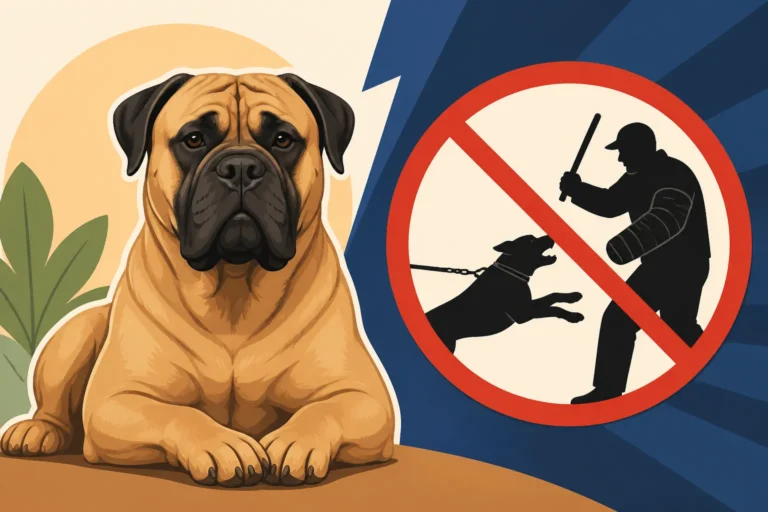
It's tempting when a Bullmastiff isn't responding to push harder or get frustrated, especially given their immense size and perceived stubbornness. However, this approach almost always backfires with these sensitive giants. Bullmastiffs do not respond well to harsh corrections, yelling, or physical intimidation. Their loyalty and trust are paramount, and a heavy-handed approach will erode that bond, making them shut down, become fearful, or simply refuse to engage. They don't understand being punished for thinking, or for being slow. As it's described in Why Harsh Correction Fails on a Bullmastiff, their sensitive nature requires a different touch.
Instead, if you find yourself getting frustrated, take a break. Step away, gather your composure, and come back later with a fresh perspective. Re-evaluate your training method: Is the cue clear? Is the reward high-value enough? Is the environment too distracting? Are you asking for too much too soon? Positive reinforcement is the only way to build lasting motivation and a strong relationship with a Bullmastiff. Celebrate small successes and ignore minor missteps, redirecting them to the correct behavior without anger. Consistency and clarity, delivered with a calm, confident demeanor, will motivate them far more than any force ever could.
Health and Comfort as Underlying Factors
Sometimes, a sudden lack of motivation or a change in temperament isn't a training issue at all, but rather a sign of an underlying health problem or discomfort. A Bullmastiff who is experiencing joint pain, dental issues, a thyroid imbalance, or even just feeling a bit under the weather won't be as motivated to perform. Their natural instinct is to conserve energy when unwell or uncomfortable. Given their size and propensity for certain health conditions like Hip Dysplasia in a Bullmastiff or Hypothyroidism in a Bullmastiff, it's vital to consider their physical well-being.
If your usually cooperative Bullmastiff suddenly seems lethargic, withdrawn, or unwilling to engage in training, and you've ruled out environmental distractions or changes in your approach, a visit to the veterinarian is always a wise first step. Even subtle changes in posture, gait, or appetite can signal discomfort that impacts their willingness to work. Ensure they have comfortable, orthopedic bedding, a balanced diet, and appropriate exercise for their age and condition. A Bullmastiff who is physically comfortable and healthy is much more likely to be a motivated and happy companion. This is particularly important as they age; Caring for a Bullmastiff Past Six will involve a closer watch on their comfort levels.
Disclaimer
This article is for general informational purposes only and does not constitute professional advice. Laws, prices and regulations vary by location and change over time. Consult a qualified professional for guidance on your specific situation.