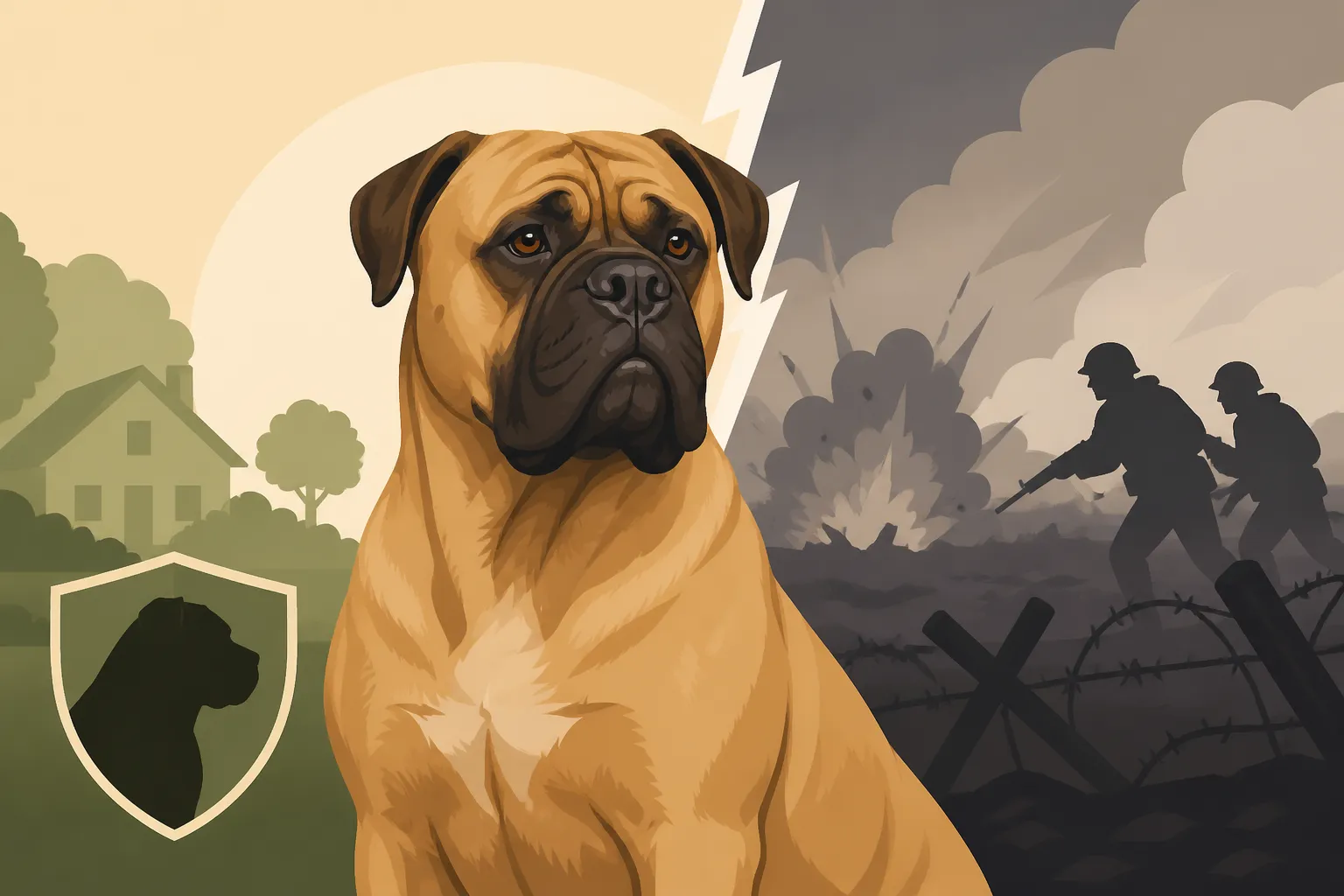
Whether the Bullmastiff Served in Wartime
A Bullmastiff’s imposing build can make it seem like an obvious military dog, but appearance alone doesn’t establish a wartime role. The breed’s history is more specific: Bullmastiffs were developed primarily as estate guardians, and their formal recognition came between the world wars. This guide separates documented breed history from plausible individual uses and explains what “served in wartime” can—and cannot—mean.
Did Bullmastiffs serve in World War I
The breed existed, but was not yet formally recognized
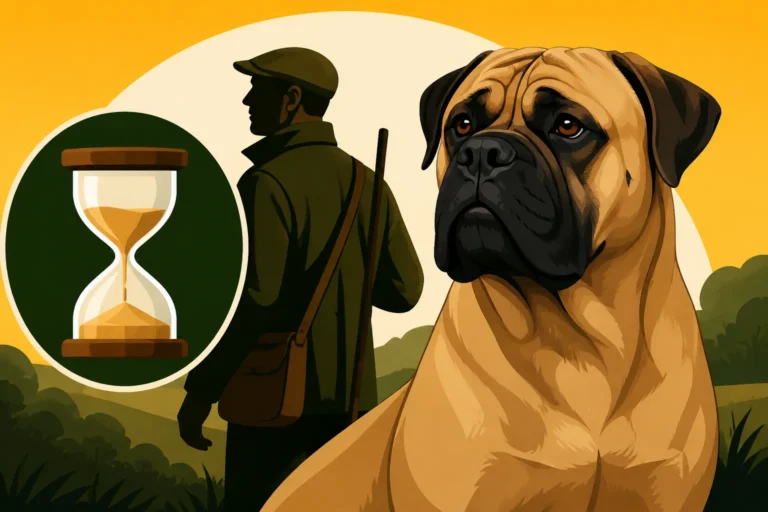
World War I began in 1914, while the Bullmastiff was still taking shape as a distinct breed. Dogs of Bullmastiff type were being developed in Britain, but the breed did not receive Kennel Club recognition until 1924. That timing matters: a dog that resembled a modern Bullmastiff might have been described as a mastiff, a cross, or simply a particular estate’s working dog rather than recorded under the breed name we use now.
That makes it difficult to look for a neat wartime record labeled “Bullmastiff.” Even if a dog of that type was present around military facilities or on a home estate, documents might not identify it as a Bullmastiff. Historical descriptions were not always consistent, and the breed’s identity was still settling. For background on this development, see When the Kennel Club Recognized the Bullmastiff and Which Breeds Went Into the Bullmastiff.
The answer, then, is not that Bullmastiffs could not have existed during World War I. Some dogs of the developing type did. It is that the available breed history does not support describing the Bullmastiff as a widely deployed or formally established military dog during that war.
Their original work was estate protection, not battlefield service
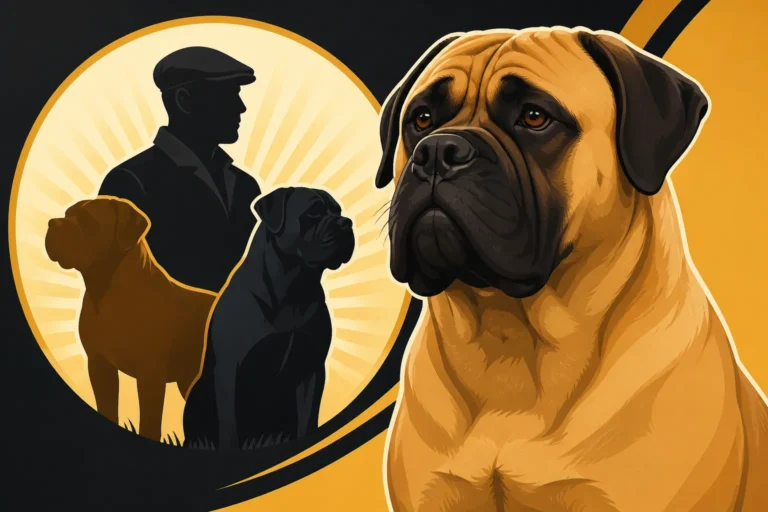
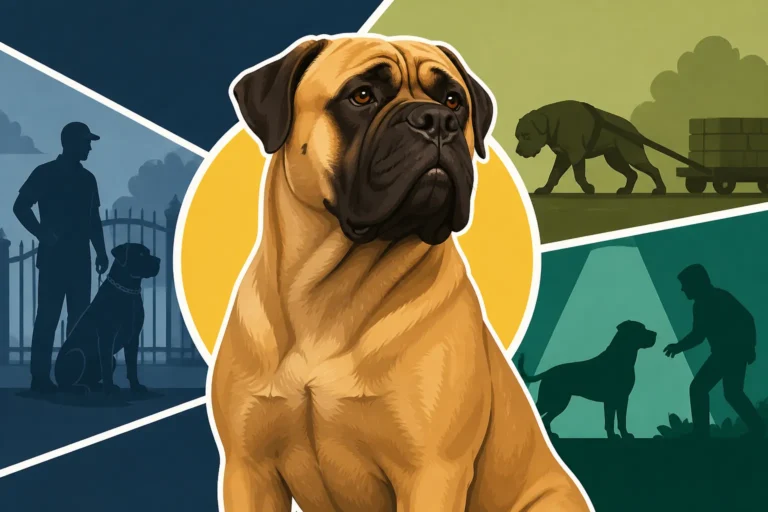
The Bullmastiff’s early purpose was tied to guarding large English estates. Gamekeepers needed a powerful dog that could help catch poachers, often in darkness, and hold a person until the keeper arrived. That work was dangerous, but it was not the same as serving in an army unit, carrying messages, searching battlefields, or transporting supplies.
The distinction can get blurred because both roles involve guarding and physical courage. A dog bred to confront an intruder might look suited to military service, but military work requires specific training, temperament, handling, and a defined task. The Bullmastiff’s historical job was more local and practical: protect an estate and assist its keeper. What English Game Laws Had to Do With the Bullmastiff gives more context for why that role developed.
It is also worth separating a dog’s general usefulness from an official role. A large, steady dog might have been kept to guard a property during wartime, just as other household or working dogs were. That possibility is different from evidence that the breed was recruited, trained, or deployed by the military in an organized way.
Did Bullmastiffs serve in World War II
Individual dogs may have guarded homes or estates
By the time World War II began in 1939, the Bullmastiff was a recognized breed. That makes it more reasonable to speak of a Bullmastiff by name than it is for the First World War period. Still, formal recognition does not prove that the breed had an official military assignment. A recognized breed can be present in a country during wartime without being part of its armed forces.
Individual Bullmastiffs may have remained in private homes, estates, or other properties where guarding was useful. In wartime, security concerns could affect ordinary life, and a dog’s presence might have mattered to a household. But unless a particular dog is tied to a reliable account, it is safer to describe this as possible private or domestic guarding—not verified military service by the breed as a whole.
There is a familiar leap in popular retellings: a breed was around during a war, it was strong and protective, so it must have served. That conclusion skips the evidence. The more careful phrasing is that Bullmastiffs existed during World War II and may have performed ordinary guarding work as individual dogs, but they are not best known as a standardized wartime military breed.
“Wartime dog” can mean several different things
People use “served in wartime” to mean different things. It could mean a dog was officially trained by the armed forces, worked for a military unit, guarded a civilian property during a war, lived with a service member, or simply belonged to a family affected by the conflict. Those are not interchangeable claims.
| Meaning of wartime service | What it would indicate | What can reasonably be said about Bullmastiffs |
|---|---|---|
| Official military deployment | A documented role in a military organization | The Bullmastiff is not generally known as a major standardized military working breed |
| Private property guarding | A dog protected a home, estate, or business | Plausible for individual dogs, but not proof of an organized breed role |
| Individual service story | A named dog has a traceable account | Should be assessed case by case |
| Breed presence during wartime | The breed existed during the conflict | True for World War II; the breed was still developing during World War I |
This distinction helps keep the history honest without dismissing the possibility of individual stories. If someone says their family Bullmastiff guarded a farm during the war, that may describe a real family memory. It does not, by itself, establish that Bullmastiffs served in a formal military capacity.
For a sense of how the breed’s working reputation formed, The Bullmastiff Was Built to Catch Poachers in the Dark explains its original setting. That history helps explain why the breed may be associated with wartime guarding, even when the evidence for official service is limited.
Why Bullmastiffs can seem like natural war dogs
Their physical presence fits a guardian image
A mature Bullmastiff is powerful, broad, and imposing. Those qualities can make the breed seem like an obvious choice for guarding, especially in photographs or stories that focus on size. But a physical impression is not the same as a working record. A dog’s suitability for a specific job depends on more than strength: it also depends on training, control, health, stamina, and how the dog behaves under pressure.
The Bullmastiff was developed to work closely with a keeper, not to act as an uncontrolled attacker. The historical ideal was a dog that could confront and hold a person rather than maul or kill. That purpose is part of why an account of the breed’s original work should not automatically be translated into “combat dog.” Why a Bullmastiff Was Bred Light Enough to Run also helps explain the balance breeders sought between power and the ability to move.
A guardian breed can deter through its presence, but military work usually asks for a narrower, carefully trained job. The fact that a Bullmastiff may be watchful at home does not mean it has the instincts or training for battlefield tasks. Nor should a modern owner try to turn a pet into a guard dog based on a romanticized view of wartime history.
Their work depended on people and context
The Bullmastiff’s early role was connected to a human partner: the gamekeeper. The dog’s strength mattered, but so did its ability to work under direction and stop when the task was over. Historical accounts of the breed’s work are best understood as partnership, not as evidence that the dog was expected to make independent decisions in every dangerous situation.
Questions about whether these dogs worked in teams or how they were trained deserve careful wording too. Whether Bullmastiffs Worked in Pairs and Whether Bullmastiffs Were Trained on Live Men address the kind of claims that can become exaggerated when a working history is retold. Training details can vary by period and individual dog, so a dramatic story should not be treated as a universal breed practice without support.
That nuance matters for today’s families. A Bullmastiff’s confident appearance can lead people to assume the dog will automatically protect them in a particular way. In reality, behavior is individual, and responsible handling and socialization matter far more than an imagined military inheritance. The breed’s history can help explain its guardian background, but it is not a substitute for modern training or safe management.
What the wartime history means for Bullmastiff owners
Respect the history without turning it into a legend
A fair answer to “Did the Bullmastiff serve in wartime?” is: there is no strong basis for presenting the breed as a major, officially deployed military dog; individual Bullmastiffs may have guarded private properties or lived through wartime, especially during World War II; and a specific service story should be judged on its own evidence.
That answer may feel less dramatic than a story about a regiment of Bullmastiffs, but it is more useful. It respects the breed’s genuine working background without assigning it jobs that are not well established. The breed’s history is interesting enough on its own: its development from estate guardian to recognized working breed is a substantial story, even without a battlefield chapter. See Why the Bullmastiff Counts as a Working Dog for more on how its working identity is understood.
If you encounter a particular wartime claim, look for details that can be checked: the dog’s name, location, owner, unit or estate, dates, and a contemporary account such as a letter, photograph caption, newspaper item, or family record. A modern retelling may preserve a genuine memory, but details can shift across generations. Ask what the story actually says the dog did, rather than relying only on a broad label like “war dog.”
The practical lessons are about responsible guardianship
For a modern owner, the useful takeaway is not to expect a Bullmastiff to act like a military dog. It is to understand that the breed has a guardian history and to build calm, reliable habits around that strength. Early socialization, leash skills, a secure home setup, and clear visitor routines are more relevant to everyday life than any claim about wartime service.
The practical side of ownership is often less glamorous: managing drool, choosing sturdy equipment, and making sure a large dog can rest comfortably. Owners looking for routine supplies may use a local pet shop or a retailer such as Chewy, but equipment should fit the individual dog and its needs. For example, a washable mat near the water bowl can help with splashes, while a well-fitted harness can make ordinary walks easier to manage.
If you are preparing for a Bullmastiff, think about safe handling rather than protection theatrics. A secure gate, suitable walking gear, and a comfortable place to settle can make daily routines more predictable. Chewy is one place owners may browse for basic dog-care items, but no product can replace training, supervision, or advice from a veterinarian or qualified behavior professional.
And if the dog is older, recovering from an injury, or struggling with heat, comfort and health take priority over any working-dog image. A supportive bed, easy access to water, and appropriate exercise are ordinary parts of caring for a companion. Some owners source those basics through Chewy or neighborhood pet stores; the important thing is choosing what suits the dog, not buying gear because the breed’s history sounds rugged.
The Bullmastiff’s wartime story is therefore best told with restraint. The breed was present in the era of World War II, and individual dogs may have guarded homes or estates. But the Bullmastiff is primarily known for estate work and its role as a guardian, not as a prominent military dog breed. That distinction preserves both the history and the reality of living with one today.
Disclaimer
This article is for general informational purposes only and does not constitute professional advice. Laws, prices and regulations vary by location and change over time. Consult a qualified professional for guidance on your specific situation.