What English Game Laws Had to Do With the Bullmastiff
Have you ever wondered why the Bullmastiff, that big, gentle giant curled up on your sofa, possesses such a unique blend of power and patience? It's easy to just see them as "big dogs," but their very existence is a direct consequence of a fascinating and often brutal chapter in English history: the Game Laws. This guide isn't just about a breed; it's about understanding the specific, real-world problem of poaching that directly led to the development of this magnificent guardian.
The Harsh Realities of 18th and 19th Century England
To truly grasp why the Bullmastiff came into being, we need to step back in time and understand the grinding poverty and stark social divides that characterized much of rural England in the 18th and 19th centuries. Life for the common laborer was incredibly hard, often a daily struggle for survival, made worse by shifts in land ownership and agricultural practices.
The Enclosure Acts and Rural Poverty
The infamous Enclosure Acts were a series of parliamentary acts that privatized common land, which had historically been available to villagers for grazing animals, growing crops, and gathering resources. Suddenly, lands that had sustained families for generations were fenced off and claimed by wealthy landowners. This move, while perhaps making farming more efficient for large estates, was utterly devastating for the rural poor. They lost their traditional means of subsistence, their small plots, and their ability to feed their families, leaving many with no option but to work for meager wages on the very estates that had displaced them, or face starvation.
Imagine living in a small village, your family having relied on a patch of common land for generations to keep a few chickens or gather firewood, and then one day, it's gone. Fenced off, now "private property." This wasn't a gentle transition; it was a profound upheaval that pushed countless people to the brink. The desperation was real and widespread, creating a fertile ground for conflict between the haves and have-nots.
The Allure of Poaching for Survival
With few legal means to feed their families, many rural workers turned to poaching. It wasn't always a malicious act or driven by greed; very often, it was simply a desperate attempt to put food on the table. The vast estates, filled with deer, rabbits, pheasants, and other game, represented a tempting, readily available food source for hungry families. Poaching became a clandestine "industry," a dangerous but often necessary gamble for survival. It was a way to supplement a meager diet or even earn a small income by selling game in local black markets.
The risks were immense, but for a starving family, the reward often outweighed the fear of capture. Poachers developed intricate knowledge of the land, the habits of the game, and the patrols of the gamekeepers. They were often skilled, silent, and resourceful, moving under the cover of darkness. This created an escalating arms race between those trying to protect their property and those trying to feed their families, a conflict that would directly shape our beloved Bullmastiff.
English Game Laws: A Legal Shield for the Landed Gentry
The powerful landowners, often members of the aristocracy, saw their game as a valuable asset – for sport, for food, and as a symbol of their wealth and status. To protect these interests, they lobbied for and enforced increasingly draconian laws designed to deter poaching. These weren't just polite suggestions; they were brutally enforced legal frameworks meant to send a clear message.
Defining "Game" and Property Rights
Under the English Game Laws, "game" was meticulously defined and restricted, typically including deer, pheasridges, hares, and rabbits. Critically, these laws asserted that ownership of game belonged to the landowner upon whose property it resided. This meant that even if a rabbit hopped from a common field onto a private estate, it instantly became the property of the landowner. The laws were explicitly designed to protect the recreational pursuits and economic interests of the wealthy, severely limiting who could legally hunt game. Only those with significant property holdings or specific licenses, which were expensive and exclusive, were permitted to hunt.
This created a massive imbalance. The same landless laborers who had no legal right to hunt were often the ones whose ancestors had lived off the land for centuries. The concept of property rights, as enforced by these laws, was a powerful tool to maintain the existing social hierarchy and economic advantages of the elite. To them, poaching wasn't just theft; it was a challenge to their authority and ownership, something that simply couldn't be tolerated.
Brutal Punishments for Poaching
The penalties for poaching were astonishingly severe, reflecting the importance placed on game preservation by the ruling class. A first offense might result in a hefty fine or imprisonment. Repeat offenders, however, could face transportation to penal colonies like Australia, or even execution. The "Black Act" of 1723, for example, made it a capital offense to appear in disguise in a hunting area or to kill deer. While later acts were less extreme, the threat of severe punishment remained a constant shadow over anyone caught "taking" game.
Gamekeepers, the very men who would eventually breed the Bullmastiff, were empowered to apprehend poachers, and confrontations could often turn violent. Many stories from the period recount gamekeepers and poachers engaging in brutal fights, sometimes resulting in serious injury or death on both sides. The legal system was firmly on the side of the landowner, and a poacher caught red-handed had little chance of leniency. It was a dangerous game, where the stakes were literally life and liberty. This climate of fear and severe consequences underscored the critical need for an effective deterrent, one that would lead directly to the creation of a specialized dog breed.
The Gamekeeper's Dilemma: Protecting Estates from Poachers
With poachers growing bolder out of desperation and punishments escalating, the gamekeepers found themselves in a difficult position. They needed a more effective tool to protect the estates, one that could handle the challenging conditions of night patrols and the cunning of human intruders.
Limitations of Traditional Guard Dogs
Traditional breeds available at the time, like the English Mastiff and the Bulldog, had their strengths, but also significant limitations for the specific task of anti-poaching. The Mastiff, while imposing and powerful, was often too slow and lumbering for the quick, silent pursuit required in the dark. Imagine trying to chase a nimble poacher through thick woods with a dog that weighed upwards of 200 pounds – it wasn't practical. Plus, their sheer size sometimes made them cumbersome in dense undergrowth.
On the other hand, the Bulldog of that era, though courageous and tenacious, was often too small to truly deter or hold a grown man effectively without causing severe injury, which wasn't the goal. Why a Bullmastiff Was Bred Not to Kill is a crucial piece of this puzzle. The aim was to apprehend, not to maul. Neither breed, in its pure form, possessed the ideal combination of speed, strength, silence, and restraint that the gamekeepers desperately needed. They needed something in between, a dog that could cover ground quickly, tackle a man, hold him, and ideally, do it quietly, without alerting others or causing undue harm.
The Demand for a Specialized "Night Dog"
This pressing need for a highly specialized animal led to the concept of the "Gamekeeper's Night Dog." This wasn't just about a guard dog; it was about a stealth operative, a living alarm system with the physical capability to neutralize a threat without resorting to lethal force. The ideal dog had to be fast enough to catch a human, strong enough to pin them down, and possess an inherent temperament that allowed for a "holding" action rather than an attack.
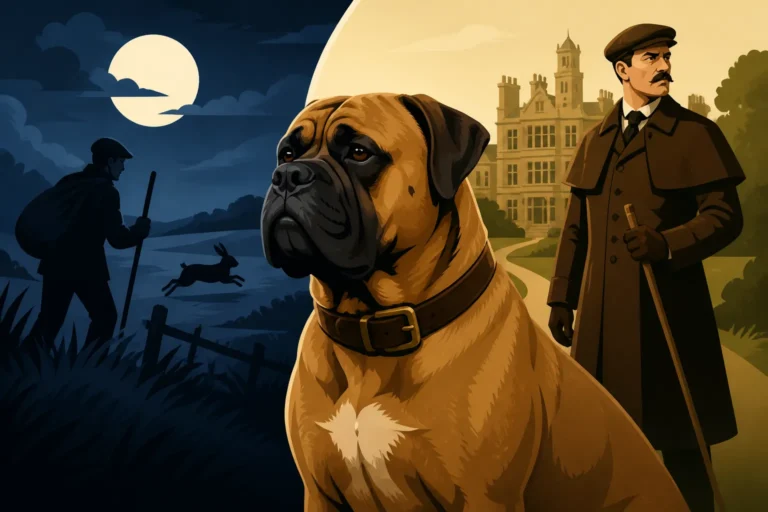
Picture a gamekeeper patrolling a vast estate on a moonless night. The silence is broken only by the rustling of leaves. He needs a dog that can move like a shadow, detecting an intruder before any human sense can, and then, upon command or instinct, act decisively. This dog couldn't bark incessantly, drawing attention, but needed to act as a silent deterrent. The Silent Guard: Why a Bullmastiff Barks So Little directly speaks to this requirement. This wasn't a dog for show; it was a dog for a specific, dangerous, and illegal job that had real consequences for both the poacher and the gamekeeper. This specific occupational demand was the crucible in which the Bullmastiff was forged.
The Genesis of the Bullmastiff: A Solution to a Specific Problem
The gamekeepers, being practical men, realized that existing breeds wouldn't cut it. They needed to engineer a solution, blending the traits of two very different dogs to create the perfect "night dog." This was intentional, selective breeding driven by a clear, functional purpose.
Blending the Best of Two Worlds
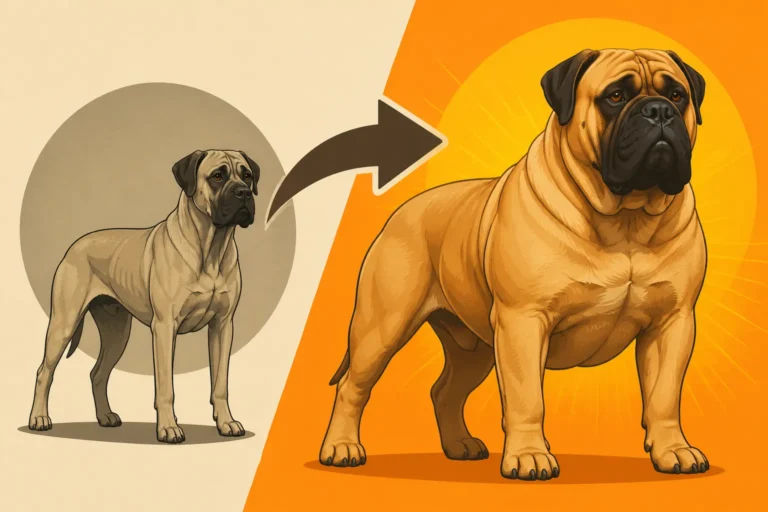
The solution they devised was brilliant in its simplicity: combine the size and power of the Mastiff with the courage, agility, and tenacity of the Bulldog. The generally accepted formula was approximately 60% Mastiff and 40% Bulldog, a blend that aimed to strike the perfect balance. The Mastiff contributed the bulk, the intimidating presence, and a certain degree of gravitas. The Bulldog, though smaller, brought its fierce grip, its low center of gravity, and its unwavering determination. The Bullmastiff Is Sixty Percent Mastiff and Forty Percent Bulldog explains this genetic recipe.
This wasn't random mixing; it was careful selection over generations. Gamekeepers would choose individual dogs with the most desirable traits from each parent breed, slowly refining the offspring. They were looking for specific physical attributes – a powerful yet agile body, a broad skull for intelligence and determination, and a short, dark coat for camouflage in the night. This deliberate hybridization was a direct response to the legal and social pressures of the time, creating a dog uniquely suited to a very niche and dangerous profession.
The "Gamekeeper's Night Dog" Takes Shape
Over time, this deliberate breeding program yielded the "Gamekeeper's Night Dog," the direct ancestor of our modern Bullmastiff. These dogs were developed to patrol large estates, often in the dead of night, seeking out poachers. Their job was not to attack and maul, but to track, quickly catch up to, knock down, and hold a human intruder until the gamekeeper arrived. This "holding" instinct is still a hallmark of the breed today. What a Bullmastiff Was Bred to Do to a Poacher delves deeper into this fascinating aspect of their original work.
The success of these dogs was paramount to the gamekeeper's ability to protect the landowner's assets. A successful "catch" meant discouraging future poaching, and a dog that could perform this duty without seriously injuring the poacher was highly valued. This distinction is crucial: they were guardians of property, not instruments of execution. The breed's development was truly a testament to functional breeding, where every trait was selected for its utility in a demanding, high-stakes environment.
Traits Shaped by Law and Necessity
The specific demands of enforcing the game laws directly influenced the physical and temperamental traits that became ingrained in the Bullmastiff. Every characteristic, from their coat color to their demeanor, was a deliberate adaptation.
The Silent Approach and Holding Instinct
One of the most critical requirements for the "night dog" was silence. A dog that barked incessantly would alert poachers to its presence, negating the element of surprise. Therefore, breeders selected for dogs that were naturally quiet, preferring a silent approach. This explains why modern Bullmastiffs are generally not excessive barkers; it's a deeply ingrained trait from their working past. Why Dark Brindle Hid a Bullmastiff at Night also ties into this stealth requirement, offering camouflage in the shadows. Once a poacher was located, the dog's role was to move swiftly, often at a low run, to intercept them.
Upon reaching the poacher, the dog was trained or instinctively knew to use its weight and strength to bring the person down and then hold them, often by pinning them or using its powerful jaws to grip clothing, without breaking the skin. This "holding" instinct, rather than a biting attack, was a defining characteristic. A Bullmastiff Was Bred to Hold a Man, Not Bite Him is essential reading for understanding this nuanced aspect of their historical role. This required immense self-control and a discerning temperament, traits that are still evident in the breed's patient and watchful nature today.
Physicality Built for the Job
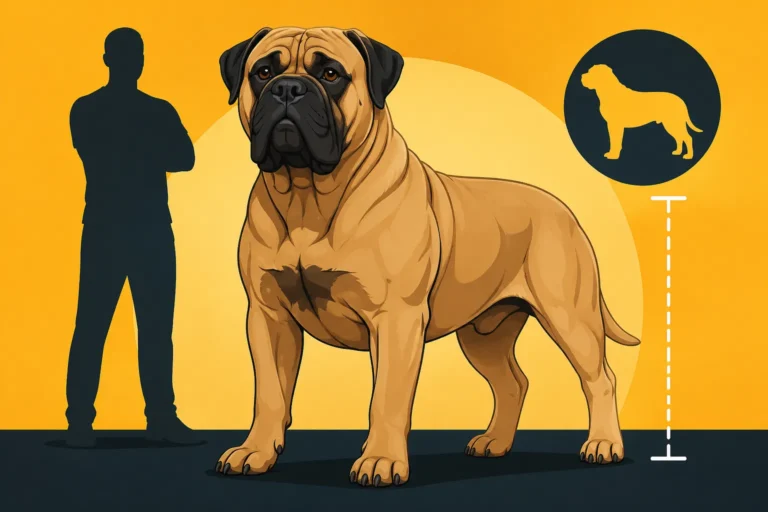
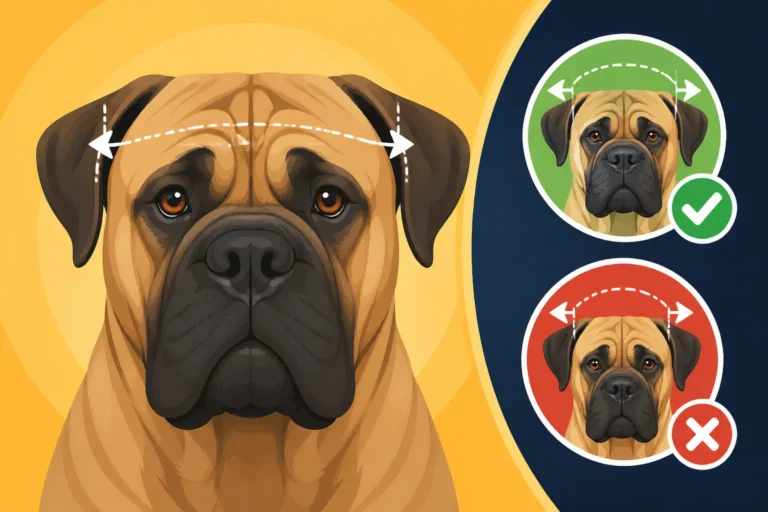
The Bullmastiff's physical build is a direct blueprint of its original job. They needed to be powerfully built but not so heavy as to be slow. Their deep chest, muscular legs, and sturdy bone structure allowed for bursts of speed over varied terrain and the strength to subdue a struggling human. Their short, dense coat offered protection from the elements and low visibility in the dark. Their broad skull housed a powerful jaw, necessary for that characteristic "hold."
Consider the structure of a Bullmastiff – the strong neck, the powerful shoulders, the moderate angulation of their hindquarters. All these physical attributes are optimized for short, powerful bursts of activity, followed by sustained restraint. They weren't bred for endurance running across miles of open country, but for the intense, short-range pursuit and powerful takedown. They needed to be agile enough to navigate difficult terrain in the dark, and strong enough to handle a human adversary without injury to themselves or excessive injury to the poacher. This functional design is a remarkable example of how selective breeding can adapt a species to a specific, demanding role. For owners today looking for optimal nutrition for such a powerful build, brands like Chewy offer a wide selection of large-breed specific formulas that cater to these robust needs.
Beyond Poaching: The Lasting Legacy of the Gamekeeper's Dog
While the era of gamekeepers and poachers has largely faded into history, the foundational purpose of the Bullmastiff has left an indelible mark on the breed's temperament and behavior. These historical roots deeply influence the Bullmastiff we know and love today.
Inherent Protective Instincts
Even generations removed from their working origins, Bullmastiffs retain a strong, innate protective instinct. They are naturally watchful and discerning, often observing strangers with a calm, quiet intensity before deciding if they are welcome. This isn't aggression; it's a vestige of their heritage as guardians of property and family. They tend to form strong bonds with their human families and are acutely aware of their surroundings. How a Gamekeeper Used a Bullmastiff on a Poacher can shed more light on the psychology behind this guarding trait.
This protective nature means they are often reserved with strangers, preferring to assess a situation rather than rushing in with boisterous greetings. However, once they accept someone, they are typically friendly and affectionate. It's a testament to their original role that they are so attuned to their environment and the people within it. This inherent instinct makes them excellent family guardians, always watchful, always ready to step in if they perceive a threat, even if that "threat" is just the postal worker! For new owners, understanding and channeling this protective drive through early socialization and training is key. Tools and resources available from places like Chewy can assist with everything from durable chew toys to training aids for these intelligent, if sometimes deliberate, dogs.
The Bullmastiff's Enduring Gentleness
Despite their powerful build and protective nature, the Bullmastiff is renowned for its gentle disposition, especially with children and those within its trusted circle. This gentleness is also a direct legacy of their original purpose. Remember, their job was to hold, not to harm. A dog that was overly aggressive or prone to indiscriminate biting would have been useless, or worse, a liability to the gamekeeper. They needed a dog with excellent judgment and a steady temperament.
This is why, despite their formidable appearance, Bullmastiffs are often described as "gentle giants" or "nanny dogs." They are patient, tolerant, and incredibly affectionate with their families. Their strength is tempered by a profound sense of loyalty and a surprisingly soft heart. While they were bred to confront and contain human intruders, they were also expected to be controllable by their gamekeepers and intelligent enough to differentiate between a threat and a non-threat. This balance of power and restraint makes them truly unique and wonderful companions today, embodying a history that is both gritty and noble.
A Look at the Bullmastiff's Working Past
Let's summarize some key aspects of the Bullmastiff's development and purpose, highlighting how the English Game Laws directly influenced their creation and characteristics.
| Feature | Impact of English Game Laws | Bullmastiff Trait Today |
|---|---|---|
| Need for Stealth | Poachers worked at night; barking alerted them. | Generally quiet, rarely barks excessively. |
| Need for Apprehension | Gamekeepers wanted to catch and hold, not kill, poachers. | Strong "holding" instinct, powerful but non-aggressive. |
| Night Camouflage | Dark brindles blended into the night for surprise. | Fawn, red, and brindle coats with a black mask. |
| Speed & Agility | Needed to catch a fleeing human quickly over varied terrain. | Powerful, athletic build capable of bursts of speed. |
| Strength & Determination | Required to subdue and hold a struggling adult. | Muscular body, strong jaws, unwavering resolve. |
| Discernment | Had to distinguish between innocent trespassers and true threats. | Naturally protective but discerning, gentle with family. |
This table neatly encapsulates how legal necessity molded the physical and temperamental attributes of this remarkable breed.
Understanding the Bullmastiff Through Its History
The more you learn about the origins of the Bullmastiff, the more you appreciate the complex interplay of social conditions, legal frameworks, and human ingenuity that led to its creation. It's not just a dog; it's a living piece of history, a testament to a time when survival and property protection were intertwined in a very tangible, often dangerous way.
When you look at a Bullmastiff today, whether they're sprawled out on a comfy dog bed you picked up from Chewy or quietly observing the world from your doorway, remember their ancestors. Remember the shadowy figures of gamekeepers and poachers, the vast estates under the cover of night, and the strict laws that dictated who could hunt and who could starve. The Bullmastiff carries the legacy of that era in every gentle nudge and every watchful gaze. Why the Bullmastiff Counts as a Working Dog is not just a classification; it's an acknowledgment of their purposeful past.
This breed isn't for everyone, but for those who understand and appreciate their unique history, their inherent protective instincts, and their unwavering loyalty, a Bullmastiff can be the most rewarding companion. They remind us that even the most formidable creatures can possess the tenderest hearts, especially when they were bred for a purpose far more nuanced than simple aggression. What a Bullmastiff Does All Day is less about rigorous patrolling these days and more about being a devoted family member, but the traits that make them good at the latter were forged in the fires of the former. Caring for such a noble creature means understanding their needs, from their specific dietary requirements which many modern pet supply companies address, to their inherent desire to be a calm, protective presence in your home. Training a Bullmastiff That Weighs More Than You Do also speaks to the ongoing commitment required to manage a powerful dog, a commitment that was just as essential to the gamekeeper as it is to the modern owner.
Disclaimer
This article is for general informational purposes only and does not constitute professional advice. Laws, prices and regulations vary by location and change over time. Consult a qualified professional for guidance on your specific situation.