Whether a Bullmastiff Should Look Square
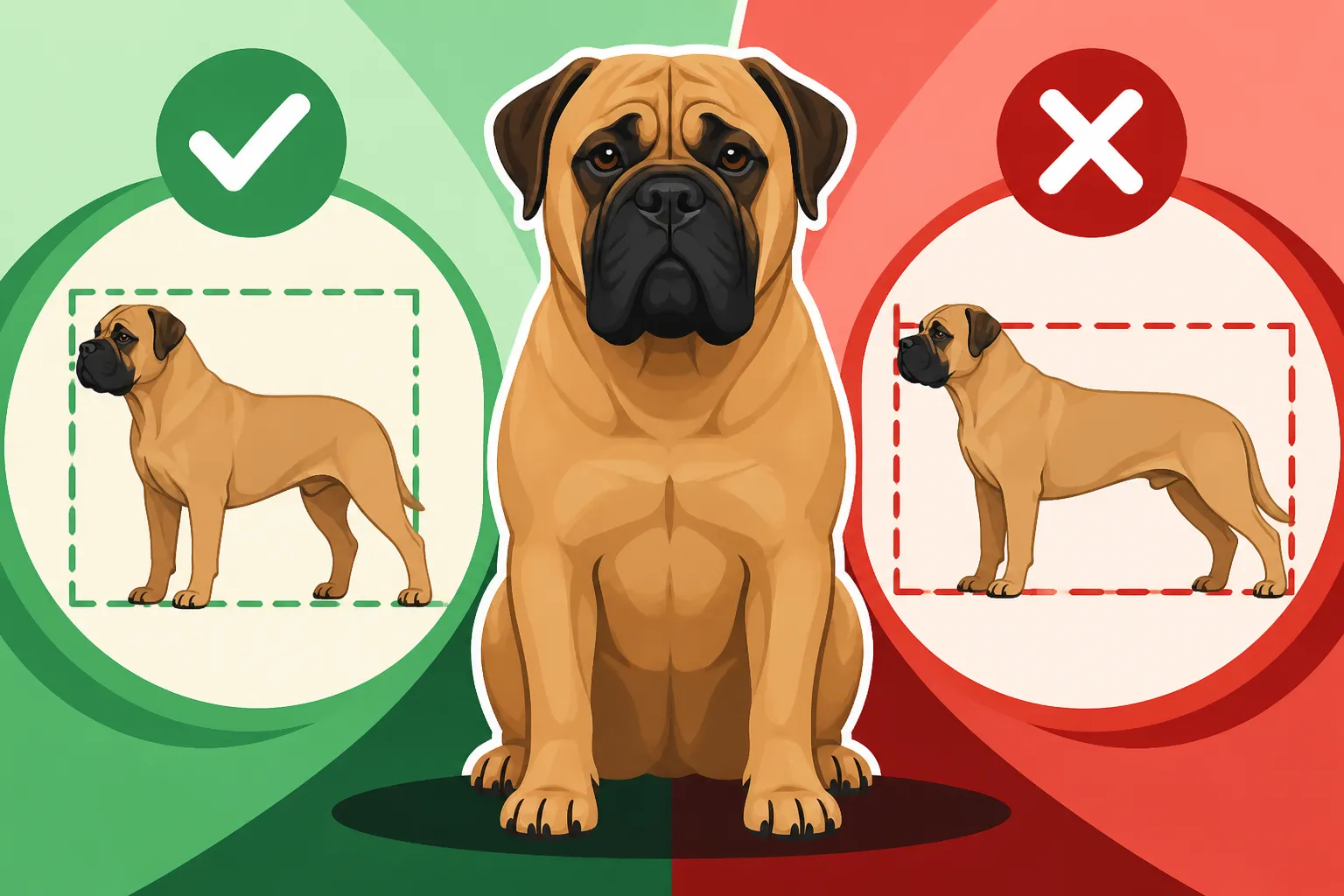
A Bullmastiff should look powerful and balanced, with a silhouette that reads as nearly square rather than long and low or tall and narrow. That does not mean its height and body length must match exactly. This guide explains what “square” means in the breed, how to assess the outline without being misled by stance or coat, and when a shape difference may be worth asking a breeder or veterinarian about.
What a square outline means in a Bullmastiff
Nearly square is a visual proportion, not perfect geometry
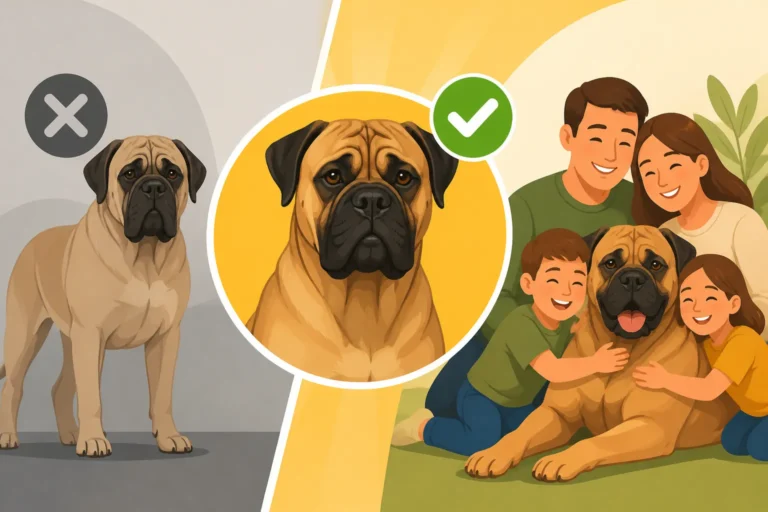
When people describe a Bullmastiff as square, they are talking about the dog’s overall proportions. Viewed from the side, the body should look compact and substantial, with a strong connection between the front and rear rather than an elongated, stretched appearance. The dog should not look so tall and narrow that its mass seems to disappear, nor so short-legged and long-bodied that it appears low to the ground.
“Nearly square” is important. Breed standards generally allow the body to be slightly longer than the dog is tall, depending on the standard being used. The measurements are not supposed to produce a mathematically exact square in every dog. Instead, the goal is a balanced outline: adequate body length for a powerful working dog, paired with enough leg and chest depth to create a sturdy, athletic appearance.
A useful way to think about it is to imagine a Bullmastiff standing naturally on level ground. The dog should look solid and compact, not stretched from nose to tail. A camera angle, a sloping floor, a tucked-up abdomen, or a handler pulling the dog forward can all make its outline look longer or shorter than it really is.
Height and length are assessed from specific points
Height is measured at the withers, the point at the top of the shoulders where the neck meets the back. It is not measured to the top of the head, which can shift with posture, or to the top of the ears. Body length is typically assessed from the front of the shoulder to the rear of the body, rather than from the nose to the tail tip.
That distinction matters when comparing photos or judging a dog at home. A Bullmastiff with a long tail held out behind it may look longer in a casual snapshot. A dog standing with its front feet far forward or its rear feet stretched back can also appear less compact. For a more reliable impression, look at several images of the dog standing comfortably and squarely, and compare the same side-on view rather than a close-up or wide-angle photo.
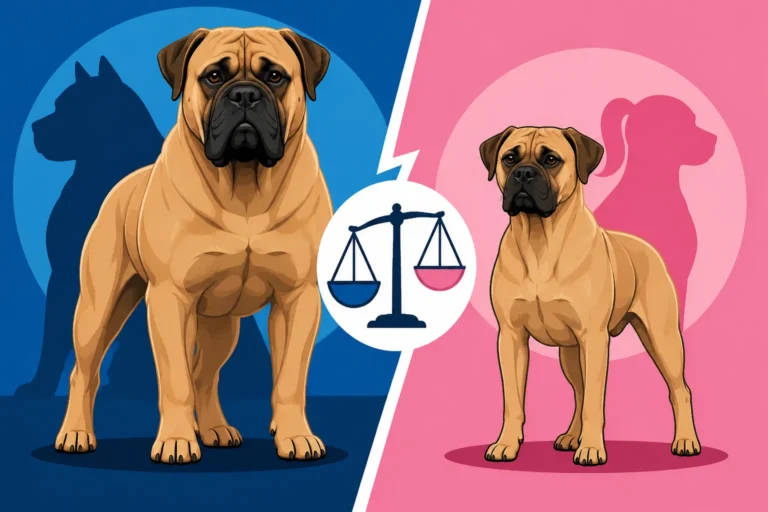
If you are trying to understand the breed’s general scale, see How Tall a Bullmastiff Stands and How Much a Bullmastiff Weighs. Height and weight give useful context, but neither tells the whole story. Two dogs can have similar measurements and still differ in how balanced their bodies look.
The outline should look strong, not exaggerated
A square outline does not mean a Bullmastiff should look blocky in every feature. The breed’s characteristic impression comes from several parts working together: a broad, deep chest; strong shoulders; a firm back; powerful hindquarters; and enough leg to carry a heavy, muscular body. If one feature overwhelms the rest, the dog may look unbalanced even if its basic height and length are close.
For example, a very deep chest combined with unusually short legs can make a dog seem long and low. A narrow chest and long legs may create the opposite impression: a tall, less substantial outline. Likewise, a large head can dominate a photograph and make the body appear shorter than it is. The question is not whether every body part looks equally sized, but whether the dog’s proportions come together as a compact, capable whole.
How to judge the Bullmastiff’s proportions
Look at the dog from the side and from above
A side view is usually the easiest place to begin. Look for a firm, relatively short back and a body that does not appear stretched between the shoulders and hindquarters. The topline should look strong and stable, not excessively sloping or visibly weak. The chest should have depth and width, while the legs should appear substantial enough to support the body without making the dog seem excessively low.
Then consider the dog from above. The body should have substance through the chest and ribcage, with a defined waist rather than a barrel-shaped, overweight appearance. This view can help separate natural breadth from excess weight. A broad Bullmastiff is not automatically overweight, but a waist that has disappeared, combined with difficulty feeling the ribs, may point to excess body condition rather than breed type.
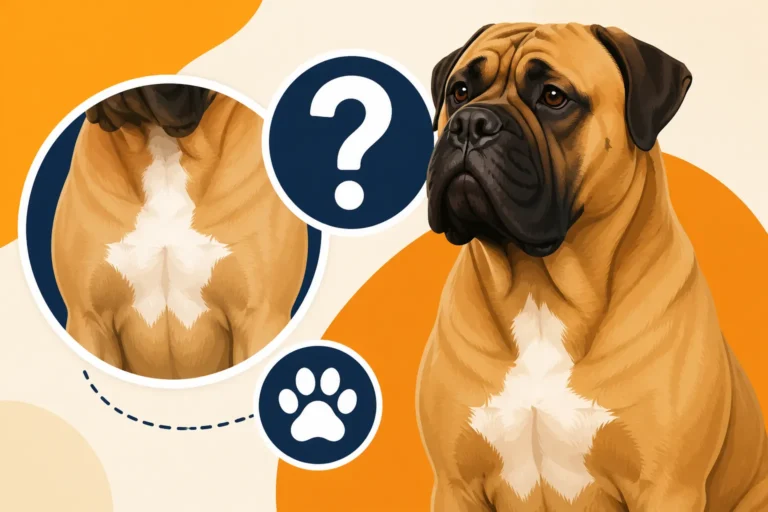
For more detail about one key part of the silhouette, read What a Bullmastiff's Chest Should Be Like. The chest helps establish the dog’s front-to-back balance, but it should not be considered in isolation. A deep front with weak, narrow hindquarters can still leave the overall dog looking poorly proportioned.
| What to assess | A balanced impression | What may distort the view |
|---|---|---|
| Height | Measured at the withers | Measuring to the head or ears |
| Body length | Considered from shoulder to rear of body | Including the nose or tail in a photo |
| Back | Compact and firm | A stretched stance or sloping ground |
| Chest | Deep and broad, in proportion to the frame | Excess weight or a camera angle from below |
| Overall outline | Powerful, compact, and nearly square | A wide-angle lens, unusual posture, or grooming and coat effects |
Don’t confuse a show stance with natural proportions
In a show ring, a handler may position a dog’s feet to show its structure clearly. The stance can help reveal balance, but it is still a posed moment. If the forelegs are placed too far forward, the dog may appear longer through the body. If the rear legs are pulled back, the topline and hindquarters may look more extended. A relaxed stance can give a different impression from a carefully stacked pose.
This is why it helps to watch the dog move as well as stand. A Bullmastiff should move with strength and coordination, not simply look square while posed. The outline should remain reasonably balanced in motion, although movement naturally changes the way the body appears from one step to the next. A single still image is a poor basis for deciding that a dog is too long, too short, or otherwise incorrectly built.
If you are choosing a puppy, ask to see the parents standing naturally and moving at a comfortable pace. A puppy’s proportions change as it grows, so an awkward adolescent stage does not necessarily predict its adult outline. At the same time, a breeder should be able to explain the structure they are aiming for and show how the parents fit the breed’s intended type. The Outline a Gamekeeper Wanted in a Bullmastiff offers useful context for why a capable, balanced outline matters beyond appearance.
Body condition can change the apparent shape
Weight can make a Bullmastiff look more rectangular, especially when fat obscures the waist and the transition between chest and abdomen. On the other hand, a dog that is too lean or still growing may appear leggy, narrow, or less filled out than an adult. Neither appearance alone proves that the dog has an underlying structural problem.
For a practical check, look at the dog from above and from the side, then gently feel along the ribcage. You should be able to feel the ribs without pressing hard, although they should not be sharply visible in a healthy adult. If you are unsure whether your dog’s shape reflects its build or its body condition, ask your veterinarian to assess weight and body condition together. A photo-based comparison with a breed standard cannot reliably distinguish muscle, fat, and developing growth.
Why the Bullmastiff was bred to look compact
A balanced body served a practical purpose
The Bullmastiff’s shape is not just a show-ring preference. The breed developed as a strong, agile estate dog, expected to move with purpose and hold its ground. A body that was too long and low could be cumbersome; a frame that was too tall and lightly built might lack the substance associated with the breed. The compact outline reflects a balance between strength, mobility, and stability.
This context helps explain why a Bullmastiff should look powerful without appearing clumsy. The ideal is not simply “as large as possible.” The body should be substantial, but the dog still needs a coherent structure that allows it to move comfortably. The breed’s outline is one part of a larger picture that includes muscle, soundness, temperament, and movement.
For the historical background, Why a Bullmastiff Needed a Short Back and Why the Bullmastiff Standard Stops Short of Mastiff Height help explain why the breed’s proportions are not interchangeable with those of other giant dogs. A Bullmastiff is not supposed to be judged by whether it resembles a taller Mastiff or a more heavily built breed. Its own balance is the point.
Breed standards and national variation can differ
Breed standards are written by different kennel organizations, and wording can vary between them. One standard may emphasize a nearly square build, while another may describe the body as slightly longer than the height at the withers. Those descriptions can sound contradictory if read as exact measuring instructions, but they often point toward a similar visual goal: a compact, powerful dog with no excessive length.
If you are evaluating a show prospect, check which standard applies to the event or registration system in question. If you are simply trying to understand your family dog, do not assume that a small difference in apparent length means the dog is poorly bred or unhealthy. Standards describe an ideal for the breed; individual dogs vary, and many healthy Bullmastiffs will not match every show ideal perfectly.
There can also be differences in presentation and interpretation between countries. How the British and American Bullmastiff Differ is a helpful place to explore those distinctions. If you are looking at a dog advertised as unusually large or unusually short, keep the same perspective: size alone does not establish quality, soundness, or whether the dog is a good fit for your home.
A square outline does not mean an oversized dog is better
People are naturally drawn to a massive Bullmastiff, especially when the dog’s broad head and muscular frame are part of its appeal. But more height, more weight, or a more dramatic silhouette does not automatically mean better structure. An oversized dog may still have poor balance, while a dog closer to the standard’s proportions may be more functional and comfortable moving through everyday life.
When considering a puppy, focus on the parents’ overall balance rather than a promise that the puppy will become exceptionally large. Ask what health screening has been done, how the dogs move, and whether the breeder can discuss the strengths and limitations of their line. Questions about adult size and proportions should be answered in a measured way, not with a guarantee based on a puppy’s current paws or weight.
The same applies to show eligibility. A dog that looks unusually large is not automatically more impressive in the ring, and there are standards and judging criteria to consider. For more on that issue, see Whether an Oversized Bullmastiff Can Be Shown. A well-proportioned dog should be valued for the complete package, not for one headline-grabbing measurement.
Practical ways to assess your Bullmastiff at home
Take consistent photos instead of relying on memory
If you want to track your dog’s development, take side-on photos on level ground at regular intervals. Keep the camera at roughly the same height and distance each time, and avoid using a wide-angle setting that can exaggerate the front or rear of the body. Have the dog stand naturally, with all four feet under the body, rather than pulling it into a pose.
Photos can be useful for noticing broad changes, such as a puppy becoming taller before filling out, or an adult gaining weight around the waist. They cannot replace a hands-on veterinary assessment, but they make it easier to compare the dog with its own earlier shape rather than with a different dog photographed under different conditions.
If you are comparing harnesses or other walking gear as your dog grows, measure the chest and neck according to the product’s instructions rather than choosing a size based on breed alone. Retailers such as Chewy may list measurement guidance for individual products, but sizing charts are not interchangeable: check the fit directions for the particular harness. A harness that sits awkwardly can make a dog look oddly proportioned in photos and may also rub or restrict movement.
Ask a professional when the change is sudden or affects movement
A dog’s outline can change gradually with growth, age, muscle development, or weight. A sudden change deserves more attention, especially if it comes with stiffness, reluctance to rise, limping, reduced stamina, or an apparent loss of muscle. Those signs are more meaningful than a minor difference from an idealized breed outline.
Your veterinarian can assess body condition, joints, and movement and can help distinguish normal variation from a concern that needs follow-up. If the dog is a puppy or adolescent, ask what kind of growth and exercise pattern is appropriate for its age. If the dog is an adult, mention any changes you have noticed over time, rather than focusing only on whether it looks square in one snapshot.
For everyday equipment, such as a collar or harness, recheck the fit when your Bullmastiff gains muscle or changes weight. Chewy and other pet retailers can be useful places to compare product measurement instructions, but the dog’s comfort and freedom of movement matter more than a label that says “large breed.” If a harness slips, pinches behind the elbows, or changes the dog’s gait, stop using it and reassess the fit.
Keep the goal on health and function
A Bullmastiff does not need to look like a perfect diagram to be a good companion. The square outline is a useful description of breed type, but it is only one piece of the dog. Comfortable movement, a healthy body condition, sound joints, and an easy, confident temperament are all more important in daily life than matching an exact visual ratio.
If you are choosing a puppy, use the outline as one discussion point among many. Ask about parent structure, health testing, temperament, and how the breeder supports owners as the dog matures. If you already have a Bullmastiff, enjoy its individual build while keeping an eye on changes that affect comfort or movement. A balanced dog is not simply one that looks square; it is one whose proportions and condition allow it to live comfortably.
Disclaimer
This article is for general informational purposes only and does not constitute professional advice. Laws, prices and regulations vary by location and change over time. Consult a qualified professional for guidance on your specific situation.