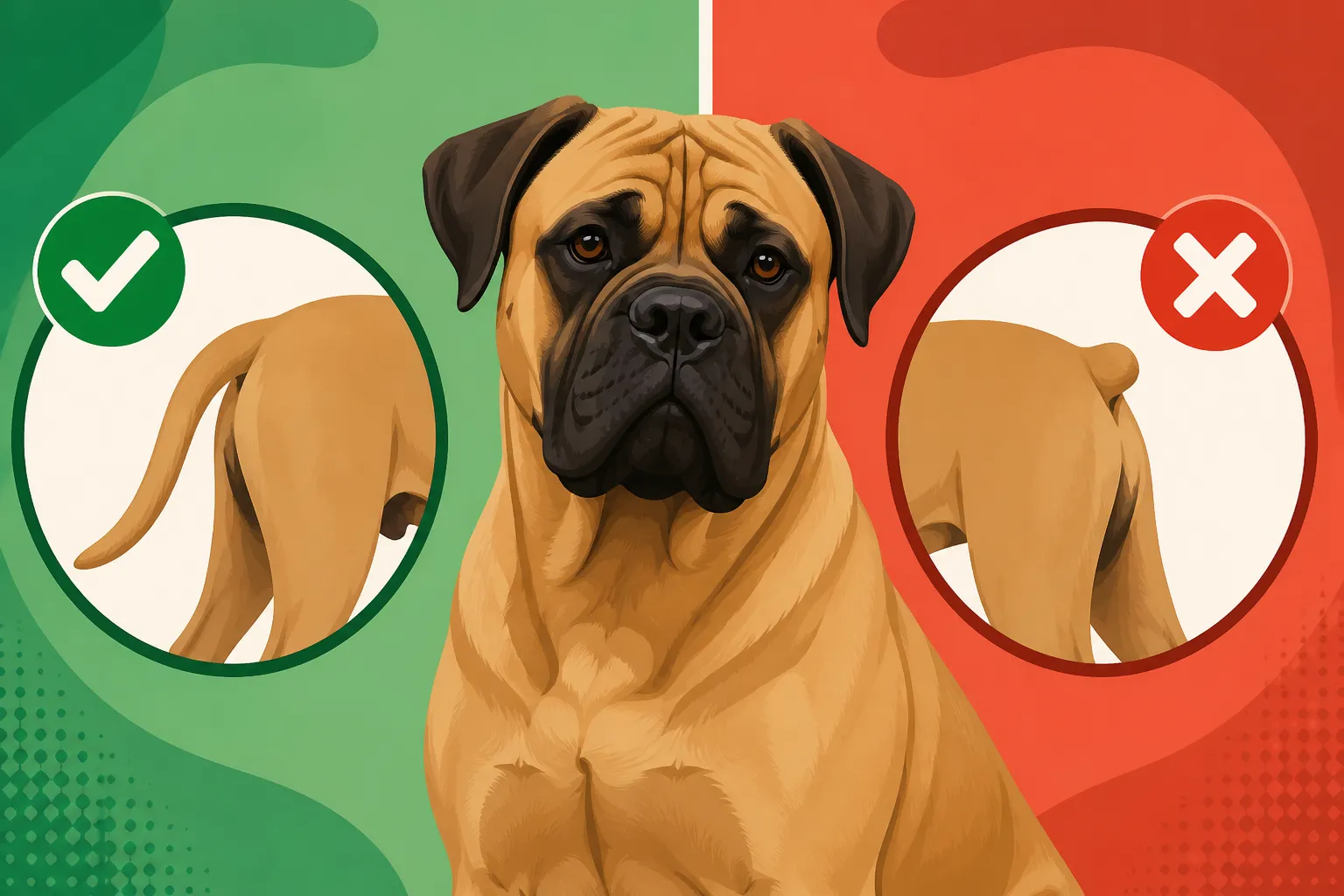
Whether a Bullmastiff’s Tail Is Docked
One of the most common questions I hear from folks new to the magnificent Bullmastiff breed, or even those just admiring them from afar, often revolves around their tails. You see pictures, and sometimes they look shorter, sometimes long and sweeping, leading to a lot of understandable confusion. Many people wonder if a Bullmastiff's tail is traditionally docked, a practice seen in a fair number of other breeds, and what that means for their appearance and well-being. This comprehensive guide will clear up all that uncertainty, diving deep into the breed standard, historical context, and modern considerations surrounding the Bullmastiff's tail.
The Historical Perspective on Tail Docking in Dogs
For centuries, the practice of tail docking – the surgical removal of part or all of a dog's tail – was quite common, rooted in various beliefs and practical purposes. It's understandable why people might assume certain breeds, especially large working dogs, would have had their tails docked. Let's explore why this tradition began and which breeds were historically affected.
Origins and Purpose of Docking
Historically, tail docking wasn't done for aesthetics, but for what was perceived as a practical necessity. In ancient Rome, it was believed that removing part of a puppy's tail could prevent rabies, a notion that, of course, has no scientific basis. Later, as specific dog breeds emerged for working roles, docking became linked to preventing injury. Farmers and hunters often docked the tails of their dogs to prevent injuries during work in dense brush, or to stop them from being grabbed by prey or adversaries. Imagine a dog herding cattle, or flushing game from thorny thickets – a long, whipping tail could easily get caught, broken, or severely lacerated. For fighting dogs, docking was sometimes done to remove a potential point of weakness or a handle for an opponent.
It was a practice born of a different era, where the immediate utility and perceived welfare of the working dog took precedence, often without the full understanding of canine anatomy and communication we have today. The thought was, "better a short tail than a broken one," even if it meant a painful procedure for a young puppy.
Breeds Traditionally Docked and the Bullmastiff's Exception
Many working breeds, particularly those used for hunting, guarding, or herding, traditionally had their tails docked. Think about Rottweilers, Boxers, Doberman Pinschers, or certain types of Terriers and Spaniels – all historically seen with docked tails, each for their own specific reasons related to their original jobs. The idea was that a shorter tail was less vulnerable or more efficient for their tasks.
However, the Bullmastiff stands apart from many of these breeds. The Bullmastiff was specifically bred in England in the mid-19th century by gamekeepers to deter poachers. Their job was to silently track, confront, and hold a poacher without mauling them. This required a dog that was powerful, agile, and intimidating, but also quiet and stealthy. A long tail wasn't seen as a hindrance to this work; in fact, the breed standard has always called for a natural, undocked tail. The gamekeepers needed a dog that was built to last, but also to communicate effectively with its handler and sometimes even with the person it was holding. A tail, as we'll discuss, is a crucial part of a dog's communication system. So, while many working breeds underwent docking, the Bullmastiff's original purpose did not necessitate it, and thus, it was never part of their breed tradition.
The Bullmastiff Tail: A Clear Standard
Unlike many breeds where tail docking has been a point of contention and change over time, the Bullmastiff breed standard has consistently upheld the importance of a natural, undocked tail. This isn't just an aesthetic preference; it's a fundamental aspect of the breed's conformation and history.
What the Breed Standard Dictates
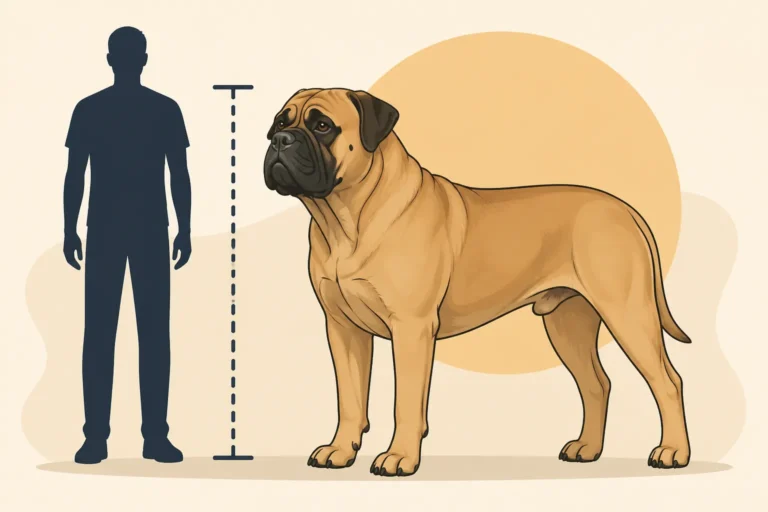
The official breed standards for the Bullmastiff, recognized by major kennel clubs around the world, are very clear: the tail should be natural, strong at the root, tapering to a point, and set high. It should reach to the hocks (the joint on the back leg that looks like an ankle) or slightly below. When the dog is moving, excited, or alert, the tail can be carried straight out or curved slightly upward, but it should never be carried over the back in a tight curl, like a Pug's or Akita's tail, or between the legs.
This detailed description emphasizes a tail that is proportional to the dog's powerful body, contributing to its overall balanced and majestic appearance. It's a natural appendage, meant to be seen and utilized by the dog. Any alteration, such as docking, would be considered a deviation from the standard and, in the show ring, would be penalized. This commitment to the natural tail reflects the breed's origins and a respect for its complete anatomical structure. You won't find any wiggle room here; a Bullmastiff's tail is meant to be full-length.
Common Misconceptions About Bullmastiff Tails
Despite the clear breed standard, many people still hold misconceptions, largely because other similar large breeds do have docked tails. It's easy to see a Boxer or a Doberman with their short, stubby tails and assume that all powerful, short-coated breeds might follow suit. Some might even confuse the Bullmastiff with a type of Mastiff or another Molosser breed that does allow or even prefer docking in their standards in some regions.
Another misconception arises from photos or videos where a Bullmastiff's tail might appear shorter than expected. This could be due to camera angles, the dog holding its tail very low, or perhaps an instance where a dog, unfortunately, had its tail docked for non-standard reasons or was a mix. It's crucial for prospective owners to understand that a purebred Bullmastiff, bred to standard, will always have a full-length tail. If you encounter a Bullmastiff puppy with a docked tail, it's a strong indicator that something isn't quite right with the breeding practice, or it might not be a purebred Bullmastiff at all.
The Importance of a Natural Tail for Breed Type
A Bullmastiff's natural tail is far more than just a decorative flourish; it is integral to their breed type. Firstly, it completes their silhouette, providing balance to their massive, muscular frame. Without it, the dog would look disproportionate and less "finished" according to what the breed was developed to be. The length and carriage contribute to their powerful and imposing yet dignified presence.
Beyond aesthetics, the tail plays a significant role in their overall balance and agility. While a Bullmastiff isn't a high-speed sighthound, they do need to be able to move with purpose and stability, especially if they were, in their historical role, running down and holding a man. The tail acts as a counter-balance, aiding in turns and maintaining stability, much like a rudder on a boat. A dog's tail helps them pivot, maintain equilibrium, and shift their weight, particularly in dynamic movements. Without it, their natural gait and movement could be subtly (or not so subtly) compromised. This functional aspect is why the standard is so particular about the tail's placement and form.
The Global Shift: Legislation and Ethical Concerns
The landscape surrounding tail docking has changed dramatically in recent decades, moving from a common practice to one increasingly viewed as unnecessary and even cruel. This global shift reflects evolving ethical standards, a deeper understanding of animal welfare, and the recognition of a dog's natural form and function.
Where Tail Docking is Illegal or Restricted
Many countries around the world have enacted laws banning or severely restricting cosmetic tail docking. This is particularly true across much of Europe, including the United Kingdom, Germany, Sweden, Norway, and Switzerland, where the procedure is largely prohibited except in very rare medical circumstances, and often then only by a veterinarian. In these regions, showing a dog with a docked tail, if it was docked after the ban came into effect, can even lead to disqualification or legal repercussions.
In North America, the situation is more varied. While the American Veterinary Medical Association (AVMA) opposes ear cropping and tail docking, it is not yet illegal in all states or provinces. Many states in the U.S. have not outright banned it, but pressure from animal welfare groups and increasing public awareness are pushing for change. Canada, for instance, has seen several provinces ban the practice, with others considering it. This patchwork of laws means that while a Bullmastiff in London, UK, will almost certainly have a natural tail, one born in certain parts of the United States might, unfortunately, still be subjected to docking by an unscrupulous breeder, although this would be against the breed standard. This disparity can be incredibly frustrating for those trying to ensure they are getting a dog bred ethically.
Veterinary Perspectives on Tail Docking
The vast majority of modern veterinary organizations globally consider cosmetic tail docking to be an unnecessary and inhumane procedure. Their stance is rooted in several key points. Firstly, it's a surgical procedure performed on very young puppies, typically without anesthesia, causing acute pain and distress. While some argue that neonates feel less pain, scientific evidence suggests otherwise. Secondly, the tail serves vital functions. It's an extension of the spine, containing bone, muscle, nerves, and blood vessels. Removing it is a partial amputation.
Thirdly, the tail is critical for canine communication. Dogs use their tails to express a wide range of emotions and intentions, from excitement to fear, submission to dominance. Removing this tool impairs their ability to communicate effectively with other dogs and with humans, potentially leading to misunderstandings and behavioral issues. Furthermore, some dogs can suffer from chronic pain, nerve issues (neuromas), or phantom limb sensations after docking. The veterinary community strongly advocates for keeping tails intact, viewing it as a matter of respecting the dog's natural anatomy and welfare.
Why the Practice is Declining
The decline in tail docking is a reflection of several societal and scientific advancements. There's a much greater understanding of animal sentience and pain management today than there was centuries ago. What was once dismissed as a minor inconvenience for a puppy is now recognized as a painful, unnecessary surgery. Public opinion has shifted dramatically, largely driven by animal welfare organizations and the ethical stance of veterinary professionals. People are simply more educated about what constitutes good animal care.
Moreover, the original "practical" reasons for docking often no longer apply. Most dogs are pets, not working animals facing the hazards of dense brush or aggressive livestock. For companion animals, the risks of a long tail being injured are generally low, and proper management and care can mitigate many concerns. In fact, many perceived benefits of docking, such as preventing injury, have been found to be statistically insignificant when compared to the natural occurrence of such injuries in undocked dogs. As more countries and regions adopt bans, and as breeders strive to meet higher ethical standards and breed for health and natural type, the practice continues to fade, which is a huge relief for advocates for the Bullmastiff's natural tail.
Life with a Natural Bullmastiff Tail
Living with a Bullmastiff means embracing their natural form, and that includes their beautiful, expressive tail. Far from being a mere appendage, the tail is a vital part of who they are, how they communicate, and how they navigate their world. Understanding its role and how to care for it will only deepen your bond with your gentle giant.
Tail Wagging as Communication
If you've ever spent time around dogs, you know how much they "talk" with their tails. For a Bullmastiff, their strong, natural tail is an incredibly rich communication tool. A high, confident wag often means excitement or friendliness, especially when accompanied by a relaxed body posture. A low, slow wag might signal uncertainty or submission, while a tail tucked tightly between the legs clearly indicates fear or extreme submission. The speed, height, and sweep of the wag all carry nuanced messages.
When you bring a Bullmastiff home, you'll quickly learn to read their tail as easily as their facial expressions. It's how they tell you they're thrilled to see you, curious about a new visitor, or perhaps a little wary of an unfamiliar situation. Imagine trying to understand a person who can't use their hands or body language; that's essentially what docking does to a dog. For a breed like the Bullmastiff, known for its protective instincts and discerning nature, clear communication, especially with other dogs, is paramount to avoiding misunderstandings and ensuring social harmony.
Practicalities and Care for a Long Tail
While a natural tail is wonderful for communication and breed type, it does come with a few practical considerations for owners, especially with a large, powerful breed like the Bullmastiff. One common concern is the "happy tail" injury. This happens when a dog with a strong, enthusiastic wag repeatedly bangs its tail against hard surfaces like walls, furniture, or crates, sometimes causing the tip to split open and bleed. Bullmastiffs are not prone to this any more than other large, powerful breeds, but it's something to be aware of. If you have a particularly enthusiastic wagging Bullmastiff in a confined space, you might consider soft furnishings or even a "tail bandage" (a light, protective wrap) from a pet store like Chewy if an injury occurs to allow it to heal.
Beyond potential injuries, a long tail also means that during muddy walks or after swimming, it can collect dirt and water, requiring a quick wipe-down to keep your home clean. Regular grooming, although minimal for a Bullmastiff's coat, should include a quick check of the tail for any mats, burrs, or skin irritations, especially around the base where dirt can accumulate. Thankfully, these are minor considerations compared to the benefits of a full, expressive tail.
The Myth of Injury Prevention
One of the oldest arguments for tail docking was that it prevented injuries. The logic seemed sound: a shorter tail has less chance of getting caught or broken. However, modern studies and veterinary consensus largely debunk this myth, especially for companion dogs. While working dogs in specific, hazardous environments might historically have faced certain risks, the vast majority of today's Bullmastiffs live in homes and backyards, where the risk of severe tail injury is remarkably low.
Furthermore, some research suggests that dogs with docked tails may actually be more prone to certain types of injuries, or suffer from long-term issues related to the docking itself, such as nerve pain. The idea that a docked tail prevents future problems is generally not supported by evidence for most breeds, and certainly not for the Bullmastiff whose tail is naturally robust. The minor risks associated with an intact tail are typically far outweighed by its crucial functions in balance, communication, and overall well-being. Focusing on safe environments and appropriate exercise is a much more effective way to prevent injuries than resorting to an unnecessary surgical procedure.
Finding a Bullmastiff with an Undocked Tail
If you're looking to welcome a Bullmastiff into your family, finding one with an undocked, natural tail is not just about adhering to the breed standard, but about ensuring you're supporting ethical breeding practices and getting a healthy, well-adjusted dog. Here's how to navigate the process.
What to Ask Reputable Breeders
When you're searching for a Bullmastiff puppy, a reputable breeder will be transparent, knowledgeable, and prioritize the health and welfare of their dogs above all else. One of the first things to ask, even if you already know the answer, is about their views on tail docking. A good breeder will proudly tell you that their puppies have natural tails and will be able to explain why this is important, referencing the breed standard and ethical considerations. They should never offer or suggest docking a Bullmastiff's tail for cosmetic reasons.
Beyond tails, a responsible breeder will also discuss other critical health screenings. For a Bullmastiff, this includes certifications for hips and elbows, cardiac clearances, and sometimes eye exams. They should be open about the health history of the puppy's parents and even previous generations. You'll want to ask about Which Health Tests a Bullmastiff Breeder Should Run and Finding a Bullmastiff Breeder Who Screens Hearts. Expect a comprehensive discussion about the breed's health, temperament, and lifetime care needs. A red flag would be a breeder who is vague about health testing, seems to have puppies available all the time, or offers to dock tails.
Adopting from Rescue Organizations
Choosing to adopt a Bullmastiff from a rescue organization is a fantastic way to give a deserving dog a second chance, and often, these dogs will come with their natural tails intact. Rescue groups, particularly breed-specific ones, are generally staunch advocates for the health and welfare of the dogs, and unnecessary cosmetic procedures like tail docking are rarely a part of their philosophy. When considering a rescue Bullmastiff, the focus will often be on their individual history, temperament, and any existing health needs rather than cosmetic conformity to a show standard.
Rescue organizations, like those you might find through a network recommended by Chewy, often have a comprehensive understanding of each dog's background, including whether they are purebred or a mix. They can tell you if a dog's tail is natural or if it was docked prior to their arrival (which is rare for a Bullmastiff but could happen if it came from an unknown background). They will typically ensure all necessary veterinary care is provided, including spaying or neutering, vaccinations, and any treatments for existing conditions. Adopting can also be a more affordable route than buying a puppy from a breeder, as outlined in What Adopting a Bullmastiff Costs. The best part? You're providing a loving home to a dog that truly needs one.
Understanding Different Regional Practices
As we touched upon, the legal and ethical landscape around tail docking varies significantly from one region to another. If you are located in a country or state where docking is prohibited, then finding a Bullmastiff with a natural tail will be the norm. Breeders in these areas adhere strictly to the law and prevailing ethical standards.
However, if you live in a region where docking is still legally permissible, you might encounter breeders who, unfortunately, continue the practice on other breeds. It's crucial, therefore, to be explicit in your search for a Bullmastiff with an undocked tail. Emphasize to any potential breeder that you expect a dog true to the Bullmastiff standard, which means a full, natural tail. This also holds true for any other conformational details, such as ensuring your potential pup doesn't come from lines with extreme brachycephaly (short muzzle) that could impact their breathing, as discussed in Why a Bullmastiff's Short Muzzle Cannot Cool It. Your informed choice sends a clear message about what is valued in the breed.
Here’s a quick overview of why a Bullmastiff's tail is and always has been, natural:
| Feature | Bullmastiff Tail | Traditional Docked Tail (Other Breeds) |
|---|---|---|
| Breed Standard | Full, natural length; set high, tapers to a point, reaches hocks or slightly below. | Often described as "short," "stumpy," or specific length. |
| Historical Reason | Never docked; not considered a hindrance for gamekeeping role. | Prevent injury during hunting/working, perceived hygiene, traditional aesthetics. |
| Communication | Crucial for expressing emotion and intent to other dogs and humans. | Impaired communication; dog loses a key expressive tool. |
| Balance/Movement | Aids in balance, agility, and stability. | Can affect balance and gait, especially in turns. |
| Ethical Stance | Supported by breed clubs and veterinary community for natural welfare. | Opposed by veterinary bodies; seen as unnecessary cosmetic surgery. |
| Legality | Always allowed/expected; docking is often illegal for cosmetic reasons in many countries. | Increasingly restricted or banned in many regions globally. |
In conclusion, when you're admiring a magnificent Bullmastiff, know that their long, sweeping tail is not just part of their stunning appearance, but a vital part of their heritage, their communication, and their overall well-being. It's a natural feature, cherished by responsible breeders and owners alike, and a clear indicator of a dog bred true to its purpose and standard.
Disclaimer
This article is for general informational purposes only and does not constitute professional advice. Laws, prices and regulations vary by location and change over time. Consult a qualified professional for guidance on your specific situation.