Why a Bullmastiff Needed a Short Back
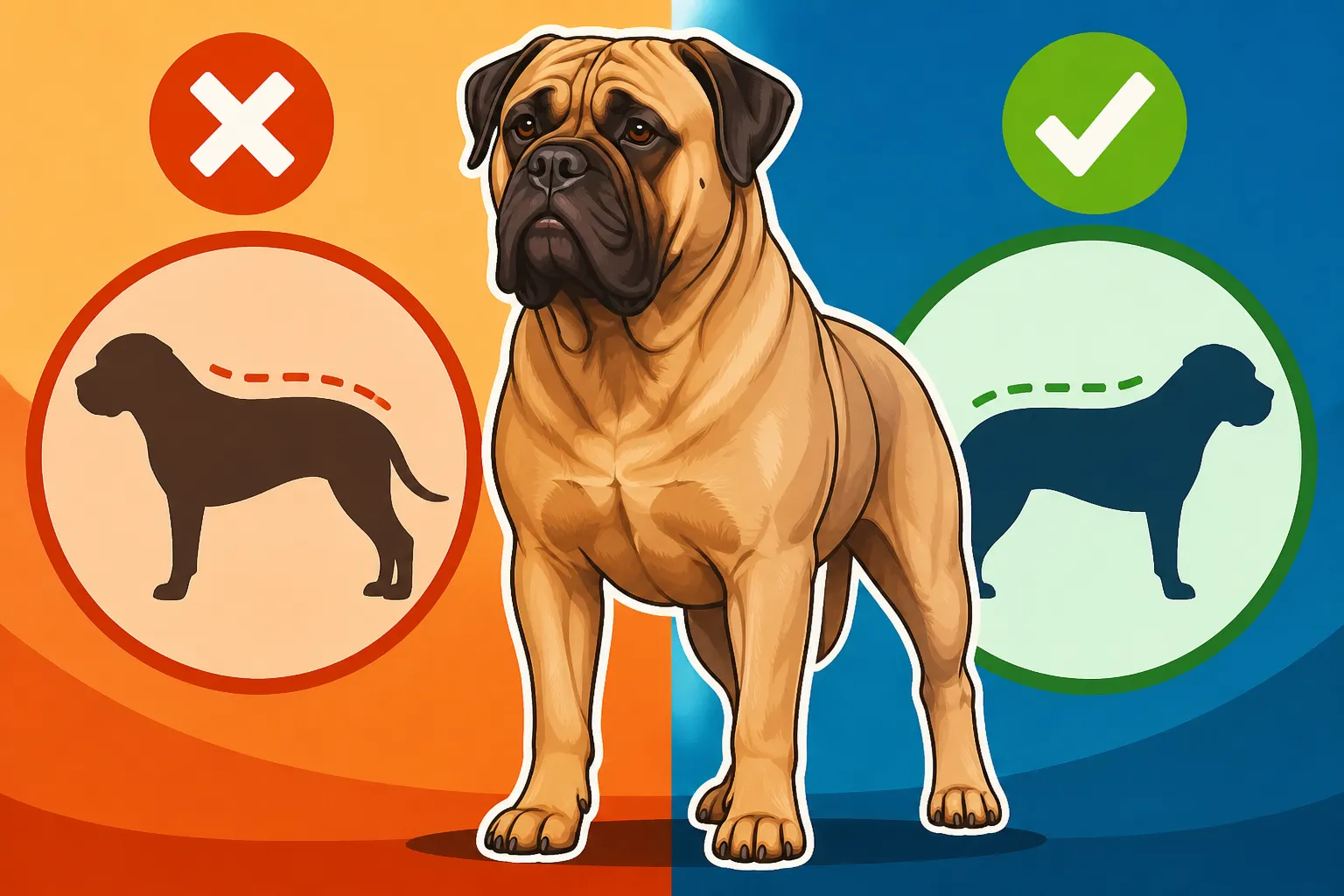
A Bullmastiff’s short back was meant to help create a compact, powerful working dog—not simply a broad dog with a dramatic outline. Gamekeepers needed an animal that could move quickly over uneven ground, stay balanced when confronting a person, and hold its position without being cumbersome. Understanding that purpose makes the breed’s proportions easier to interpret, and helps separate useful structure from exaggerated appearance.
Why a short back mattered to a working Bullmastiff
A gamekeeper needed power without cumbersome bulk
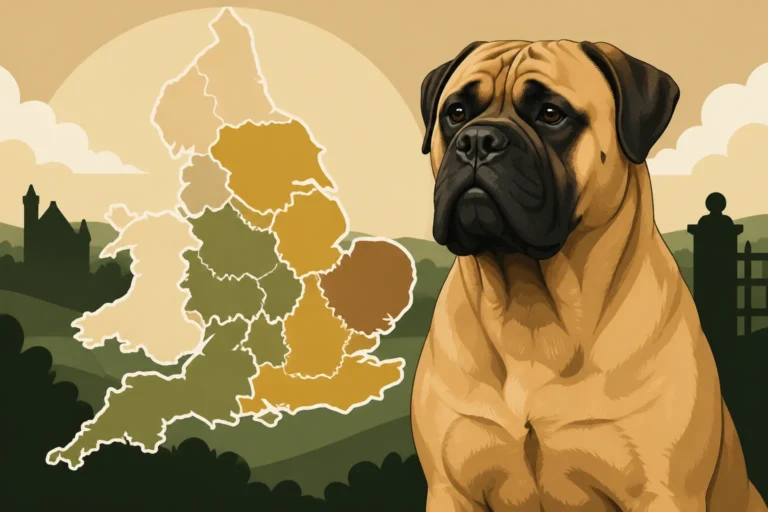
The Bullmastiff developed as a night-working estate dog in England. Gamekeepers needed a dog that could locate and stop poachers, often in darkness and on rough ground. Speed mattered, but so did strength, steadiness, and the ability to grapple at close range. The breed was not meant to be a long-distance runner or a dog that chased quarry for miles. Its job called for a different mix of abilities: move quickly enough to reach a person, then use its body with control.
A compact back helped bring that package together. A dog with a reasonably short, strong body could turn and brace without carrying a long middle that might feel less stable in a close encounter. It also helped the dog look solid and ready to act without having the sheer height and mass of a heavier mastiff type. The Bullmastiff’s history is closely tied to that balance, as explored in The Bullmastiff Was Built to Catch Poachers in the Dark and What a Gamekeeper Needed a Night Dog For.
It is easy to picture “short back” as a purely visual preference, like choosing a square silhouette for a show ring. For a working dog, proportions had a practical side. A compact outline could support agility and balance while still leaving room for the broad chest, strong limbs, and substantial muscles needed for physical work. The goal was not the shortest possible body. It was a body that could do the job without unnecessary length or bulk.
Compact does not mean cramped or rigid
A strong, short back should not be confused with a body that is unnaturally compressed. Dogs still need enough length through the body to move comfortably, and a well-built Bullmastiff should be able to walk, turn, and extend its stride without looking stiff or restricted. If a dog’s proportions seem extreme, or its movement looks uncomfortable, the appearance alone is not evidence of good structure.
Think about a dog crossing a muddy estate path, stepping around roots, or turning sharply when a person changes direction. It needs a stable trunk, but it also needs a spine and limbs that move freely. A short-backed outline works as part of the whole dog: the ribcage, loin, pelvis, shoulders, and legs all affect how the animal carries itself. Looking only at the length of the back misses that larger picture.
This distinction matters for anyone comparing dogs or reading breed descriptions. “Short” is relative to the dog’s height and overall proportions. It does not mean a level back should be unnaturally flat, that the dog should be built like a box, or that a shorter-looking dog is automatically healthier. A balanced working outline is the point, not a single measurement treated as a virtue on its own.
How the short back supported movement and balance
Turning and bracing were part of the work
The Bullmastiff’s role was not simply to run in a straight line. In close work, a dog may need to change direction, plant its feet, lean into movement, or hold steady while a person resists. A compact, muscular body can make those movements look controlled and grounded. The dog’s strength is not just in its shoulders or head; it depends on how its body works as a connected unit.
A longer body is not automatically weak or unsuitable, and individual dogs vary. But a long, low outline can change the way a dog’s weight is carried and how it turns. In a working context, the desired proportions aimed to avoid unnecessary length while retaining enough body for a substantial chest and strong musculature. The related idea of a dog built to move rather than simply look massive is discussed in Why a Bullmastiff Was Bred Light Enough to Run.
A simple comparison can help clarify the purpose:
| Proportion or quality | Why it mattered in a working dog | What it does not mean |
|---|---|---|
| Compact, strong back | Helped create a balanced body for turning and close work | The dog should be extremely short or rigid |
| Substantial chest | Supported a powerful, muscular frame | A broad chest alone guarantees fitness |
| Moderate height and weight | Helped preserve mobility alongside strength | The dog should be slight or fragile |
| Free, steady movement | Showed that the body could work as a whole | A particular outline guarantees soundness |
The point is not that every historical dog had identical proportions or that a compact back alone made a Bullmastiff effective. A dog’s temperament, training, conditioning, feet, joints, and overall health all mattered. Structure supported the work; it did not replace the other qualities a gamekeeper needed.
The back was one part of a whole-body outline
A Bullmastiff’s back makes sense when viewed alongside its height, chest, legs, and overall balance. The breed was intended to be substantial, but not so tall or heavy that it lost the ability to move with purpose. Its outline reflects that combination: a powerful dog with enough mobility to cover ground and enough strength for close control. The Outline a Gamekeeper Wanted in a Bullmastiff offers more context for how those proportions fit together.
The chest is especially important to the overall picture. A strong body needs adequate depth and room for the ribcage; simply shortening the dog’s middle would not create a useful working animal. The back, chest, and loin need to relate sensibly to one another. A dog can appear compact and still be poorly balanced if other parts of its body are out of proportion. For more on that feature, see What a Bullmastiff's Chest Should Be Like.
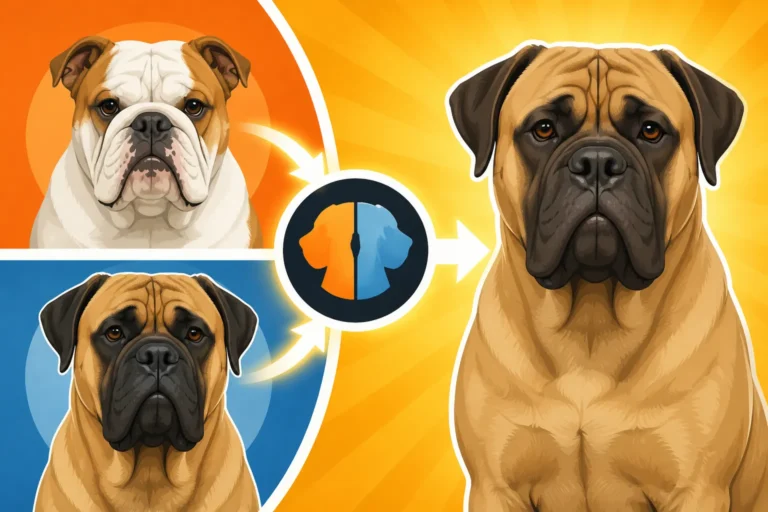
This is also why the Bullmastiff should not be judged as a smaller version of a massive mastiff. The breeds share history and some physical traits, but the Bullmastiff’s working type was shaped around a different balance of size, strength, and movement. Its comparatively compact outline is part of that identity, alongside its moderate height and muscular build. The distinction is explored in Why the Bullmastiff Standard Stops Short of Mastiff Height and How a Bullmastiff Differs From a Mastiff.
What a short back should look like today
Look for balance rather than a single visual feature
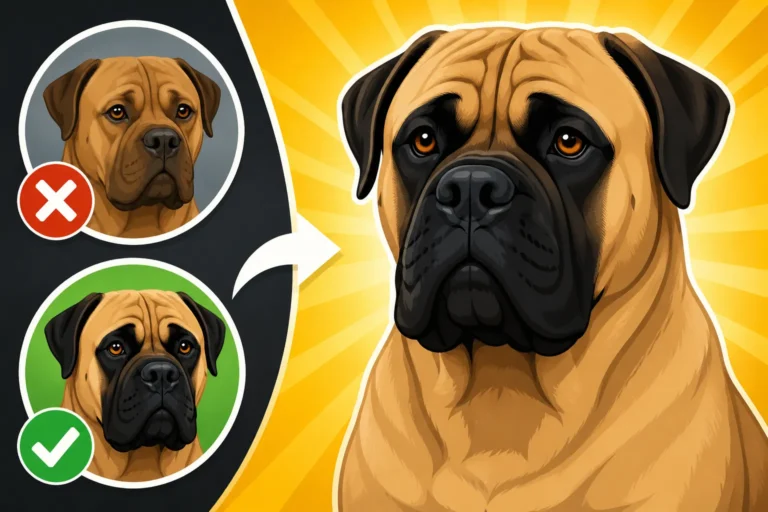
When you look at a Bullmastiff standing or moving, consider the whole dog. Does its body look strong and proportionate? Can it walk with a steady, comfortable stride? Does it turn without appearing awkward or stiff? Is its back in keeping with its height, chest, and limbs? Those practical observations are more useful than trying to decide whether the dog has the shortest back in the room.
A dog may look compact when standing still but move in a way that suggests discomfort or poor coordination. Conversely, another dog may appear a little longer through the body yet move easily and comfortably. A photograph also offers limited information: posture, camera angle, weight, coat, and how the dog is standing can all change the apparent outline. When evaluating a puppy or adult, movement and health matter alongside appearance.
The traditional idea of a square or compact outline is often misunderstood as a demand for exact geometric proportions. Breed type is about an overall impression and functional balance, not a ruler applied to the dog’s back. If you are comparing descriptions of the breed, Whether a Bullmastiff Should Look Square helps explain why “square” should not be taken to mean rigidly box-shaped or unnaturally compressed.
Modern care still matters more than matching a silhouette
A Bullmastiff’s historic proportions do not make everyday care optional. Keep the dog at a healthy weight, build exercise gradually, and speak with a veterinarian about mobility changes, stiffness, or reluctance to move. Extra weight can put more strain on joints and make activity harder, while age, injury, and other health conditions can affect movement regardless of body shape.
At home, small adjustments can make ordinary movement easier for a large dog. A supportive resting place, nonslip surfaces on slick floors, and a safe way to get into a vehicle may help reduce awkward jumps. If you are comparing beds or ramps, Chewy is one place owners may browse for basic options; check dimensions carefully and choose equipment suited to your dog’s size and mobility rather than its breed label alone. Chewy may also be useful when you need to compare nonslip mats for a hallway or feeding area, where a heavy dog can lose footing on smooth flooring.
A harness can help with controlled walking, but it should fit comfortably and should not be used to force a dog through pain or weakness. If an older Bullmastiff suddenly struggles to rise, changes its gait, or avoids stairs it once managed, arrange a veterinary assessment instead of assuming it is simply slowing down. For ordinary supplies such as a supportive bed or a ramp, Chewy offers another place to compare available options, but your dog’s needs and your veterinarian’s advice should guide the choice.
Common misunderstandings about the Bullmastiff’s back
Shorter is not automatically better
It is tempting to treat a short back as a simple scorecard: the shorter the dog looks, the closer it must be to the ideal. That is not a reliable way to evaluate a living animal. Too much emphasis on one feature can distract from the dog’s movement, comfort, proportions, and overall condition. A well-balanced Bullmastiff is not defined by one body measurement.
Likewise, historical function should not be used to excuse a dog’s discomfort. A breed’s original work can explain why certain proportions became desirable, but it does not mean that stiffness, difficulty rising, or reluctance to walk is normal. Those signs deserve attention. Good structure should support comfortable movement, not be used as a reason to overlook problems.
A working outline is not a promise of working ability
A compact, muscular build can tell you something about breed type, but it cannot tell you everything about temperament, training, fitness, or health. The Bullmastiff’s early purpose required more than a particular back length. A dog also needed steadiness, confidence, and appropriate handling. The shape of the body provided a useful foundation; it did not guarantee that any individual dog would be suited to every task.
For today’s owners, that history is most helpful as context. It explains why the breed is substantial yet intended to move with control, and why the back should be considered together with the rest of the outline. When you assess a Bullmastiff, look for a dog whose build appears balanced and whose movement is comfortable. That is a more meaningful standard than chasing an especially short silhouette.
Disclaimer
This article is for general informational purposes only and does not constitute professional advice. Laws, prices and regulations vary by location and change over time. Consult a qualified professional for guidance on your specific situation.