Why a Bullmastiff’s Nostrils Must Be Wide
A Bullmastiff’s broad head and short muzzle can make narrow nostrils more than a cosmetic concern: they may restrict airflow when the dog is breathing harder, exercising, or coping with warm weather. Wide, open nostrils help air enter more freely, but appearance alone cannot diagnose a breathing problem. This guide explains what to look for and when a veterinarian should assess your dog.
What wide nostrils mean in a Bullmastiff
The role of the nostrils in breathing
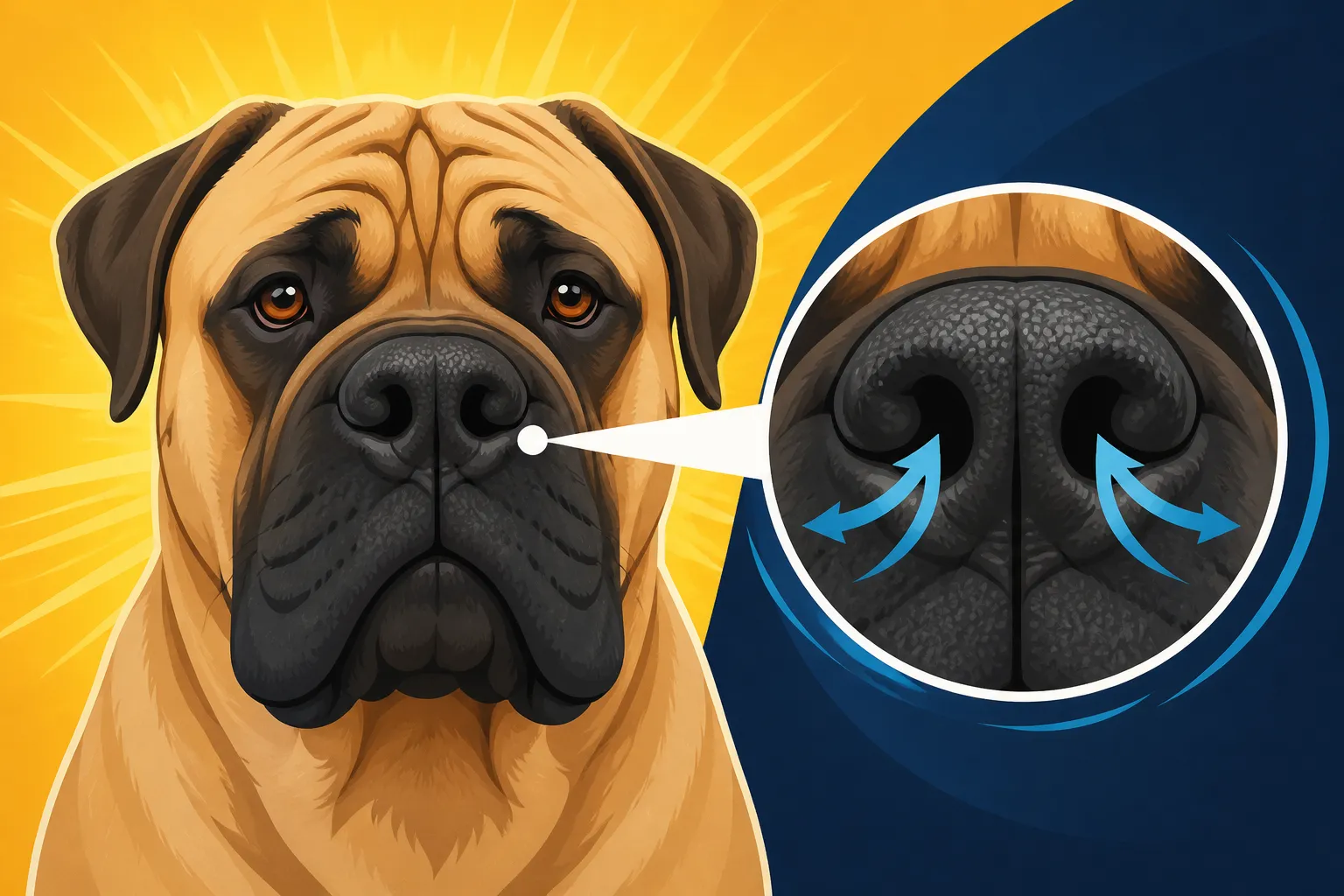
A dog draws air through its nostrils before it travels through the nasal passages and into the rest of the respiratory system. When the nostril openings are narrow or pinched, they can add resistance at the very start of that route. A dog may then need to work harder to move enough air, particularly when its breathing demand rises.
That is why breed descriptions call for nostrils that are wide and well opened rather than tightly pinched. The aim is not to make a Bullmastiff’s nose look a certain way for its own sake. It is to avoid an obvious structural bottleneck in a dog whose short muzzle and heavy build can already make breathing and heat management worth watching.
How to spot nostrils that may be too narrow
Look at your dog’s nostrils when they are calm and standing naturally. Open nostrils generally have a visible, unobstructed opening. Narrow nostrils may look like small vertical slits, appear pinched at the sides, or seem to collapse inward as the dog breathes in. A photograph can be useful to show your veterinarian what you noticed, but it cannot replace an examination.
Do not judge the dog’s breathing by nose shape alone. Some dogs with nostrils that look relatively open still have airway problems elsewhere, while a dog with a less dramatic-looking opening may breathe comfortably. Pay attention to function: breathing effort, recovery after gentle activity, sleep sounds, and whether the dog seems comfortable at rest all matter. For another explanation of the breed’s facial structure, see What a Bullmastiff's Muzzle Length Should Be.
How nostril shape relates to the Bullmastiff’s muzzle
Short muzzle does not mean every Bullmastiff has the same airway
Bullmastiffs have a broad head and relatively short muzzle, but individuals vary. Some have a more compact facial profile than others, and dogs with similar-looking faces can have different breathing comfort. A short muzzle does not by itself prove that a dog has a disorder, nor does a wide-looking nostril guarantee that the whole airway is healthy.
The term brachycephalic is often used for dogs with shortened skulls and muzzles. It describes a type of head shape, not a diagnosis. In a Bullmastiff, the practical question is whether the dog can breathe comfortably through its nose and mouth during ordinary life. Learn more in Whether a Bullmastiff Is Brachycephalic and Whether a Bullmastiff Has Breathing Problems.
Why a small opening can matter more during exertion
At rest, a dog with mildly restricted nostrils may not seem distressed. The difference can become more noticeable when the dog is walking briskly, excited, stressed, or warm, because the body needs to move more air. A Bullmastiff that slows down unusually quickly, struggles to settle after mild activity, or develops noisy breathing may need a veterinary assessment rather than a simple change to its walking routine.
Warm weather adds another layer. Dogs rely heavily on panting to release heat, and a dog that already has difficulty moving air may have less breathing reserve when conditions are hot or humid. Wide nostrils are one part of the picture, not a complete solution. For related guidance, read Why a Bullmastiff's Short Muzzle Cannot Cool It and Why Eighty Degrees Is Dangerous for a Bullmastiff.
Signs that deserve veterinary attention
Listen for changes, not just loud breathing
Some Bullmastiffs snore, snort, or make occasional soft sounds, especially while sleeping or excited. A familiar sound that has been stable over time is different from breathing that becomes louder, harsher, or more effortful. New or worsening noise, especially when the dog is awake and resting, is worth discussing with a veterinarian. The article Whether a Bullmastiff Snores explores the difference between ordinary snoring and signs that may need attention.
Watch the whole dog rather than focusing only on the nose. Concerning signs can include visibly working to breathe, flared nostrils, pronounced movement of the chest or abdomen, frequent pauses during mild activity, or difficulty recovering after exertion. A dog that cannot settle comfortably, seems distressed, or has blue-tinged or unusually pale gums needs urgent veterinary care.
| What you notice | Why it matters | What to do |
|---|---|---|
| Nostrils look pinched but breathing seems comfortable | Shape can be a clue, but does not establish a diagnosis | Ask your veterinarian to assess the nose and overall airway at a routine visit |
| New or worsening noisy breathing | A change can signal discomfort or an airway issue | Arrange a veterinary appointment and describe when it happens |
| Labored breathing at rest or distress | Breathing difficulty can become serious quickly | Seek urgent veterinary care |
| Overheating, weakness, or collapse | These can indicate a medical emergency | Move the dog to a cooler place and contact an emergency veterinarian immediately |
What an examination can clarify
A veterinarian can assess the nostrils alongside the dog’s breathing pattern, facial structure, activity history, and general health. Tell them whether the dog’s breathing sounds different during sleep, after a walk, or in warm weather. Short videos taken at home can help show a pattern that may not appear during a brief clinic visit, as long as recording does not delay urgent care.
If you are choosing supplies for everyday comfort, focus on fit and safe use rather than expecting a product to correct an airway problem. For instance, a harness should not press on the throat, and a cooling mat should not be treated as a substitute for shade, water, or a cool indoor space. Chewy listings can help compare product dimensions, but ask your veterinarian whether a particular item suits your dog. Chewy may also be useful for checking sizing details when replacing a harness, and a product’s measurements matter more than its label. Nothing bought from Chewy or elsewhere can widen narrowed nostrils or replace veterinary care.
Supporting comfortable breathing day to day
Keep activity and heat in view
A Bullmastiff with breathing concerns should not be pushed to keep pace simply because the walk seems short to you. Choose calm, manageable outings, pause when the dog needs to recover, and avoid strenuous activity during hot or humid conditions. If your dog is panting heavily, struggling to breathe, or failing to recover as usual, stop the activity and seek advice rather than trying to build endurance through discomfort.
At home, make it easy for the dog to rest somewhere cool and quiet. Fresh water, shade outdoors, and access to a comfortably cool indoor area are basic safeguards. A cooling mat or similar item may provide an extra resting option, but it does not treat restricted airflow. If you shop for one through Chewy, check that it is suitable for your dog’s size and use it according to the product instructions. For more on weather-related precautions, read What Temperature Is Dangerous for a Bullmastiff.
Bring specific observations to your veterinarian
A clear description is more useful than a broad concern such as “he sounds funny.” Note what the breathing sounds like, when it happens, how long it lasts, and whether your dog has recently slowed down or avoided activity. Mention changes in sleep, exercise tolerance, or recovery, and bring a short recording if you can capture one safely. These details can help the veterinarian decide whether the nostrils, another part of the airway, or a separate health issue needs closer attention.
If you are choosing routine gear, Chewy’s measurements and item descriptions can help you compare sizes, but product information is not a medical assessment. A new harness, cooling mat, or other accessory may improve comfort in a specific situation; it cannot tell you whether the nostrils are adequately open. The main reason a Bullmastiff’s nostrils should be wide is straightforward: open nostrils support easier airflow. If breathing seems difficult, the next step is a veterinary examination, not a guess based on appearance.
Disclaimer
This article is for general informational purposes only and does not constitute professional advice. Laws, prices and regulations vary by location and change over time. Consult a qualified professional for guidance on your specific situation.