How a Bullmastiff’s Tail Should Be Carried
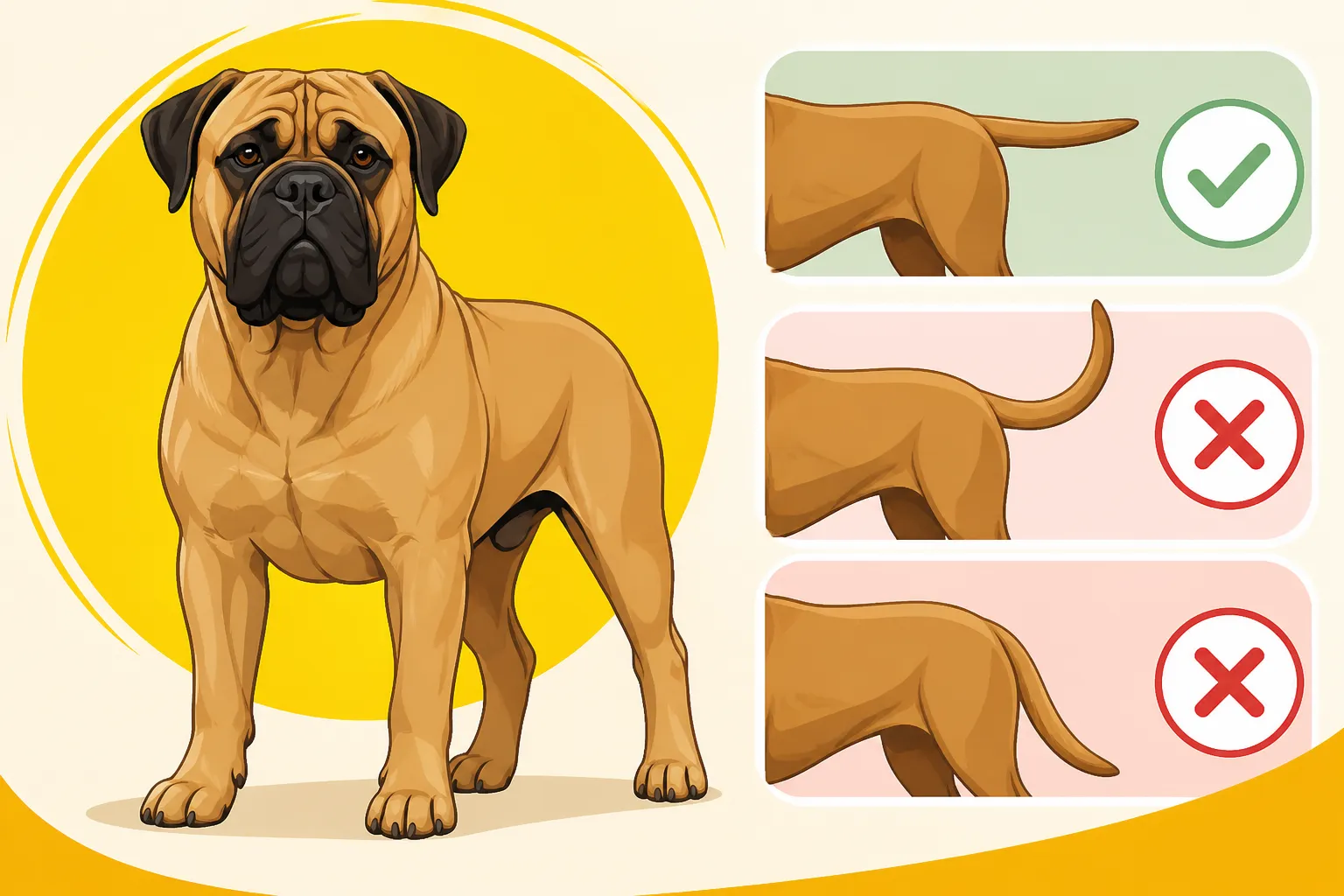
A Bullmastiff’s tail should naturally reach around the hocks and be carried level or with a gentle curve, not tightly curled over the back. But a dog’s tail does not stay in one position all day: excitement, alertness, relaxation, discomfort, and injury can all change how it looks. This guide explains what is typical, what may concern a show judge, and when a change deserves a veterinary call.
What a Bullmastiff’s tail should look like
Length, shape, and set
A Bullmastiff’s tail is set high on the body, broad at the base, and gradually tapering toward the tip. It is generally long enough to reach the hocks. When relaxed, it may hang down; when the dog is alert or moving, it may rise toward level with the back or form a modest curve.
The tail should look like a natural continuation of the dog’s sturdy frame, rather than a tightly wound spiral. It is not meant to curl up over the back like a ring. Still, a single photograph can be misleading: posture, movement, and the moment the picture was taken all affect how the tail appears.
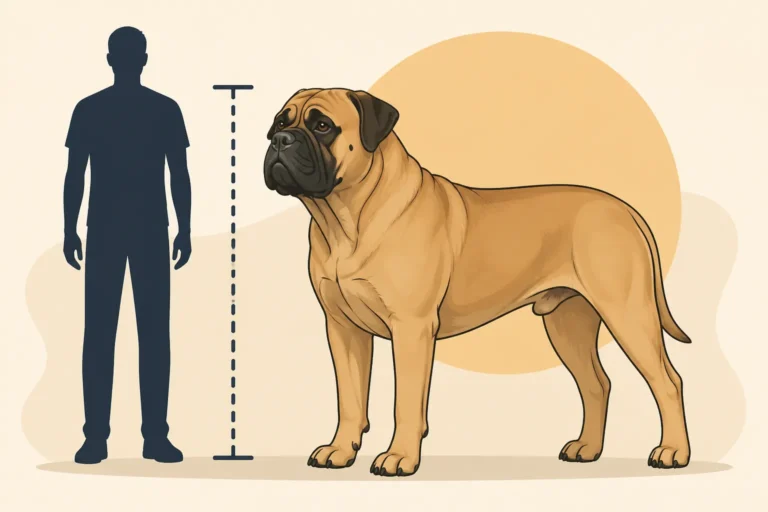
A Bullmastiff’s tail is one piece of the breed’s overall outline, just as the head, back, and proportions are. If you are learning how the breed is put together, A Hundred and Thirty Pounds of Bullmastiff, Measured offers broader context for the dog’s substantial build.
How the tail is carried in the breed standard
Breed standards describe a dog’s ideal appearance, so the wording is most relevant to judging and breeding—not to deciding whether a beloved pet is healthy. In general, the Bullmastiff’s tail should be carried straight or with a curve, rather than curled tightly over the back. The exact description can vary somewhat between kennel clubs, so anyone preparing for a show should consult the standard used by that event.
A dog may hold the tail differently from one moment to the next. A Bullmastiff watching a visitor approach may lift it; the same dog resting on a rug may let it hang loosely. A tail that rises briefly when the dog is excited is not, by itself, evidence of a health problem or a temperament issue.
It can help to distinguish three questions: Does the tail look broadly typical for the breed? Is its posture comfortable and familiar for this particular dog? Has the way the dog holds it changed suddenly? The first question is mostly about appearance. The other two matter in everyday care.
A natural tail is not the same as a docked tail
Bullmastiffs are generally seen with their natural tails. Whether a Bullmastiff’s tail is docked can depend on the dog’s history and where it was bred or acquired. A short tail should not automatically be assumed to be a normal breed feature; ask the breeder, rescue, or previous owner what is known about the dog.
If you are comparing a dog’s appearance with breed information, Whether a Bullmastiff's Tail Is Docked provides a useful companion topic. Regardless of length, take note of the tail’s usual position, range of movement, and appearance. Knowing what is normal for your own dog makes it easier to spot a meaningful change later.
Why a Bullmastiff holds its tail differently
Mood and attention can change tail posture
Like other dogs, Bullmastiffs use body language to communicate, but a tail position should not be interpreted on its own. A raised tail might accompany alertness or excitement; a relaxed, hanging tail may simply mean the dog is resting. Look at the whole dog: ears, eyes, mouth, posture, movement, and the situation around them.
For instance, a Bullmastiff standing at the front window may hold the tail higher while watching activity outside. A few minutes later, after settling beside the sofa, the tail may drop. That shift is ordinary if the dog remains comfortable and moves the tail normally.
A rigid or unusually tucked posture can be worth noticing, especially if it appears alongside other changes such as reluctance to move, hiding, or reduced appetite. It still does not identify a specific cause. A veterinarian can assess the full picture rather than relying on one body-language clue.
Movement, excitement, and rest
Walking, turning, sniffing, greeting a familiar person, and settling down can all affect how a dog carries its tail. Some dogs move their tails more visibly than others. A Bullmastiff’s large, powerful build may also make its tail movement feel dramatic in a narrow hallway or beside a low table.
Try to observe your dog in a few ordinary settings rather than judging its posture from one greeting or one walk. Notice how the tail looks while the dog is relaxed at home, moving at a comfortable pace, and responding to familiar people. A quick phone note or photo can help you remember a baseline, especially if you later need to explain a change to your veterinarian.
Tail carriage can also differ between individuals. A dog’s posture is shaped by its structure, habits, and current state, so comparisons with another Bullmastiff are not a reliable substitute for knowing your own dog. For broader breed background, How a Bullmastiff Differs From a Mastiff can help put differences in build and outline into context.
Pain or injury may alter the usual posture
A sudden change deserves more attention than a tail that has always been carried a little differently. A Bullmastiff that normally holds its tail loosely but now keeps it clamped down, rigid, or unusually still may be uncomfortable. Possible causes range from a bump or strain to a problem affecting the skin or the area around the tail. The posture alone cannot tell you which one.
Be gentle if your dog seems sore. Do not pull the tail, repeatedly bend it to test its movement, or give human pain medicine unless a veterinarian specifically directs you to do so. If the tail has been caught, crushed, or otherwise injured, contact a veterinary clinic for advice.
Pain in dogs is not always obvious, and a dog may continue eating or greeting family members while showing subtler changes. How a Bullmastiff Hides Pain explains why watching ordinary behavior can matter as much as looking for a dramatic limp.
Typical posture versus signs to take seriously
A practical comparison
The table below is a guide to observation, not a diagnosis. A posture that is normal for one Bullmastiff may not be typical for another, and changes in the dog’s comfort or behavior deserve more weight than a single visual detail.
| What you notice | What it may mean | A sensible next step |
|---|---|---|
| Tail hangs loosely while resting | Often a relaxed posture | Observe whether this is normal for your dog |
| Tail rises briefly when the dog is alert | May reflect attention or excitement | Look at the dog’s overall body language |
| Tail is naturally curved but not tightly curled over the back | May be an individual variation | Ask your breeder or a knowledgeable breed professional if you have a show-standard question |
| Tail suddenly becomes tucked, stiff, or difficult to move | Could indicate discomfort or injury | Contact your veterinarian, especially if the change persists |
| Tail area is swollen, bleeding, very tender, or visibly injured | Needs prompt professional assessment | Call a veterinary clinic for guidance |
| Tail posture changes along with trouble walking, weakness, or loss of bladder or bowel control | May indicate a more serious problem | Seek urgent veterinary advice |
A tucked tail during a stressful moment can be a temporary response, but a posture that stays changed after the situation has passed is different. Consider what happened immediately beforehand: a rough play session, a fall, a door closing near the tail, or a sudden reaction when the dog was touched may all be useful details to share with the clinic.
When a veterinary call is appropriate
Call your veterinarian if the tail suddenly hangs differently, remains rigid, appears painful, or is not moving as it usually does. It is also sensible to get advice if your dog repeatedly licks or chews at the tail, has a sore or swelling there, or seems reluctant to sit, walk, or be touched near the hindquarters.
Seek urgent veterinary guidance for a serious injury, bleeding that does not stop, marked swelling, severe pain, or a sudden change accompanied by weakness or difficulty controlling urination or bowel movements. If you are unsure how quickly your dog needs to be seen, describe the signs and ask the clinic. A clear photo or short video of the tail moving naturally can be helpful, as long as taking it does not delay care or distress the dog.
Routine checkups are a good time to mention a concern that is subtle or recurring. How Often a Bullmastiff Needs a Wellness Exam covers the role of regular veterinary visits across a dog’s life. Bring a concise history: when you first noticed the change, whether it is constant or intermittent, and whether anything else about your dog’s behavior has shifted.
Caring for your Bullmastiff’s tail
Make gentle observation part of normal handling
You do not need to manipulate the tail every day. Instead, become familiar with its usual appearance during calm, ordinary interactions. When grooming or petting your dog, look for obvious redness, scabs, damp or irritated skin, and areas that seem newly sensitive. Keep handling brief and relaxed, particularly if your Bullmastiff is not accustomed to having its hindquarters touched.
If your dog flinches, turns quickly, growls, or tries to move away, stop rather than pushing through. Those reactions do not tell you exactly what is wrong, but they do tell you that the dog may be uncomfortable or worried. A veterinarian or qualified groomer can advise you on safe handling if the area needs closer attention.
Routine coat care can make it easier to notice changes across the body, including near the tail. For general grooming context, see Why a Bullmastiff's Coat Takes Ten Minutes a Week and Nails, Ears and Teeth on a Bullmastiff. If a veterinarian recommends a particular pet-safe cleanser for a skin issue, Chewy is one place owners may look for that exact product; follow the vet’s directions and avoid substituting scented household wipes.
Reduce bumps and irritation at home
A Bullmastiff may accidentally knock its tail against furniture, doorways, or walls while turning in a tight space. You can make those collisions less likely by keeping pathways clear and giving the dog room to turn, especially in busy areas such as an entryway or kitchen. This is practical prevention, not a reason to restrict normal movement.
If the tail has been injured, ask the veterinarian how to protect it while it heals. Do not bandage it tightly or apply creams, disinfectants, or pain-relief products without professional guidance; some products can irritate skin or be unsafe if licked. If a veterinarian recommends a recovery collar, Chewy may be one option for comparing sizes, but a good fit and the clinic’s instructions matter more than where it is purchased.
For a dog with a minor skin problem, bedding that can be washed may make clean-up easier while you follow veterinary advice. A washable throw from a retailer such as Chewy can protect a resting spot, but it does not treat a wound or replace an examination. If the area worsens, becomes painful, or does not improve as expected, check back with the clinic.
Show questions and everyday health are separate
If you are preparing a Bullmastiff for a conformation show, ask the show organization or a breed mentor how the applicable standard describes tail carriage. A judge evaluates the dog’s outline and movement in a particular setting. That assessment is different from a veterinary evaluation, and a show-ring preference should not be treated as proof that a pet is unwell.
For a family pet, prioritize comfort and normal function. A Bullmastiff whose tail has a modest curve but moves freely and has always looked that way may simply have an individual shape. A dog whose tail changes abruptly or seems painful needs attention even if its tail would otherwise fit a breed description.
It is useful to keep those questions separate: What does the standard favor? What is normal for this dog? Is the dog comfortable? Breed knowledge can help you understand the first; careful observation and veterinary care help with the others. If your Bullmastiff is otherwise acting normally but you remain uncertain about a long-standing shape, your veterinarian or a reputable breed club can help direct you to someone familiar with the standard.
Disclaimer
This article is for general informational purposes only and does not constitute professional advice. Laws, prices and regulations vary by location and change over time. Consult a qualified professional for guidance on your specific situation.