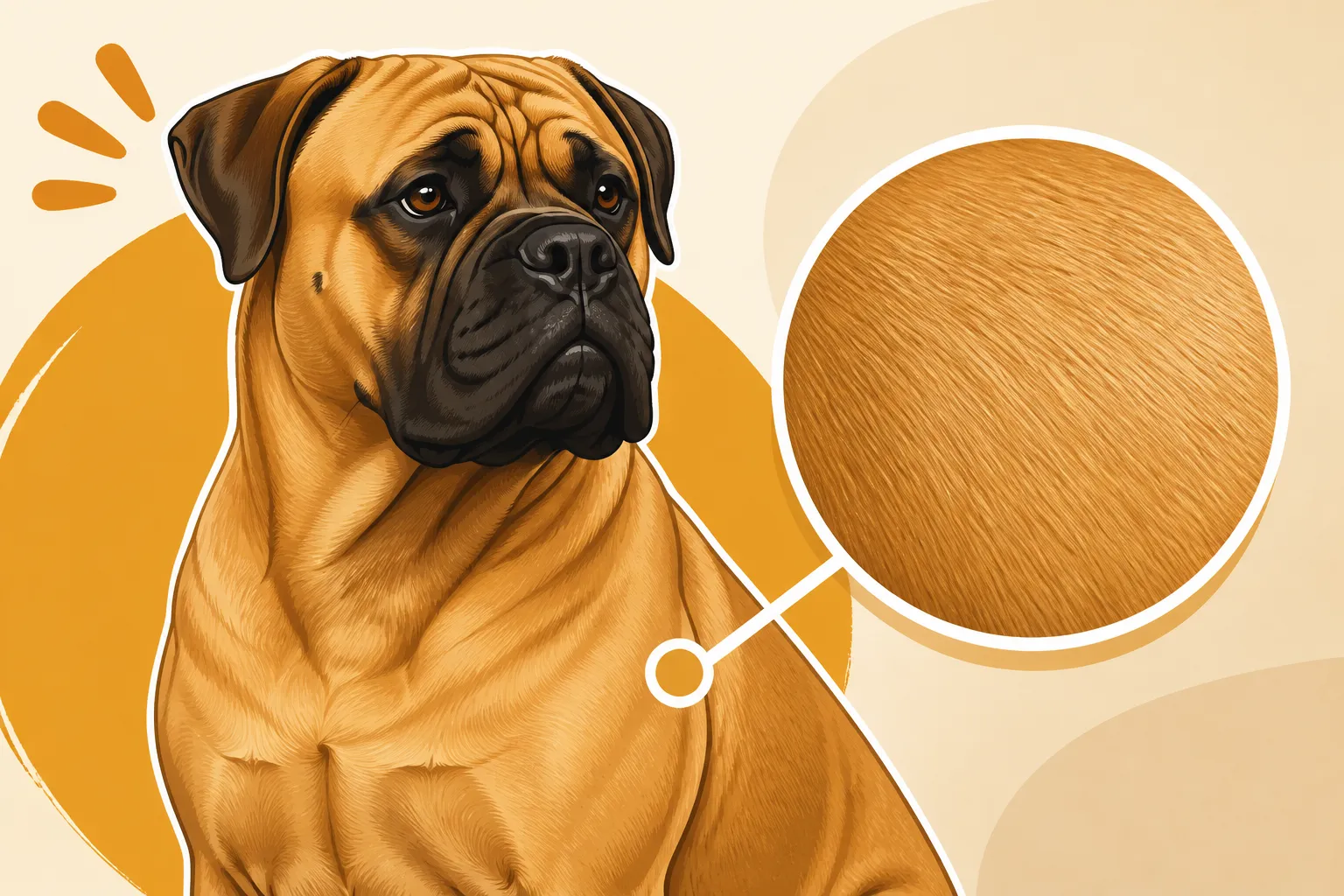
What Texture a Bullmastiff’s Coat Should Have
A Bullmastiff’s coat should feel short, dense, and firm beneath your hand—not soft and fluffy like a plush toy. If your dog’s hair seems suddenly brittle, greasy, patchy, or unusually thin, it can be hard to know whether you’re noticing normal variation or a skin problem. This guide explains what healthy coat texture feels like, how to care for it, and when to call your vet.
What a healthy Bullmastiff coat feels like
Short, dense, and close to the body
A healthy Bullmastiff has a short, hard coat that lies close to the body. Run your hand over the back and sides: the hair should feel firm and smooth, rather than long, feathery, cottony, or woolly. The coat is dense enough to give the dog some protection from the weather, but it is not a thick, plush undercoat.
“Hard” does not mean sharp or unpleasant to touch. It describes the texture of the individual hairs: they have a little firmness, rather than feeling silky or fine. The coat should also look even over the body, without unexplained bald patches or clumps of loose hair.
A Bullmastiff puppy’s coat may feel softer than an adult’s, and individual dogs can vary somewhat in how coarse their hair feels. A dog’s age, health, and grooming routine can also affect how the coat feels from day to day. What matters most is the overall picture: a close-lying, short coat that feels reasonably consistent and has healthy-looking skin underneath.
Color does not determine texture
Bullmastiffs may be fawn, red, or brindle, and their coat color does not tell you whether the hair should be soft or hard. A brindle dog should not have a different basic coat texture from a fawn dog. Nor does a particular shade, a dark muzzle, or a small white marking explain a coat that is unexpectedly thin or rough.
A dog’s appearance can sometimes make texture seem different than it is. For example, a glossy coat may look especially sleek, while a dry coat can seem rougher under your fingers. Try assessing the hair in natural light and in more than one area, rather than judging from a quick glance or one patch along the back.
If you are comparing your dog with a breed description, remember that written terms such as “hard” and “dense” are general standards, not a promise that every individual coat will feel identical. For a closer look at the range of normal seasonal shedding, see Whether a Bullmastiff Sheds Year Round. To understand the breed’s overall appearance, The Bullmastiff Is Sixty Percent Mastiff and Forty Percent Bulldog offers broader context.
How to check your Bullmastiff’s coat and skin
Use your hands as well as your eyes
A simple weekly check can help you learn what is normal for your dog. Start at the shoulders and move slowly along the back, sides, chest, belly, and legs. Part the hair in a few places and look at the skin rather than just the surface of the coat. You are checking for changes—such as redness, flakes, small scabs, moist patches, or areas where the hair seems thinner than it used to be.
Pay attention to whether the hair feels different in one particular spot. A rough patch on an elbow, for instance, may be related to repeated pressure against a hard floor rather than a whole-body coat change. Greasy hair, a persistent smell, or skin that seems irritated deserves a closer look, especially if your dog keeps scratching, licking, or rubbing the area.
Keep the check relaxed. Many Bullmastiffs are more comfortable when you handle them while they are settled on a familiar bed or beside you after a walk. If your dog is uneasy about having paws, ears, or belly handled, go gradually and reward calm moments. The goal is not to conduct a perfect inspection in one sitting; it is to build familiarity so changes are easier to notice.
Distinguish a normal coat variation from a change
Some loose hair on your hands or brush is normal, even for a short-coated dog. Seasonal shedding may be more noticeable at certain times, and a coat can look a little less sleek after a muddy walk or a day spent lounging on blankets. Those everyday changes are different from a new, persistent shift in texture or skin condition.
It helps to note when you first noticed a change and whether anything else is happening. Is your dog scratching more? Are there new bald spots, a strong odor, or red skin? Has the texture changed across the whole body or only in one area? A quick phone photo of a patch can be useful for comparing its appearance over time and showing your veterinarian.
A coat that becomes dull or dry can have many possible explanations, including skin irritation, parasites, allergies, or an underlying health issue. It is not possible to identify the cause by texture alone. If the change persists, spreads, or comes with discomfort, arrange a veterinary check rather than trying a string of shampoos and supplements at random. Learn more about possible causes in Skin Allergies in a Bullmastiff and Whether a Bullmastiff Gets Dry Skin.
| What you notice | What it may mean | A sensible next step |
|---|---|---|
| Short, firm hair that lies close to the body | Typical Bullmastiff coat texture | Keep up routine brushing and skin checks |
| A little loose hair on a brush | Ordinary shedding | Brush gently and monitor for sudden increases |
| Dry flakes or a rough patch | Dryness, irritation, or another skin concern | Check for redness or itching; ask your vet if it persists |
| Greasy hair or a strong odor | Skin or coat problem may be present | Book a veterinary assessment, especially if the skin is sore |
| Bald spots, scabs, or ongoing scratching | A problem needing investigation | Contact your veterinarian instead of relying on grooming products alone |
Grooming for a short, firm coat
Brush gently and consistently
A Bullmastiff’s short coat usually does not need elaborate grooming, but regular brushing helps lift loose hair and lets you check the skin. Choose a brush designed for short-coated dogs and use light strokes in the direction the hair grows. Pressing hard or repeatedly scraping over the same spot can irritate the skin, especially on a dog with sensitive areas.
If you are choosing equipment, Which Brush Suits a Bullmastiff can help you think through the options. You do not need a large collection of tools; the best brush is one that works gently for your dog and that you can use comfortably. A rubber grooming mitt or soft-bristled brush may suit some dogs, while another may tolerate a different style better.
Make brushing a short, pleasant routine. Start with a few strokes on the back, where many dogs are comfortable being handled, then gradually work toward more sensitive areas. If your Bullmastiff turns away, stiffens, or tries to leave, pause and make the next session easier. Grooming should not become a wrestling match, and brushing more forcefully will not make a coat healthier.
Bathe only when needed and dry skin folds carefully
Frequent bathing is not a shortcut to a better coat. Too many baths, or using a harsh product, can leave the skin dry or irritated. When your dog is dirty or has an odor that cannot be handled with brushing and a wipe-down, use a dog-appropriate shampoo and rinse thoroughly. If skin problems are already present, ask your veterinarian what product is suitable before trying a medicated wash.
Drying matters, particularly around facial folds and other areas where moisture can linger. Towel-dry carefully after a bath and check that skin folds are not left damp. Persistent redness, soreness, or an unpleasant smell around the folds is not simply a coat-texture issue. For further guidance, see How to Clean a Bullmastiff's Face Wrinkles and Skin Fold Infections on a Bullmastiff.
If you need to replace basic grooming supplies, a pet retailer such as Chewy may be one place to look for a suitable brush, dog shampoo, or absorbent towels. Check that a product is intended for dogs and appropriate for your pet’s skin needs; a popular grooming product is not automatically the right choice for an irritated coat. When a skin condition is suspected, your vet’s advice should guide product selection.
When a coat change needs veterinary attention
Watch for symptoms beyond texture
Texture is only one part of the picture. A slightly rough coat on its own may not point to an urgent problem, but coat changes accompanied by itching, redness, scabs, hair loss, or an unpleasant odor deserve attention. Dogs may also show discomfort by licking their paws, rubbing their face, or repeatedly scratching a particular spot.
Be especially alert to a change that appears quickly, spreads, or keeps returning after you clean the area. A Bullmastiff that has a new bald patch and keeps chewing at it needs more than a different brush. Similarly, skin that is wet, painful, swollen, or bleeding should be assessed promptly.
Before the appointment, make a short record of the changes you have seen. Note when they began, what areas are affected, whether your dog is scratching, and any new food, bedding, cleaning products, or grooming products in the household. You do not need to diagnose the cause yourself. Those details simply help your veterinarian understand the timeline.
Avoid treating the coat as a cosmetic problem
It is understandable to want to restore a smooth, shiny coat quickly, particularly when the change is visible or your dog seems uncomfortable. Still, oils, supplements, home remedies, or frequent bathing may not address the reason the coat changed—and some products can irritate the skin further. Start with a veterinary assessment when the change is persistent or comes with other symptoms.
Nutrition and general health can affect the skin and coat, but adding supplements without guidance is not always helpful. A balanced diet appropriate for your dog’s age and condition is a better starting point than assuming a particular nutrient is missing. Your veterinarian can advise whether diet, parasite prevention, testing, or a specific skin treatment is appropriate.
If you shop for grooming or care items through Chewy or another retailer, use those products to support—not replace—medical advice. Keep a note of anything you apply to the skin, since that information can help the vet distinguish a product reaction from other causes. For general coat care and bathing routines, see How Often a Bullmastiff Should Be Bathed.
A healthy Bullmastiff coat should feel short, close, and firm, with no widespread irritation or unexplained hair loss. Once you know your dog’s normal texture, a gentle weekly check and simple brushing routine make changes easier to catch. If the coat becomes persistently dry, greasy, patchy, or itchy, arrange a veterinary check instead of trying to solve the problem through grooming alone.
Disclaimer
This article is for general informational purposes only and does not constitute professional advice. Laws, prices and regulations vary by location and change over time. Consult a qualified professional for guidance on your specific situation.