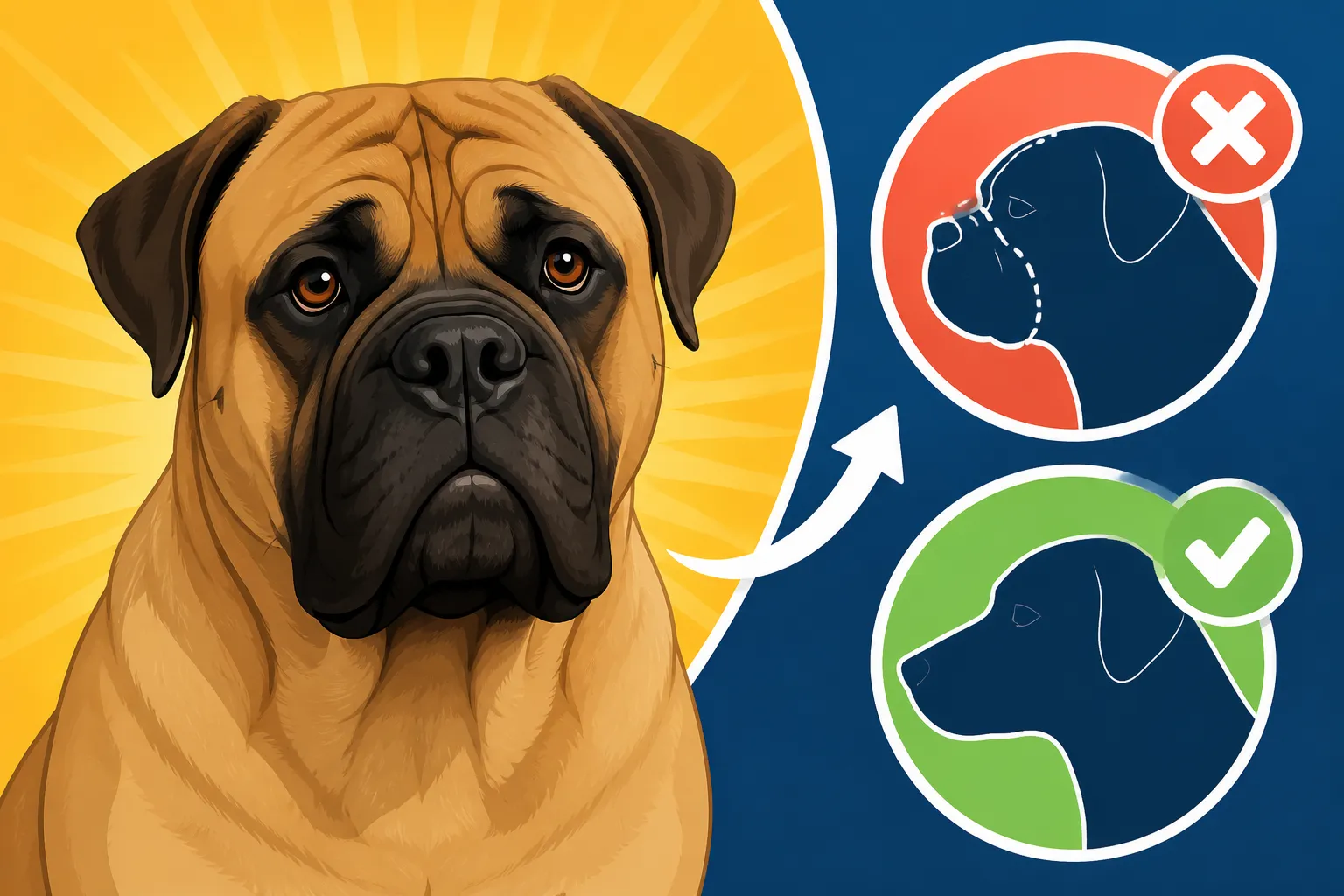
Whether a Bullmastiff Is Brachycephalic
A Bullmastiff’s short, broad muzzle can make breathing and cooling less efficient than in a longer-faced dog, but the breed is not as extremely flat-faced as a Pug or English Bulldog. The most useful answer is that Bullmastiffs have brachycephalic features, and some may be affected by brachycephalic airway problems. Here’s how to understand the difference and what to watch for.
Are Bullmastiffs brachycephalic
What brachycephalic means
“Brachycephalic” describes a shortened skull and muzzle. The term comes up most often with breeds whose faces look very flat, but it isn’t an all-or-nothing label based on appearance alone. A dog can have a shortened muzzle to some degree without having serious breathing difficulty.
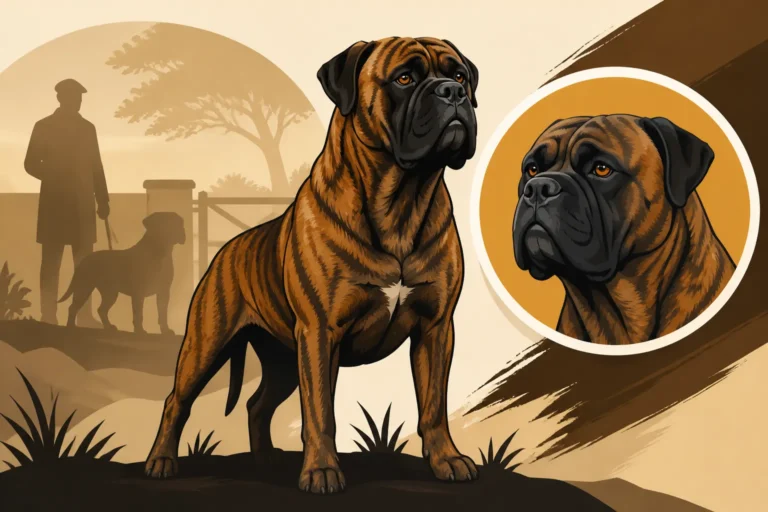
Bullmastiffs have a broad head and a relatively short muzzle, so they have brachycephalic features. They are generally less flat-faced than breeds such as Pugs and Bulldogs, but individuals vary. The shape of a dog’s muzzle, the width of its nostrils, and the space inside its nose and throat all affect how easily it breathes. A dog that looks less flat-faced can still have airway trouble, while another with a similar appearance may breathe comfortably.
That’s why the question isn’t only whether a Bullmastiff “counts” as brachycephalic. It’s also whether that particular dog can breathe quietly and comfortably during ordinary activities, in warm weather, and while asleep. For more on the breed’s facial proportions, see What a Bullmastiff's Muzzle Length Should Be.
How a Bullmastiff’s features can affect breathing
A shortened muzzle can mean less room for airflow through the nose and upper airway. Some brachycephalic dogs have narrowed nostrils, an elongated soft palate, or other anatomical features that make breathing harder. These conditions can occur in different combinations, and an owner cannot confirm them just by looking at a dog’s face.
A Bullmastiff’s heavy build can add another practical challenge: carrying extra weight may put more strain on breathing and movement. Heat, excitement, exertion, and stress can also make breathing less efficient. A dog that pants heavily after a short walk on a warm day may need a cool, quiet place to rest—and may also need veterinary assessment, particularly if the reaction seems excessive or is new.
Breed standards describe desired appearance, not a guarantee that every dog has normal airflow. A responsible breeder should pay attention to functional breathing and health, not just a broad head or short muzzle. The article Why a Bullmastiff's Nostrils Must Be Wide explains why open nostrils matter for airflow.
Signs a Bullmastiff may be having trouble breathing
What can be normal and what deserves attention
Panting is one way dogs cool themselves, and a Bullmastiff may pant after exercise, in warm conditions, or when excited. But loud or labored breathing at rest shouldn’t be dismissed as “just how the breed sounds.” A snore during sleep can be harmless for some dogs, yet frequent noisy breathing while awake, repeated snorting, or difficulty settling after mild activity can signal an airway issue.
Pay attention to the whole dog, not just the sound. Notice whether your Bullmastiff keeps up with an easy walk, needs unusually long recovery time, avoids activity, or appears distressed when breathing. A change from the dog’s normal pattern is especially important. If breathing suddenly becomes difficult, the gums or tongue look bluish or unusually pale, the dog collapses, or it cannot settle, seek emergency veterinary care.
Signs worth discussing with a veterinarian include:
- Persistent noisy breathing while awake
- Heavy panting after mild activity or in comfortable conditions
- Gagging, retching, or repeated trouble swallowing
- Poor exercise tolerance or frequent pauses to recover
- Restlessness during sleep or difficulty finding a comfortable position
- A history of overheating or breathing distress
The guide Whether a Bullmastiff Has Breathing Problems covers related concerns, but a veterinarian is the right person to assess an individual dog. Don’t try to diagnose the cause based on breed or sound alone.
How a veterinarian can assess your dog
A veterinarian will usually start with your dog’s history and a physical examination. Be ready to describe when the breathing sounds occur, how long they last, what activity preceded them, and whether heat or excitement makes them worse. A short video recorded at home can be helpful if the sound doesn’t happen during the appointment.
Depending on the signs, the veterinarian may recommend further evaluation. Some airway structures are difficult to assess in an alert dog, so a more complete examination may involve sedation or anesthesia. That decision depends on the individual dog and the suspected problem; it should be planned and monitored by a veterinary team familiar with the dog’s size, airway, and health.
Ask what changes should prompt urgent care and whether your dog needs limits on exercise or heat exposure. If a procedure is being discussed, tell the clinic about any history of snoring, noisy breathing, overheating, or slow recovery from anesthesia. For more context, see Whether a Bullmastiff Tolerates Anesthesia.
| What you notice | Why it matters | A sensible next step |
|---|---|---|
| Quiet breathing at rest and comfortable recovery after gentle activity | Reassuring, though it does not rule out every airway issue | Keep up routine wellness checks and monitor for changes |
| Frequent noisy breathing, poor stamina, or extended recovery | Could reflect an airway or other health problem | Book a veterinary assessment and describe when it happens |
| Sudden severe breathing difficulty, collapse, or blue-tinged gums | May be an emergency | Seek urgent veterinary care immediately |
Why heat and exercise need extra care
Cooling can be harder with a short muzzle
Dogs mainly cool themselves by panting. When airflow through the nose and upper airway is restricted, panting may be less effective. That can make hot, humid conditions, strenuous exercise, and excitement more concerning for a Bullmastiff with brachycephalic features. A dog’s individual health, fitness, body condition, and airway all influence its risk.
Plan walks for cooler parts of the day, choose a steady pace, and give your dog access to shade and water. If the weather feels warm or humid, replace a long walk with brief outdoor breaks and indoor enrichment. Don’t leave a Bullmastiff in a parked car, even for a short errand. Cars can heat rapidly, and a dog with limited cooling capacity has little room for error.
A cooling mat or other cooling aid can be one part of a comfortable rest area, but it cannot make unsafe heat exposure safe. When comparing products on Chewy or elsewhere, check the size, materials, and care instructions, and supervise your dog to make sure the item is being used safely. For a fuller discussion of heat precautions, see Why a Bullmastiff's Short Muzzle Cannot Cool It and What Temperature Is Dangerous for a Bullmastiff.
Match exercise to the individual dog
Bullmastiffs need regular movement, but a long, fast workout is not automatically better. Start with manageable walks and watch how your dog responds during and afterward. A comfortable dog should be able to recover without persistent, distressed panting. Reduce the intensity if your dog falls behind, repeatedly stops, or seems reluctant to continue.
Use a well-fitted harness or collar setup that gives you control without putting unnecessary pressure on the throat. If you are comparing harness styles on Chewy, check the fit carefully and ask your veterinarian or a qualified trainer for guidance if your dog pulls or has a known airway concern. Avoid forcing exercise in warm weather or encouraging a dog to “push through” heavy panting.
Heat distress can become urgent. Move a dog that seems overheated to a cooler place, offer access to water, and contact a veterinarian promptly for instructions. Severe panting, weakness, vomiting, confusion, collapse, or breathing difficulty needs urgent attention. The guides Why a Bullmastiff Overheats So Easily and Signs a Bullmastiff Has Heatstroke explain why it’s important to act quickly.
Helping a Bullmastiff breathe comfortably day to day
Keep an eye on body condition and routine
Extra weight can make movement and breathing more demanding, so aim for a body condition recommended by your veterinarian rather than relying only on a number on the scale. Your vet can help set an appropriate feeding and activity plan, especially for a growing puppy, an older dog, or a Bullmastiff with an existing health concern.
Keep a simple record of symptoms if you’re unsure whether a breathing pattern is changing. Note the time, weather, activity, duration, and any other signs, such as coughing or difficulty settling. This can make a veterinary conversation more useful than a general description like “he always pants a lot.” If you shop for cooling products or other comfort supplies on Chewy, treat those items as practical supports—not substitutes for an exam when breathing seems abnormal.
Choose breeding and care with function in mind
If you’re choosing a puppy, ask the breeder about the parents’ breathing, exercise tolerance, and veterinary history. Meet the adult dogs if possible and observe whether they breathe comfortably while resting and moving around. Ask what health testing is done and how the breeder prioritizes sound structure and functional health. The guide What a Bullmastiff's Muzzle Length Should Be can help you understand the breed’s facial proportions, while What Nobody Tells You Before Buying a Bullmastiff offers a broader look at life with the breed.
No single feature guarantees that a dog will or won’t have airway problems. A short muzzle deserves attention, but the dog’s actual breathing, comfort, and ability to cope with ordinary activity matter most. If your Bullmastiff has persistent noisy breathing, struggles in mild conditions, or takes a long time to recover, arrange a veterinary assessment rather than assuming the symptoms are simply part of the breed.
Disclaimer
This article is for general informational purposes only and does not constitute professional advice. Laws, prices and regulations vary by location and change over time. Consult a qualified professional for guidance on your specific situation.