How Long a Bullmastiff’s Muzzle Should Be
A Bullmastiff’s muzzle should look short, broad, and deep in proportion to its large head—not flattened so far that breathing seems labored. Because breed standards describe an approximate proportion rather than a single measurement for every dog, the best way to assess muzzle length is to compare it with the whole head and consider the dog’s comfort and function.
The Bullmastiff muzzle length standard
How the muzzle is measured
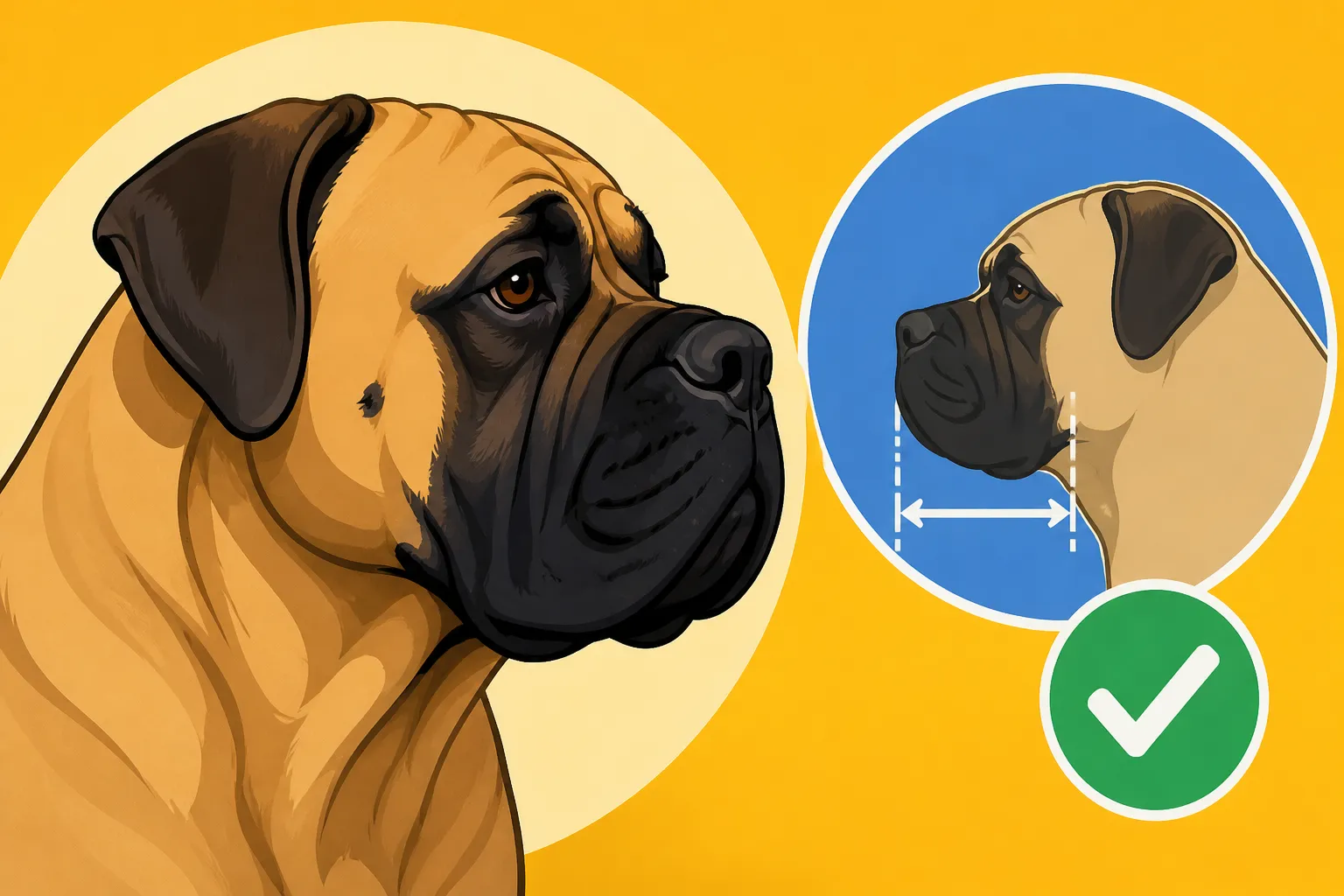
In breed descriptions, the muzzle is the part of the head in front of the stop: the transition between the forehead and the muzzle. For a rough comparison, measure from the tip of the nose back to the stop, then compare that distance with the head’s overall length, usually measured from the nose to the back of the skull.
Bullmastiff standards generally call for a muzzle that is short in relation to the skull, as well as broad and deep. One commonly used description puts the muzzle at about one-third of the head’s total length. Treat that as an approximate guide, not a pass-or-fail formula: standards can differ in wording, and dogs vary in head shape.
It also matters where the measurement ends. Measuring from the nose only to the eyes, or judging length from a side view without locating the stop, can make the muzzle seem shorter or longer than it is. If you are comparing a dog with a written standard, check which kennel club’s standard is being used.
What “short, broad, and deep” looks like
A typical Bullmastiff muzzle is compact, but it should still have substance. Viewed from the front, it should look broad; from the side, it should have visible depth rather than appearing like a narrow strip beneath the eyes. The nose is usually dark, with open nostrils, while the muzzle blends into a broad skull.
The goal is balanced proportion, not the shortest muzzle possible. A muzzle that looks very short in a photograph may be affected by camera angle, a wide lens, the dog’s expression, or the way the head is turned. When assessing a dog in person, look at the head from the front and side, and watch the dog at rest and after gentle activity.
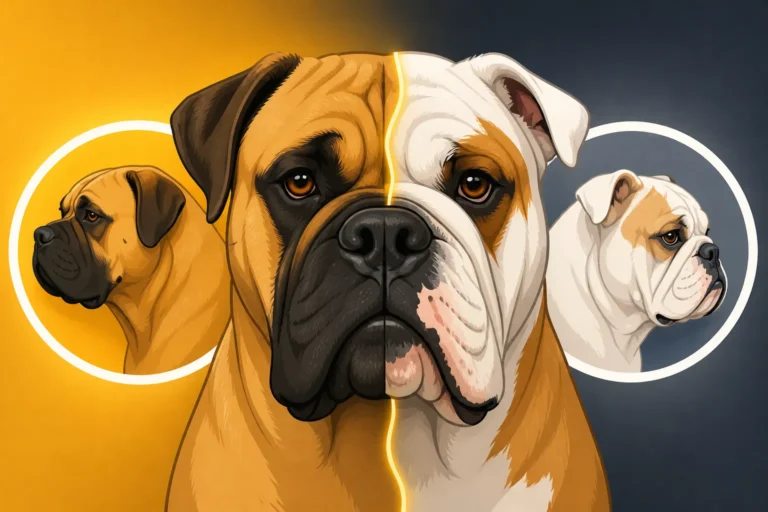
The muzzle’s appearance is just one part of the breed’s characteristic head. For more context on how the head is built, see How the Bulldog Half Shows in a Bullmastiff's Head and What a Bullmastiff's Muzzle Length Should Be is not the best comparison point for other breed features; a separate useful guide is What a Bullmastiff's Black Mask Should Look Like.
Why there is no exact ideal measurement for every dog
A ratio is a practical description, not a promise that every well-bred Bullmastiff will measure exactly the same way. Individual skull shape, age, sex, and overall build can affect how the proportions appear. Puppies also change as they grow, so a young dog’s head may not yet have the mature shape you expect.
A ruler cannot assess the full picture by itself. Two dogs might have similar nose-to-stop measurements but look different because one has a broader skull, a deeper muzzle, or a different transition at the stop. For that reason, breeders and judges assess the head as a whole rather than relying on a single measurement.
If you are choosing a puppy, ask to see the parents and, when possible, adult relatives. Their heads give you a better sense of the lines’ mature proportions than a puppy photograph alone. A knowledgeable breeder can explain how the puppies are developing without promising that a particular muzzle shape guarantees health or show success.
Muzzle length, breathing, and everyday comfort
Breed type does not replace breathing assessment
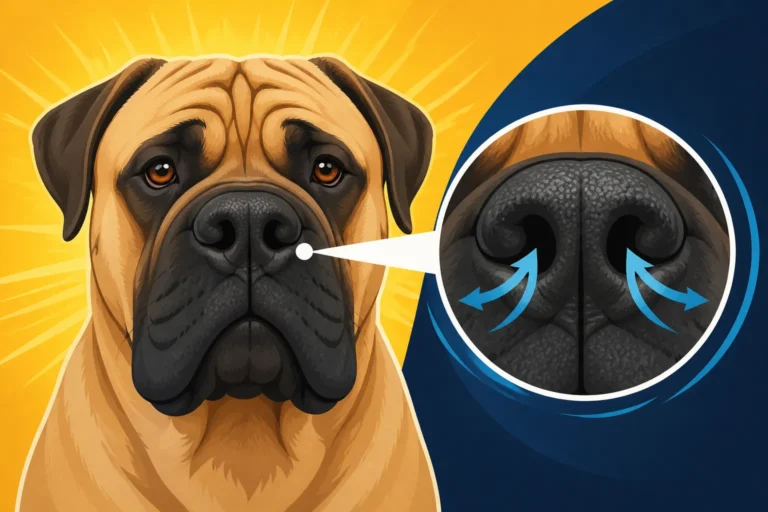
Bullmastiffs have relatively short muzzles compared with many breeds, but appearance alone cannot tell you how well a dog breathes. Airway function depends on more than the visible length of the muzzle. Nostril shape, soft tissues, body condition, heat, excitement, and individual anatomy can all matter.
A short muzzle does not automatically mean a dog has a breathing disorder, and a muzzle that looks a little longer does not guarantee easy breathing. If your dog regularly struggles to breathe, makes pronounced noisy breathing sounds while awake, tires unusually quickly, or has difficulty recovering after mild activity, discuss those observations with a veterinarian. Sudden or severe breathing distress needs prompt veterinary attention.
For related background, read Whether a Bullmastiff Is Brachycephalic, Why a Bullmastiff's Nostrils Must Be Wide, and Whether a Bullmastiff Has Breathing Problems. These topics are connected, but they are not interchangeable: a breed label or head shape should not be used to diagnose an individual dog.
Normal snoring versus signs worth discussing
Some Bullmastiffs snore or snuffle, particularly while asleep. That may be familiar in a short-muzzled, heavy-headed dog, but “common” does not mean every sound should be dismissed. Pay attention to what is normal for your own dog and whether the sound changes over time.
Make a note of when the noise happens. Is it limited to sleep, or does it occur when the dog is awake and resting? Does it become louder during warm weather or after exercise? Is the dog comfortable, or does it seem to work hard to draw breath? A short phone video can help your veterinarian understand what you are hearing at home.
Heat deserves extra caution. Dogs cool themselves mainly by panting, and dogs with shorter muzzles may have less margin for coping with hot, humid conditions. Learn the warning signs and safe cooling steps in Why a Bullmastiff's Short Muzzle Cannot Cool It. Do not use muzzle length alone to decide whether a dog can safely exercise in warm weather.
A practical comparison of appearance and function
| What you are assessing | What to look for | What it can and cannot tell you |
|---|---|---|
| Muzzle proportion | Short in relation to the skull, with a broad and deep shape | Helps describe breed type; it is not a stand-alone health test |
| Nostrils | Open rather than obviously pinched | Offers a visible clue, but does not show the whole airway |
| Breathing at rest | Quiet, comfortable breathing without visible effort | Repeated effort or distress warrants veterinary attention |
| Recovery after activity | The dog settles and breathes comfortably after gentle exercise | Unusual fatigue or prolonged difficulty recovering should be discussed with a vet |
| Overall head | Balanced proportions viewed from the front and side | A single photo or ruler measurement can be misleading |
Judging a Bullmastiff’s muzzle responsibly
Look at more than one angle
A side view helps show the length from nose to stop and the depth of the muzzle. A front view shows width, nostril shape, and how the muzzle relates to the skull. If you only see a profile, you might miss a narrow muzzle; if you only see a head-on photo, you may not be able to judge its length accurately.
Lighting and camera perspective can also distort proportions. A close-up taken with a phone lens may make the nose look larger or the muzzle appear shorter. Whenever possible, compare relaxed, naturally posed views rather than relying on a tightly cropped image or a dramatic show pose.
This is especially useful when evaluating a puppy online. Ask for clear photos or videos from more than one angle, and ask how old the puppy is. Then consider the parents’ proportions and ask the breeder what they prioritize in head shape, breathing, and overall health.
Separate a breed feature from a health problem
The Bullmastiff’s compact muzzle is part of its characteristic appearance, but a breed feature should not be used to excuse persistent discomfort. A dog that regularly gasps, struggles in ordinary conditions, or cannot settle after mild activity needs an individual assessment, regardless of whether its head looks typical.
Likewise, a dog with a muzzle that appears slightly longer than another Bullmastiff’s is not automatically unhealthy or outside every standard. Breed standards describe desired type for judging and breeding; a veterinarian evaluates the dog in front of them. Those are different questions, and confusing them can lead owners to overlook either normal variation or a genuine concern.
If your concern is how your dog functions, describe specific signs rather than asking only whether the muzzle is “too short.” Mention when the signs occur, how often they happen, and whether they are changing. That gives your veterinarian more useful information than appearance alone.
Do not confuse muzzle length with a basket muzzle
A Bullmastiff’s anatomical muzzle is part of its face. A basket muzzle is a piece of equipment fitted over the face for a particular safety or training purpose. Breed-standard proportions do not tell you what size restraint muzzle to buy, and a product label saying it is suitable for a large dog does not confirm that it fits your dog.
A basket style generally needs to allow comfortable panting and drinking, while remaining secure enough for its intended use. Fit should be checked on the individual dog, and a veterinarian or qualified trainer can help if you are unsure. Never leave a muzzled dog unattended or use equipment that interferes with breathing.
If you are comparing options, Chewy can be one place to browse product descriptions, but treat listed sizing as a starting point rather than a final fitting decision. Chewy listings may help you compare styles, while an in-person fit check helps confirm that the basket clears the nose and allows the dog to pant. If you need a muzzle for a veterinary visit or a behavior plan, ask the clinic or trainer what style is appropriate before buying; Chewy is not a substitute for that individualized guidance.
Questions to ask breeders and veterinarians
When you are choosing a puppy
Ask the breeder how they assess the puppies’ overall head shape and whether they have noticed any breathing concerns in the litter or close relatives. You are looking for a thoughtful, specific answer, not a guarantee that every puppy will have identical proportions or never develop a health problem.
It is also reasonable to ask what health screening the parents have received and whether the breeder will explain the results. A puppy’s muzzle is only one feature among many; temperament, general health, sound movement, and responsible breeding practices matter too. The guide What a Bullmastiff Breeder Should Have Screened can help you prepare questions about screening beyond appearance.
Be wary of claims that a very short muzzle is automatically better, or that one photograph proves a puppy will breathe perfectly as an adult. Ask to see the puppies behaving naturally, including while resting, and observe whether they appear comfortable. A breeder should welcome questions and help you understand what they can—and cannot—predict.
When you are already worried about your dog
Bring your observations to your veterinarian rather than trying to diagnose the problem from a breed-standard diagram. Note whether the dog’s breathing changes during sleep, heat, walks, excitement, or rest. If it is easy and safe to do so, a short video may help show a pattern that does not occur in the clinic.
Also mention changes in exercise tolerance, recovery, sleep, or comfort. A dog that has always snored lightly is different from one whose breathing has recently become louder or more effortful. The distinction is not a matter of muzzle length alone; the veterinarian can assess your dog’s signs and decide whether further evaluation is appropriate.
For a broader view of head and mouth structure, What a Bullmastiff's Bite Should Be offers related context, while What a Bullmastiff's Muzzle Length Should Be should be understood as a proportion guide rather than a health checklist. The most useful standard is one that helps you recognize the breed’s shape without losing sight of the individual dog’s comfort.
Disclaimer
This article is for general informational purposes only and does not constitute professional advice. Laws, prices and regulations vary by location and change over time. Consult a qualified professional for guidance on your specific situation.