Bullmastiff or Cane Corso for a Guard Dog
Choosing between a Bullmastiff and a Cane Corso for a guard dog is not just a question of which one looks more imposing. The real challenge is finding a dog whose instincts, training needs, and everyday temperament fit your home. This guide compares how the breeds tend to guard, what they need from an owner, and how to make a responsible choice.
What kind of guarding do you actually need
“Guard dog” can mean several different things: a dog whose size discourages trespassers, one that notices unfamiliar activity and alerts you, or one trained to respond to a threat. Those are not interchangeable jobs. A breed’s reputation alone cannot promise safe, reliable protection, and adding protection training without careful professional guidance can create serious risks.
Bullmastiffs tend to guard with presence
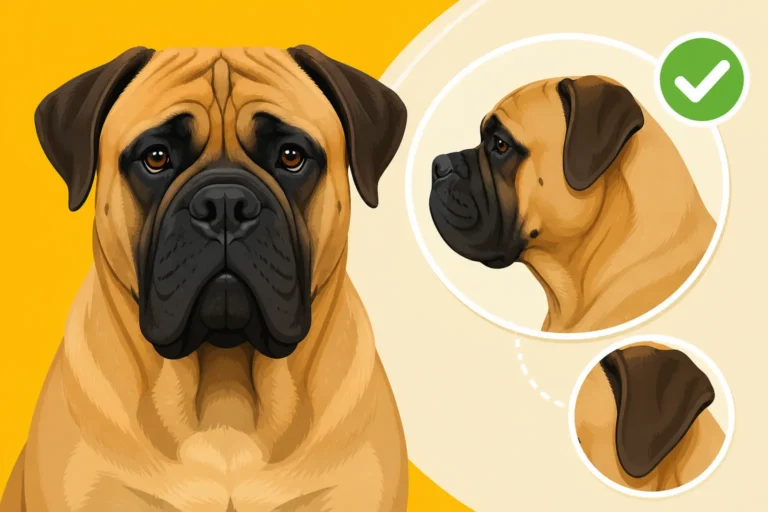
Bullmastiffs were developed in England as estate dogs used by gamekeepers to find and hold poachers. That history is often summed up as a dog that can stop someone without being expected to maul them. Today, individual dogs vary, but the breed’s substantial build, close attention to its household, and tendency to be watchful can make its presence a deterrent.
A Bullmastiff may not announce every passing person with a stream of barking. Some are quiet observers who move toward a door or position themselves between their family and a visitor. That can feel reassuring, but it also means owners should not rely on a dramatic bark as their only warning. Learn your dog’s ordinary body language and how it reacts when people enter the home. For more on that first meeting, see How a Bullmastiff Greets a Stranger.
Bullmastiffs are not automatically safe or predictable simply because they were historically bred to hold rather than attack. A large dog can injure someone by rushing, blocking, or knocking them over, even without biting. A calm temperament, thoughtful introductions, secure management, and consistent training matter more than an assumed instinct. How Protective a Bullmastiff Is explains why protective behavior should be understood as a tendency, not a guarantee.
Cane Corsos are often more active and responsive guardians
The Cane Corso is an Italian working breed with a history that includes guarding property and working alongside people. Many are alert, physically capable, and attentive to their surroundings. Compared with the Bullmastiff’s often more measured, lower-key style, a Cane Corso may be a more energetic and engaged partner for an owner who enjoys regular training and structured activity.
That does not mean every Cane Corso will be more protective, or that every Bullmastiff will be calmer. Temperament depends on the individual dog, breeding, early experiences, socialization, health, and the owner’s handling. A dog that is nervous, poorly socialized, or encouraged to treat ordinary visitors as threats is not a better guard dog. It is a dog whose behavior may become difficult to manage.
Think about what you want the dog to do in routine situations. If you mostly want a reassuring presence at home, either breed may be more dog than necessary unless you can manage its size and training needs. If you expect the dog to perform formal protection work, consult a qualified trainer who can assess the individual dog and your goals before you choose a puppy or adult.
Compare the breeds by daily fit, not just deterrence
| Consideration | Bullmastiff | Cane Corso |
|---|---|---|
| Typical impression | Heavy, imposing, often watchful and relatively quiet | Athletic, alert, and often more visibly engaged |
| Everyday activity | Usually needs regular, moderate exercise suited to its age and condition | Often needs regular exercise plus meaningful training and mental work |
| Training priority | Manners, leash control, calm greetings, and reliable household routines | The same basics, with particular attention to consistent handling and socialization |
| Main practical challenge | Managing a very large, powerful dog and its needs in warm weather | Providing structure and activity while managing a powerful, watchful dog |
| Best starting point | Meet the individual dog and assess its health, temperament, and household fit | Meet the individual dog and assess its health, temperament, and household fit |
These are broad tendencies, not guarantees. Breed comparisons can help you ask better questions, but they cannot tell you how a particular dog will behave with your children, guests, neighbors, or other pets. If you are comparing size, energy, and daily routines more broadly, How a Bullmastiff Differs From a Cane Corso is a useful related read.
Training and socialization make the difference
A powerful dog needs clear, practiced household rules before it is large enough to overpower its handler. The goal is not to make a dog suspicious of everyone. It is to teach it to stay composed, respond to cues, and let you manage greetings and unexpected situations.
Start with everyday obedience and control
Teach basic skills early: walking without dragging you, waiting at doors, coming when called in safe settings, settling on a mat, and allowing handling. Practice with ordinary distractions gradually. A dog should be able to disengage from a visitor or a noise when asked, not decide on its own that every unfamiliar person needs to be confronted.
Short, consistent sessions are often more productive than occasional long drills. Reward the behavior you want, such as looking at you when someone approaches or remaining settled while a guest comes inside. Avoid physical intimidation or harsh corrections. These can increase fear or conflict, especially in a dog that is already uncertain. For practical guidance on the breed’s learning style, read How Trainable a Bullmastiff Is.
Socialization does not mean forcing a dog to greet every stranger or play with every dog. It means giving it calm, age-appropriate exposure to people, places, sounds, and routines, while allowing enough distance for it to remain relaxed. If your dog stiffens, stares, lunges, or cannot take a familiar reward, make the situation easier and seek qualified help rather than pushing closer.
Be cautious about protection training
A dog can be a useful household companion and a visible deterrent without being trained to bite or physically stop someone. Formal protection work is specialized. Poorly planned training can teach a dog to interpret normal activity as danger, and an owner may not be able to interrupt the behavior once the dog is aroused.
Before considering any protection work, be honest about the purpose. If you want better alerting, focus on calm behavior around the door and a reliable cue to move away or settle. If you have a genuine security concern, improve physical security and speak with appropriate professionals rather than relying on a dog to make decisions about threats.
Not every breed or individual dog is suited to protection sports, and an impressive appearance is not proof of sound nerves or good judgment. A Bullmastiff’s historical role does not mean it should be taught to confront people. See Whether a Bullmastiff Should Be Guard Trained and Why Protection Training Is Unnecessary for a Bullmastiff for more on why controlled, everyday manners are often the safer priority.
Plan for greetings, guests, and other dogs
Set up a predictable visitor routine before the doorbell rings. Put the dog behind a secure barrier or on a leash while guests enter, then reward calm behavior. Give visitors clear instructions: do not lean over the dog, reach toward its face, crowd it, or assume it wants to be petted. If the dog is uncomfortable, keep distance instead of asking it to “get used to it” on the spot.
Pay attention to how the dog behaves around other dogs, too. A dog may be friendly with familiar companions but uncomfortable with unfamiliar dogs, especially when confined or on leash. Do not assume that a powerful guardian breed will naturally accept every dog in a park or neighborhood. How a Bullmastiff Treats Other Dogs covers why individual compatibility and careful introductions matter.
For homes with children, supervision and separation rules are essential regardless of breed. A heavy dog can unintentionally knock down a child, and children should not be expected to manage a guarding breed’s behavior. Review Whether a Bullmastiff Suits a Family when considering how size, supervision, and household routines fit together.
Consider the home, climate, and ongoing care
The better choice is not simply the dog with the strongest protective reputation. It is the dog whose everyday requirements you can meet safely and consistently. Think through your space, schedule, experience, and ability to handle a large dog in an emergency.
Match the dog’s needs to your routine
Bullmastiffs are large, heavy dogs. They need regular movement, training, and companionship, but strenuous exercise is not a sensible default for every individual, particularly for a puppy or a dog with health concerns. Their short muzzle and heavy build also make heat management important. Provide shade, water, and a cool indoor space, and avoid hard exercise in hot conditions. Why Eighty Degrees Is Dangerous for a Bullmastiff offers more detail about warm-weather risks.
Cane Corsos are also powerful dogs, and many need a purposeful routine that combines exercise with training and mental engagement. A fenced yard does not replace walks, practice, or supervision. For either breed, long periods of isolation and little structure can contribute to frustration and unwanted behavior.
Consider your physical ability to manage the dog on leash. If the dog surges toward a squirrel or reacts to a passerby, can you keep control without getting pulled off balance? A well-fitted harness, sturdy leash, and careful practice can help, but equipment does not replace training. You may also need to adapt your home with secure gates, nonslip flooring, and a safe place for the dog to settle.
Budget for the whole dog, not just the puppy
Large dogs can mean larger practical and veterinary needs. Food portions, suitable beds, medication doses, transport equipment, and emergency care may all affect the household budget. Ask a veterinarian about expected preventive care and breed-relevant health screening, and make a realistic plan for unexpected expenses before bringing a dog home.
When buying supplies, check measurements and weight guidance carefully rather than choosing by a product label that simply says “large.” A crate, bed, harness, or car restraint needs to suit the individual dog. Chewy can be one place to compare general pet supplies, but confirm dimensions and suitability with the product details and your veterinarian or trainer. For a growing puppy, revisit equipment sizing as the dog changes.
Think about travel and transport as well. A dog that cannot comfortably and safely fit in your vehicle may limit access to training classes, boarding, or veterinary appointments. Chewy may be useful for browsing everyday essentials such as beds and grooming supplies, but the most important purchase is not a particular accessory; it is a safe plan for handling and caring for the dog.
Choose a responsible source and meet the individual dog
Ask breeders or rescue organizations about the dog’s temperament, health history, behavior around people and animals, and any known challenges. For a puppy, ask what health screening has been completed for the parents and what support the breeder offers as the puppy grows. A responsible source should welcome thoughtful questions and should not promise that a puppy will become a safe protection dog.
Spend time observing the actual dog rather than relying only on breed descriptions or photographs. Notice whether it can recover after a surprise, accept guidance, and settle in a new environment. Ask how it behaves with visitors, handling, food, and other dogs. For a rescue dog, be patient: behavior in a shelter or foster home may not show exactly how the dog will act after settling into a new home.
If you are preparing a home for a puppy, include appropriately sized food and basic care supplies in the plan. Chewy is one option for comparing those general items, while a veterinarian can help you choose food and care suited to the dog’s age and health. Regardless of where you shop, the dog’s temperament, training, and long-term fit deserve more attention than the convenience of buying gear.
So which breed is the better guard dog
If you want a quiet, imposing companion whose presence may discourage unwanted visitors, a Bullmastiff may suit your household, provided you can manage its size, heat sensitivity, and training needs. If you want a more active working partner and can provide steady structure, exercise, and socialization, a Cane Corso may be worth considering. Neither breed is a ready-made security system.
For most homes, the most dependable outcome comes from selecting a stable individual dog, teaching calm and reliable behavior, managing visitors thoughtfully, and maintaining sensible home security. Do not choose based on a promise that a dog will protect you in a particular way. Choose the breed and individual you can care for well every day, including on ordinary walks, busy evenings, and visits from people you want to welcome.
Disclaimer
This article is for general informational purposes only and does not constitute professional advice. Laws, prices and regulations vary by location and change over time. Consult a qualified professional for guidance on your specific situation.