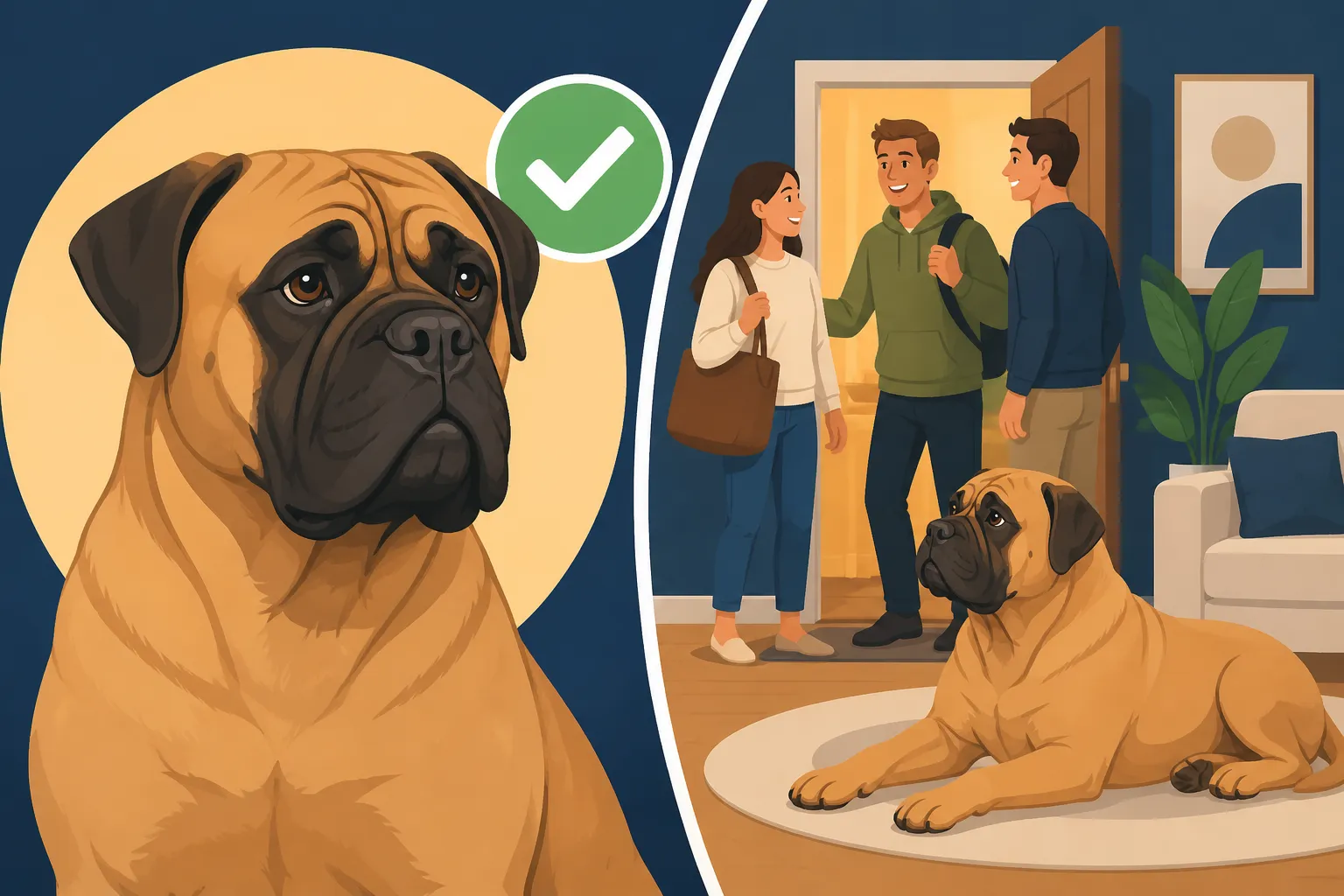
Whether a Bullmastiff Accepts Guests Who Stay Over
Bringing new people into your home, especially for an extended stay, can be a source of real anxiety for any dog owner, but when your canine companion is a formidable Bullmastiff, that anxiety can be amplified. You love your gentle giant, but you also know their protective instincts run deep, and wondering how they'll react to a new face sleeping under the same roof is a completely valid concern. This guide is here to walk you through understanding your Bullmastiff's nature, preparing for visitors, and ensuring everyone, two-legged and four-legged, has a harmonious and safe experience when guests stay over.
Understanding Your Bullmastiff's Instincts Around Houseguests
Bullmastiffs are truly magnificent dogs, known for their unwavering loyalty and formidable presence. They were originally bred to guard gamekeepers' estates in England, specifically to deter poachers. This history has etched a profound guarding instinct into their very being, which means they are naturally inclined to be suspicious of strangers, especially those entering their perceived territory – your home. It's not aggression, but rather a strong sense of duty to protect their family and space. This instinct is precisely why the question of "will my Bullmastiff accept guests who stay over?" is so important.
This inherent protectiveness means that a Bullmastiff doesn't always view a new face, even a friendly one, as a welcome addition right away. Their default setting is often one of caution, and a new person who isn't leaving after a short visit can trigger a heightened sense of vigilance. They might appear aloof, stand between you and the guest, or even offer a low rumble as a warning, all signals that they are assessing the situation and deciding if this new person is a threat or part of the "pack." It's crucial to respect these signals and understand that it takes time for a Bullmastiff to lower its guard.
The biggest mistake owners make is to assume their Bullmastiff will instinctively understand the difference between a fleeting visitor and a long-term guest. For a Bullmastiff, a person who stays overnight, who moves freely through the house, and who uses "their" bathroom or sleeps in "their" spare bedroom, can feel like a genuine territorial encroachment. This isn't personal; it's instinct. It requires thoughtful management and proactive steps to help your Bullmastiff understand that this guest is, in fact, an invited and welcome member of your temporary household.
The Guardian's Mindset and New People
Bullmastiffs were bred to apprehend, not to harm, poachers, often by holding them down silently. This "hold, don't harm" philosophy is critical to understanding their protective nature. They are generally not prone to biting without extreme provocation, but their sheer size and intent stare can be intimidating. When someone new comes into their home, particularly for an extended period, their primary objective is to observe and, if necessary, intercede. They are trying to figure out the hierarchy and where this new individual fits within the family unit and its territory.
Think of your Bullmastiff as a highly observant, rather stoic bouncer. They're watching every move, listening to every sound, and weighing the intentions of this new person. They aren't going to be overtly friendly or playful with a stranger right off the bat, especially not one who is settling in. This is why How a Bullmastiff Greets a Stranger often involves a lot of sniffing, quiet observation, and perhaps a deliberate lean into your leg as a statement of possession. They need to understand that you trust this person implicitly before they even begin to consider accepting them.
This careful assessment period can last hours, or even days, depending on the individual dog and the guest. It’s not a reflection of the guest's character, but purely your Bullmastiff's hardwired cautious nature. A Bullmastiff thrives on routine and predictability, and an overnight guest disrupts that. The key is to manage these disruptions and gradually integrate the guest into the dog's accepted routine, making it clear through your actions that this person is welcome and safe.
The Importance of Early and Ongoing Socialization
Just like with people, a well-socialized Bullmastiff is generally a more confident and accepting dog. Socialization isn't just about exposing a puppy to new things; it's an ongoing process throughout their life. For a Bullmastiff, this means controlled, positive introductions to a wide variety of people, places, and sounds from a young age. A Bullmastiff who has met many different people in different contexts is far more likely to tolerate a new face staying over than one who has lived a more isolated life. You can read more about foundational experiences in The First Year With a Bullmastiff Puppy.
Ongoing socialization helps your Bullmastiff build a mental library of "safe" human archetypes. They learn that not every stranger is a threat and that new experiences can often be positive. Without this broad exposure, even the most well-meaning guest can become a source of stress or suspicion. It's about teaching them emotional resilience and flexibility, rather than expecting them to just "figure it out" when a new situation arises.
If your Bullmastiff isn't particularly well-socialized, don't despair! It just means you'll need to take even more deliberate and careful steps when introducing overnight guests. This might involve longer, slower introductions, more management strategies (like leashes and crates), and consistent positive reinforcement. The goal is always to create positive associations and build trust, rather than forcing interactions that could lead to fear or territorial displays.
Preparing for Your Guests' Arrival
Preparation is absolutely paramount when a Bullmastiff is involved and you have overnight guests. You wouldn't throw a surprise party for someone who dislikes crowds, and you shouldn't spring an overnight guest on a Bullmastiff without careful planning. The more you can do beforehand to set everyone up for success, the smoother the experience will be. This includes everything from how you communicate with your guests to how you configure your home.
One of the most valuable things you can do is to think through the entire process from your Bullmastiff's perspective. What will change? Where will the guest sleep? Where will their bags be? What new sounds or smells will there be? Anticipating these changes allows you to address them proactively, reducing potential stressors for your dog. Remember, their world is about routine, and any deviation needs to be introduced with care and reassurance.
Consider this phase your mission briefing. You're not just preparing your dog, you're also preparing your guests. Everyone needs to be on the same page, understanding the Bullmastiff's specific needs and temperament, and ready to participate in making the visit a positive one for all. This collaborative approach significantly increases the chances of a peaceful and enjoyable stay for everyone involved.
Communication is Key with Your Guests
Before your guests even pack their bags, have an open and honest conversation with them about your Bullmastiff. Explain their size, their protective instincts, and their typical reaction to new people. Don't sugarcoat it, but frame it positively, emphasizing that with a few simple guidelines, everyone will get along wonderfully. The more informed your guests are, the better equipped they'll be to interact appropriately and respectfully with your dog.
Provide clear instructions on how to behave upon arrival and during their stay. This includes:
- Initial greeting: Advise them to completely ignore the Bullmastiff at first. No direct eye contact, no reaching out, no talking to the dog. Let the dog approach them on its own terms, if it chooses. This lessens the pressure on the Bullmastiff.
- Treats: Ask if they're comfortable offering treats (if you approve this). Have a supply of high-value treats ready, and instruct them to toss, not hand-feed, treats initially, creating distance.
- Space: Explain that the Bullmastiff needs its space and shouldn't be crowded.
- Rules: Emphasize house rules – no feeding from the table, no letting the dog out without supervision, not entering the dog's crate, etc.
You might even send them a quick text or email with these bullet points, so they have it handy. Guests who understand and cooperate with your management plan are invaluable assets. If you have guests who are fearful or resistant to following your guidelines, it might be better to arrange for alternative dog care during their stay. You can learn more about how to manage specific behaviors in Training a Bullmastiff That Weighs More Than You Do.
Creating a Safe and Structured Environment
Before your guests arrive, set up designated spaces for both your Bullmastiff and your guests. This is about establishing clear boundaries and giving everyone a sense of security. Your Bullmastiff needs to know they have a retreat, and your guests need to feel safe and comfortable in their temporary space.
- For your Bullmastiff: Ensure their crate, bed, or dedicated room is ready and comfortable. This "safe zone" is where your Bullmastiff can retreat when overwhelmed, and it's also a place where they can be secured if you need to leave them alone with guests, or if the guests need a break. Many owners find a large, sturdy crate from a retailer like Amazon to be indispensable. You can explore options and sizing in What a Crate for a Bullmastiff Costs. Baby gates can also be incredibly useful for partitioning off areas of your home, allowing your Bullmastiff to be nearby but not directly interacting if needed.
- For your guests: Make sure their bedroom is dog-free, especially if your Bullmastiff is prone to guarding personal items. Advise guests to keep their belongings (luggage, shoes, toiletries) put away and out of reach of curious noses. A Bullmastiff isn't above "investigating" new smells and objects!
The goal is to prevent problematic situations before they even start. By creating these structured environments, you reduce the opportunities for your Bullmastiff to feel threatened or for your guests to feel uncomfortable. It’s about clear expectations and physical barriers when necessary. This strategy aligns well with answering Whether a Bullmastiff Should Be Crated When Guests Come.
Pre-Arrival Introduction Strategies
If possible, explore ways to introduce your Bullmastiff to your guests' scent or presence before they physically arrive. This can help "prime" your dog and make the actual introduction less startling.
- Scent swapping: Ask your guests to send you an item of clothing they've worn, like an old t-shirt or scarf, a few days before their visit. Let your Bullmastiff sniff it, even sleep with it (under supervision, of course). This familiarizes them with the guest's unique scent in a low-stress environment.
- Photos/Videos: While not as impactful as scent, showing your Bullmastiff photos or videos of the person can sometimes help, especially if they associate faces with positive interactions. This is more about subtly integrating the idea of the person than a direct introduction, however.
- Virtual introductions: If your guest is comfortable, a video call where they quietly appear on screen while you talk to your dog in a positive, reassuring tone can be helpful. Again, the dog isn't interacting but rather seeing and hearing the new person in a non-threatening way within their home.
These subtle preparatory steps leverage your Bullmastiff's excellent sense of smell and observation skills to make the real-life introduction smoother. They get a chance to process "newness" in a controlled way, reducing the element of surprise that can sometimes trigger their protective instincts.
Managing the Stay: Introductions and Daily Routines
The moment your guests arrive is the most critical time for your Bullmastiff. This initial interaction sets the tone for the entire visit. It's vital to remain calm, confident, and in control, as your Bullmastiff will be looking to you for cues on how to react. Remember, you are their anchor, and your composure will greatly influence theirs. After the initial greeting, maintaining consistency in routines and interactions will be key to helping your Bullmastiff settle into having guests in the home.
It’s easy to get caught up in the excitement of guests, but neglecting your Bullmastiff's needs or allowing chaotic interactions can quickly undo all your careful preparation. Every interaction, every walk, every mealtime becomes an opportunity to reinforce positive associations and show your Bullmastiff that these guests are not a threat, but simply part of the temporary rhythm of the household. This period requires a dedicated focus on management and thoughtful engagement.
Above all, patience is your best friend. A Bullmastiff's acceptance of new people, especially those staying in their home, is rarely instantaneous. It's a gradual process built on consistent, positive experiences. Don't rush it, and celebrate every small step forward. This deliberate approach will help ensure a peaceful coexistence for the duration of the visit.
The Initial Meet and Greet
This is the moment of truth, but it doesn't have to be dramatic. Here's a suggested approach for the initial introduction:
- Secure your Bullmastiff: Before your guests even knock on the door, have your Bullmastiff on a leash in a controlled area, or better yet, in their crate or behind a sturdy baby gate in another room. This prevents a potentially overwhelming charge at the door and allows you to greet your guests without immediate dog interference.
- Guest entry: Allow your guests to enter and settle their bags. Instruct them to completely ignore your Bullmastiff at this stage. No talking, no eye contact, no reaching out. This reduces perceived pressure on the dog.
- Controlled introduction: Once guests are calm and settled, bring your Bullmastiff into the same general area, still on a leash. Have your guests turn sideways, avoiding direct eye contact. Allow your Bullmastiff to sniff from a distance. If they remain calm, your guests can casually drop a high-value treat on the floor, rather than offering it directly from their hand. This creates a positive association without direct pressure.
- Observe and manage: Watch your Bullmastiff's body language. If they are relaxed (loose body, soft eyes), you can allow slightly closer interaction, always supervised and always with the option to retreat. If they show any signs of stress (stiff body, hard stare, growl), calmly redirect them to their safe space.
This slow, controlled method allows your Bullmastiff to process the new arrival on their own terms, reducing anxiety and increasing the likelihood of acceptance. Remember, How Long a Bullmastiff Takes to Warm to a Visitor can vary greatly, so be prepared for a marathon, not a sprint.
Establishing House Rules and Boundaries
During the guests' stay, it's essential to maintain clear rules and boundaries for your Bullmastiff, and ensure your guests understand and adhere to them. This provides predictability for your dog and prevents misunderstandings.
- Supervised interactions: All interactions between your Bullmastiff and guests should be supervised, especially in the early stages of the visit. Don't leave them alone together until you are absolutely certain both parties are comfortable and safe.
- Respecting dog's space: Teach guests that your Bullmastiff's crate or bed is their sanctuary. It's not a petting zoo. When your dog is in their designated safe zone, they should be left undisturbed.
- Consistency in training: Ask your guests to help reinforce any basic commands your Bullmastiff knows. For example, if your dog knows "sit" for a treat, guests can ask for a "sit" before offering a reward. This helps your Bullmastiff see guests as extensions of your authority, not as potential challengers. Online training platforms, such as those from BAXTER & Bella, often have excellent resources for family members and guests to learn how to interact with your dog using consistent cues.
- Managing movement: Bullmastiffs are known for following their owners room to room. Explain to guests that this isn't stalking, but rather their desire to be near their people. However, if your Bullmastiff is hovering or blocking paths excessively, redirect them to their bed or a "place" command.
Consistency is key here. If the rules are relaxed for guests, your Bullmastiff will become confused and potentially test boundaries. By maintaining structure, you provide reassurance and help your dog understand the new temporary normal.
Maintaining Routine and Structure
Bullmastiffs thrive on routine. While a guest's presence inevitably changes some dynamics, maintaining as much of your Bullmastiff's regular schedule as possible will help them feel more secure and less stressed.
- Feeding times: Stick to your Bullmastiff's regular feeding schedule. This predictable event is a cornerstone of their day.
- Walks and exercise: Don't skimp on daily exercise, even if it means you have to juggle your time with guests. A well-exercised Bullmastiff is a calmer Bullmastiff. Even if it's just a couple of short, calm walks each day, this can make a huge difference. What a Bullmastiff Needs Every Day, Which Is Less Than You Think covers this in more detail.
- Potty breaks: Maintain regular potty breaks. Changes in routine can sometimes lead to accidents, especially if your dog is feeling anxious.
- Quiet time: Ensure your Bullmastiff still gets their usual quiet time or naps. If the house is buzzing with activity, they might need more opportunities to retreat to their crate or a quiet room.
When routines are disrupted, dogs can become anxious or act out. By consciously making an effort to keep your Bullmastiff's schedule consistent, you reduce their stress load and help them adjust to the temporary change in household dynamics.
Building Positive Associations and Long-Term Harmony
Beyond just managing the immediate interactions, your goal is to help your Bullmastiff build truly positive associations with your guests. You want them to eventually view guests not as intruders or disruptions, but as sources of good things – treats, calm attention, and perhaps even a nice scratch behind the ears. This proactive approach helps to soften their natural guarding tendencies and allows their sweet, gentle nature to shine through.
Remember that positive reinforcement is always more effective than punishment, especially with a sensitive breed like the Bullmastiff. If they exhibit undesirable behavior, it's often a sign of stress or misunderstanding, not malice. Redirect, manage, and reward good choices. Over time, these consistent positive experiences will reshape their perception of visitors.
The ultimate aim is to create a home environment where your Bullmastiff is comfortable and secure, even when new people are present. This takes time, effort, and understanding, but the reward is a relaxed dog and harmonious visits for all.
Treats, Praise, and Gentle Attention
Once the initial guardedness begins to fade, and your Bullmastiff shows signs of relaxing around your guests, you can start actively encouraging positive interactions. The key is to let the Bullmastiff initiate and to make the guest the source of good things.
- Treat dispenser: Have your guests casually toss high-value treats towards your Bullmastiff when they are calm and settled in the same room. A treat dispenser from Amazon can be a fun way to do this. This reinforces the idea that guests bring good things.
- Verbal praise: If your Bullmastiff approaches a guest calmly or rests nearby, the guest can offer soft, gentle verbal praise in a calm tone. Avoid overly excited voices or sudden movements.
- Gentle petting: If and only if your Bullmastiff initiates contact and seems comfortable, guests can offer a gentle scratch on the chest or shoulder, avoiding direct head pats initially, as these can be perceived as threatening. Always instruct guests to stop if the dog moves away or shows any signs of discomfort.
The goal is to let your Bullmastiff dictate the pace of these interactions. Never force physical contact. Over time, these positive, low-pressure experiences will build trust and comfort between your dog and your guest. It's important to understand How a Bullmastiff Decides Someone Is a Threat, and these positive reinforcement strategies help them decide guests are definitely not threats.
Shared Activities and Walks
As your Bullmastiff becomes more comfortable, you can start incorporating your guests into some of your dog's regular activities. This further integrates the guest into the routine and builds shared positive experiences.
- Calm walks: If your Bullmastiff walks well on a leash, have your guest join you on a walk. You should maintain control of the leash initially, but the presence of the guest walking alongside you can create a sense of shared purpose and pack cohesion. If your Bullmastiff is a strong puller, be sure to manage this, as Training a Bullmastiff That Weighs More Than You Do is crucial for safely handling such a powerful dog on walks.
- Quiet presence during playtime: If your Bullmastiff enjoys a gentle game of tug or fetch with you, have your guest sit quietly nearby. Over time, they might even be able to gently toss a toy or hold one end of a tug toy, always under your close supervision.
- "Relax" time: Simply having the guest quietly present while your Bullmastiff chews a favorite bone or rests can be a powerful bonding experience. It shows your dog that the guest is a calm, non-threatening presence in their space.
These shared activities, especially those involving the outdoors, allow your Bullmastiff to associate positive, enjoyable experiences with the guest's presence. It shifts the dynamic from "intruder" to "fellow companion."
Recognizing and Responding to Stress Signals
Even with the best preparation, your Bullmastiff might still show signs of stress or discomfort during a guest's stay. It's crucial to be vigilant and know how to interpret their body language, especially since Bullmastiffs are often The Silent Guard: Why a Bullmastiff Barks So Little. They might not bark, but they will communicate their feelings.
Look for subtle cues such as:
- Lip licking or yawning (when not tired): These can be signs of appeasement or stress.
- Avoiding eye contact or turning head away: Indicates discomfort or a desire to disengage.
- Stiff body posture or tail tucked low: Clear signs of anxiety or fear.
- Low growl or soft rumbles: Your Bullmastiff is giving a warning that they are uncomfortable.
- Panting (when not hot or exercising): A common sign of stress in dogs.
- Hiding or retreating: Your dog is trying to remove themselves from the situation.
- Becoming hyper-vigilant: Constantly staring at the guest, unable to relax.
If you observe any of these stress signals, intervene immediately. Remove your Bullmastiff to their safe space, or gently ask your guest to give the dog more room. Never punish your Bullmastiff for showing these signs; they are communicating their feelings. Instead, acknowledge their discomfort and manage the situation to alleviate the stress. Understanding How Territorial a Bullmastiff Is helps you recognize when their boundaries are being pushed. It’s always better to err on the side of caution and create more distance or a break for your dog.
Checklist for a Successful Guest Visit
To summarize, here's a handy checklist to help you prepare and manage your Bullmastiff when guests stay over:
| Task | Action | Timing |
|---|---|---|
| Communicate with Guests | Discuss Bullmastiff's temperament, rules, and expectations for interaction. | Before they arrive |
| Prepare Safe Spaces | Set up dog's crate/bed area and dog-free zones for guests. Ensure guests know to keep items secured. | Before they arrive |
| Scent Introduction | If possible, get a worn item from guests for your Bullmastiff to sniff beforehand. | Days before arrival |
| Leash/Contain Dog | Secure your Bullmastiff (leash, crate, gate) before guests enter. | Just before guest arrival |
| Initial Greeting Protocol | Instruct guests to ignore dog. Allow dog to approach on its own terms, supervised. | Upon guest arrival |
| Provide High-Value Treats | Have guests toss treats (not hand-feed) to create positive association. | During initial greeting & stay |
| Maintain Daily Routine | Stick to regular feeding, walking, and potty schedules. | Throughout the stay |
| Supervise All Interactions | Never leave Bullmastiff and guests unsupervised, especially initially. | Throughout the stay |
| Respect Dog's Space | Ensure guests understand dog's crate/bed is off-limits for bothering. | Throughout the stay |
| Watch Body Language | Be vigilant for stress signals from your Bullmastiff and intervene calmly if seen. | Throughout the stay |
| Encourage Calm Activities | Include guests in calm activities like quiet walks or sitting near your resting dog. | Once dog is comfortable |
This structured approach will help alleviate stress for your Bullmastiff and ensure your guests have a pleasant, worry-free visit.
Disclaimer
This article is for general informational purposes only and does not constitute professional advice. Laws, prices and regulations vary by location and change over time. Consult a qualified professional for guidance on your specific situation.