Why a Bullmastiff Follows You Room to Room
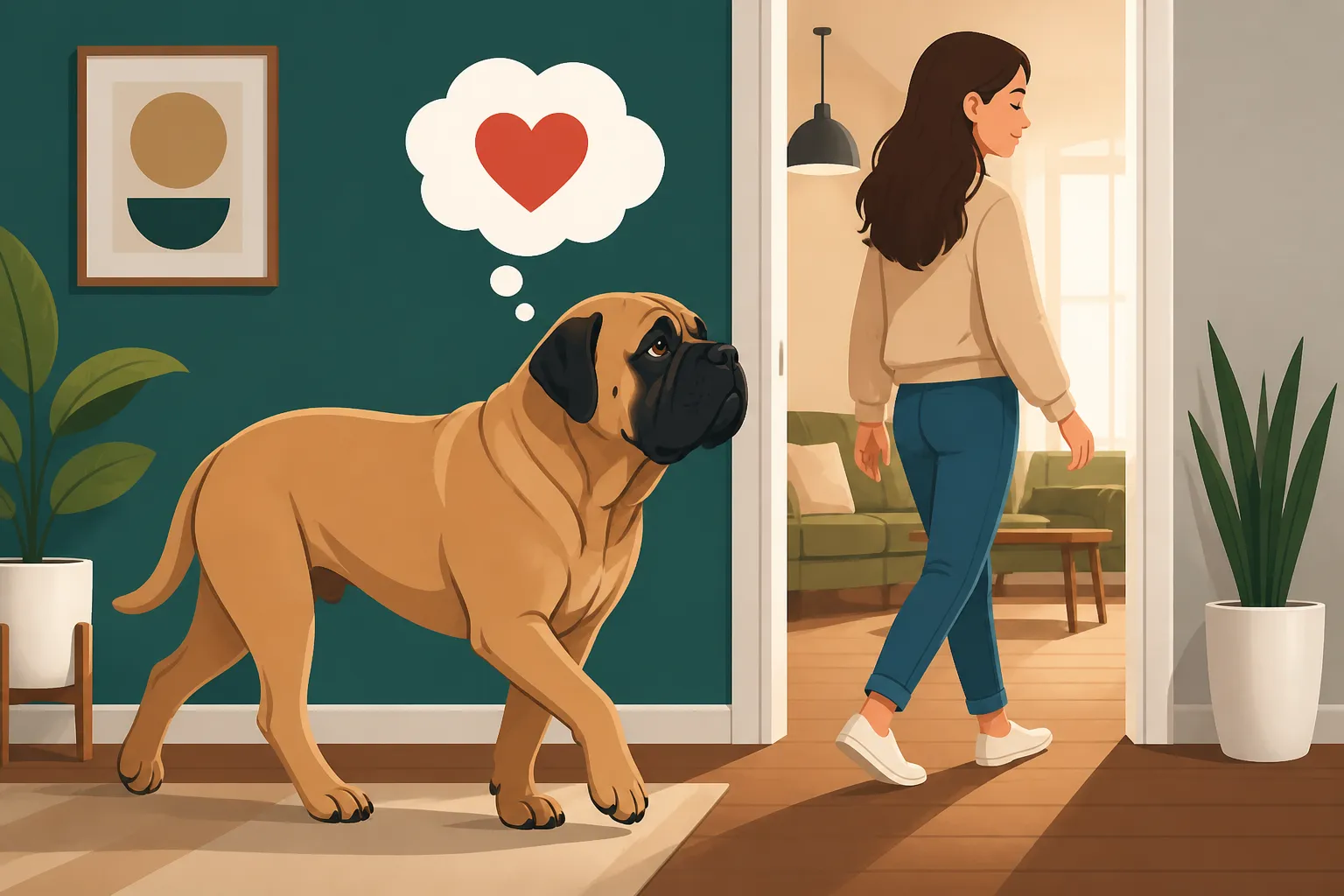
If you've ever found yourself shuffling sideways around a massive, loving dog lying squarely in your path, or turning around only to nearly trip over a giant furry shadow, you're not alone. Many Bullmastiff owners quickly discover they have acquired a personal, four-legged entourage. This constant companionship, while incredibly endearing, can also be a bit of a mystery, making you wonder just why your Bullmastiff feels the need to follow you from room to room. This guide will delve into the deep-seated reasons behind this "Velcro dog" behavior and offer insights into managing it gracefully.
The Bullmastiff's Ancient Instinct to Guard Their Charge
The primary reason your Bullmastiff shadows your every move often harks back to their very purpose: they were bred to be guardians. Imagine their ancestors, silently patrolling vast estates in England, tasked with detecting and apprehending poachers. Their job wasn't to bark and raise a ruckus, but to remain close to their human companion, ready to act if a threat appeared. This ingrained need to keep you safe and accounted for hasn't left them.
A Silent, Vigilant Protector
Unlike some breeds that might alert with a flurry of barks, a Bullmastiff's guarding instinct often manifests as silent proximity. They want to be where you are, not necessarily to be "on duty" in an aggressive sense, but to know your whereabouts and assess your environment. If you move from the living room to the kitchen, they often follow, positioning themselves in a way that allows them to observe all angles. They're constantly taking in information, listening for unusual sounds, and keeping an eye on who enters and leaves their perceived territory – which includes you. It's their way of keeping tabs on their flock. You might notice them settling near a doorway or in a hallway, giving them a vantage point to survey multiple rooms. This isn't clinginess in a needy way; it's a deep-seated, protective awareness. You can read more about how this unique guarding instinct shaped the breed in A Bullmastiff Was Bred to Hold a Man, Not Bite Him.
Your Personal Security Detail
Think of your Bullmastiff as your own personal, fuzzy security detail. When you're in the kitchen, they're probably somewhere within sight, perhaps sprawled across the cool tile. If you move to the bedroom, they're right there, perhaps flopping onto their orthopedic bed. They're ensuring that their charge, you, is safe. This constant oversight is more about their historical job description than a lack of confidence. They derive comfort from knowing you're secure, and their presence near you helps them fulfill this ancient role. It’s not about asserting dominance or being disruptive, but about being present and prepared. For many Bullmastiffs, a closed door between them and their person can be a source of mild anxiety because it prevents them from performing this vital function.
The Deep Bond and Affection for Their People
Beyond their guarding instincts, Bullmastiffs are known for their profound loyalty and affection towards their family members. They are truly "people dogs" who thrive on companionship and physical closeness. This strong emotional connection is another major driver of their room-to-room shadowing.
The Desire for Constant Companionship
Bullmastiffs are not typically independent dogs who are content to be left alone for long stretches. They bond incredibly deeply with their human families and crave their presence. For them, being near you isn't just about protection; it's about comfort, love, and belonging. They see you as the center of their world, and they want to be a part of everything you do. This means if you're working at your desk, they'll want to be under your feet. If you're watching TV, they'll want to be on the couch with you, or at least very close by. This isn't a behavior that can necessarily be "trained out" entirely, nor should it be, as it's a core part of their loving nature. It's a testament to the strength of the bond you share. What a Bullmastiff Does All Day explores how much a Bullmastiff values being near their family.
Seeking Comfort and Reassurance
Just like humans, dogs seek comfort and reassurance from those they trust. Your presence is a constant source of security and happiness for your Bullmastiff. Following you around allows them to soak up your energy, hear your voice, and feel your touch. If they're feeling a little unsure about something outside, or even just heard a strange noise, being right next to you can be profoundly reassuring. They often lean against you, put their head in your lap, or gently nudge you for attention, all seeking that physical and emotional connection. This behavior is especially pronounced in puppies and younger Bullmastiffs who are still developing confidence, but it often continues throughout their lives.
Practical Reasons for "Velcro" Behavior
While instinct and affection play huge roles, there are also very practical, everyday reasons why your Bullmastiff might be your constant shadow. Sometimes, they just want something, or they’ve learned that following you leads to good things!
Anticipation of Activities or Treats
Let’s be honest, we often carry the promise of good things! If you walk towards the kitchen, your Bullmastiff knows that means food prep, or maybe even a stray crumb might fall. If you head to the door, it could mean a walk or a car ride. They quickly learn to associate your movements with potential rewards. This is classic associative learning. Even if you're just going to the bathroom, they might follow because they know that eventually, you'll come back out, and then something interesting might happen. They're optimists, always hoping for a treat, a pat, or an exciting new activity. This can be particularly noticeable if you've ever rewarded them for coming when called by offering a treat, inadvertently reinforcing the idea that following you around can lead to snacks.
Learning Your Routine and Cues
Dogs are incredibly observant, and Bullmastiffs are no exception. They learn your routine down to the minute. They know when you usually wake up, when you get your coffee, when you head to work, and when it’s time for their dinner. Your subtle cues—the jingle of keys, picking up your purse, putting on your shoes—all signal upcoming events. By following you, they stay intimately connected to these routines, ensuring they don't miss out on anything important (from their perspective). If you typically take them out for a potty break after you finish your morning coffee, they'll be right there, anticipating the next step. They're excellent at reading body language and predicting your next move, even if you don't realize you're giving anything away!
Boredom or Lack of Alternative Stimulation
Sometimes, the simplest explanation is the right one: your Bullmastiff might be following you because they're a little bored and you're the most interesting thing happening. While Bullmastiffs don't have boundless energy, they still need mental and physical stimulation. If they're not getting enough exercise, playtime, or enrichment, shadowing you becomes their primary form of engagement.
Ways to Offer More Enrichment:
- Puzzle Toys: Toys that dispense treats as your dog manipulates them can keep their minds busy. You can find a great selection of durable puzzle toys on Amazon.
- Chew Bones: Long-lasting chew bones provide an outlet for natural chewing instincts and can occupy them for a while.
- Training Sessions: Even short, engaging training sessions can burn mental energy. Practicing commands like "stay" or "settle" can give them a job to do. Training a Bullmastiff That Weighs More Than You Do offers excellent advice on making training effective for such a powerful breed.
- Enrichment Feeders: Instead of just a bowl, use a slow feeder or a snuffle mat for their meals.
- Walks: Regular, moderate walks (mindful of their joint health and sensitivity to heat) are crucial. Remember that Why Eighty Degrees Is Dangerous for a Bullmastiff.
When a Bullmastiff is bored, they might also be seeking attention. If you always give them a pat or a word when they follow you, you've inadvertently reinforced the behavior. This isn't to say you shouldn't give your dog affection, but understanding the motivation helps you choose the right response.
Managing the Shadowing Safely and Happily
While your Bullmastiff’s devoted shadowing is usually a charming trait, there are times when it can be inconvenient, or even a safety hazard (think of stepping over them in the dark!). It's important to find a balance where they feel secure and loved, but you also have space and safety.
Teaching "Place" or "Stay"
One of the most valuable commands for a Bullmastiff is "place" or "stay." This teaches them to remain in a designated spot (like their bed or a mat) even when you move to another room. Start by training this in short bursts, in the same room as you, gradually increasing distance and duration. Reward heavily when they stay. This isn't about isolating them, but about giving them an alternative to constant following, building their confidence in being comfortable a few feet away.
Steps to Teach "Place":
- Choose a "place": A comfortable bed or mat works best.
- Lure them: With a treat, lure your Bullmastiff onto their place. As they step on it, say "Place!"
- Reward: Once they're on the mat, give the treat and praise.
- Practice short durations: Start with them staying on the mat for just a few seconds, then release them with a "free" command.
- Increase duration and distance: Slowly build up the time they spend on the mat. Once they're reliably staying for a minute or two, start taking a step away, then two, then moving to another part of the room.
- Move to another room: Once they're rock-solid with "place" in the same room, try stepping just outside the doorway for a second, then returning to reward. This builds their comfort with you being out of sight briefly.
For robust online training resources, you might look into programs offered by BAXTER & Bella, which often focus on positive reinforcement and building foundational behaviors like "place" and "settle."
Creating Designated "Safe Zones"
Having a comfortable, appealing spot in a room where you frequently spend time can encourage them to settle there instead of glued to your heels. This could be a large, plush dog bed in your home office or a cooling mat in the kitchen. Make these spots highly rewarding with favorite toys or chews. If they choose to settle in their designated spot while you're in the room, offer quiet praise or a small, unexpected treat. This helps them understand that they don't always need to be physically touching you to be loved and included. Remember, their joints need proper support, so investing in a quality orthopedic bed is essential for a dog of their size, as discussed in Bedding and Joints for a Hundred and Thirty Pound Bullmastiff.
Gradual Independence Training
Sometimes, shadowing can border on separation anxiety, or at least a mild form of over-attachment. If your Bullmastiff becomes genuinely distressed when you leave the room or house, you'll need to work on building their independence. This involves very gradual desensitization:
- Short departures: Start by leaving the room for just a few seconds, then returning. Don't make a big fuss when you leave or return.
- Increase time: Slowly increase the duration of your absence.
- Practice departure cues: Pick up your keys, put on your coat, but don't leave. This helps decouple those actions from your actual departure.
- Provide enrichment: Always leave them with something interesting to do, like a stuffed Kong or a puzzle toy, when you do leave.
A Bullmastiff's tendency to follow you from room to room is a beautiful blend of their protective heritage, deep affection, and practical observation. It's a hallmark of the breed's loyal and devoted nature. By understanding why they do it, we can appreciate their devotion while gently guiding them to a place of safe, happy companionship.
Common Reasons for Bullmastiff Shadowing
To summarize the various factors that contribute to your Bullmastiff's "Velcro" tendencies, here's a quick overview:
| Reason Category | Specific Motivation | How it Manifests |
|---|---|---|
| Instinctual Guarding | Historical role as estate protectors | Constant proximity, observing surroundings, settling near doorways |
| Ensuring the safety of their "flock" (you) | Following to 'clear' new rooms, positioning themselves between you and perceived threats | |
| Deep Affection | Strong bond with human family | Desire for physical closeness, gentle nudges, leaning, sighs of contentment |
| Seeking comfort and reassurance | Staying nearby during new or uncertain situations, enjoying your presence | |
| Practical & Learned | Anticipation of positive outcomes (food, walks) | Following to the kitchen, to the door, or wherever routines lead |
| Learning and observing human routines | Predicting your next move based on subtle cues | |
| Boredom or lack of alternative stimulation | Following as the primary form of engagement if other needs aren't met |
Understanding these motivations allows you to respond to your Bullmastiff's behavior with empathy and appropriate guidance, ensuring a happy and safe household for both of you.
Disclaimer
This article is for general informational purposes only and does not constitute professional advice. Laws, prices and regulations vary by location and change over time. Consult a qualified professional for guidance on your specific situation.