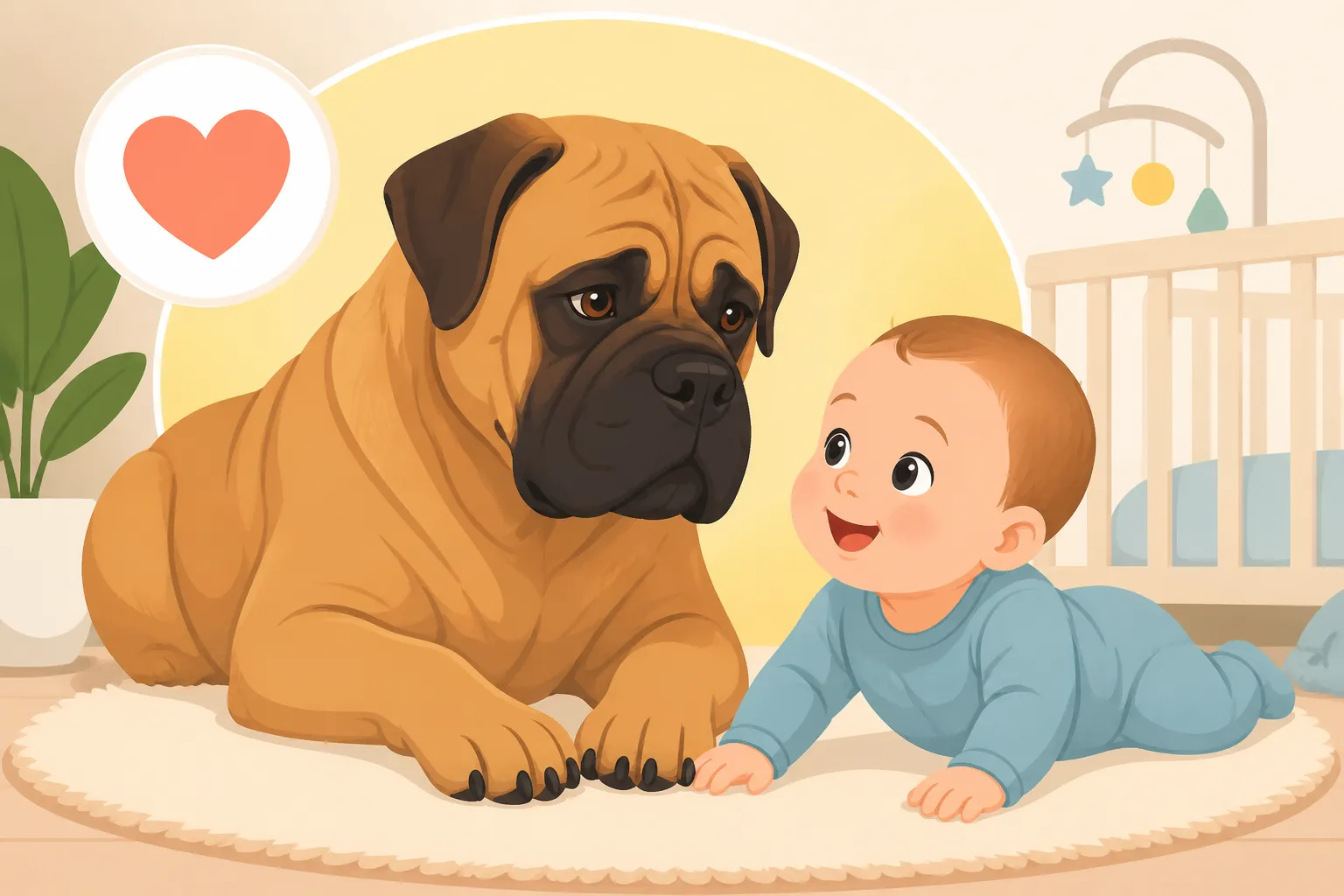
How a Bullmastiff Behaves With a Baby
Many Bullmastiff owners find themselves in a unique position when a baby is on the way, grappling with the sheer size and protective instincts of their beloved giant alongside the fragility of a newborn. It’s a common and completely valid concern to wonder how these two very different members of your household will integrate safely and harmoniously. This guide aims to provide practical, empathetic advice on how to navigate the introduction and ongoing relationship between your Bullmastiff and your baby, focusing on preparation, management, and long-term success.
Understanding Your Bullmastiff's Nature Around Infants
Bringing a newborn into a home with a large, strong dog like a Bullmastiff can feel daunting, but it's important to start with a clear understanding of your dog's inherent traits. Bullmastiffs are often described as "gentle giants," a nickname earned through their calm demeanor and deep loyalty to their families. However, their imposing size and their historical role as guardians mean that careful consideration and proactive management are absolutely essential when it comes to interactions with a baby. You're not just managing a dog; you're managing a hundred-pound-plus animal with a strong protective drive and a capacity for accidental harm due to sheer bulk.
The Bullmastiff's Gentle Giant Reputation: Fact or Fiction with Babies?
While the "gentle giant" moniker holds a lot of truth for the Bullmastiff in general, it's crucial to understand that this gentleness is primarily directed towards their known family members and is often accompanied by a reserved nature around strangers. With babies, this can manifest as an incredibly tolerant and protective instinct. They often seem to inherently understand the fragility of a small child, displaying remarkable patience even with clumsy toddler explorations later on. However, this innate gentleness isn't a substitute for responsible supervision and training. It’s a wonderful starting point, but it still requires your proactive involvement.
A Bullmastiff's calm temperament means they are less likely to be excitable or jumpy compared to some other breeds, which is a significant advantage when you have an infant. They prefer to observe rather than react impulsively. Yet, even the calmest dog can be startled, or react unintentionally. Their heavy tail, for instance, can knock over a mobile or send toys flying, not out of malice, but simply due to its powerful wag. It’s about understanding their physical presence and potential impact, not just their mental state. While A Bullmastiff With Children are typically very loving, their size demands respect and careful handling.
The "fiction" part comes in when owners assume "gentle giant" means they don't need to do any work. This couldn't be further from the truth. It means you have a strong genetic foundation for good behavior, but that foundation still needs building and reinforcing, especially with a new, unpredictable tiny human involved. Their protective instincts, while usually a positive, can sometimes become possessive if not managed correctly, particularly if they perceive the baby as "their" charge or a resource to guard. It’s your job to guide these instincts safely.
Instinctual Protection vs. Accidental Overwhelm
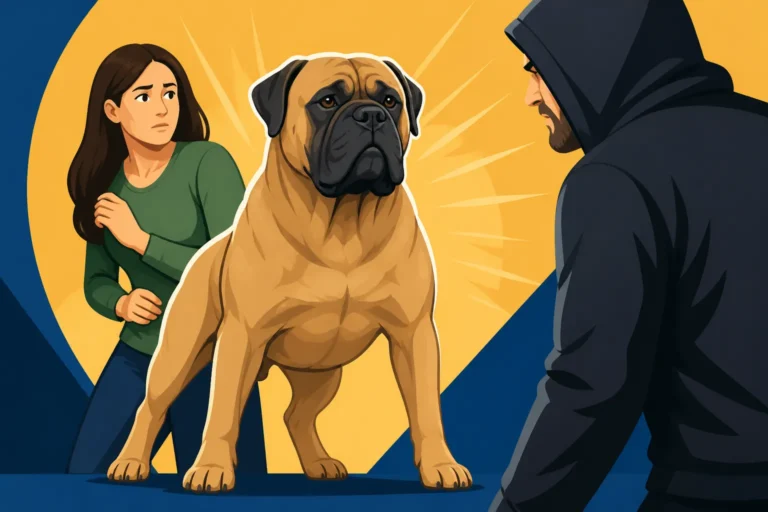
Bullmastiffs were originally bred to guard estates and apprehend poachers by holding them, not harming them. This deeply ingrained protective instinct extends to their human families. They are keenly aware of their surroundings and naturally vigilant. When a baby arrives, your Bullmastiff will likely perceive this new, small, vulnerable creature as part of their "pack" to be defended. This can be a wonderful trait, fostering a deep bond and a sense of security within the family, but it also means you need to be prepared for how this instinct might manifest.
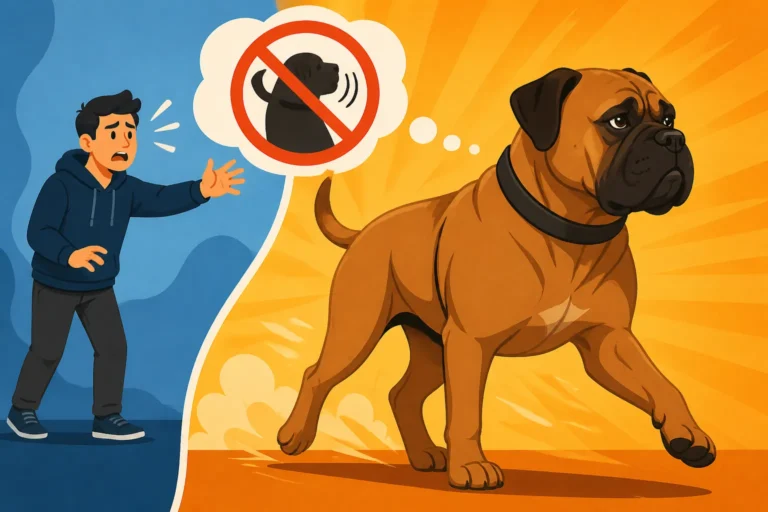
However, this protection can be a double-edged sword. A Bullmastiff might try to "intervene" if they perceive a threat, even if that threat is a well-meaning family member bending over the crib or a curious toddler exploring the baby. Their protective actions, while well-intentioned, could be overwhelming or even dangerous due to their sheer size and strength. Imagine a Bullmastiff body-blocking a visitor whom they perceive as too close to the baby, or nudging someone away from the bassinet – such a gesture, even gentle, could easily cause an adult to stumble, let alone a small child.
It's vital to teach your Bullmastiff that you are the primary protector of the baby, and their role is to be a calm, well-behaved family member. This means managing situations where their protective instincts might be misinterpreted or become a problem. For example, some Bullmastiffs might become anxious or guard resources like toys, or even the baby itself. Understanding Why a Bullmastiff Was Bred to Hold a Man, Not Bite Him can help you appreciate their inherent control, but it doesn't mean they're immune to stress or poor judgment, especially in new and confusing situations.
Reading Your Bullmastiff's Body Language Around the Baby
Your Bullmastiff communicates constantly through their body language, and learning to interpret these subtle cues is paramount when a baby is in the house. A relaxed Bullmastiff will have a soft gaze, loose body, and perhaps a low, wagging tail. Signs of stress, even subtle ones, include lip licking, yawning (when not tired), turning their head away, stiffening their body, showing the whites of their eyes (often called "whale eye"), or pinning their ears back. A Bullmastiff's characteristic "Bullmastiff sigh" is often an indicator of contentment, but other less obvious signals can mean discomfort or anxiety.
Even what seems like positive interest needs careful observation. A Bullmastiff nosing the baby's blanket might be gentle curiosity, but if their body stiffens or they block access to the baby, it could be a subtle sign of resource guarding. Learning to differentiate between genuine calm acceptance and polite tolerance that's masking underlying stress is key to preventing problems. Never force interactions, and always watch for signs that your dog needs a break. Providing an escape route or a designated safe space for your Bullmastiff, perhaps a comfy bed in another room, gives them an option to retreat if they feel overwhelmed.
Regularly observing how your Bullmastiff reacts to new sounds (like a crying baby) or movements (like a bouncy seat) before the baby even arrives will give you a head start. Think about How a Bullmastiff Hides Pain – they can also hide stress, so vigilance is always necessary. Pay particular attention to how they respond to changes in routine or household chaos; these observations will be invaluable when the baby is actually present and adding to the household activity.
Preparing Your Bullmastiff for the Baby's Arrival
The period leading up to the baby's arrival is your golden opportunity to set the stage for success. Don't wait until the last minute; proactive preparation can significantly reduce stress for both your Bullmastiff and your family. This involves gradually introducing new stimuli, reinforcing desired behaviors, and thoughtfully designing your living space to accommodate both canine and human infant needs.
Gradual Introduction to Baby Sights, Sounds, and Smells
Babies come with a whole new sensory experience for dogs: unfamiliar smells, strange sounds, and new objects cluttering the home. Start introducing these well in advance. Set up the crib, changing table, and swing. Let your Bullmastiff investigate these items at their leisure, under supervision, praising them for calm curiosity. You want these objects to become part of the normal household environment, not sudden, alarming additions that appear overnight.
Play recordings of baby sounds – crying, cooing, babbling – at low volumes first, gradually increasing the volume over weeks. Observe your Bullmastiff's reaction. If they show signs of stress, lower the volume and pair the sound with positive reinforcement, like treats or praise. Similarly, introduce baby lotions, powders, and diaper smells. Rub a small amount on your hands and let your Bullmastiff sniff, associating these new scents with positive experiences. You can even bring home a baby blanket from the hospital before the baby arrives, letting your dog get used to the scent of the newborn in a calm, controlled environment.
This desensitization process helps normalize the baby's presence before it becomes a reality. It prevents your Bullmastiff from being overwhelmed by a sudden onslaught of new stimuli, allowing them to adjust at their own pace. Remember, The First Year With a Bullmastiff Puppy is all about new experiences, and while your adult Bullmastiff is beyond that stage, a new baby is essentially a whole new world for them to adapt to.
Reinforcing Good Behavior and Establishing Boundaries Before Baby
Now is the time to really polish your Bullmastiff's obedience skills. Focus on commands like "sit," "stay," "down," "leave it," and a solid "go to your bed" or "place" command. These will be indispensable for managing interactions with the baby. Practice these commands in various scenarios, including when you're distracted or when new objects (like a doll representing the baby) are present. A strong "stay" can mean the difference between your dog accidentally bumping the baby and calmly waiting.
Establish clear boundaries for areas where the baby will be. If you don't want your Bullmastiff in the nursery, start keeping them out now. Use baby gates or close the door. If they are allowed in, teach them polite entry and exit. Reinforce the idea that certain areas or items are "off-limits" by using the "leave it" command with baby toys or blankets. Consistency is key here; every family member needs to be on the same page regarding rules and expectations. This prevents confusion and establishes a predictable environment for your Bullmastiff.
Consider enrolling in an online dog training program like BAXTER & Bella. Their programs often cover preparing dogs for new babies, providing structured guidance and support. They emphasize positive reinforcement and help build a strong foundation of polite behavior, which is exactly what you need when you’re about to add a tiny, unpredictable human to the mix. Think about Training a Bullmastiff That Weighs More Than You Do – it's all about consistency and clear communication.
Creating Safe Spaces for Both Dog and Baby
Every member of the household, including your Bullmastiff and your new baby, needs a safe, private space where they can retreat and feel secure. For the baby, this is typically the crib or bassinet, which should always be inaccessible to the dog, especially when unsupervised. Baby gates are your best friend here. Use them to block off the nursery, or create a "baby zone" in the living room. Look for sturdy, tall gates on Amazon that a determined Bullmastiff can't easily jump or push over.
For your Bullmastiff, their safe space might be a crate, a designated dog bed in a quiet corner, or even an entirely separate room. This is their sanctuary, a place where they can go to escape the noise and activity, especially when the baby is fussing or when visitors are over. Teach them to go to this space on command and reward them for doing so calmly. This isn't a punishment; it's a positive retreat. Ensure they have fresh water and a favorite chew toy in their safe spot to make it a pleasant haven.
Having these designated areas prevents accidental bumps or stressful encounters. It also gives your Bullmastiff a sense of predictability and control in a potentially chaotic time. This becomes even more critical once the baby starts crawling or walking. A dog who can calmly retreat to its bed when a curious toddler approaches is a safe dog. How Much Exercise a Bullmastiff Needs is often less than people think, so having a good, comfortable spot for them to relax is crucial.
Managing Interactions: When Baby Comes Home
The moment your baby comes home is exciting, overwhelming, and a huge adjustment for everyone. Your Bullmastiff is keenly aware of changes in your scent, routine, and attention. Thoughtful management of the initial introduction and subsequent daily life is crucial for a smooth transition and lasting harmony.
The First Meeting: Calmness and Supervision are Key
The very first interaction between your Bullmastiff and your baby should be calm, controlled, and supervised. Before you even bring the baby inside, have one parent greet your Bullmastiff alone, without the baby, to settle them down and reassure them. This prevents an overly enthusiastic greeting directed at the parent holding the baby. Then, while one parent holds the baby, the other can bring the Bullmastiff into the room, on a leash, if necessary. Keep the leash loose to avoid creating tension, but have it ready for control.
Allow your Bullmastiff to approach slowly and sniff the baby's feet or the blanket, not the face. Keep the interaction brief and positive. Offer praise and a special treat for calm, gentle behavior. Avoid forcing the interaction. If your Bullmastiff seems overly excited or stressed, gently redirect them to their safe space. This first meeting is about a calm acknowledgement, not a play date. The goal is positive association. Never leave your Bullmastiff alone with the baby, even for a second, no matter how trustworthy you believe your dog to be. This rule is non-negotiable and applies to Whether a Bullmastiff Should Be Left With Children of any age, let alone an infant.
Focus on creating a relaxed atmosphere. Your Bullmastiff will pick up on your energy, so try to remain calm and confident. Short, positive introductions are far more beneficial than long, stressful ones. If you have been consistent with your preparation, this moment should feel more like a continuation of their desensitization training rather than a sudden shock. Your calm demeanor will help your dog feel secure in the new situation.
Setting Up Routine and Maintaining Consistency
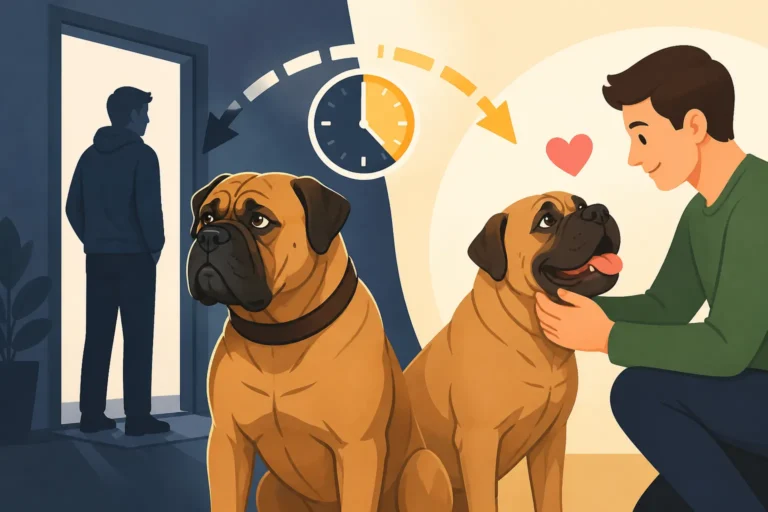
Babies thrive on routine, and so do Bullmastiffs. The arrival of a baby inevitably disrupts household schedules, but try to establish a new routine for your Bullmastiff as quickly as possible. Maintain their feeding times, walk schedules, and play sessions as consistently as you can. This predictability helps reduce anxiety for your dog, who might otherwise feel displaced or ignored. Even if walks are shorter or play is less intense initially, the consistency of the event itself is reassuring and helps your dog adapt to the changes.
Ensure your Bullmastiff still gets individual attention. A few minutes of quiet petting, a dedicated training session, or a game of tug can go a long way in reinforcing their bond with you and reminding them they are still a valued member of the family. Avoid making all attention revolve around the baby. When you’re spending time with the baby, include your Bullmastiff if they are calm and relaxed. For instance, have them lie on their bed in the same room while you feed the baby, occasionally offering a quiet pat or treat to keep them feeling included and loved.
Consistency also applies to rules and boundaries. Don't let things slide just because you're tired or overwhelmed. If the couch was off-limits before, it's still off-limits. If they weren't allowed to jump, they still aren't. Inconsistent rules confuse dogs and can lead to behavioral issues. Every family member, including older children and visitors, needs to uphold these rules to provide a clear, stable structure for your Bullmastiff. This predictability fosters trust and reduces confusion for your canine companion.
Addressing Common Challenges and When to Seek Professional Help
Even with the best preparation, challenges can arise. Your Bullmastiff might exhibit signs of jealousy, such as nudging you for attention when you're holding the baby, or acting out by chewing forbidden items. They might become overly vigilant or even growl if they feel the baby is threatened by someone. Some Bullmastiffs might react to the baby's cries with distress or confusion. It's crucial to address these behaviors immediately and appropriately to prevent them from becoming ingrained habits.
For mild issues, continue with positive reinforcement training, redirection, and management. For example, if your Bullmastiff nudges you, ask them to "sit" or "place" before offering attention. If they chew something inappropriate, redirect them to an approved chew toy, perhaps one purchased from Amazon specifically for large breeds. Never punish your Bullmastiff for showing interest in the baby, but always redirect inappropriate behavior gently and calmly to teach them the correct way to behave.
However, if you observe any aggressive behaviors—growling, snapping, prolonged stiff body language, or attempts to physically guard the baby from you or other family members—it’s time to call in a professional. Don't try to handle serious aggression on your own. A certified professional dog trainer or veterinary behaviorist specializing in dog-human dynamics, especially with babies, can assess the situation and provide a tailored plan. Early intervention is key; waiting for things to escalate puts everyone at risk and makes resolution much harder.
Long-Term Harmony: Raising Your Bullmastiff and Child Together
The introduction is just the beginning. Nurturing a safe and loving relationship between your Bullmastiff and your growing child requires ongoing effort, adaptability, and unwavering commitment. This isn't a "set it and forget it" situation; it's a dynamic relationship that evolves as both your dog and your child mature, requiring your active participation throughout their shared lives.
Continued Training and Socialization for Your Bullmastiff
As your baby grows into a toddler and then a child, their interactions with your Bullmastiff will change significantly. A crawling baby presents new challenges, and a walking, grabbing toddler can be even more unpredictable. Therefore, your Bullmastiff's training needs to be an ongoing process. Continue to reinforce basic obedience commands. Practice "leave it" frequently, especially with toys or food. Regular refresher training sessions, even short ones, will keep their skills sharp and their minds engaged.
Socialization isn't just for puppies. Continue exposing your Bullmastiff to new experiences, sounds, and people in a positive way. This helps maintain their adaptability and confidence, preventing them from becoming overly protective or fearful as their world expands. Consider enrolling in advanced obedience classes or even fun dog sports if your Bullmastiff enjoys them and is physically able. Keeping them mentally stimulated and physically fit (within their limits) contributes greatly to a well-adjusted dog.
Remember that When a Bullmastiff Finishes Maturing it's often later than other breeds, sometimes not until three years old. This means they are still growing, both physically and mentally, even when your child is also growing. Consistent, calm guidance from you is invaluable throughout these developmental stages for both your dog and your child, ensuring a safe and happy coexistence.
Teaching Children How to Respect Your Bullmastiff
It’s not just about training the dog; it’s equally important to teach your child how to interact respectfully with your Bullmastiff. As soon as your child is old enough to understand, begin teaching them the rules of safe and considerate interaction. This foundation will protect both your dog and your child, fostering a bond built on trust rather than fear.
Essential rules to instill include:
- Gentle Hands: No pulling tails, ears, or grabbing fur. Teach them how to stroke gently.
- No Disturbing: Never bother the dog when it’s eating, sleeping, or in its bed. This is the dog’s safe space and must be respected.
- Ask First: Always ask a parent if it's okay to pet the dog. This teaches consent and supervision.
- Read Body Language: Teach them simple signs of a dog being uncomfortable (turning head, yawning, moving away). This empowers children to recognize when to give the dog space.
Use positive reinforcement when your child interacts gently with the dog. Always supervise interactions, even if you feel confident in both your dog and your child. Children, especially toddlers, can be unpredictable and inadvertently cause pain or fear in a dog, even one as tolerant as a Bullmastiff. How a Bullmastiff Handles a Toddler is usually with great patience, but that patience isn't limitless, and accidents can happen quickly.
Consider using visual aids, like posters, to remind children of the rules. Programs like "The Dog & Baby Connection" often provide excellent resources for teaching both dogs and children safe interaction. The goal is to foster mutual respect, where the child understands the dog has feelings and boundaries, and the dog trusts the child not to harm them.
Recognizing When the Dynamic Needs Adjustment
Life changes, and so do family dynamics. What worked perfectly when your child was an infant might need tweaking when they become a boisterous five-year-old. Stay vigilant in observing the interactions between your Bullmastiff and your child. Are there new behaviors emerging in your dog? Is your child becoming bolder or less careful around your Bullmastiff? Consistent observation is your best tool.
Regularly assess your Bullmastiff's comfort level. If they are consistently retreating, showing subtle stress signals, or actively avoiding the child, it’s a strong sign that the dynamic needs adjustment. This might involve increasing the physical separation between them (more baby gate use, more crate time for the dog), increasing direct supervision, or reinforcing specific training commands. Sometimes, simply giving the Bullmastiff more dedicated "alone" time with an adult can help reduce stress and remind them of their individual place in the family.
On the flip side, if your child is consistently disrespectful, overly rough, or ignoring the established rules, you need to step in and educate them more firmly. This is a critical safety issue for both child and dog. Never put your Bullmastiff in a position where they feel they have no option but to defend themselves. Ultimately, you are responsible for maintaining a safe and respectful environment for both your human and canine family members. The peace and safety of your home depend on your ability to adjust and intervene proactively, making changes as both your Bullmastiff and your child grow.
| Bullmastiff Behavior | Potential Meaning | Management Strategy |
|---|---|---|
| Licking baby's face | Curiosity, affection, submission, or sometimes stress/over-arousal. | Gently redirect to sniffing feet/blanket, praise calm behavior. Do not allow face licking due to hygiene and risk of accidental harm. |
| Leaning on crib/stroller | Seeking proximity, guarding, or attention-seeking. | Redirect to their designated bed, reward for calm "place." Use gates to prevent access to baby's immediate area. |
| Growling/Snapping | Warning sign of discomfort, fear, or perceived threat. IMMEDIATE CONCERN. | Separate dog and baby immediately. Seek professional help from a veterinary behaviorist. Never punish growling, as it suppresses a valuable warning signal. |
| Yawning/Lip Licking/Head Turn | Stress, anxiety, or discomfort. | Give dog space, a safe retreat. Do not force interaction. Reassess the environment and level of supervision to reduce stressors. |
| Excessive Vigilance | Strong protective instinct, potentially becoming possessive. | Reinforce your role as primary protector. Redirect dog to a "place" if guarding behavior is observed, rewarding calmness. |
| Tail Wagging (stiff body) | Can indicate excitement, but a stiff wag with a rigid body often means arousal/stress rather than pure happiness. | Observe other cues. Ensure wagging is loose and happy, not rigid. Redirect if over-aroused to a calmer activity. |
| Retreating/Hiding | Overwhelmed, stressed, or fearful. | Ensure safe retreat is always available and encouraged. Do not force interaction. Increase management of the baby's access to the dog's space. |
Disclaimer
This article is for general informational purposes only and does not constitute professional advice. Laws, prices and regulations vary by location and change over time. Consult a qualified professional for guidance on your specific situation.