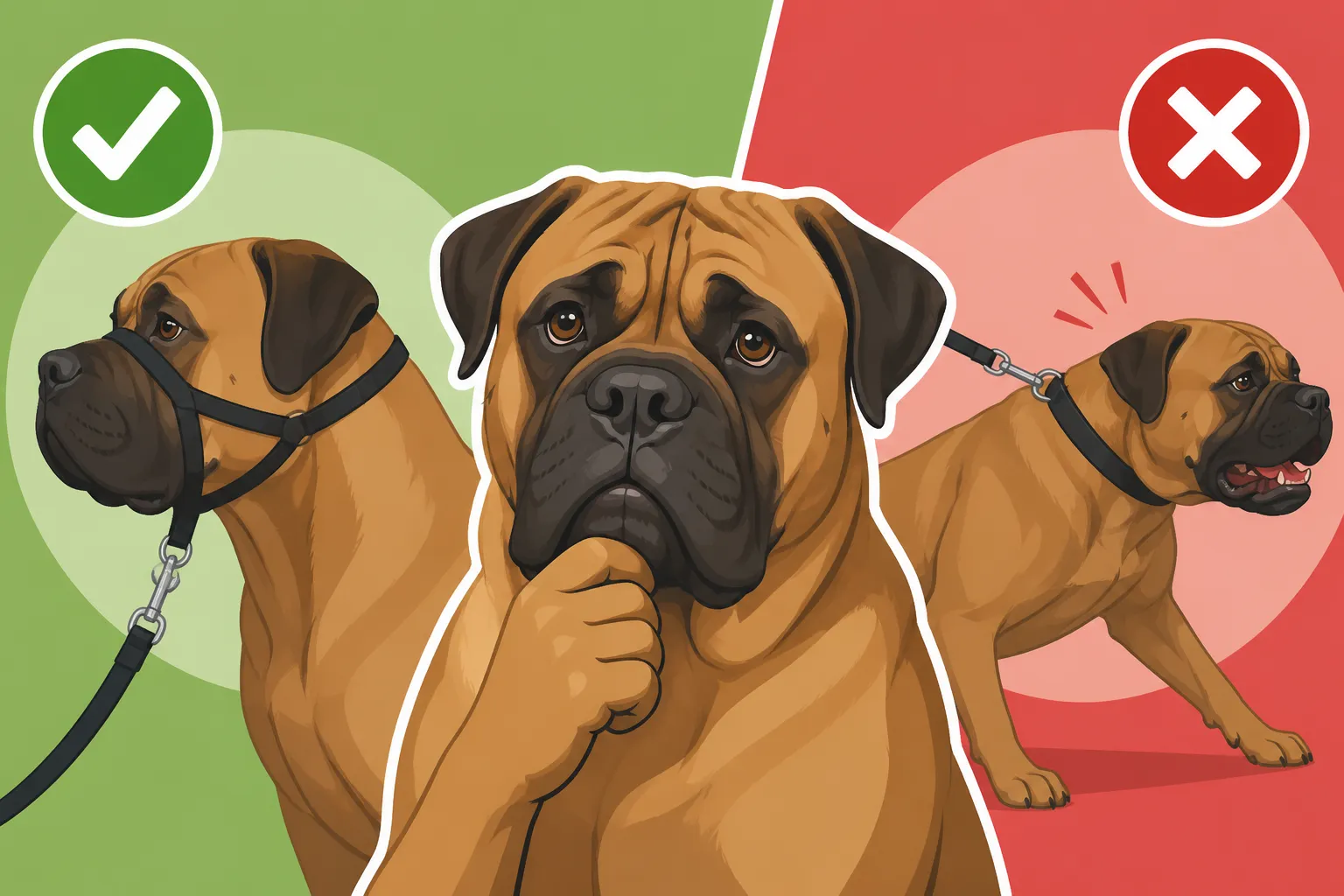
Whether a Head Halter Suits a Bullmastiff
Walking a Bullmastiff on a leash can feel like an epic struggle against a gentle, yet incredibly powerful, force of nature. If you've ever found yourself being unexpectedly towed down the street or grappling with a sudden lunge that nearly dislocates your shoulder, you know the frustration is real. This comprehensive guide will explore whether a head halter is a suitable and effective tool for managing your Bullmastiff on walks, helping you regain control and make outings more enjoyable for both of you.
The Unique Leash Challenges of Owning a Bullmastiff
Let's be honest, Bullmastiffs are magnificent, strong dogs. They are loyal companions, often described as gentle giants, but that "giant" part comes with significant physical power. A full-grown Bullmastiff can easily weigh over 100 pounds, and sometimes much more, meaning that even a relatively mild pull can feel like being dragged by a small pony. Many owners feel completely overwhelmed, trying various collars and techniques, only to find their arms aching and their patience wearing thin after just a block or two. It's not about your Bullmastiff being disobedient out of spite; it's often a combination of their sheer strength, natural instincts, and perhaps a lack of understanding about how to best communicate with such a robust dog on a walk.
Traditional flat buckle collars, while fine for holding ID tags, often provide little to no control when a Bullmastiff decides to put its weight into pulling. The pressure falls directly on their trachea and neck, which can be uncomfortable for them and ineffective for you. Moreover, a powerful Bullmastiff, once committed to pulling towards a squirrel or an interesting smell, can easily injure itself or its handler with sudden jerks. You might find yourself dreading walks instead of looking forward to them, which isn't fair to either you or your Bullmastiff. Finding effective tools is crucial for happy, safe walks, especially when you are responsible for Training a Bullmastiff That Weighs More Than You Do.
The truth is, many Bullmastiffs love to explore, and their powerful scent drive can make them quite determined. They might not be intentionally rebellious, but their enthusiasm, combined with their substantial build, means that what might be a minor tug from a smaller dog becomes a major test of strength with a Bullmastiff. It’s a common frustration to have a dog that truly wants to be with you, but simply hasn't learned the polite way to share a walk. This often leads to owners researching alternative equipment when traditional collars just aren't cutting it for managing Whether a Bullmastiff Pulls on Leash.
What is a Head Halter and How Does it Work?
A head halter, sometimes called a head collar or head harness, is a piece of dog training equipment that fits over your dog's head, much like a horse's halter. It typically consists of a strap that goes around the dog's muzzle and another that goes behind their ears, connecting under the chin where the leash clips. It's important to clarify right away that a head halter is not a muzzle, although it can look similar. While some designs might prevent a full gaping bite, its primary purpose is not bite prevention but rather control and guidance during walks.
The mechanics of a head halter are quite clever and rooted in animal behavior. Think about how you lead a horse: you don't pull on its neck; you guide its head. The direction of a dog's head largely dictates the direction of its body. When your Bullmastiff pulls on a regular neck collar, their body often follows their head, giving them leverage. With a head halter, when your dog pulls forward, the leash connection under the chin gently turns their head to the side. This slight redirection of the head often causes the body to follow, immediately discouraging pulling. It interrupts their forward momentum in a gentle, non-aversive way.
Unlike a neck collar, which applies pressure to the sensitive trachea and neck, a head halter distributes pressure more safely across the muzzle and the back of the head. This makes it a much more humane option than choke chains or prong collars, which use pain or discomfort to deter pulling. The gentle steering action allows you to guide your Bullmastiff's attention away from distractions and keep them focused on you, making it an invaluable tool for Teaching a Bullmastiff to Walk on Leash.
The Pros of Using a Head Halter for Your Bullmastiff
For a breed as strong and substantial as the Bullmastiff, the advantages of a head halter can be truly transformative for daily walks and training.
Enhanced Control and Safety
The most immediate and noticeable benefit of a head halter is the dramatically improved control it offers. Suddenly, that feeling of being an anchor attached to a runaway ship disappears. When your Bullmastiff tries to pull, a gentle tug on the leash redirects their head, and often their entire body, back towards you. This means you can confidently manage even the most enthusiastic lunge or sudden change of direction. For an owner who struggles with How to Walk a Bullmastiff That Outweighs You, this level of control can be a game-changer, making walks less stressful and more enjoyable. The ability to easily guide your dog's head away from potential hazards or unwanted interactions also significantly increases safety for both your Bullmastiff and others.
Imagine walking past another dog or a bustling playground. With a traditional collar, your Bullmastiff might pull and strain, potentially barking or lunging, and you're left bracing yourself. With a head halter, a subtle leash adjustment can turn their head and redirect their focus to you, allowing you to calmly navigate past the distraction. This means less stress for everyone involved, and a much safer experience overall. Many owners purchase head halters from online retailers like Amazon, where they can read reviews and find different styles to suit their dog's head shape.
Effective Training Aid
A head halter is primarily a training aid, not a permanent crutch. It helps you teach your Bullmastiff how to walk politely on a leash by allowing you to interrupt unwanted pulling behaviors effectively and non-punitively. It gives you the leverage to reward loose-leash walking, making the desired behavior much clearer to your dog. Instead of constant corrections on their neck, which can be painful and lead to a dog associating walks with discomfort, the head halter enables a more positive and communicative approach. It helps establish a foundation for good leash manners while minimizing physical strain on both you and your dog.
It allows you to reinforce the idea that walking nicely by your side is comfortable and rewarding, while pulling results in a gentle, almost imperceptible, redirection. This method taps into a dog's natural instinct to follow where its head is pointed, making it a very intuitive tool for them to understand. With consistent positive reinforcement, many Bullmastiffs learn excellent leash manners, eventually requiring the head halter only as needed, or transitioning to a standard collar with their newfound polite habits.
Reduced Neck Strain and Injury Risk
For a large breed like the Bullmastiff, constant pulling on a flat collar can lead to significant neck and throat strain, even potential long-term damage to the trachea or thyroid. The head halter, by design, avoids putting pressure on these sensitive areas. The pressure is distributed across the top of the muzzle and behind the ears, which are less prone to injury from pulling. This is a huge benefit for your dog's health and comfort, especially if they are prone to enthusiastic pulling.
Furthermore, it reduces the risk of injury to you. No more sudden jerks that cause shoulder pain or loss of balance. The added control means you're less likely to be pulled off your feet, a genuine concern with a dog of the Bullmastiff's impressive stature. For owners with physical limitations or those who simply want a more pleasant walking experience, the head halter offers a kinder, safer solution for both ends of the leash.
The Cons and Potential Challenges of Head Halters
While head halters offer many advantages, they aren't without their potential downsides and require a thoughtful approach to ensure success.
Initial Resistance and Acceptance Issues
One of the biggest hurdles many owners face is their Bullmastiff's initial reaction to wearing a head halter. Because it fits over their muzzle, some dogs instinctively dislike it. They might try to paw it off, rub their face on the ground, or freeze completely, looking utterly miserable. This is a very common reaction, and it's essential not to force the issue. A negative first experience can make it much harder for your dog to accept the tool in the future. Remember that for a strong-willed dog like a Bullmastiff, physical force often backfires, as Why a Bullmastiff Cannot Be Physically Made to Do Anything rings true.
It’s crucial to introduce the head halter very gradually and with lots of positive reinforcement. Rushing the process can create an aversion that's difficult to overcome. This initial period of adjustment requires patience, understanding, and a generous supply of high-value treats to create a positive association. It's not uncommon for a dog to take several days or even weeks to fully accept wearing the head halter without protest.
Potential for Chafing or Discomfort if Not Fitted Properly
Just like any piece of equipment, a head halter needs to be properly fitted to be effective and comfortable. If it's too loose, your Bullmastiff might be able to paw it off or even slip out of it, potentially leading to a dangerous situation. If it's too tight, it can chafe their skin, particularly around the muzzle or behind the ears, causing discomfort and irritation. Each brand and style of head halter might fit slightly differently, so it's worth exploring options. Platforms like Amazon offer a variety of brands and styles, allowing owners to compare materials and sizing guides.
Careful measurement of your dog's head and muzzle is essential before purchasing. Once you have the halter, pay close attention to how it sits on your Bullmastiff's face. There should be enough room to slide one finger comfortably under all the straps, but not so much that it's loose. Always inspect your Bullmastiff's skin after walks for any signs of rubbing or redness, especially during the initial adjustment period. If chafing occurs, you might need to adjust the fit, try a different brand, or even look for versions with softer padding.
Misconceptions from Others
Because head halters resemble muzzles, you might encounter people who mistakenly believe your Bullmastiff is aggressive or dangerous. This can be frustrating, especially when you know your gentle giant is anything but. You might get questions or even wary looks from strangers. While it's not the primary reason to avoid a head halter, it's something to be aware of and mentally prepare for.
You might find yourself explaining to well-meaning (or not-so-well-meaning) passersby that it's a training tool, not a muzzle. This social aspect can be a minor inconvenience, but the benefits of improved control and safety often outweigh this concern. If you're particularly sensitive to public perception, this is something to consider.
Not a "Cure-All" for Behavior Issues
It's vital to remember that a head halter is a management tool and a training aid; it is not a magical fix for underlying behavioral issues. While it provides excellent control, it doesn't teach your Bullmastiff why they shouldn't pull, nor does it address issues like reactivity, fear, or aggression. If your Bullmastiff's pulling stems from anxiety or intense reactivity, the head halter will help manage the physical pulling but won't resolve the root cause.
For complex behavioral challenges, the head halter should be used in conjunction with a comprehensive training plan developed with a certified professional dog trainer. Resources like those offered by BAXTER & Bella, which emphasize positive reinforcement and foundational skills, can be incredibly helpful for owners integrating a head halter into a broader training strategy. It's a tool to facilitate training, not a substitute for it.
How to Introduce a Head Halter to Your Bullmastiff Gently
Introducing a head halter to your Bullmastiff requires patience and a positive approach. Rushing the process will only create negative associations and make your dog more resistant. Remember, the goal is for them to tolerate and eventually accept it as a normal part of going for a walk.
Step 1: Positive Association and Desensitization
Start by simply letting your Bullmastiff see and sniff the head halter. Hold it out and offer high-value treats when they show curiosity or even just ignore it. Don't try to put it on yet. The goal is for them to associate the sight of the head halter with good things – delicious treats! Do this several times a day, for very short sessions.
Step 2: Gentle Introduction to the Muzzle Loop
Once your Bullmastiff seems comfortable with the sight of the halter, try to gently touch the muzzle loop to their nose, offering a treat immediately. Don't push or force it. If they tolerate the touch, gradually work towards getting their nose into the loop for a split second, then immediately remove it and give a treat. Repeat this many times, slowly increasing the duration their nose is in the loop before you reward and remove. This might take several sessions. What Motivates a Bullmastiff will be your best friend here, so use their favorite training treats.
Step 3: Fastening and Short Durations
When your Bullmastiff is comfortable putting their nose into the loop and holding it there for a few seconds, try to fasten the neck strap quickly. Reward immediately with a jackpot of treats and praise, then take it off after just a few seconds. The aim is for them to experience wearing it briefly, getting rewarded, and then having it removed before they get a chance to object strongly. Gradually increase the time it stays on, working up to a minute or two, all while keeping the treats flowing and distracting them with praise or a quick game.
Step 4: Adding the Leash and First Steps
Once your Bullmastiff can wear the head halter for a few minutes calmly indoors, attach the leash. Let them drag the leash around indoors for a few minutes, again with treats and praise. Then, take the first short steps. Walk around your living room, rewarding every step they take without trying to paw it off. Keep sessions short and positive, remembering How Short a Bullmastiff's Training Session Should Be. Your first outdoor walk with the head halter should be in a quiet, familiar area, and keep it very brief.
Here's a quick table to summarize the gentle introduction process:
| Step | Action | Key Goal |
|---|---|---|
| 1. Initial Familiarization | Present the halter, allow sniffing. Reward curiosity or indifference. | Create positive association with sight of halter. |
| 2. Muzzle Loop Acceptance | Touch muzzle loop to nose, reward. Progress to nose in loop for short seconds, then remove and reward. | Bullmastiff voluntarily puts nose in loop. |
| 3. Fastening & Duration | Fasten strap, reward heavily, remove after a few seconds. Gradually increase duration indoors. | Tolerate wearing halter comfortably for short periods. |
| 4. Leash & Movement | Attach leash, let them drag it indoors. Take short steps indoors. Move to brief, quiet outdoor walks. | Bullmastiff walks with halter on, understanding the gentle guidance. |
| 5. Consistency & Positive Reinforcement | Always reward calm acceptance and polite walking. Never use it for punishment. | Halter becomes a comfortable, non-aversive tool for pleasant walks. |
Remember, consistency and a positive attitude from you are key. If your Bullmastiff shows significant distress at any stage, go back a step and proceed even more slowly.
Head Halters vs. Other Leash Tools for Bullmastiffs
When it comes to walking a Bullmastiff, the market is flooded with different leash tools, and it can be hard to know which is best. Let's compare the head halter to some common alternatives.
Traditional Flat Collars
As mentioned, a flat buckle collar is great for holding ID tags, but it's largely ineffective for controlling a powerful Bullmastiff that pulls. All the pressure is concentrated on their throat, which can cause coughing, gagging, or even damage to their trachea. They offer very little leverage for the handler, and often, the Bullmastiff will just learn to pull through the discomfort. While every dog should wear one for identification, relying solely on a flat collar for leash training a strong Bullmastiff is often a recipe for frustration and potential injury.
Choke Chains and Prong Collars
These tools operate on the principle of applying pain or discomfort to deter pulling. Choke chains tighten around the neck, while prong collars have blunt metal points that dig into the skin. While they can provide immediate control, they do so through aversive methods. For a Bullmastiff, whose neck is broad and powerful, these collars can still be overridden by sheer strength, leading to the dog ignoring the pain or becoming desensitized to it. More importantly, they can cause serious physical damage (tracheal collapse, whiplash, nerve damage) and significant psychological stress, fostering fear, anxiety, or even aggression. Many modern positive reinforcement trainers strongly advise against their use due to their potential for harm and the negative impact on the human-animal bond. They teach a dog what not to do, rather than what to do, and can lead to a dog associating pain with other dogs or people they see on walks.
Harnesses (Front-Clip vs. Back-Clip)
Harnesses are a popular alternative to neck collars, as they distribute pressure across the chest and shoulders, removing it from the sensitive neck area.
-
Back-Clip Harnesses: These are comfortable and safe, but often do little to deter pulling. In fact, for a strong Bullmastiff, a back-clip harness can inadvertently act like a sled dog harness, actually encouraging them to pull more by allowing them to use their full body weight and strength. They're excellent for dogs who don't pull or for activities where pulling is desired, but less effective for leash training a pulling Bullmastiff.
-
Front-Clip Harnesses: These harnesses have the leash attachment point on the dog's chest. When the dog pulls, the leash connection redirects them to the side, similar to a head halter, interrupting their forward momentum. This makes them a much more effective anti-pulling tool than back-clip harnesses. Many owners find front-clip harnesses a good compromise if they dislike the idea of a head halter. They offer good control, reduce pulling significantly, and are generally well-tolerated. However, they don't offer the same level of steering control as a head halter, and a determined Bullmastiff can still sometimes muscle through them. For more details, you might want to look into Which Harness Suits a Bullmastiff.
When choosing between a front-clip harness and a head halter for your Bullmastiff, consider the degree of control you need and your dog's acceptance. Some dogs prefer one over the other. The head halter offers superior directional control, making it easier to guide your Bullmastiff's attention.
When a Head Halter Might Not Be the Right Fit
While head halters are fantastic tools for many Bullmastiffs, there are situations where they might not be the ideal solution, or where they need to be part of a larger, more specialized approach.
Underlying Behavioral Issues
If your Bullmastiff's pulling, lunging, or reactivity on leash stems from deep-seated fear, anxiety, or aggression, a head halter alone is not the answer. It can manage the physical manifestations of these behaviors, but it won't resolve the underlying emotional state. In fact, if a dog is already stressed or fearful, introducing a new, potentially uncomfortable piece of equipment could exacerbate their anxiety. For instance, a Bullmastiff who is intensely reactive towards other dogs due to fear might feel even more trapped and anxious with a head halter, potentially leading to increased lashing out.
In these cases, a head halter should only be used under the guidance of a qualified positive reinforcement trainer or veterinary behaviorist. They can help you address the root cause of the behavior through desensitization, counter-conditioning, and other behavior modification techniques. The head halter then becomes one component of a multi-faceted treatment plan, providing a safe management tool while you work on changing your dog's emotional response. This is especially true if your Bullmastiff displays guarding tendencies towards strangers, for which Why Protection Training Is Unnecessary for a Bullmastiff provides good context.
Specific Medical Conditions
While head halters are generally safer for the neck than traditional collars, there might be rare medical conditions where even the gentle pressure of a head halter could be problematic. For example, if your Bullmastiff has certain neurological conditions affecting their head or neck, severe facial injuries, or certain respiratory issues, a head halter might cause discomfort or exacerbate the condition.
Always consult with your veterinarian before introducing any new training equipment, especially if your Bullmastiff has known health issues. Your vet can advise whether a head halter is medically appropriate for your specific dog. They can also provide insights if your Bullmastiff has extreme sensitivity around their face, making it difficult to introduce even gentle handling, which relates to the challenges of Teaching a Bullmastiff to Have Its Feet Handled.
Extreme Dislike and Inability to Acclimate
Despite the most patient and positive introduction methods, some Bullmastiffs simply will not acclimate to a head halter. They might continue to fight it, paw at it relentlessly, or become so stressed and miserable that walks become more unpleasant than before. In such cases, forcing the issue is counterproductive and harmful to your relationship with your dog.
If you've tried all the gentle introduction techniques, sought advice from a positive reinforcement trainer, and your Bullmastiff still shows extreme and persistent aversion, it might be time to consider other effective tools, such as a well-fitted front-clip harness. While head halters are excellent for many, no single tool works for every dog. The most important thing is to find a solution that is both effective for management and comfortable for your beloved Bullmastiff.
Finding the right tool for walking your Bullmastiff can truly transform your daily routine. A head halter offers a humane and effective way to gain control over a powerful dog, fostering polite leash manners without resorting to painful or aversive methods. With a gentle introduction, consistent positive reinforcement, and a clear understanding of its purpose, a head halter can be an invaluable asset in your Bullmastiff ownership journey. It's about empowering you to teach your dog, not just restrain them, making every walk a joyful experience for both of you.
Disclaimer
This article is for general informational purposes only and does not constitute professional advice. Laws, prices and regulations vary by location and change over time. Consult a qualified professional for guidance on your specific situation.