Why a Bullmastiff Cannot Be Physically Made to Do Anything
It’s a scenario many Bullmastiff owners find themselves in: you have this magnificent, powerful dog, weighing upwards of a hundred pounds, and sometimes, they just decide they’re not going to do something. You try to coax, you try to nudge, and if you’re honest, maybe you’ve even tried to physically move them. You quickly realize it's a losing battle, and not just because of their sheer size. This guide will explore why physically forcing a Bullmastiff is not only ineffective but can actually harm your relationship and their training, and how to build a partnership based on trust and positive reinforcement instead.
The Bullmastiff's Independent Spirit and Unmatched Physicality
If you’ve ever felt like your Bullmastiff has a mind of their own, you’re not imagining things. These dogs weren't bred for blind obedience, and their impressive physical stature means they simply cannot be physically overpowered without serious risk to both dog and handler.
More Than Just Muscle: Understanding Their Core Nature
Let's rewind to the origins of the Bullmastiff. They were essentially the gamekeeper's night dog, bred to silently track and hold poachers until their human arrived. This job required immense strength, yes, but also a significant degree of independent thought and discretion. They weren't meant to maul or attack; they were meant to deter and hold without causing serious injury. This historical purpose ingrained a certain deliberation and independence into their very being. They're not wired to blindly follow commands or be physically pushed around. They're thinkers, observers, and decision-makers.
Because of this history, a Bullmastiff isn't always quick to respond, leading some to misunderstand their thoughtful nature as stubbornness. They often pause, assessing the situation, and deciding if your request is truly worth their effort. It's not defiance for the sake of it, but rather a characteristic that requires a different approach to training than one might use with, say, a highly biddable herding breed. Trying to physically compel them goes against their inherent nature and the trust they place in you. They are naturally protective, but that protection comes from a place of partnership, not forced submission. If you want to know more about their original purpose, check out What a Bullmastiff Was Bred to Do to a Poacher.
The Weight of the Matter: Why Physical Force Fails
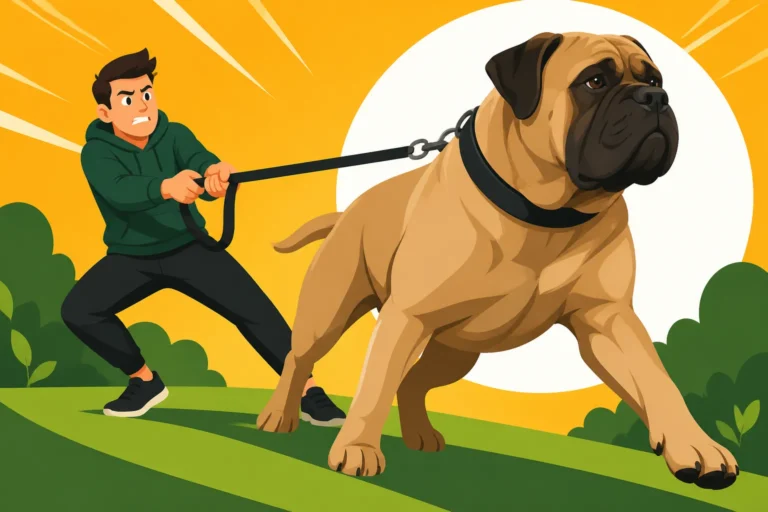
When you stand next to a full-grown Bullmastiff, you truly grasp their immense power. A male can easily tip the scales at 130 pounds or more, with females not far behind. Imagine trying to physically move a dog that outweighs many adult humans, especially one that has braced itself or simply decided it doesn't want to go. It's not just impractical; it's genuinely dangerous.
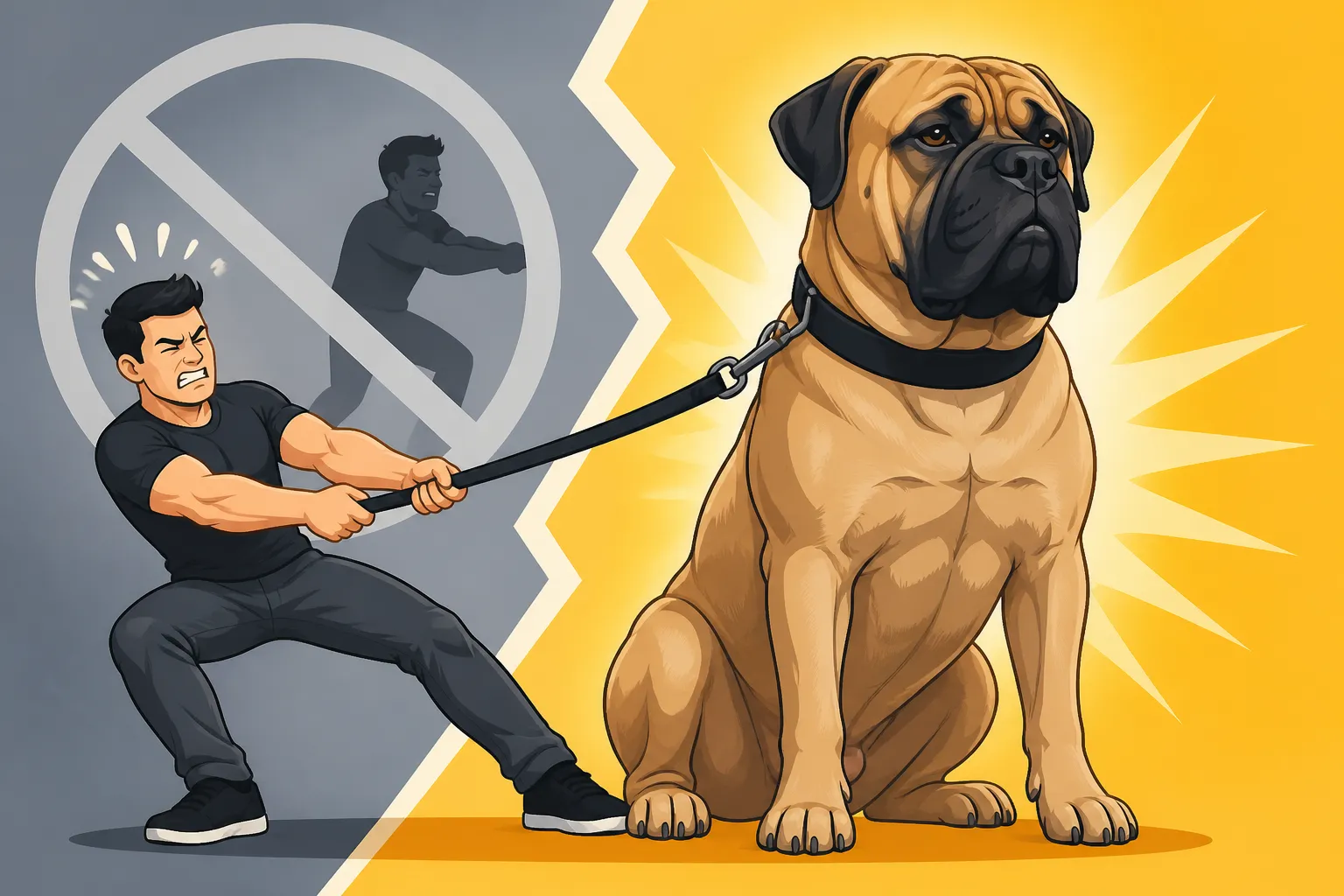
Any attempt to physically force a Bullmastiff often triggers what's known as an "opposition reflex." Instead of complying, they instinctively push back harder. This isn't them being deliberately difficult; it's a natural canine reaction to physical pressure. You pull on the leash, they lean harder. You try to push them into a sit, they resist. Not only can this lead to strain or injury for you, but it can also cause serious harm to your dog, from neck injuries if yanking on a collar, to joint damage if you're trying to manipulate their large frame. It quickly becomes clear that engaging in a physical power struggle with a Bullmastiff is a battle you are almost guaranteed to lose, and it risks your safety and theirs.
The Damage of Coercion: Behavioral and Relational Fallout
Attempting to physically force a Bullmastiff into compliance does more than just fail in the moment; it chips away at the foundation of your relationship and can introduce significant behavioral problems down the line.
Eroding Trust and Creating Fear
Bullmastiffs, despite their formidable appearance, are incredibly sensitive dogs at heart. They thrive on clear, consistent leadership and a deep bond of trust with their owners. When you resort to physical force or harsh corrections, you shatter that trust. Instead of seeing you as a benevolent leader, they begin to see you as unpredictable, threatening, or even scary. This erosion of trust isn't easily repaired.
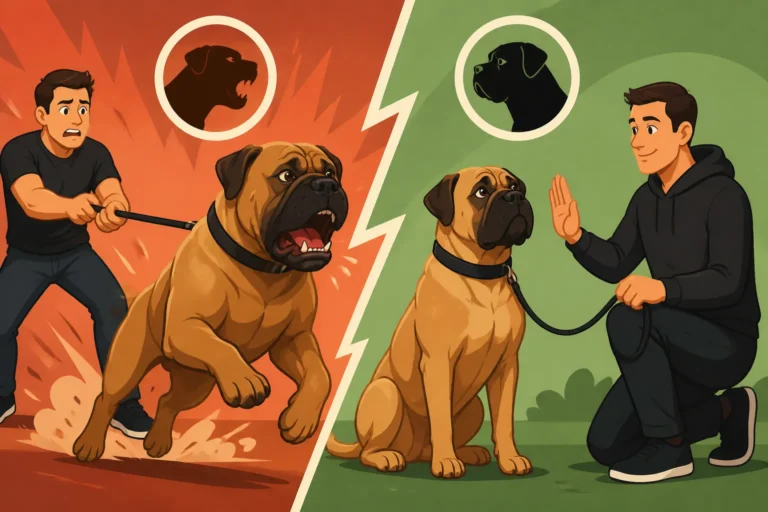
A fearful or distrustful Bullmastiff is not a well-behaved Bullmastiff. They may become withdrawn, anxious, or develop avoidance behaviors, actively trying to escape your presence or specific situations. Worse, a dog that feels threatened may eventually resort to defensive aggression, using their formidable size and strength to protect themselves from what they perceive as a threat – even if that threat is their owner attempting a physical correction. This is why Why Harsh Correction Fails on a Bullmastiff is such an important topic for owners to understand. You want your Bullmastiff to choose to cooperate, not to feel forced into it.
Teaching Them to Fight, Not to Learn
When you try to physically compel a Bullmastiff, you're not teaching them the desired behavior; you're teaching them that training involves a confrontational dynamic. They learn to resist, brace, or even escalate their opposition. This creates a cycle where both owner and dog become frustrated, and the learning process completely breaks down. Instead of thinking about what you want them to do, their focus shifts to how to get away from the uncomfortable physical pressure.
Think about it from their perspective: if every attempt to guide them physically leads to discomfort or fear, why would they ever willingly engage in training? They might learn not to do something to avoid punishment, but they won't learn what to do. This often results in a dog that is sullen, hesitant, or only performs when explicitly threatened, which is a far cry from the willing and joyful partnership we all desire with our pets. It truly becomes a fight, and that's not a healthy basis for any relationship.
Building a Partnership: The Power of Positive Reinforcement
With a breed as powerful and thoughtful as the Bullmastiff, the only truly effective path to training and a strong bond is through positive reinforcement, patience, and clear communication. You want them to want to work with you.
Understanding What Motivates a Bullmastiff
Bullmastiffs are often highly food-motivated, which can be a huge asset in training. High-value treats – think small pieces of cooked chicken, cheese, or hot dogs – can be incredibly powerful motivators. Beyond food, they also respond well to genuine praise, enthusiastic play with a favorite toy, or even the opportunity for a sniff walk in an interesting new area. The key is to figure out what your individual Bullmastiff finds most rewarding. What Motivates a Bullmastiff explores this in greater detail.
Their desire to please their trusted people is also a strong motivator, but it must be earned. They need to understand that cooperating with you leads to good things, not discomfort or confusion. When you make training a positive experience, they are much more likely to engage, learn, and offer behaviors willingly. This builds a robust partnership where they trust your guidance because it consistently leads to positive outcomes for them.
Patience, Consistency, and Clear Communication
One of the most crucial elements when training a Bullmastiff is patience. These dogs are deliberate thinkers, not impulsive responders. They often take a moment to process a command, especially if it’s new or in a distracting environment. This can sometimes be perceived as Why a Bullmastiff Ignores a Cue It Knows or Why a Bullmastiff Pauses Before Obeying, but it's usually just their thoughtful nature at play. Giving them that extra moment to think can make all the difference.
Consistency is also paramount. Everyone in the household needs to use the same commands and expectations. Short, frequent training sessions are far more effective than long, drawn-out ones. A Bullmastiff's attention span, especially as a puppy, might be shorter than you'd expect for such a large dog. Aim for 5-10 minute sessions several times a day. As they mature, which happens slowly – often not until they are three years old – their focus will improve, but consistency remains key. You can find more information on their developmental timeline in When a Bullmastiff Finishes Maturing.
For those looking for structured guidance, online platforms like BAXTER & Bella offer comprehensive training programs rooted in positive reinforcement. They provide step-by-step instructions, video tutorials, and support that can be invaluable for Bullmastiff owners learning to communicate effectively without force. Such resources can help you build the skills necessary to teach your powerful dog in a way that fosters cooperation and trust.
Tools and Techniques for a Giant Dog
While physical force is out, appropriate tools are definitely in. A sturdy, well-fitting harness is essential for a Bullmastiff, especially one that tends to pull on the leash. A front-clip harness can provide better control by redirecting their forward momentum, making walks much more manageable for you without needing to yank or pull. Check out Which Harness Suits a Bullmastiff for specific recommendations. A strong, non-retractable leash (preferably six feet long) is also a must.
Beyond basic walking gear, think about enrichment. Puzzle toys, interactive feeders, and robust chew toys can keep their intelligent minds engaged and help burn off mental energy. You can find a vast selection of these on Amazon, perfect for stimulating your Bullmastiff and preventing boredom-related behaviors. These tools support positive training by giving them appropriate outlets for their natural drives and instincts, rather than trying to suppress them with force. Remember, training a Bullmastiff means working with their unique traits, not against them.
Real-World Scenarios and Practical Solutions
It’s easy to talk about positive reinforcement in theory, but what about those moments when your Bullmastiff decides to play immovable object? Here’s how to navigate some common scenarios without resorting to physical coercion.
The Stubborn "Sit" or "Stay"
Imagine you're out on a walk, and you ask your Bullmastiff, "Sit!" Perhaps they glance at you, maybe even shift their weight slightly, but then they just… don't sit. Your first instinct might be to gently push their rump down, but as we’ve discussed, this is counterproductive.
Instead, calmly restart. Show them the treat at their nose, lure their head up and back gently to guide their rear to the ground, and as soon as their hindquarters touch, mark the behavior with a verbal "Yes!" or clicker, and immediately reward them with that high-value treat. If they’re not responding to a lure, it might be too distracting where you are, or the reward isn't motivating enough. Move to a quieter spot, or switch to an even higher-value treat. You're teaching them that their choice to sit earns them something wonderful, not that they are forced into position. This consistent positive association is How a Bullmastiff Responds to Correction effectively.
Managing Leash Reactivity and Pulling
Walking a Bullmastiff that pulls can feel like being dragged by a small horse. Trying to yank them back with force will only engage their opposition reflex, making them pull harder, and it's dangerous for both of you. Teaching a Bullmastiff to Walk on Leash requires strategy, not strength.
If your Bullmastiff starts to pull, simply stop moving. Become a tree. Don’t say anything, don’t yank. Just stand still. The moment the leash slackens, even for a second, start walking again. Repeat this every single time they pull. They quickly learn that pulling gets them nowhere, but a loose leash keeps the walk going. You can also incorporate changing directions frequently; every time they catch up to you with a loose leash, reward them. This teaches them to pay attention to where you're going and to maintain slack. Remember, it's about making the desired behavior (loose-leash walking) more rewarding than the undesired one (pulling).
The "No Move" Stand-off
This is perhaps the quintessential Bullmastiff moment: you're ready to go inside, or get in the car, or simply move from one spot to another, and your big dog just flops. They might lie down, sit firm, or just stand there, rooted like an oak. You can try to pull, push, or even carry them, but you’ll quickly find it’s impossible and futile. This is The Bullmastiff That Pauses to Decide Whether You Are Worth It in action.
The best approach here is often patience, calm encouragement, and once again, motivation. If it's safe to do so, you can wait them out. Often, they’ll eventually decide to move on their own. Alternatively, use a high-value treat to lure them a short distance. "Let's go, treat!" and take a step, rewarding them immediately when they take a step with you. Break the task down into tiny, achievable steps. If they're refusing to get in the car, try luring them to the car door, then rewarding. Then one paw in, reward. It’s slow, but it builds a positive association rather than a battle of wills. This also applies to situations where How Stubborn a Bullmastiff Is might manifest, such as refusing to come when called. Building a strong recall through consistent, positive rewards in low-distraction environments first is key.
Here's a table summarizing effective versus ineffective training approaches for a Bullmastiff:
| Training Approach Aspect | Ineffective (Physical Coercion) | Effective (Positive Reinforcement) |
|---|---|---|
| Philosophy | Domination, force, punishment | Partnership, trust, motivation |
| Communication | Physical pushing, pulling, yelling | Clear cues, positive markers (clicker/verbal), calm voice |
| Response to "No" | Physical correction, leash jerks, harsh words | Redirect to desired behavior, manage environment, reward alternatives |
| Impact on Dog | Fear, anxiety, resistance, defensive aggression | Confidence, willingness to learn, strong bond |
| Result | Damaged relationship, inconsistent behavior, potential injury | Reliable behaviors, happy partnership, safe interaction |
| Key Motivator | Avoidance of punishment | Desire for reward (food, praise, play) |
This article is for general informational purposes only and does not constitute professional advice. Laws, prices and regulations vary by location and change over time. Consult a qualified professional for guidance on your specific situation.