What a Bullmastiff Chews
Bullmastiff chewing behaviors, from puppy teething to separation anxiety, explained with strategies to protect your home.

Bullmastiff chewing behaviors, from puppy teething to separation anxiety, explained with strategies to protect your home.

Bullmastiff destructive behavior stems from unmet mental needs, causing these powerful dogs to chew furniture and household items.

Bullmastiff sleep requirements range from eighteen hours daily for young puppies down to twelve hours for healthy adult dogs.

Bullmastiff sleeping habits explained through instincts, temperature regulation, joint support for heavy bodies, and security needs.

A bred-in urge to stay near their pack drives these hundred-pound dogs onto the sofa, so owners need clear boundaries and comfortable alternatives.

Bullmastiff shadowing behavior stems from ancient guarding instincts and deep loyalty, explaining why this breed follows owners everywhere.

Bullmastiff behavior around babies involves balancing protective instincts, calm temperaments, and massive physical size safely.
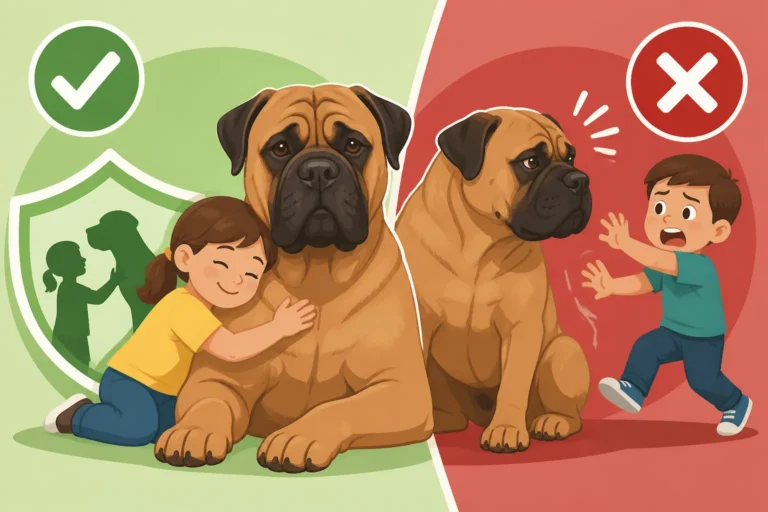
Bullmastiff temperament around children, physical size risks, and protective instincts explained for safe home management.

Bullmastiff temperament around children, explaining their patient nature, protective instincts, and how to manage their massive size safely.

Bullmastiff temperament around toddlers, including their gentle patience, protective instincts, and physical size management.