Whether Early Neutering Affects a Bullmastiff’s Cancer Risk
It's incredibly challenging to make the "right" decision for our beloved Bullmastiffs, especially when it comes to something as permanent as neutering. Many of us have been taught for years that early neutering is simply "what you do," only to now hear conflicting information that makes us question everything. This comprehensive guide aims to cut through the confusion and explore the latest understanding regarding how early neutering might impact your Bullmastiff's cancer risk and overall long-term health.
The Complex Decision of Neutering Your Bullmastiff
Deciding when, or even if, to neuter your Bullmastiff is far from a simple check-box item these days. For generations, the message was clear and consistent: spay or neuter early to prevent unwanted pregnancies, curb certain behaviors, and reduce the risk of specific health issues. Many veterinarians still recommend this traditional approach, and for good reason, as it has undeniable benefits for pet population control and can certainly prevent some hormone-driven health problems.
However, the conversation has become significantly more nuanced, especially for giant breeds like our magnificent Bullmastiffs. What might be best for a Chihuahua or a Labrador might not be ideal for a dog that matures slowly and carries significant weight, putting different stresses on its developing body. Owners are increasingly feeling the pressure to navigate conflicting advice, wanting nothing more than to give their gentle giants the longest, healthiest life possible. It's a heavy burden, knowing that such a decision could have lifelong repercussions.
The Long-Standing Beliefs About Neutering
Historically, neutering (both spaying for females and castration for males) has been championed for a host of reasons. For males, the primary health benefits cited include eliminating the risk of testicular cancer and reducing the incidence of benign prostatic hyperplasia (enlarged prostate) later in life. Behavioral advantages often include a decrease in roaming, urine marking, and certain types of aggression. For females, spaying prevents mammary tumors, ovarian cysts, uterine infections (pyometra), and, of course, unwanted pregnancies and heat cycles, which can be messy and inconvenient.
These are all valid and important considerations. Nobody wants to deal with a potentially fatal pyometra, which is a very real risk for intact females, nor do we want to contribute to the heartbreaking problem of pet overpopulation. For many smaller or medium-sized breeds, the traditional early neutering guidelines—often around six months of age—have served their purpose well, seemingly without significant long-term drawbacks that outweigh the benefits.
Why the Conversation is Shifting for Giant Breeds
But then you get a Bullmastiff, and suddenly, you're looking at a dog that won't even be fully physically mature until 2 or even 3 years old. This slow, deliberate growth phase is crucial for the development of their massive bones, joints, and musculature. It’s also a period of significant hormonal activity, which plays a role in closing growth plates and strengthening connective tissues. This extended developmental timeline is a key reason why many in the veterinary community and among responsible breeders are now urging a reconsideration of early neutering for giant breeds.
The concern is that removing these vital sex hormones too early, before the body has had a chance to fully develop, might inadvertently increase the risk of other health issues down the line. It's a complex puzzle, as we want to prevent problems, but we also don't want to create new ones. This shift in thinking acknowledges the unique physiology of breeds like the Bullmastiff and seeks to balance the known benefits of neutering with potential new insights into its long-term effects on large and giant dogs.
Examining the Link Between Neutering Age and Cancer Risk
When we talk about cancer risk in Bullmastiffs, it's a topic that hits close to home for many owners. These dogs, while magnificent, do face a higher predisposition to certain types of cancer, making any decision that might influence that risk incredibly significant. So, what does the science say about the timing of neutering and cancer prevalence in our big-boned companions?
What the Studies Suggest About Lymphoma and Mast Cell Tumors
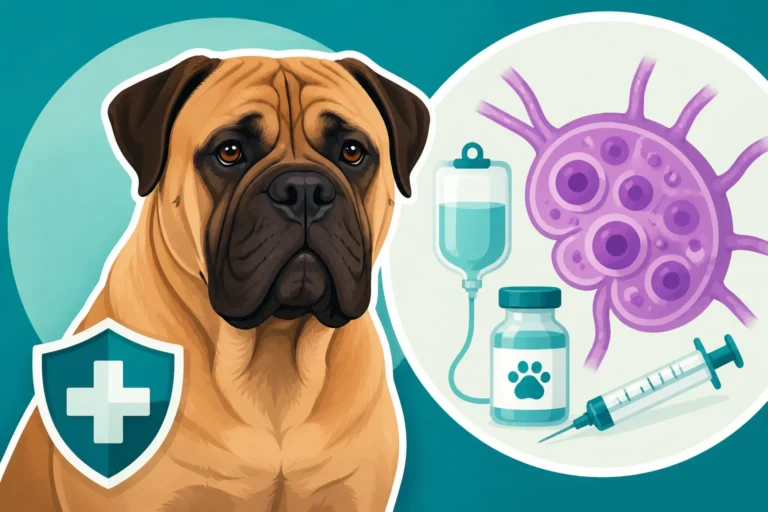
Unfortunately, Bullmastiffs are disproportionately affected by certain cancers, with Lymphoma Kills More Bullmastiffs Than Anything Else being a particularly devastating one. We also know that Mast Cell Tumors and the Lumps on a Bullmastiff are a common concern. Specific, large-scale studies focusing exclusively on neutering timing and these cancers in Bullmastiffs are rare. However, broader research on large and giant breeds offers some insights that are relevant.
Some studies, notably those from the University of California, Davis, have investigated the effects of neutering age on various cancers in different breeds. While findings vary by breed, some suggest a potential link between early neutering and an increased risk of certain cancers, including lymphoma and mast cell tumors, in some large breeds. The hypothesis is that sex hormones play a role in immune system regulation and cell development, and their premature removal might disrupt these processes. It’s a concerning possibility, especially given that Why a Bullmastiff's Lymphoma Risk Is Five Times a Mixed Breed's already places our dogs at a disadvantage.
Considering Osteosarcoma and Other Malignancies
Beyond lymphoma and mast cell tumors, one of the most frequently discussed cancers in relation to neutering timing in large breeds is osteosarcoma, a aggressive bone cancer. Several studies have indicated a higher incidence of osteosarcoma in early-neutered males and females of certain large and giant breeds compared to their intact counterparts. This is believed to be linked to the impact of sex hormones on bone growth and density. When growth plates close prematurely or abnormally due to the absence of these hormones, it could potentially leave bones more susceptible to cancerous changes.
While direct data for Bullmastiffs specifically might not be as robust as for breeds like Golden Retrievers or Rottweilers, their size and predisposition to other cancers make this a serious consideration. Other cancers, such as hemangiosarcoma or prostate cancer (though a lower risk in intact males than previously thought for some breeds), are also subjects of ongoing research regarding neutering timing. This adds another layer of complexity to the decision, forcing owners to weigh one set of potential risks against another. It’s not just about what you prevent, but what you might inadvertently increase the risk of.
Defining "Early" vs. "Delayed" Neutering for a Bullmastiff
The terms "early" and "delayed" neutering can be quite subjective, so it’s important to clarify what they typically mean in the context of giant breeds like the Bullmastiff. Generally, "early neutering" refers to sterilization performed before the dog has reached full skeletal maturity, which for a Bullmastiff can be anywhere from 18 to 36 months of age. The traditional age of six months, often recommended for smaller breeds, is decidedly "early" for a Bullmastiff.
"Delayed neutering," on the other hand, implies waiting until the dog's growth plates have closed and they are closer to, or have reached, their adult size and maturity. For a Bullmastiff, this might mean waiting until they are closer to two years old, or even older, depending on their individual development. This distinction is crucial because the presence of sex hormones during that critical growth phase is thought to play a vital role in proper bone and joint development, which we'll discuss next. Making an informed decision requires understanding these timelines for your specific breed.
Beyond Cancer: Orthopedic and Other Health Implications
The discussion around neutering timing for Bullmastiffs isn't solely about cancer risk. Their sheer size and weight put unique demands on their skeletal system, making orthopedic health a paramount concern. The interplay of hormones, growth, and joint integrity is a significant factor in deciding when to sterilize.
The Impact on Joint Health: Hips, Elbows, and Cruciates
One of the most compelling arguments for delaying neutering in large and giant breeds centers around joint health. Conditions like Hip Dysplasia in a Bullmastiff, Elbow Dysplasia in a Bullmastiff, and Cruciate Tears in a Bullmastiff are already prevalent in the breed. Studies on large dogs have shown a higher incidence of these orthopedic issues in dogs neutered early compared to those neutered later or kept intact.
The theory is that sex hormones play a critical role in the proper closure of growth plates, which are the soft areas at the ends of long bones that allow for bone growth. When these hormones are removed prematurely, growth plates can remain open for longer, leading to longer and potentially weaker bones, or bones that grow at disproportionate rates. This can alter joint angles and stability, predisposing the dog to conditions like hip and elbow dysplasia or increasing the risk of cranial cruciate ligament tears. Given the immense weight a Bullmastiff carries, any factor that compromises joint integrity is a serious consideration. Many owners budget for potential joint issues, and a robust pet insurance plan like that offered by Healthy Paws can provide immense peace of mind should these problems arise later on.
Other Hormonal Influences on Behavior and Wellness
Beyond skeletal health, sex hormones also influence various other aspects of a Bullmastiff's well-being, including their behavior and overall metabolic function. While neutering can help reduce certain unwanted behaviors like roaming or marking, especially in males, early sterilization can sometimes lead to an increase in other issues. Some studies suggest a potential link between early neutering and increased fear-based aggression, anxiety, or even noise phobias in certain breeds.
Furthermore, hormones influence metabolism. We often see anecdotal evidence, and some scientific backing, for a higher incidence of obesity and Hypothyroidism in a Bullmastiff in neutered dogs. Hypothyroidism, in particular, can lead to weight gain, lethargy, and skin problems, further compounding health challenges for a large breed already prone to joint issues. It's a delicate balance; while traditional neutering prevents specific hormone-related conditions, the absence of those hormones can impact other systems, creating a new set of potential concerns that owners must weigh carefully.
Navigating the Neutering Choice for Your Individual Bullmastiff
Given the complexities and the breed-specific nuances, there's no single "right" answer that applies to every Bullmastiff. The decision needs to be a highly individualized one, taking into account a multitude of factors specific to your dog, your lifestyle, and your comfort level with different risks. It’s a conversation, not a dictum.
A Dialogue with Your Veterinarian is Paramount
This is perhaps the most crucial piece of advice. Your veterinarian is your best resource, but it's important to find a vet who is current on the latest research regarding large and giant breed health and neutering timing. Don't be afraid to ask questions and have an open, honest discussion about the pros and cons for your specific Bullmastiff. Some veterinarians might still lean towards traditional early neutering, while others are now advocating for delayed sterilization, especially for breeds like ours.
Be prepared to discuss your dog's genetics, activity level, living situation, and any potential health concerns. A good vet will help you understand the risks of not neutering (like pyometra in females or testicular cancer in males) against the potential risks of early neutering (like increased orthopedic or certain cancer risks). They can help you monitor your Bullmastiff's growth and development to determine the optimal timing for closure of growth plates. Even though your Bullmastiff is a resilient breed, the goal is to prolong their healthy years beyond The Median Bullmastiff Lives Eight and a Half Years.
Weighing the Personal and Practical Considerations
Beyond the health aspects, there are very real practicalities that play into the neutering decision. For intact males, the drive to roam to find a mate can be incredibly strong, posing escape risks. Unneutered males can also be more prone to certain types of dog-on-dog aggression, particularly same-sex aggression, although this is heavily influenced by individual temperament and training. For females, managing heat cycles—with the bleeding, hormonal changes, and attraction of intact males—can be a significant undertaking, especially with a dog the size of a Bullmastiff.
You need to honestly assess your ability to manage an intact dog. Can you prevent accidental pregnancies? Are you prepared to manage potential behavioral challenges that might arise from an intact male's hormonal drives? Do you have secure fencing that a determined Bullmastiff can't breach? These are not minor concerns. The benefits of spaying and neutering for population control and preventing certain health issues (like pyometra) are undeniable, and responsible pet ownership dictates that if you cannot safely manage an intact dog, sterilization is the right choice, regardless of timing.
Here's a quick comparison to help visualize the complexities:
| Factor | Early Neutering (Before 18 months) | Delayed Neutering (18-36+ months) |
|---|---|---|
| Population Control | Excellent (eliminates risk early) | Good (requires careful management during fertile periods) |
| Testicular Cancer | Eliminates risk | Risk present (though still relatively low for intact males) |
| Pyometra (Females) | Eliminates risk | Risk present (can be life-threatening) |
| Mammary Tumors | Significantly reduces risk | Risk reduction less pronounced if spayed after first heat |
| Hip/Elbow Dysplasia | Potentially increased risk in some studies for large breeds | Potentially lower risk as hormones aid growth plate closure |
| Cruciate Ligament Tears | Potentially increased risk in some studies | Potentially lower risk as hormones support joint development |
| Osteosarcoma | Potentially increased risk in some studies for large breeds | Potentially lower risk as hormones support bone health |
| Lymphoma/Mast Cell Tumors | Some studies suggest a possible increased risk in large breeds | Research is still emerging, but possibly no increased risk (or lower) |
| Urinary Incontinence (Females) | Potentially increased risk in some studies | Potentially lower risk |
| Behavioral Issues | May reduce roaming/marking; some studies suggest increased anxiety | May allow full behavioral maturity; requires management of intact drives |
| Obesity/Hypothyroidism | Potentially increased risk | Potentially lower risk |
Exploring Alternative Sterilization Options
For those deeply concerned about the potential long-term health impacts of full gonadectomy (removal of ovaries or testes) but still wanting to prevent reproduction, there are alternative sterilization procedures available. These include vasectomy for males and ovary-sparing spay (OSS) for females.
In a vasectomy, the tubes that transport sperm are cut, but the testes remain, continuing to produce testosterone. This means the male will be sterile but will retain his sex hormones. Similarly, an ovary-sparing spay involves removing the uterus but leaving the ovaries intact, allowing the female to remain sterile while still producing her essential female hormones. These procedures are not universally offered by all veterinarians and might come with their own set of considerations, such as the continued expression of intact behaviors or the potential for certain hormone-driven health issues to still occur (e.g., pyometra risk is greatly reduced but not entirely eliminated with OSS if any uterine tissue remains, and mammary tumor risk is not reduced). However, for owners who are committed to understanding What a Bullmastiff Breeder Should Have Screened and want to do everything possible to mitigate cancer and orthopedic risks, these options present a different path worth discussing with a specialized veterinary surgeon. When considering these less common procedures, having a flexible pet insurance provider like Healthy Paws can be beneficial, as it's wise to ensure potential future treatments are covered. It’s all part of Caring for a Bullmastiff Past Six and striving for longevity.
Disclaimer
This article is intended for informational purposes only and does not constitute veterinary advice. Always consult with a qualified veterinarian regarding your Bullmastiff's specific health needs and before making any medical decisions. Individual outcomes can vary greatly.