Bloat in a Bullmastiff
The sudden, terrifying onset of bloat is one of the most frightening emergencies a Bullmastiff owner can ever face. One moment your big, goofy companion is fine, and the next, they could be fighting for their life. This guide is here to help you understand this deadly condition, recognize its warning signs, and empower you with strategies to protect your beloved Bullmastiff.
What Exactly is Bloat and Why is it So Terrifying for Bullmastiffs?
When we talk about "bloat" in dogs, especially deep-chested breeds like our Bullmastiffs, we're almost always referring to a medical emergency called Gastric Dilatation Volvulus, or GDV. It's not just a little indigestion; it's a rapidly progressing, life-threatening condition where every minute counts. Understanding what's happening inside your dog is the first step in being prepared.
Gastric Dilatation Volvulus Explained
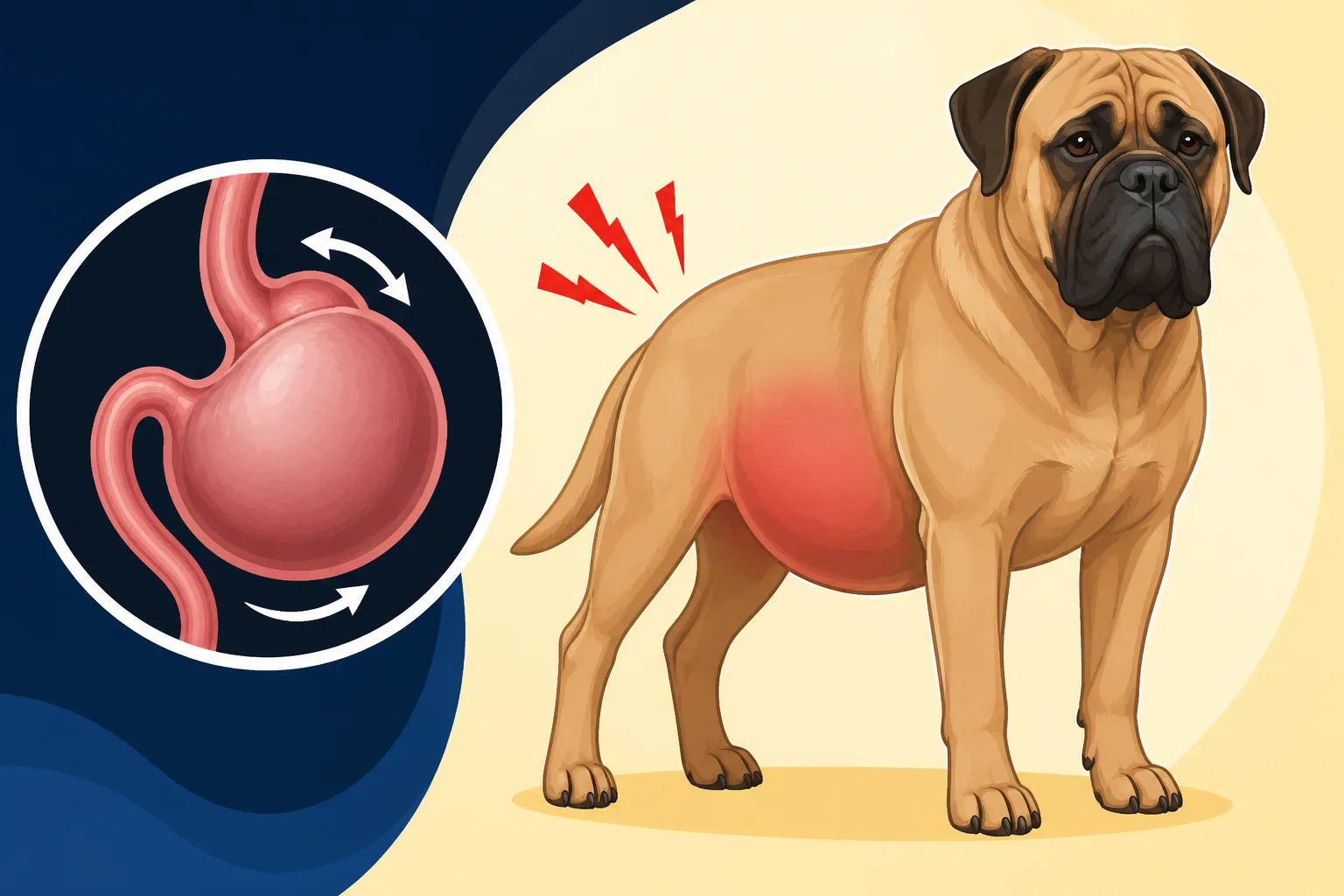
At its core, GDV begins with the stomach filling rapidly with gas, fluid, or food, leading to a severe distension. Imagine a balloon inflating quickly inside a confined space – that's your Bullmastiff's stomach. This initial distension is painful and alarming, but it's the "volvulus" part, the twisting, that truly makes GDV a catastrophic event. The stomach, once distended, rotates on its axis, often 180 to 360 degrees. This twisting motion pinches off both the entrance (esophagus) and exit (duodenum), effectively trapping everything inside.
The pressure inside the stomach builds to extreme levels because the gas and fluids can't escape. This pressure starts to compress major blood vessels in the abdomen, severely restricting blood flow back to the heart. This leads to a cascade of shock. Without proper blood circulation, vital organs like the heart, kidneys, and liver start to suffer. The lining of the stomach itself begins to die due to lack of blood supply. Toxins are released, heart arrhythmias can develop, and the dog rapidly deteriorates into a state of critical shock. It's a truly horrifying chain of events.
The Silent Killer: Why Speed is Critical
The rapid progression of GDV is what makes it so terrifying. What might seem like mild discomfort can turn into a critical emergency in a matter of an hour or two, or even less. The stomach twisting cuts off blood supply, leading to tissue death and a rapid decline in overall health. This means that if you suspect bloat, there's absolutely no time to "wait and see" if your Bullmastiff gets better. This isn't a condition that resolves on its own.
The prognosis for a Bullmastiff with bloat is directly tied to how quickly they receive veterinary intervention. Studies show that the longer the delay between the onset of symptoms and surgical treatment, the higher the mortality rate. This puts immense pressure on owners, a pressure that's completely understandable. You're constantly monitoring your big friend, and the thought of missing something crucial is a heavy burden. But knowing the signs and acting quickly is your best defense. Every minute you shave off the time to the vet dramatically improves your dog's chances of survival.
Recognizing the Urgent Signs a Bullmastiff Is Bloating
Bloat can come on so quickly, and sometimes the early signs are subtle, making it easy to miss if you're not vigilant. For a Bullmastiff owner, recognizing these crucial indicators immediately is paramount. You know your dog best, and any deviation from their normal behavior should be treated seriously.
Physical Indicators of Distress
One of the first things you might notice is a profound sense of restlessness. Your Bullmastiff, usually content to lounge, might start pacing nervously around the house, unable to settle. They might pant excessively, even if it's not hot or they haven't been exercising. There's a palpable anxiety in their demeanor that tells you something is deeply wrong. As the condition progresses, you might actually be able to see the physical swelling. The abdomen, particularly on the left side, can become noticeably distended and hard to the touch, like a taut drum. This isn't always immediately obvious, especially on heavily built Bullmastiffs, but if you gently press and feel a drum-like tautness, it's a huge red flag.
Another classic, heartbreaking sign is persistent drooling, often coupled with unproductive retching or gagging. Your Bullmastiff will look like they are trying desperately to vomit, perhaps even bringing up small amounts of foamy saliva, but nothing substantial comes out. This is because the twisted stomach prevents anything from leaving. It's a terrifying sight for any owner. You might notice these specific Signs a Bullmastiff Is Bloating before any visible swelling, making them critical early warnings. Their gums might also appear pale or blueish, indicating poor circulation.
Behavioral Changes You Cannot Ignore
Beyond the physical signs, your Bullmastiff's behavior will scream distress. The continuous attempts to vomit without success are a tell-tale sign that something is blocked. They might keep looking at their side or hunching over, as if trying to alleviate intense abdominal pain. They may become withdrawn or, conversely, extremely agitated, unable to find a comfortable position. This is your dog trying to communicate their immense discomfort and pain.
As bloat progresses, your Bullmastiff might become increasingly weak. They could have difficulty standing or lying down, or they might even collapse. Their breathing may become shallow and rapid, and their heart rate can increase. These are very late-stage signs, and if you see them, you are in an extreme emergency. The goal is to catch bloat long before it reaches this critical point. Trust your gut instinct; if your Bullmastiff isn't acting right, especially after a meal, it's always better to be safe than sorry and contact your veterinarian immediately.
Why Are Bullmastiffs So Susceptible to This Life-Threatening Condition?
It's a cruel twist of fate that some of the most beloved breeds are also the most prone to certain devastating health conditions. Unfortunately, our gentle giants, the Bullmastiffs, fall into the high-risk category for GDV, and it's a combination of their unique anatomy and certain lifestyle factors that contributes to this vulnerability.
Breed-Specific Anatomy and Genetics
One of the primary reasons Bullmastiffs are so susceptible to bloat lies in their distinct physical conformation: they are a deep-chested breed. Their chests are typically long, narrow, and deep, which creates more space within the abdomen for the stomach to distend and, critically, to twist. Think of a pendulum: a longer pendulum has more room to swing. This anatomical feature is shared by other large breeds like Great Danes, Weimaraners, and German Shepherds, all of whom face higher risks. It's an unfortunate characteristic tied directly to their imposing build.
Beyond physical structure, there's a strong genetic component at play. If a Bullmastiff's parents or close relatives had bloat, their offspring are at a significantly increased risk. This suggests a hereditary predisposition, though the exact genes involved are still being researched. While we extensively discuss Why Bullmastiffs Carry So Much Lymphoma Risk and its genetic ties, bloat also has a familial connection that responsible breeders strive to understand and mitigate where possible. Older males tend to have a slightly higher incidence of bloat, but it can affect any Bullmastiff, regardless of age or sex. This makes it a constant concern throughout their lives.
Environmental and Lifestyle Triggers
While genetics load the gun, environmental factors often pull the trigger. One of the most significant triggers is eating too quickly, especially large meals. A Bullmastiff that inhales a big bowl of food in minutes can swallow a lot of air, which contributes to gastric distension. Similarly, drinking a large quantity of water rapidly after eating can increase stomach volume and potentially lead to issues. It's why experts often suggest giving your Bullmastiff smaller, more frequent meals. We've often discussed Why a Bullmastiff Should Rest After Eating, and this advice is particularly crucial in the context of preventing bloat. Intense exercise or play too close to meal times can also agitate the stomach and increase the risk of it twisting. A good rule of thumb is to allow at least an hour before and after meals for calm activity.
Stress can also play a role, although it's less understood. Highly anxious dogs or those undergoing stressful situations might be more prone. Diet type is another debated factor; some theories suggest that diets rich in fermentable ingredients or those with very small kibble size might contribute, but the research remains inconclusive and often contradictory. Ultimately, while you can't change your Bullmastiff's chest conformation, you can control many of the environmental triggers, giving you valuable tools in the fight against bloat.
Immediate Action: What to Do When You Suspect Bloat
The moments after you suspect bloat in your Bullmastiff are critical. This is not a drill; it's a true veterinary emergency that demands immediate, decisive action. Hesitation can, tragically, be fatal.
The Golden Hour: Getting to Emergency Care
If you notice any of the signs of bloat – the restlessness, the unproductive retching, the distended abdomen – your very first step must be to call your veterinary clinic or the nearest emergency animal hospital immediately. Do not attempt to "wait and see" if the symptoms subside, and absolutely do not try home remedies. Every second counts. When you call, clearly state that you suspect your Bullmastiff has bloat and that you are on your way. This allows the veterinary team to prepare for your arrival, ensuring they have staff and equipment ready to go the moment you walk through the door.
Transport your Bullmastiff safely and as calmly as possible. Even if they are in pain, try to keep them as still as you can during the journey. Avoid any movements that might exacerbate their discomfort or put further strain on their abdomen. This is a terrifying experience for both you and your dog, but maintaining your composure will help them. Understand that the costs associated with emergency bloat treatment, including diagnostics, stabilization, and surgery, can be substantial. What Bloat Surgery Costs on a Bullmastiff can easily run into thousands of dollars. This is precisely where having robust pet insurance, like a comprehensive plan from Healthy Paws, can be a literal lifesaver, allowing you to focus on your dog's care rather than agonizing over the financial burden. Pet insurance can provide invaluable peace of mind when facing such an unexpected and costly emergency.
What Happens at the Vet Clinic
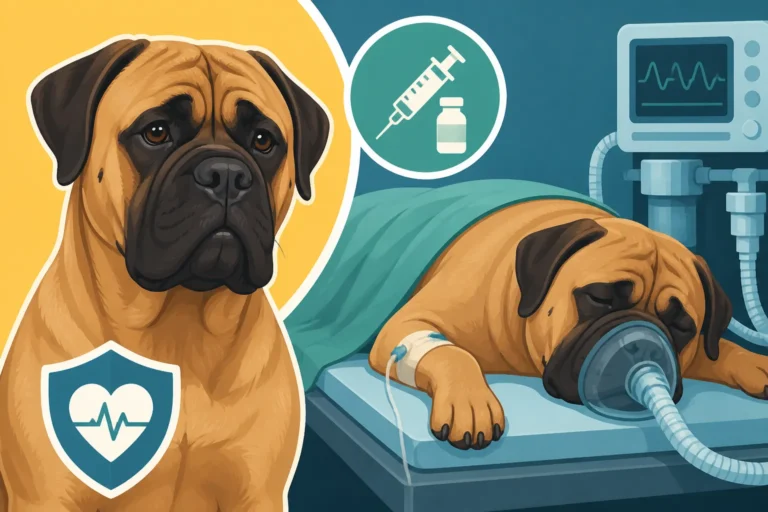
Upon arrival, the veterinary team will immediately assess your Bullmastiff. Diagnosis is typically confirmed with an X-ray, which will clearly show the distended and possibly twisted stomach. Before surgery, they will work quickly to stabilize your dog. This involves administering intravenous (IV) fluids to combat shock, providing pain medication to ease their suffering, and sometimes antibiotics. They will also likely attempt to decompress the stomach. This might involve carefully passing a tube down your dog's esophagus into the stomach to release gas and fluids. If this isn't possible due to the twist, a large needle (trocar) might be used to carefully puncture the stomach from the outside, relieving some pressure, though this is a temporary measure.
Once your Bullmastiff is stable enough, they will be taken to surgery. The primary goal of the operation is to untwist the stomach (derotate it) and then carefully inspect it for any dead or damaged tissue, which may need to be removed. The surgeon will also assess other abdominal organs for any secondary damage. Following the derotation, the surgeon will typically perform a gastropexy, which is a procedure to permanently tack the stomach to the abdominal wall. This crucial step prevents the stomach from twisting again in the future, significantly reducing the risk of a recurrence. It's important to know that even with surgery, there are risks, and not every Bullmastiff survives bloat, but prompt action drastically improves their chances. You'll want to understand How Often a Bullmastiff Survives Bloat to manage expectations, but the outcome is always better with immediate, professional care.
Proactive Steps to Minimize Bloat Risk in Your Bullmastiff
While bloat is a terrifying and often sudden event, there are proactive steps you can take to significantly reduce your Bullmastiff's risk. Implementing good feeding practices and managing their environment can make a real difference, giving you a greater sense of control over this unpredictable condition.
Feeding Practices to Adopt
One of the most effective strategies is to change how your Bullmastiff eats. Instead of one or two large meals a day, break their daily food allowance into two or three smaller meals spread throughout the day. This reduces the amount of food and air in the stomach at any one time, lessening the chance of distension. For Bullmastiffs who tend to "inhale" their food, investing in a slow feeder bowl can be incredibly beneficial. Brands like Outward Hound and PetFusion offer excellent slow feeder designs that force your dog to eat around obstacles, significantly slowing down their ingestion and reducing the amount of air they swallow.
There's ongoing debate about whether a Bullmastiff should eat from a raised bowl. While some theories suggested it might help, current research indicates it actually might increase the risk of bloat in large, deep-cheasted breeds. So, it's generally recommended to feed your Bullmastiff from bowls on the floor. Crucially, avoid strenuous exercise or exciting play for at least one hour before and one hour after meals. Allowing your Bullmastiff to have a calm period around meal times can prevent the stomach from jostling around, which might contribute to twisting. Think about how much food your Bullmastiff eats in a month, and plan their feeding schedule carefully around their daily activity.
Managing Stress and Hydration
A calm eating environment can also contribute to reducing bloat risk. If your Bullmastiff is anxious or stressed during meal times, they might eat faster or gulp more air. Ensure they have a quiet, undisturbed space to eat. If you have multiple pets, feed them separately to minimize competition and rushing.
Regarding hydration, always ensure your Bullmastiff has constant access to fresh water. However, try to limit them from gulping down massive amounts of water immediately after a meal or vigorous exercise. If they are extremely thirsty after a walk, offer smaller amounts of water over a short period rather than letting them drink a whole bowl at once. Some owners also find that adding a small amount of warm water to dry kibble can help slow down eating and provide extra hydration, while ensuring the food isn't overly dry in the stomach. While diet itself is not a direct cause, these small adjustments to feeding and environmental management are practical, impactful steps you can take to protect your beloved Bullmastiff.
The Lifesaving Decision: Understanding Gastropexy
For breeds at high risk for bloat, like our Bullmastiffs, a preventive surgery called gastropexy can offer immense peace of mind and significantly reduce the chances of a fatal bloat episode. It's a topic that every Bullmastiff owner should discuss with their veterinarian.
What is a Prophylactic Gastropexy?
A prophylactic gastropexy is a surgical procedure where the stomach is permanently attached, or "tacked," to the inside of the abdominal wall. The key here is "prophylactic," meaning it's performed before a bloat episode occurs, ideally when your Bullmastiff is young. The goal of this surgery isn't to prevent the stomach from filling with gas (dilatation), but critically, to prevent it from twisting (volvulus). Even if your Bullmastiff's stomach distends with gas after a gastropexy, it cannot rotate, which is the most dangerous part of GDV. This means that while they might still experience the discomfort of bloating, it is far less likely to become life-threatening.
This procedure is often performed at the same time as a spay or neuter surgery when your Bullmastiff is already under anesthesia, making it a convenient option. It can also be done as a standalone procedure, and advancements in veterinary medicine mean it can often be performed laparoscopically, which is a minimally invasive technique. This involves smaller incisions, less pain, and a faster recovery time compared to traditional open surgery. Knowing Whether a Gastropexy Is Worth It for a Bullmastiff is a common question, and for owners of high-risk breeds, the consensus among veterinary professionals is a resounding yes. The relatively low risk and cost of a preventive gastropexy are almost always outweighed by the significantly higher risks, stress, and cost of emergency bloat surgery.
When to Consider Gastropexy and What to Expect
For Bullmastiffs, who face a significant lifetime risk of bloat, a prophylactic gastropexy is a strong recommendation from many veterinary experts. It's a conversation to have with your vet, ideally when your Bullmastiff is still a puppy or young adult, around the time they would typically be spayed or neutered. This allows the procedure to be performed in conjunction with another surgery, minimizing the need for additional anesthesia. However, it can be performed at any age.
When your Bullmastiff undergoes a gastropexy, your vet will discuss the pre-surgical bloodwork, anesthesia protocols, and post-operative care. Recovery from a laparoscopic gastropexy is generally smooth, with most dogs feeling much better within a few days. Even with traditional surgery, recovery is typically straightforward, involving rest, pain management, and preventing your dog from licking the incision site. The peace of mind this procedure offers to owners of at-risk breeds is immeasurable. While there is an upfront cost for the surgery, the potential emergency bills for a full GDV episode, as well as the emotional toll, make it a worthwhile investment. In fact, many pet insurance providers like Healthy Paws will cover prophylactic gastropexy if it's not considered a pre-existing condition, further easing the financial aspect of this vital preventive measure. Discussing this option with your vet is one of the most proactive steps you can take to safeguard your Bullmastiff's health and longevity. It's a decision that reflects a deep commitment to their well-being, helping them to live the fullest life possible, rather than succumbing to an avoidable emergency.
Understanding the Differences: Bloat vs. Other Abdominal Issues
It's easy to jump to the conclusion of bloat when your Bullmastiff is showing abdominal discomfort, but it's important to remember that other conditions can cause similar symptoms. Knowing the key differences can help you provide crucial information to your vet, even if the primary advice is always to seek immediate professional help for suspected bloat.
| Symptom / Condition | Gastric Dilatation Volvulus (GDV) | Colic / Gas | Pancreatitis | Intestinal Obstruction |
|---|---|---|---|---|
| Abdominal Swelling | Often rapid, firm, drum-like distension. | Mild distension, may be softer, often fluctuates. | Generalized tenderness, less visible distension. | Variable, can be localized or generalized. |
| Vomiting/Retching | Unproductive retching (trying to vomit, nothing comes up) is classic. | May vomit food, bile, or grass; usually productive. | Vomiting is common, often severe and bile-stained. | Vomiting is common, can be projectile, may contain stool. |
| Pain Level | Severe, rapidly worsening, dog is highly distressed. | Mild to moderate, dog may pass gas, temporary relief. | Moderate to severe, dog may be hunched, unwilling to move. | Moderate to severe, depends on obstruction type and location. |
| Activity Level | Extreme restlessness, pacing, inability to lie down comfortably. | Restless but may eventually settle, less frantic. | Lethargic, weak, unwilling to move, painful. | Restless early, then lethargic, depressed. |
| Drooling | Profuse drooling due to nausea and inability to swallow. | Mild to moderate, usually associated with nausea. | Mild to moderate, associated with nausea. | Mild to moderate, associated with nausea. |
| Emergency? | DEFINITELY EMERGENCY – seek vet care immediately. | Usually not an emergency, but monitor closely. Consult vet if severe/prolonged. | EMERGENCY – seek vet care immediately. | EMERGENCY – seek vet care immediately. |
This table highlights why the unproductive retching is such a defining and urgent symptom for GDV. While other conditions cause distress and vomiting, the inability to actually expel stomach contents when trying to vomit is a hallmark of the twisted stomach. Regardless, if your Bullmastiff is showing acute signs of pain or distress in the abdominal area, especially after a meal, it's always safest to assume the worst and head straight to the emergency vet. Early diagnosis is key for any of these conditions, and for bloat, it's literally life-or-death.
Disclaimer
This article is intended for informational purposes only and does not constitute veterinary advice. Always consult with a qualified veterinarian for any health concerns or before making any decisions about your Bullmastiff's care.