What a Bullmastiff Breeder Should Have Screened
Bringing a Bullmastiff puppy into your life is an incredibly exciting time, full of dreams of a loyal, gentle giant companion. Yet, the joy can quickly turn to anxiety when you realize the genetic predispositions and potential health challenges this magnificent breed faces. It's a heavy burden to worry about your beloved dog's future health, and finding a breeder who truly prioritizes the well-being of their dogs, rather than just aesthetics, can feel like searching for a needle in a haystack. This comprehensive guide aims to arm you with the knowledge to identify a truly responsible Bullmastiff breeder by detailing the essential health screenings and practices they should uphold, helping you find a healthy companion and providing some peace of mind.
Understanding the Importance of Health Screening in Bullmastiffs
When you welcome a Bullmastiff into your home, you’re not just getting a big dog; you’re investing in a member of your family with specific health considerations. Unlike some breeds, Bullmastiffs, with their impressive size and unique build, are unfortunately prone to several significant health issues that can severely impact their quality of life and shorten their time with you. A responsible breeder understands these inherent risks and actively works to mitigate them through careful health screening of their breeding stock. This isn't just about preventing suffering for individual dogs; it's about preserving the health and integrity of the breed as a whole.
Why Bullmastiffs Need Specific Screenings
The very traits that make Bullmastiffs so beloved—their substantial bone, broad heads, and powerful frames—also make them vulnerable to certain conditions. For instance, their rapid growth and heavy build put extra stress on developing joints, making orthopedic issues a prime concern. Their specific facial structure can lead to eye problems, and sadly, certain cancers and heart conditions are far too common in the breed. When you consider that The Median Bullmastiff Lives Eight and a Half Years, and many don't even reach that age due to these health challenges, the urgency of proactive health screening becomes abundantly clear. It's not just a recommendation; it's a moral imperative for anyone serious about producing healthy Bullmastiffs.
Breeders who truly care go beyond superficial checks, delving deep into the genetic health of their lines. They recognize that what you see on the surface doesn't always tell the full story. For example, a Bullmastiff might appear perfectly healthy, but without specific cardiac testing, a life-threatening heart condition like Subaortic Stenosis could be silently lurking. This dedication ensures that potential parents are not only sound themselves but are less likely to pass on detrimental genetic traits to their offspring. This meticulous approach is the cornerstone of ethical breeding and is what every prospective Bullmastiff owner should expect and demand.
The Difference Between "Vet Checked" and "Health Screened"
Many prospective puppy buyers hear the term "vet checked" and breathe a sigh of relief, assuming it means the puppy and its parents are free from significant health issues. However, there's a world of difference between a basic veterinary check-up and comprehensive health screening. A routine vet check typically involves a physical examination, listening to the heart and lungs, checking teeth, and possibly administering vaccinations and deworming. It's an important first step, but it's a snapshot, not a deep dive into genetic predispositions or hidden conditions.
Comprehensive health screening, on the other hand, involves specific, often specialized tests designed to detect conditions known to affect the Bullmastiff breed. These tests might include X-rays evaluated by certified orthopedic specialists, echocardiograms performed by veterinary cardiologists, or advanced genetic testing for inherited disorders. These screenings provide a much more thorough assessment of a dog's health status and its suitability for breeding. A responsible breeder will be able to provide verifiable documentation for all these screenings, often through public databases, demonstrating their commitment to producing healthy puppies. Without these specialized screenings, even a "vet checked" puppy could carry significant health risks, leading to heartache and substantial veterinary bills down the line.
Orthopedic Health Clearances: Hips and Elbows
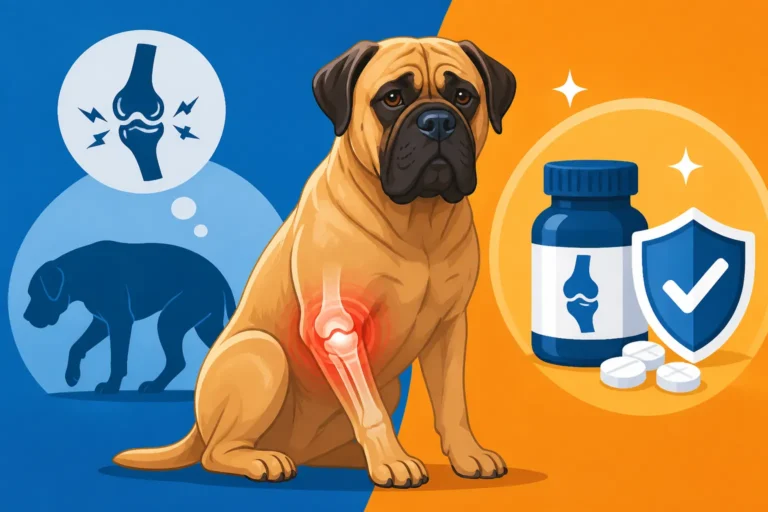
Orthopedic issues are unfortunately prevalent in many large and giant breeds, and Bullmastiffs are no exception. Their sheer size and rapid growth put immense strain on their joints, making conditions like hip and elbow dysplasia a serious concern. A responsible Bullmastiff breeder will prioritize screening for these conditions in all breeding animals, understanding that good joint health is fundamental to a Bullmastiff's comfort and mobility throughout its life. Ignoring these screenings is not only irresponsible but can lead to a lifetime of pain and costly interventions for the dogs.
Hip Dysplasia in Bullmastiffs
Hip dysplasia is a malformation of the hip joint where the ball and socket don't fit together properly, leading to grinding, pain, and eventually debilitating arthritis. In a Bullmastiff, which can weigh upwards of 100-130 pounds, severe hip dysplasia can be devastating, making simple movements like walking or rising incredibly difficult. Responsible breeders utilize established screening methods like those offered by the Orthopedic Foundation for Animals (OFA) or PennHIP to assess the structural integrity of a dog's hips. The OFA evaluates X-rays, providing a grade from Excellent to Dysplastic, while PennHIP uses a quantitative method to measure hip laxity.
When choosing a puppy, always ask to see the OFA or PennHIP certificates for both parents. A reputable breeder will not only have these clearances but will be eager to share them and explain what the results mean. They understand that Hip Dysplasia in a Bullmastiff can significantly impact a dog's quality of life and are committed to breeding dogs with the best possible joint structure. If a breeder makes excuses about not having these screenings, or claims their vet "looked at" the hips, it's a major red flag, as a general vet check isn't sufficient for certified orthopedic evaluation.
Elbow Dysplasia in Bullmastiffs
Just like hip dysplasia, elbow dysplasia is a complex condition involving abnormal development of the elbow joint, often leading to pain, lameness, and degenerative joint disease. Given the Bullmastiff's weight and robust build, healthy elbows are critical for their ability to move comfortably. Elbow dysplasia is often inherited, and symptoms can emerge early in a puppy's life, or manifest as chronic pain in adulthood. The OFA provides a grading system for elbows, ranging from Normal (Grade 0) to Grade III, indicating severe dysplasia.
Every Bullmastiff used for breeding should have OFA elbow clearances, showing a grade of Normal. A breeder who truly prioritizes the long-term health of their puppies will ensure that both parents have been screened and certified free of elbow dysplasia. They understand the heartbreak and expense associated with Elbow Dysplasia in a Bullmastiff, which often requires expensive surgeries or lifelong pain management. Don't hesitate to ask for copies of these certificates and to verify them through the OFA public database. This step is non-negotiable for a breed so susceptible to these debilitating joint conditions.
Understanding OFA Grades and Certification
The Orthopedic Foundation for Animals (OFA) is a critical resource for breeders and buyers alike, providing a standardized system for evaluating and documenting the health of breeding dogs. For hips, OFA grades include Excellent, Good, Fair (all considered passing), Borderline, and Dysplastic (Mild, Moderate, Severe). A responsible Bullmastiff breeder will only breed dogs with OFA ratings of Good or Excellent hips. Breeding a dog with Fair hips is generally considered acceptable, but many top breeders strive for Good or Excellent to reduce the risk of passing on issues.
For elbows, the OFA grades are simpler: Normal (Grade 0), Grade I, Grade II, and Grade III. Only dogs with a Normal (Grade 0) elbow score should ever be bred. Any indication of elbow dysplasia should immediately disqualify a dog from a breeding program. These certifications aren't just pieces of paper; they represent a commitment to the health of the breed. Furthermore, the OFA maintains a public database where you can look up any registered dog by its name or registration number. This transparency allows prospective buyers to verify a breeder's claims and ensures that the health clearances provided are legitimate and up-to-date.
Cardiac Health Screening: Looking Beyond the Murmur
Heart health is another critical area for Bullmastiffs, as they are disproportionately affected by certain cardiac conditions, most notably Subaortic Stenosis (SAS). This silent killer can go undetected without proper screening, leading to sudden death or severe heart failure in affected dogs, often at a young age. A responsible Bullmastiff breeder understands the gravity of these conditions and ensures rigorous cardiac evaluations are performed on all their breeding stock. They know that a simple stethoscope check by a general vet is simply not enough.
Subaortic Stenosis (SAS) in Bullmastiffs
Subaortic Stenosis (SAS) is a congenital heart defect characterized by a narrowing of the outflow tract from the left ventricle of the heart, just below the aortic valve. This narrowing forces the heart to work harder to pump blood to the body, leading to thickening of the heart muscle and potentially fatal arrhythmias or sudden cardiac death. What makes SAS particularly insidious in Bullmastiffs is that affected puppies often appear completely normal and healthy, sometimes for years, until a sudden, tragic event occurs. Subaortic Stenosis Is There Before a Bullmastiff's First Birthday, making early and accurate diagnosis crucial.
To properly screen for SAS, a Bullmastiff needs to be examined by a board-certified veterinary cardiologist, who performs an echocardiogram (an ultrasound of the heart). This advanced imaging allows the cardiologist to visualize the heart's structure and function, measure blood flow velocity, and accurately determine the presence and severity of SAS. A simple stethoscope check, while it might detect a heart murmur, cannot definitively diagnose SAS or its severity, and some affected dogs may not even have an audible murmur. This is why asking for documentation of a cardiologist's full echocardiogram report for both parents is absolutely vital.
The Importance of a Board-Certified Cardiologist
It bears repeating: for cardiac screening, especially for a condition as serious as SAS in Bullmastiffs, a general veterinarian's examination is insufficient. You need to see proof of an examination by a board-certified veterinary cardiologist. These specialists have extensive, advanced training in diagnosing and treating heart diseases in animals, and they possess the expertise and equipment necessary to accurately assess complex conditions like SAS. Their evaluation includes a thorough physical exam, often an electrocardiogram (ECG), and most importantly, a comprehensive echocardiogram.
A responsible breeder will not only ensure these specialized screenings are done but will provide you with the cardiologist's full report, not just a simple note. They understand that Why a Bullmastiff Puppy Needs a Cardiac Exam early on, and why rigorous screening of parents is the best defense against passing on this devastating condition. If a breeder hesitates or claims their regular vet cleared their dogs, it should raise significant concerns. The investment in a board-certified cardiologist is a hallmark of ethical breeding practices for Bullmastiffs.
Understanding SAS Grades and Breeding Recommendations
A board-certified veterinary cardiologist will grade any detected SAS, typically as mild, moderate, or severe. This grading is crucial because even mild SAS can carry a risk, and moderate or severe cases significantly impact a dog's health and lifespan, often leading to early death. The goal for any responsible breeding program is to produce dogs free from SAS. Therefore, any Bullmastiff diagnosed with SAS, regardless of severity, should absolutely not be used for breeding.
The Bullmastiff Club of America (BMCA) and other breed organizations strongly recommend that all breeding Bullmastiffs receive cardiac clearances from a board-certified veterinary cardiologist. A responsible breeder adheres to these recommendations. They will be transparent about the cardiac health of their lines and readily show you the certifications for their breeding dogs, ideally from the OFA's public cardiac database. When considering a puppy, this due diligence is critical, as Whether a Bullmastiff With Stenosis Should Be Bred is a question with a clear answer: no. A breeder who values the health of the breed will respect this standard.
Ophthalmic Health: Eyes and Eyelids
While perhaps not as life-threatening as some other conditions, eye and eyelid problems can cause significant discomfort, chronic pain, and even blindness in Bullmastiffs. Their characteristic loose skin and deep-set eyes make them particularly susceptible to certain inherited ocular issues. A responsible Bullmastiff breeder includes eye health in their comprehensive screening protocol, seeking evaluations from board-certified veterinary ophthalmologists to ensure their breeding dogs are free from genetic eye diseases.
Entropion and Ectropion
Entropion, a condition where the eyelid rolls inward, causing eyelashes or hair to rub against the cornea, is regrettably common in Bullmastiffs. This constant irritation leads to pain, excessive tearing, conjunctivitis, and can result in corneal ulcers and scarring, potentially impairing vision. Ectropion is the opposite, where the eyelid rolls outward, exposing the conjunctiva and leaving the eye vulnerable to dryness, irritation, and infection. Both conditions are often inherited and can require surgical correction, which is not only costly but can be a stressful experience for the dog.
A reputable breeder will have their breeding stock examined by a board-certified veterinary ophthalmologist, whose findings are often registered with the OFA's Eye Certification Registry (formerly CERF). This screening helps identify dogs carrying the genetic predisposition for entropion or ectropion, preventing them from being bred and passing these painful traits to their offspring. If a breeder has a history of puppies requiring eye surgery for Entropion in a Bullmastiff or similar issues, it’s a strong indicator that they are not screening adequately, or are choosing to breed affected individuals.
Progressive Retinal Atrophy PRA and Other Eye Conditions
While entropion and ectropion are the most commonly recognized eye issues in Bullmastiffs, a comprehensive ophthalmic exam also screens for other, less obvious conditions that could impact vision over time. Progressive Retinal Atrophy (PRA), for example, is a group of degenerative diseases affecting the retina, eventually leading to blindness. Although not as prevalent in Bullmastiffs as in some other breeds, it's a devastating condition that can be detected through specialized eye exams or genetic testing in some cases.
A responsible Bullmastiff breeder will ensure their breeding dogs undergo annual eye examinations by a board-certified veterinary ophthalmologist. These exams are crucial for catching any developing conditions and for contributing to a clearer picture of ocular health within the breed. The results are typically registered with the OFA Eye Certification Registry. By performing these screenings, breeders demonstrate their commitment to preventing preventable blindness and ensuring their puppies have the best possible chance at a lifetime of clear vision. Ask to see the most recent eye certifications for both parents, noting the date of the exam.
Thyroid Health Testing: A Hidden Problem
Hypothyroidism, a condition where the thyroid gland doesn't produce enough thyroid hormones, is another health concern for Bullmastiffs. While often manageable with medication, if left undiagnosed or untreated, it can lead to a host of health problems, affecting everything from energy levels and weight to coat quality and even behavior. A responsible Bullmastiff breeder recognizes the prevalence of this condition and includes thyroid screening as part of their health testing protocol.
Hypothyroidism in Bullmastiffs
Hypothyroidism in a Bullmastiff can manifest in various ways, often subtly at first, making it easy to miss if not specifically screened for. Common signs include lethargy, weight gain despite no change in diet, a dull or thinning coat, skin issues, cold intolerance, and even behavioral changes like increased anxiety or aggression. Because these symptoms can mimic other conditions, proper diagnosis requires specific blood tests. While treatment with synthetic thyroid hormone is generally effective, it is lifelong and incurs ongoing costs and daily medication administration.
Ethical breeders proactively test their breeding stock for hypothyroidism. They understand that while it's treatable, it's an inherited condition, and preventing its transmission through breeding is ideal. A breeder should be able to provide documentation of current and historical thyroid panel results for their breeding dogs. Be wary of breeders who dismiss thyroid issues or haven't tested their dogs. Knowing the thyroid status of the parent dogs gives you a better understanding of your puppy's potential genetic predisposition and allows you to be vigilant for Signs a Bullmastiff's Thyroid Is Low in your own dog.
Recommended Thyroid Panel Screening
For accurate assessment of thyroid function in Bullmastiffs, a comprehensive thyroid panel is necessary, not just a basic T4 test. This panel typically includes:
- Total T4 (TT4): Measures the total amount of thyroid hormone in the blood.
- Free T4 (FT4): Measures the unbound, active form of thyroid hormone.
- Total T3 (TT3) and Free T3 (FT3): Less commonly used for diagnosis but can provide additional context.
- Thyroid Stimulating Hormone (TSH): Produced by the pituitary gland to stimulate the thyroid; elevated TSH often indicates hypothyroidism.
- Thyroglobulin Autoantibodies (TgAA): Identifies autoimmune thyroiditis, a common cause of hypothyroidism.
The OFA also provides a public registry for thyroid health, offering classifications such as "Normal," "Equivocal" (borderline), and "Hypothyroid." A responsible Bullmastiff breeder will submit their thyroid test results to the OFA and only breed dogs with a "Normal" classification. This comprehensive approach helps ensure that genetic predispositions to thyroid issues are minimized within their breeding program, offering you a better chance at a healthy puppy.
The Elephant in the Room: Cancer and Breeder Transparency
Cancer is, tragically, a significant health concern for Bullmastiffs, often cutting their lives short far too soon. Unlike orthopedic or cardiac conditions, there aren't specific "clearance" certifications for cancer that you can check on a public database. This makes breeder transparency and a deep understanding of pedigree health all the more crucial. A truly responsible Bullmastiff breeder will openly discuss cancer rates and causes of death within their lines, rather than shying away from this difficult topic.
Lymphoma and Mast Cell Tumors
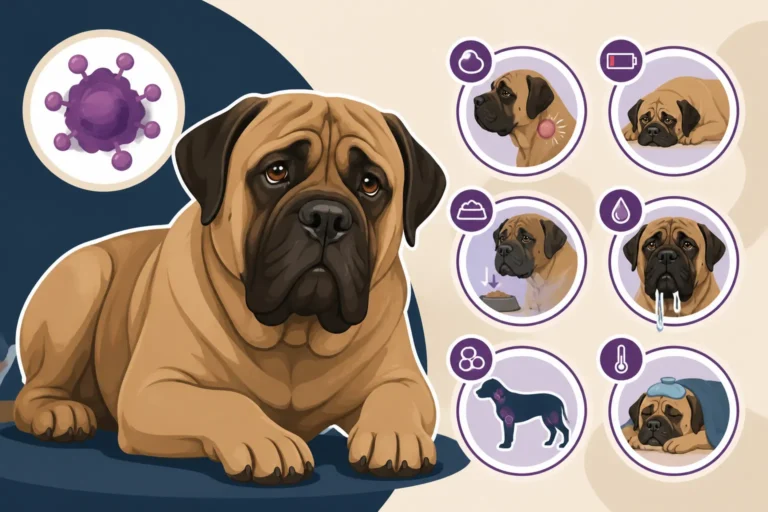
Two of the most common and devastating cancers in Bullmastiffs are lymphoma and mast cell tumors. Lymphoma Kills More Bullmastiffs Than Anything Else, and it often strikes relatively young dogs, sometimes as early as 3-5 years of age. Mast cell tumors, another prevalent concern, can range from benign skin lumps to aggressive, rapidly spreading internal cancers. These diagnoses are heartbreaking and lead to immense emotional and financial strain for owners. While there's no way to guarantee a dog won't get cancer, an ethical breeder will be acutely aware of these risks in their lines.
Because there aren't definitive genetic tests or "clearances" for these cancers, a breeder's honesty and dedication to tracking health information become paramount. They should be able to discuss the incidence of cancer in their breeding dogs' ancestors, siblings, and offspring. This isn't about blaming a breeder for cancer in their lines, but about their proactive approach to understanding and trying to mitigate these risks. Look for a breeder who is open, honest, and actively participating in cancer registries or research efforts, rather than one who makes vague assurances or avoids the topic. Understanding the risks associated with Mast Cell Tumors and the Lumps on a Bullmastiff will prepare you for vigilance.
Asking About Lifespan and Causes of Death in Pedigrees
This might seem like a morbid question, but it's one of the most important you can ask a Bullmastiff breeder: what is the average lifespan of dogs in their pedigree, and what were the causes of death for those dogs? A breeder who has been active in the breed for a long time will have extensive knowledge of their lines, often spanning multiple generations. They should be able to speak candidly about dogs who lived long, healthy lives and those who succumbed to diseases like cancer or heart failure at a young age. This information, while not a guarantee for your puppy, provides crucial insight into the genetic health landscape of that specific breeding program.
When Why Lymphoma Is Why Bullmastiffs Die Young is such a common and heartbreaking reality for the breed, a breeder who tracks this information is showing a profound commitment to improving the breed's health. They should be able to provide details on both parents' full siblings, parents, and grandparents, including their health and longevity. This transparency allows you to assess the potential risks associated with a particular litter and makes you an informed buyer. A breeder who truly prioritizes health will view these questions as an opportunity to demonstrate their diligence, not as an accusation.
The Lack of Genetic Tests for Many Cancers
It's a frustrating reality for Bullmastiff owners and breeders that, despite the high incidence of certain cancers, specific genetic tests to predict cancer risk are largely unavailable for this breed. While some genetic markers for certain cancers exist in other breeds, the complex genetics behind conditions like lymphoma and mast cell tumors in Bullmastiffs mean we don't yet have a simple DNA test to give us a clear "all clear." This void makes the breeder's role in health tracking and transparency even more critical.
However, this lack of direct genetic tests doesn't absolve breeders of responsibility. Instead, it highlights the importance of pedigree research, tracking longevity, and making breeding decisions based on the overall health of the entire line. Some research is ongoing, but definitive, widely available tests remain elusive. This is why a breeder's commitment to reporting health information to databases, participating in health studies, and being open about their lines' health history is so valuable. It demonstrates they are doing everything within their power, even without specific genetic tests, to make informed breeding decisions. It's a complex issue, and as What Research Says About Bullmastiff Lymphoma Genes evolves, good breeders stay updated.
Beyond the Core: Other Important Considerations
While orthopedic, cardiac, eye, and thyroid screenings form the backbone of responsible Bullmastiff breeding, other health concerns warrant attention. A truly comprehensive breeder will also consider these additional factors, demonstrating a holistic approach to the well-being of their dogs and the puppies they produce. These might not all have direct "clearances" but involve a deep understanding of the breed's vulnerabilities and proactive management strategies.
Bloat (GDV) Risk and Proactive Measures
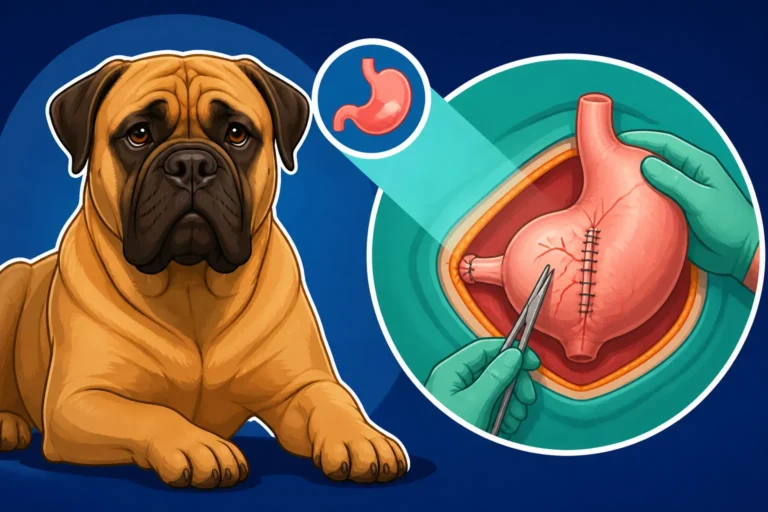
Gastric Dilatation and Volvulus (GDV), commonly known as bloat, is a life-threatening condition that affects large, deep-chested breeds like the Bullmastiff. It occurs when the stomach fills with gas and twists, trapping the gas and cutting off blood supply. Bloat can be rapidly fatal without emergency veterinary intervention. While bloat is multifactorial and not directly "screened for" in the same way as hip dysplasia, a responsible breeder will be keenly aware of its prevalence in the breed and in their own lines. They will educate prospective owners on preventative measures and potentially discuss Whether a Bullmastiff Should Have a Gastropexy as a preventative surgery.
While you cannot test a parent for bloat, a breeder should be able to tell you if any dogs in their direct lineage have experienced bloat. Furthermore, they should provide comprehensive information on managing bloat risk, including proper feeding practices, avoiding exercise immediately after meals, and recognizing the early signs of bloat. This education is a critical component of responsible breeding, as it equips new owners with the knowledge to potentially save their dog's life.
Cystinuria Testing
Cystinuria is a genetic metabolic disorder that leads to the formation of bladder stones made of cystine. These stones can cause urinary blockages, pain, and require surgical removal. This condition is known to affect Bullmastiffs and can be inherited. Fortunately, there is a DNA test available for cystinuria in Bullmastiffs. A responsible breeder will utilize this test to ensure they are not breeding affected or carrier dogs.
Testing for cystinuria involves a simple DNA sample (usually a cheek swab) and can identify dogs as clear, carriers, or affected. A breeder committed to preventing this painful condition will test their breeding stock and only breed clear dogs or breed a clear dog to a carrier to produce only clear or carrier puppies, ensuring no affected puppies are born. Ask for proof of cystinuria testing for both parents. This relatively straightforward test can prevent a lifetime of discomfort and expensive medical procedures for a Bullmastiff.
Understanding Genetic Diversity
Beyond screening for specific diseases, a forward-thinking Bullmastiff breeder also considers the broader issue of genetic diversity within their breeding program. In any purebred dog population, excessive inbreeding or reliance on a narrow set of popular sires can inadvertently concentrate undesirable genetic traits and reduce the overall health and vigor of the breed. While it's a complex topic, a responsible breeder will discuss their breeding philosophies, aiming to maintain a healthy balance between preserving desired breed characteristics and expanding the genetic pool where appropriate.
This might involve researching diverse pedigrees, selectively outcrossing to unrelated lines within the breed, or participating in genetic diversity studies. They understand that a healthy future for the Bullmastiff relies not just on screening for known diseases, but also on preventing the emergence of new ones due to a shrinking gene pool. While you won't get a "certificate" for genetic diversity, a breeder's ability to articulate their efforts in this area reflects a deep commitment to the long-term health of the Bullmastiff breed.
Verifying Health Clearances: Your Due Diligence
You've done your research, asked all the right questions, and found a breeder who claims to do all the necessary health screenings. That's a fantastic start! However, the next crucial step is verifying those claims. Unfortunately, some less scrupulous individuals may make promises they don't keep, or misunderstand what "cleared" truly means. As a prospective Bullmastiff owner, it is your responsibility to confirm the health clearances of your potential puppy's parents. This due diligence is the final, essential safeguard against bringing home a puppy predisposed to preventable health issues.
Checking OFA and CHIC Databases
The Orthopedic Foundation for Animals (OFA) is your best friend when it comes to verifying health clearances. The OFA maintains a public, online database where you can search for any registered dog by its full registered name or registration number. This database will show you the results of OFA hip, elbow, cardiac, thyroid, and eye certifications, along with DNA tests for certain conditions. A truly responsible breeder will have submitted all relevant health test results to the OFA, making their breeding stock's health history transparent and easily verifiable.
Another valuable tool is the Canine Health Information Center (CHIC) program, a collaborative effort between the OFA and the AKC Canine Health Foundation. For a dog to receive a CHIC number, it must have all the recommended health screenings for its breed, as designated by the parent breed club. For Bullmastiffs, this typically includes OFA Hips, OFA Elbows, OFA Heart (cardiologist exam), and OFA Thyroid, and OFA Eye certification. While a CHIC number doesn't mean a dog is free of all genetic diseases, it confirms that all the recommended tests have been performed and submitted to the OFA. Always ask for the CHIC numbers for both parents, or use their registered names to look up their individual OFA results directly. This step takes minutes but provides invaluable peace of mind.
Here's a quick guide to common Bullmastiff health clearances and where to verify them:
| Health Test Category | Specific Test | OFA Database Entry | Verification Notes |
|---|---|---|---|
| Orthopedic | Hip Dysplasia | Hip Evaluation | Look for grades of Excellent, Good, or Fair. Must be at least 24 months old. |
| Elbow Dysplasia | Elbow Evaluation | Look for Normal (Grade 0). Must be at least 24 months old. | |
| Cardiac | Subaortic Stenosis (SAS) | Cardiac Evaluation (Cardiologist) | Must be evaluated by a board-certified veterinary cardiologist (not just a practitioner). |
| Ophthalmic | Eye Conditions (Entropion, PRA) | Eye Certification Registry (ECR) | Annual exams recommended. Look for "Normal" or "Clear." |
| Endocrine | Hypothyroidism | Thyroid Evaluation | Look for "Normal." Should include a comprehensive panel (T4, FT4, TSH, TgAA). |
| Genetic | Cystinuria (if applicable) | DNA Based Disease | Look for "Clear" or "Normal." Some breeders may also test for DM (Degenerative Myelopathy). |
Interpreting Health Certificates and Pedigrees
Once you've looked up the OFA results, you'll need to understand what you're seeing. For hips, a certificate stating "OFA Excellent," "Good," or "Fair" is generally acceptable. For elbows, only "OFA Normal (Grade 0)" is truly passing. Cardiac results should explicitly state "Normal" with a "Specialist" code, indicating it was performed by a board-certified cardiologist. Thyroid results should be "Normal." If any parent has an "Equivocal" or "Dysplastic" rating, or if any required test is missing, it should give you pause.
Beyond individual health certificates, a reputable breeder will also provide you with a multi-generational pedigree. This document traces your puppy's lineage back several generations, showing the registered names of ancestors. With these names, you can delve even deeper into the OFA database, looking up the health clearances of grandparents and great-grandparents. This deeper dive helps you see patterns of health or disease in the line. A breeder should be able to walk you through the pedigree and explain the health status of key dogs in the lineage, demonstrating their deep knowledge of their breeding program and ensuring you’re getting the healthiest start possible with your Bullmastiff.
The Role of a Good Puppy Contract
Finally, a comprehensive puppy contract is your last line of defense and a clear indicator of a breeder's commitment to their puppies' health. A responsible Bullmastiff breeder will provide a written contract that outlines the health guarantees for your puppy, typically covering genetic health conditions for a specified period, often up to two years of age. This contract should clearly state what recourse you have if a genetic health issue, particularly one that should have been screened for, arises.
A strong contract might, for example, offer a replacement puppy or a partial refund if a severe, crippling genetic condition like hip or elbow dysplasia is diagnosed within the guarantee period. It should also detail the conditions for the guarantee, such as requiring veterinary confirmation of the diagnosis. A breeder who stands behind the health of their puppies with a clear, fair contract is showing confidence in their breeding program and a commitment to your satisfaction and the puppy's well-being. It's also a good idea to consider pet insurance, like a policy from Healthy Paws, which can help cover unexpected veterinary costs, regardless of guarantees. While no contract can prevent all health issues, it provides a layer of protection and demonstrates the breeder's accountability.
Choosing a Bullmastiff is a decision that impacts over a decade of your life, and finding the right breeder is paramount to a happy and healthy journey. Remember that Healthy Paws can be a great option for future health needs, but proactive screening by your breeder is the first and most important step.
Disclaimer
The information provided in this article is for educational and informational purposes only and does not constitute veterinary advice. Always consult with a qualified veterinarian for any health concerns or before making any decisions about your Bullmastiff's care.