Who First Bred Bullmastiffs to Type
It’s easy to look at a majestic Bullmastiff today and appreciate their unique blend of power and placid temperament, but have you ever stopped to wonder how this specific combination came to be? Many assume these dogs simply evolved, or that their lineage is ancient and shrouded in mystery. However, the Bullmastiff, as a distinct breed, was deliberately and meticulously developed by individuals who saw a specific need and worked tirelessly to fill it. This guide will take you on a journey to discover the pioneers who first bred Bullmastiffs to a recognizable and consistent type, laying the groundwork for the breed we cherish today.
The Untamed Origins: Bullmastiffs Before Formal Recognition
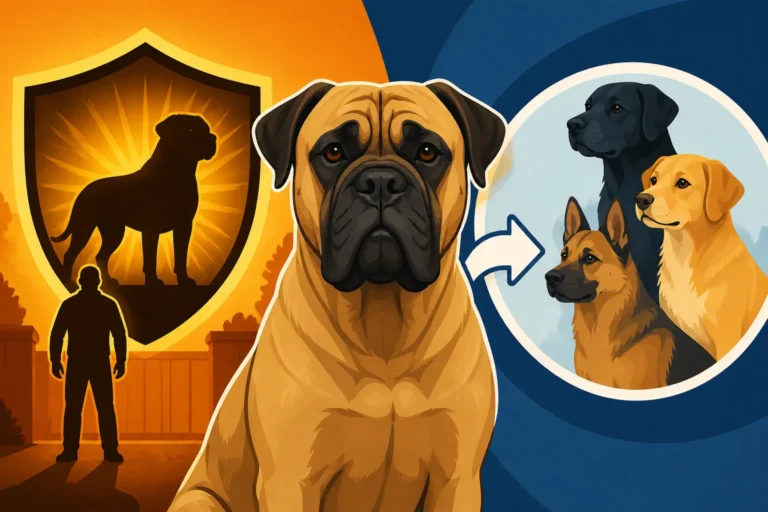
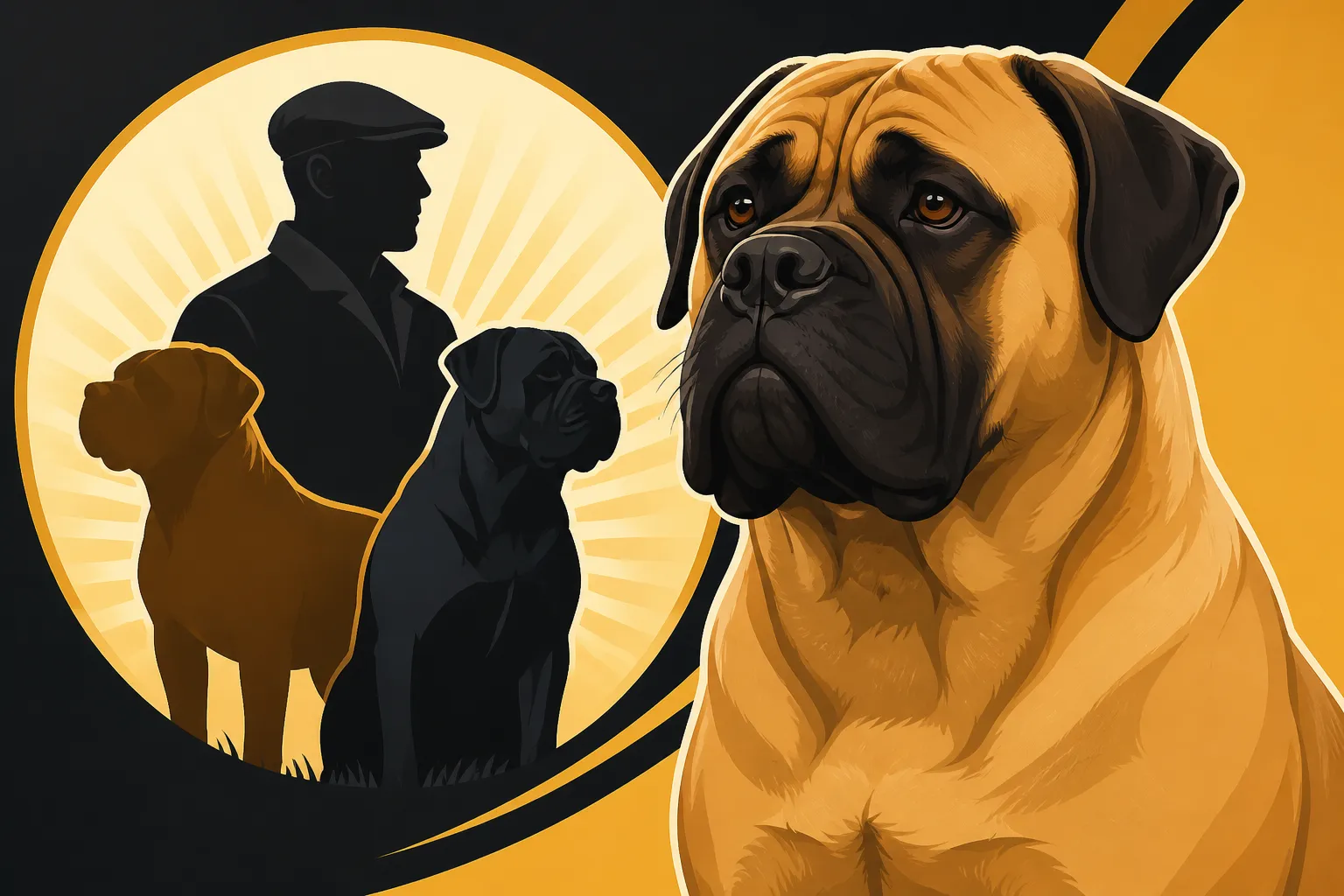
Before the Bullmastiff was a breed, it was a type – a working dog essential to survival and order on vast English estates. Imagine the sprawling lands of 19th-century England, teeming with game. These estates were valuable assets, and keeping them secure from poachers was a serious business. Gamekeepers, the guardians of these lands, needed a dog that was more than just a companion; they needed a silent, powerful, and intelligent partner capable of deterring and apprehending intruders without mauling them.
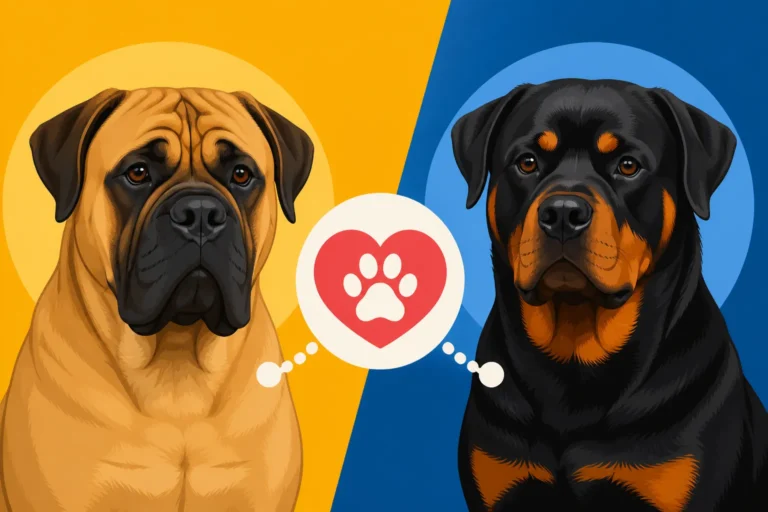
The early "gamekeeper's night dog" was a rough-and-ready cross, primarily between the Mastiff and the Bulldog. The Mastiff contributed immense size, strength, and a formidable presence, while the Bulldog (which, remember, was a much different animal back then – more athletic and tenacious than today's modern show Bulldog) brought courage, agility, and the famous gripping ability. This combination wasn't about aesthetics; it was about function. Gamekeepers weren't looking for a pretty face; they needed a dog that could track silently, catch up to a fleeing poacher, knock him down, and hold him until the gamekeeper arrived. The stakes were high, and the dogs chosen for this critical role had to be exceptional.
These early crosses were bred for utility, not for uniformity in appearance or temperament. While they served their purpose admirably, there wasn't a consistent "Bullmastiff look" or predictable set of traits beyond their working prowess. Each gamekeeper might have their own blend, their own preferences, leading to variations in size, color, and head type. It was a fluid genetic pool, focused entirely on producing effective working animals. For a deeper dive into their early purpose, you might want to read The Bullmastiff Was Built to Catch Poachers in the Dark.
The Gamekeeper's Ideal Dog
The primary problem gamekeepers faced was the balance between deterrence and excessive aggression. They wanted a dog that would stop a poacher in their tracks, but not one that would severely injure or kill them, which could lead to legal troubles for the estate owner. This required a dog with a natural instinct to apprehend and hold, rather than to bite and tear. The Mastiff provided the bulk and an intimidating presence, while the Bulldog provided the lower center of gravity and the powerful jaws for a firm, non-injurious hold.
Think of it like this: a gamekeeper patrolling a dark forest on a cold night. He hears a twig snap. He unleashes his dog, which silently melts into the shadows, a powerful form moving with surprising speed. The dog intercepts the poacher, not with a flurry of barks that would alert others, but by silently tackling and pinning them to the ground, holding them until the gamekeeper arrives to make an arrest. This was the ideal scenario, and the genetics of the Mastiff and Bulldog cross were carefully selected over generations to achieve this highly specialized outcome.
The goal was a dog that understood restraint, that could be called off, and that was devoted to its handler above all else. This meant selecting for intelligence and trainability, alongside the physical attributes. They were, in essence, custom-made security systems for the vast estates, a crucial component in enforcing What English Game Laws Had to Do With the Bullmastiff.
The Need for Standardization
As these "gamekeeper's night dogs" proved their worth, a growing appreciation for their specific attributes began to emerge. However, without a formal standard, their characteristics remained somewhat inconsistent. If you wanted a "Bullmastiff" in those early days, you'd likely approach a gamekeeper directly, hoping he had a good litter from proven working lines. There was no guarantee that the puppy you got would mature into a dog with predictable traits, either physically or temperamentally.
This lack of consistency was a challenge for anyone outside the gamekeeping community who admired these dogs and wanted to breed them. It also made it difficult to differentiate them from other large, strong dog types. To move from a functional type to a recognized breed, a concerted effort was needed to define what a "Bullmastiff" truly was: its ideal size, structure, temperament, and even color. This is where dedicated individuals stepped in, recognizing the potential for this magnificent working dog to become a distinct and admired breed.
This period was a fascinating blend of practical selection and nascent breed development, laying the groundwork for the more formal efforts that would follow. The very essence of the breed's purpose, as a silent deterrent and powerful holder, would eventually be enshrined in its physical standard.
S.E. Moseley: The Architect of the Bullmastiff Standard
While many gamekeepers contributed to the development of the Bullmastiff type through their practical breeding efforts, one man stands out as the primary driving force behind standardizing the breed and gaining it official recognition: S.E. Moseley. Often referred to as "the Father of the Bullmastiff," Moseley was a gamekeeper himself and deeply understood the functional requirements of these dogs. He wasn't just breeding; he was carefully selecting and refining, with a clear vision for what the ideal Bullmastiff should be.
Moseley began his work in the late 19th and early 20th centuries, dedicated to breeding a dog that consistently met the gamekeeper's needs. He meticulously documented his breeding lines, focusing on health, temperament, and the specific physical characteristics that made the Bullmastiff so effective. His kennel, "The Farcroft," became synonymous with quality Bullmastiffs, producing many of the foundational dogs that would go on to shape the breed. He understood that to achieve consistency, he needed a precise formula, and he worked tirelessly to apply it. You can explore more about these specific ancestral breeds in The Bullmastiff Is Sixty Percent Mastiff and Forty Percent Bulldog.
Moseley's most significant contribution was not just breeding excellent dogs, but articulating the ideal traits and advocating for them to be recognized by the Kennel Club. He championed the idea that the Bullmastiff was more than just a crossbreed; it was a distinct entity with a specific heritage and purpose.
The "60% Mastiff, 40% Bulldog" Formula
Moseley famously (and perhaps somewhat romantically, as precise percentages are hard to maintain over generations) advocated for the Bullmastiff to be comprised of 60% Mastiff and 40% Bulldog blood. This wasn't a rigid genetic equation to be followed strictly with every breeding, but rather a guiding principle for the type he was trying to achieve. He wanted the size, bone, and steadiness of the Mastiff combined with the courage, substance, and tenacity of the Bulldog.
His breeding program at Farcroft aimed to consistently produce dogs that embodied this balance. He was selecting for dogs that were powerful but agile, courageous but controllable, and above all, utterly loyal to their master. It was a careful tightrope walk, avoiding the excessive bulk that would make a dog too slow, and shunning the hyper-aggressiveness that would make it unsuitable for its unique "holding" job. The success of his vision is evident in the fact that this ratio is still widely discussed today when people talk about the Bullmastiff's heritage.
It’s important to remember that these were the days before DNA testing. Moseley's "formula" was based on phenotypic expression – what the dogs looked like and how they behaved – and careful pedigree tracking. He understood that to prevent the breed from diverging too far, he needed clear guidelines for what constituted a "true" Bullmastiff.
Establishing the First Breed Standard
Moseley didn't just have a vision; he put it on paper. He worked to develop the very first written breed standard for the Bullmastiff. This document was revolutionary because it moved the Bullmastiff from an informal "type" to a formalized "breed." The standard detailed the ideal physical characteristics – everything from head shape, muzzle length, eye color, and ear set to coat color, body structure, and gait. It also described the desired temperament, emphasizing courage, intelligence, and reliability.
This standard provided a blueprint for other breeders to follow, ensuring that as more people became interested in the Bullmastiff, they would all be working towards a common ideal. It helped to eliminate undesirable traits and promote those essential for the breed's function and character. This consistency was vital for the Bullmastiff to be taken seriously as a distinct breed rather than merely a working cross.
Without Moseley's tireless efforts in articulating and promoting this standard, the Bullmastiff might have remained a varied working type, never achieving the global recognition and admiration it enjoys today. His foresight and dedication were paramount in shaping the breed's future.
Defining the Breed: Early Traits and the Journey to Kennel Club Acceptance
Once S.E. Moseley had a clear vision and a working standard, the next crucial step was gaining official recognition for the Bullmastiff as a distinct breed. This was no small feat. The Kennel Club, the governing body for dog breeds in the UK, was rigorous in its requirements. They needed to see consistent type, health, and temperament across multiple generations before granting official status.
Moseley, along with other early enthusiasts, had to demonstrate that the Bullmastiff was not just a passing fad or a variable cross, but a stable breed with predictable characteristics. This involved showcasing dogs at shows, submitting pedigrees, and proving that the breed was being bred responsibly with a clear purpose. It was a challenging period, requiring significant effort to educate the public and the Kennel Club about the unique merits of the Bullmastiff.
The dedication paid off. In 1924, the English Kennel Club officially recognized the Bullmastiff as a breed. This was a monumental achievement, solidifying its status and providing a framework for its continued development. This recognition opened doors for the breed to gain popularity beyond gamekeeping circles and eventually make its way across the globe. You can read more about this significant milestone in When the Kennel Club Recognized the Bullmastiff.
Prioritized Physical Characteristics
When defining the breed, the early standards, heavily influenced by Moseley's work, prioritized traits that directly correlated with the Bullmastiff's original function. Size was crucial – large enough to be intimidating and powerful, but not so large as to be cumbersome. A weight range of 100-130 pounds for males and 90-120 pounds for females was generally ideal, providing the necessary substance without sacrificing agility.
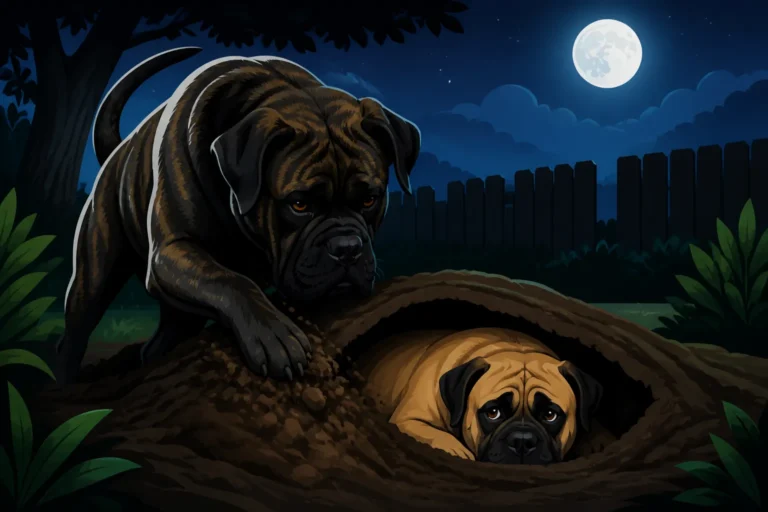
The head was also extremely important. It needed to be broad and powerful, giving the dog a strong bite and an intelligent, alert expression. A distinct black mask was also a key feature, not just for aesthetics but because it served a practical purpose. Imagine a dog working at night; a dark muzzle would help it blend into the shadows, making it harder for a poacher to spot. This is why Why Dark Brindle Hid a Bullmastiff at Night was also an early preference for coat color. The short, dense coat was practical for movement through dense undergrowth and required minimal grooming, another nod to its working roots.
The ideal Bullmastiff possessed a compact, muscular body with good bone and powerful hindquarters, allowing for both strength and bursts of speed. A slightly undershot jaw was typical, lending to the powerful grip, while dark, intelligent eyes conveyed a serious but not overtly aggressive demeanor.
| Characteristic | Early Desired Trait | Functional Purpose |
|---|---|---|
| Size | 100-130 lbs (males), 90-120 lbs (females) | Intimidation, strength to apprehend |
| Build | Muscular, powerful, compact | Agility, stamina for pursuit, holding power |
| Head | Broad, square, powerful with a pronounced stop | Strong bite, intelligent expression |
| Muzzle | Relatively short (1/3 the length of the skull) | Effective grip without impeding breathing |
| Black Mask | Essential and pronounced | Camouflage in low light, intimidating appearance |
| Coat Color | Dark Brindle preferred, Fawn, Red | Camouflage (dark brindle), blending with natural environment |
| Temperament | Courageous, reliable, intelligent, devoted to master, quiet | Silent work, controlled apprehension, handler focus |
Emphasizing Temperament and Working Ability
Beyond physical appearance, temperament was paramount. The Bullmastiff was, and still is, revered for its "silent guard" nature. Early breeders sought dogs that were fearless yet controllable, with an innate ability to distinguish between a genuine threat and an innocent visitor. A truly aggressive or unpredictable dog would have been useless, even dangerous, for a gamekeeper.
Therefore, the temperament specified in the early standard emphasized courage, self-assurance, and a calm disposition, with a strong protective instinct that wasn't prone to unnecessary barking or indiscriminate aggression. The dog needed to be intelligent enough to assess situations, respond to its handler's commands, and understand when to engage and when to back down. This discerning nature is still a hallmark of the breed today.
This focus on a stable and reliable temperament, coupled with its formidable physical presence, is what truly defined the Bullmastiff as a breed. It was a dog that could be trusted to do its job, but also to be a loyal and steady companion. This blend is what captivated not just gamekeepers, but families looking for a dedicated protector and friend.
Beyond Moseley: Other Influential Figures and Lasting Legacies
While S.E. Moseley is rightly credited as the key figure in standardizing the Bullmastiff, he was not alone. Many other dedicated individuals, both gamekeepers and early dog fanciers, played crucial roles in refining the breed and ensuring its survival and spread. These were people who believed passionately in the Bullmastiff's qualities and were willing to invest their time, resources, and reputation into its development.
These breeders worked diligently to expand the genetic pool, preventing inbreeding while maintaining type. They established their own kennels, bred carefully, and exhibited their dogs, further solidifying the Bullmastiff's reputation. Their combined efforts ensured that the breed wasn't just a fleeting success but had a strong foundation for future generations.
The legacy of these early breeders extends far beyond the show ring. Their dedication to temperament and working ability means that today's Bullmastiffs, though often found lounging on sofas rather than patrolling estates, still carry the essence of their historical purpose. Even if you're ordering your dog's favorite food or a durable chew toy from Chewy, you're tapping into a history of thoughtful breeding that prioritized the well-being and function of these magnificent animals.
The Role of Early Kennel Owners
After the initial formalization by Moseley, a number of other prominent kennel owners emerged, taking up the mantle of breed preservation and improvement. Figures like Herbert White and his dogs from the "Fearnought" kennel, and later, the influence of dogs from kennels like "Thorneywood," helped solidify the breed's characteristics and spread its influence. These breeders exchanged dogs, collaborated on breeding decisions, and tirelessly worked to improve the breed, ensuring that the Bullmastiff's specific traits were consistently reproduced.
They faced challenges like maintaining health, ensuring proper temperament, and navigating the sometimes-conflicting desires of working dog owners versus show dog enthusiasts. It was a delicate balance, but their commitment to the breed's foundational principles meant that the Bullmastiff continued to thrive and gain recognition. Their kennels served as vital hubs for the breed's development, providing strong examples and spreading well-bred dogs throughout the UK and eventually, internationally.
The meticulous record-keeping and dedication to type by these early owners were crucial. They understood that the future of the Bullmastiff depended on careful, ethical breeding practices that honored its past while securing its future.
The Breed's Journey Across the Atlantic
The Bullmastiff's reputation for courage, loyalty, and protective instincts eventually reached American shores. The first Bullmastiffs arrived in the United States in the 1930s, sparking interest among American dog fanciers and working dog enthusiasts. Like their British counterparts, these American pioneers had to educate the public and the American Kennel Club (AKC) about the breed's unique qualities.
Key individuals and kennels played an instrumental role in establishing the Bullmastiff in the U.S. They imported top-quality dogs from established British lines, began their own breeding programs, and worked towards AKC recognition. The breed gained full AKC recognition in 1933, a testament to the hard work and dedication of these early American proponents. This expansion across the Atlantic further cemented the Bullmastiff's status as a respected and recognized breed worldwide.
Today, while the Bullmastiff's original role as a gamekeeper's companion might be a distant memory for most, its core characteristics endure. The calm, confident, and protective nature, combined with its impressive physique, continues to draw admirers. Understanding who first bred these magnificent dogs to type gives us a deeper appreciation for the deliberate, thoughtful process that brought the Bullmastiff from the shadowy English estates to our homes today. If you're looking to learn more about the modern lifespan of these incredible dogs, check out How Long a Bullmastiff Lives on Average.
Disclaimer
This article is for general informational purposes only and does not constitute professional advice. Laws, prices and regulations vary by location and change over time. Consult a qualified professional for guidance on your specific situation.