Whether a Bullmastiff’s Undershot Jaw Is Allowed
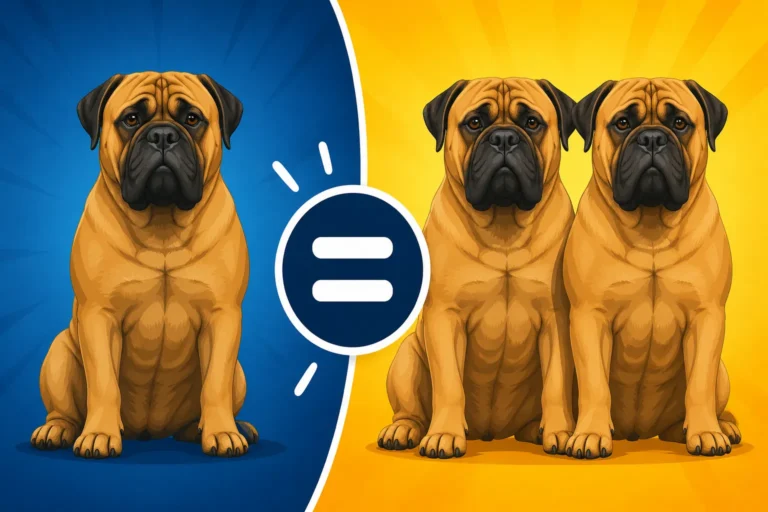
A Bullmastiff with a lower jaw that sits slightly ahead of the upper jaw may look alarming if you expected a perfectly level bite. In this breed, however, a mild undershot bite can be acceptable in the show standard. The important distinction is whether the jaw is simply a conformational feature or whether the teeth are causing discomfort, injury, or trouble eating.
Is an undershot jaw allowed in a Bullmastiff
What the breed standard means by undershot
An undershot bite, also called a reverse scissors bite or mandibular prognathism, describes a lower jaw that extends beyond the upper jaw. The front lower teeth may sit just in front of the upper teeth instead of meeting them edge to edge. That is different from an overbite, where the upper jaw projects farther forward.
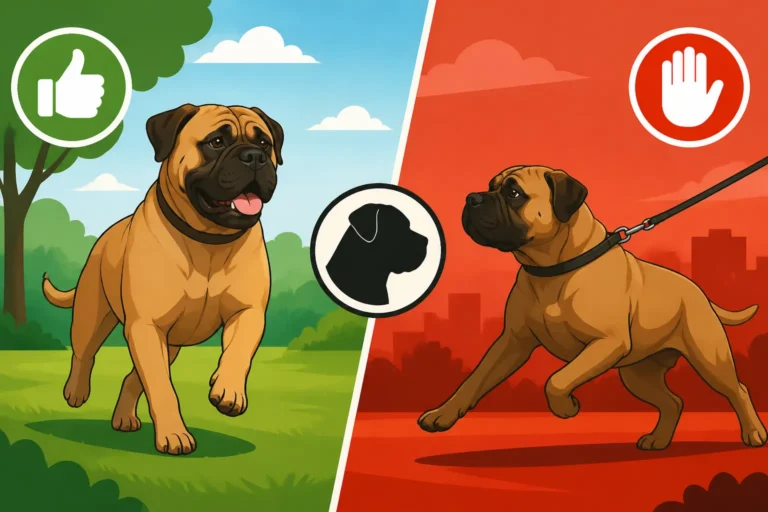
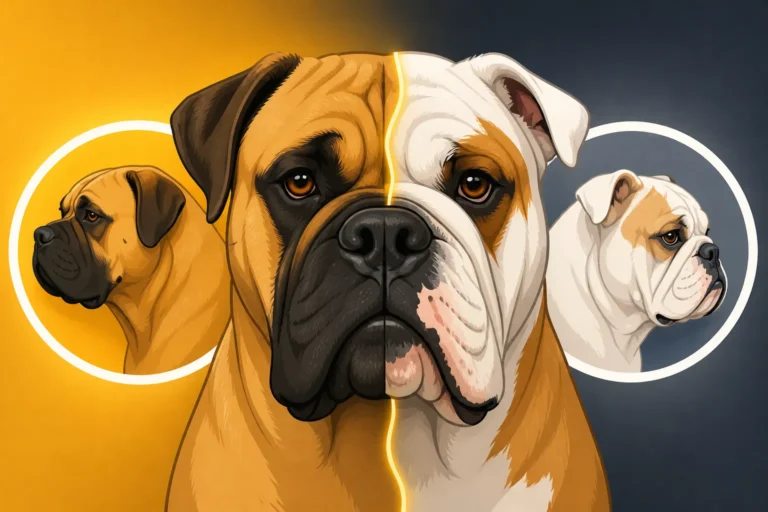
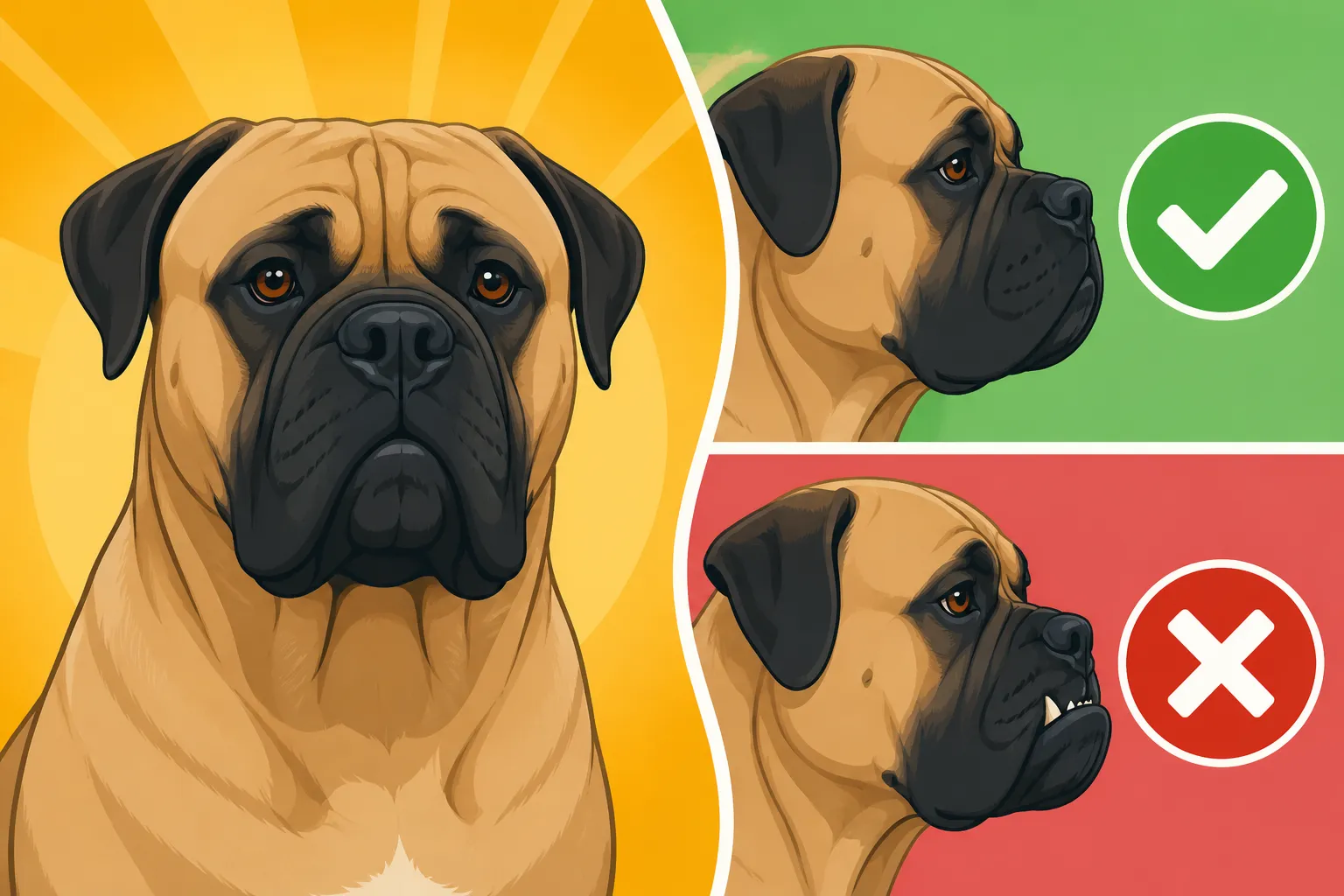
For Bullmastiffs, the American Kennel Club standard describes the bite as level or slightly undershot. So a modest underbite does not automatically disqualify a dog from fitting the breed standard. “Slightly” matters: a pronounced mismatch, visible teeth when the mouth is closed, or a bite that interferes with function is not the same thing as a mild, permitted variation.
Breed standards can differ by country and registry, and a dog’s bite is only one part of conformation. If you are considering showing a Bullmastiff, check the standard used by the organization where you plan to compete and ask an experienced judge or breed mentor to assess the dog in person. For a closer look at bite terminology and the breed’s expectations, see What a Bullmastiff's Bite Should Be.
Show eligibility is not the same as dental health
A bite can be acceptable in the ring and still deserve attention from a veterinarian. Conversely, an unusual-looking bite is not automatically a health problem. The practical question is whether the teeth fit together without repeatedly striking the gums, palate, lips, or other teeth, and whether your dog can eat comfortably.
A mild underbite may have no noticeable effect on daily life. A more substantial jaw mismatch can leave teeth poorly aligned, create places where food collects, or cause a tooth to rub against soft tissue. A dog may still eat eagerly despite discomfort, so don’t rely on appetite alone as proof that everything is fine.
That’s why it helps to keep two questions separate: “Does this bite fit the standard?” and “Is this bite comfortable and functional?” A breeder, show judge, or online photo may help with the first question, but a veterinarian is the right person to examine the mouth and advise on the second.
How to tell whether the bite is causing a problem
Signs to watch for at home
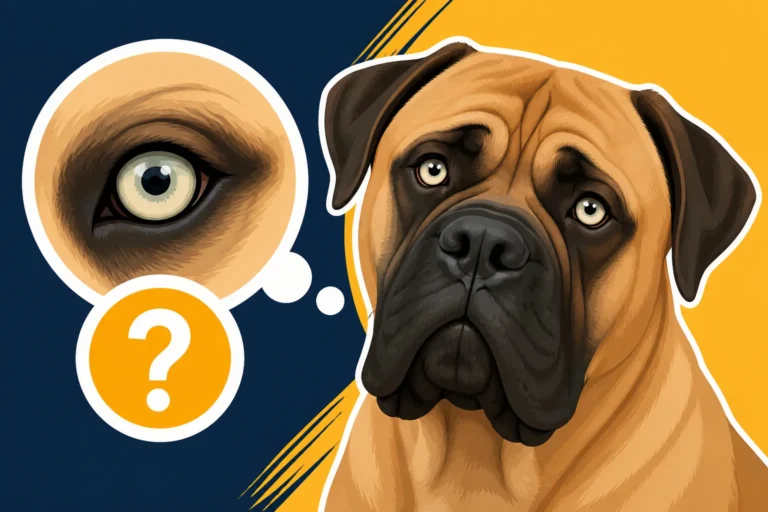
Look for changes rather than trying to diagnose your Bullmastiff by appearance alone. Signs worth mentioning to your vet include difficulty picking up food, chewing on one side, dropping food, taking longer to finish meals, pawing at the mouth, or resisting when you touch the muzzle. Persistent bad breath, bleeding gums, and repeated rubbing of the face can also signal an oral problem, though they can have causes unrelated to the bite.
When you gently lift the lips, notice whether any tooth seems to press into the gums or roof of the mouth. Don’t force the jaw open or try to push teeth into a different position. A quick look in good light can help you describe what you see, but a home inspection cannot replace a proper dental examination.
It can be useful to make a note of when you first noticed the underbite and whether it seems to be changing. A clear photo from the front and side may help you compare appearances over time or show your vet what you have noticed. If the jaw suddenly looks different, or your dog seems painful, arrange an examination rather than waiting for a routine visit.
What a veterinary examination can establish
A veterinarian can check whether the teeth are contacting tissue, whether the gums are injured, and whether there are signs of dental disease or retained baby teeth. The vet may also consider the dog’s age and development. In a growing puppy, the relationship between the upper and lower jaws can change as the head develops; a bite seen early on is not always the final adult bite.
If your Bullmastiff is eating comfortably and the teeth are not causing trauma, the recommendation may simply be to monitor the mouth during regular wellness visits. If there is pain, injury, or an abnormal tooth position, the vet can discuss appropriate next steps or refer you to a veterinary dental specialist. The right response depends on the individual mouth, not just on how far the lower jaw appears to project.
You may hear people use the word “orthodontics” when discussing a dog’s bite. Treatment is not automatically needed to make a Bullmastiff look more conventional. It is considered when there is a welfare or functional reason, and a veterinarian should explain the benefits, drawbacks, and alternatives for that dog.
Bullmastiff puppies and changing bites
Why a puppy’s bite can look different over time
Puppies are still growing, and their jaws and teeth change as baby teeth are replaced by adult teeth. The timing and pattern of that change can affect how the bite looks at different stages. A puppy that appears mildly undershot may develop into a more noticeable underbite, or the change may be less dramatic than it first seemed.
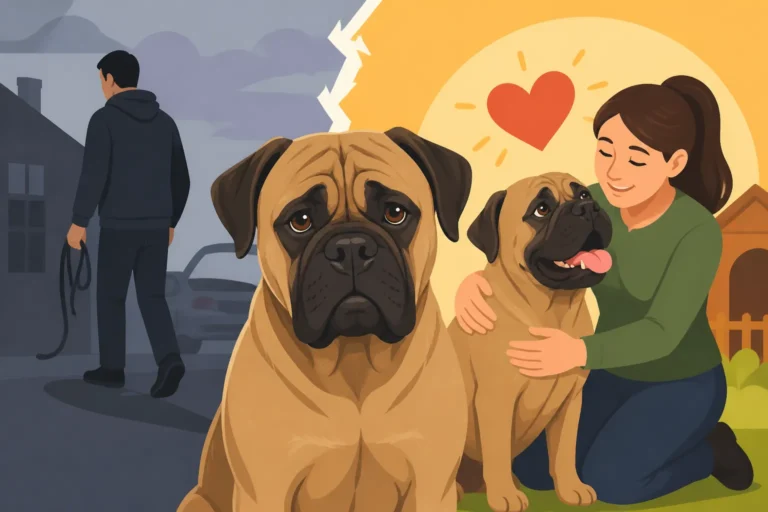
That uncertainty is a reason to keep routine veterinary checks rather than a reason to panic. During visits, ask the vet to look at the bite and note whether any teeth are catching the gums or palate. If you are buying a puppy, ask the breeder what they have observed in the puppy and in related dogs, while remembering that a breeder’s opinion cannot guarantee how the adult bite will develop.
A puppy with obvious discomfort, difficulty eating, or a tooth digging into soft tissue should be assessed promptly. Don’t wait for the adult teeth to come in if there is already pain or injury. Early evaluation gives the vet a chance to follow development and explain whether any intervention may be appropriate.
Questions to ask a breeder or veterinarian
If you are choosing a puppy, ask whether the breeder has checked the bite and whether they can explain what they mean by “slightly undershot.” Ask if the parents have a similar bite and whether the breeder knows of related dogs with dental issues. You can also ask what the purchase contract says about health concerns, but read the wording carefully: a contract cannot predict every developmental change.
A responsible breeder should be willing to discuss the puppy’s mouth honestly rather than dismissing every concern as cosmetic. For a broader checklist of health and screening questions, see What a Bullmastiff Breeder Should Have Screened and What Health Results a Bullmastiff Breeder Should Show. Those discussions are useful even when the puppy’s bite looks normal, because choosing a dog involves more than one feature.
At a veterinary appointment, describe specific observations instead of only saying “the bite looks wrong.” For example: “The lower front teeth seem to touch the roof of the mouth,” or “He drops kibble and chews on the left.” That gives the vet a practical starting point and makes it easier to decide whether monitoring or further evaluation is needed.
Everyday care for a Bullmastiff with an undershot bite
Keep routine dental care practical
An underbite does not remove the need for ordinary dental care. Get your dog used to having the lips lifted and the mouth handled gently, and brush the teeth with products made for dogs if your veterinarian recommends them. Human toothpaste is not a substitute for dog toothpaste. If your dog shows pain or resists suddenly, stop and ask the vet rather than trying to push through.
If you buy a dog toothbrush, toothpaste, or other basic supplies through a retailer such as Chewy, check that the product is intended for dogs and follow the label. Chewy listings can help you compare product descriptions, but a product listing cannot tell you whether a particular tooth is rubbing against your dog’s gums. Bring that question to your veterinary team.
Dental chews and toys should be chosen with care. A very hard chew can damage teeth, and a chew that is too small may be a choking risk. Ask your vet what is suitable for your dog’s age, jaw, chewing style, and dental condition. If you use Chewy to look at options, treat the listed size guidance as a starting point rather than a substitute for your vet’s advice.
When to book an appointment
Book a veterinary visit if the bite is new or changing, if your dog has trouble eating, or if you see a tooth pressing into the gums or palate. Bleeding, facial swelling, persistent mouth odor, and signs of pain deserve attention too. If your Bullmastiff seems unable to eat or has significant bleeding or swelling, contact a veterinary clinic promptly.
For a dog with no symptoms and a mild, stable underbite, raise the question at the next wellness exam and ask how often the mouth should be rechecked. Keeping a brief record of changes can be helpful, especially during puppyhood. If you need dental supplies after the visit, Chewy may offer a way to review product descriptions and sizes, but the vet’s recommendations should guide what you choose.
The main takeaway is simple: a slightly undershot jaw can be allowed in a Bullmastiff, but the word “allowed” refers to breed conformation, not a guarantee that every bite is healthy. What matters day to day is comfortable eating, teeth that do not injure the mouth, and regular veterinary attention when something changes. For more on how the breed’s head and muzzle are described, read How a Bullmastiff's Muzzle Length Should Be and Whether a Bullmastiff Is Brachycephalic. If you are learning how judges assess the whole dog, What a Bullmastiff Judge Puts a Hand On First offers useful context.
Disclaimer
This article is for general informational purposes only and does not constitute professional advice. Laws, prices and regulations vary by location and change over time. Consult a qualified professional for guidance on your specific situation.