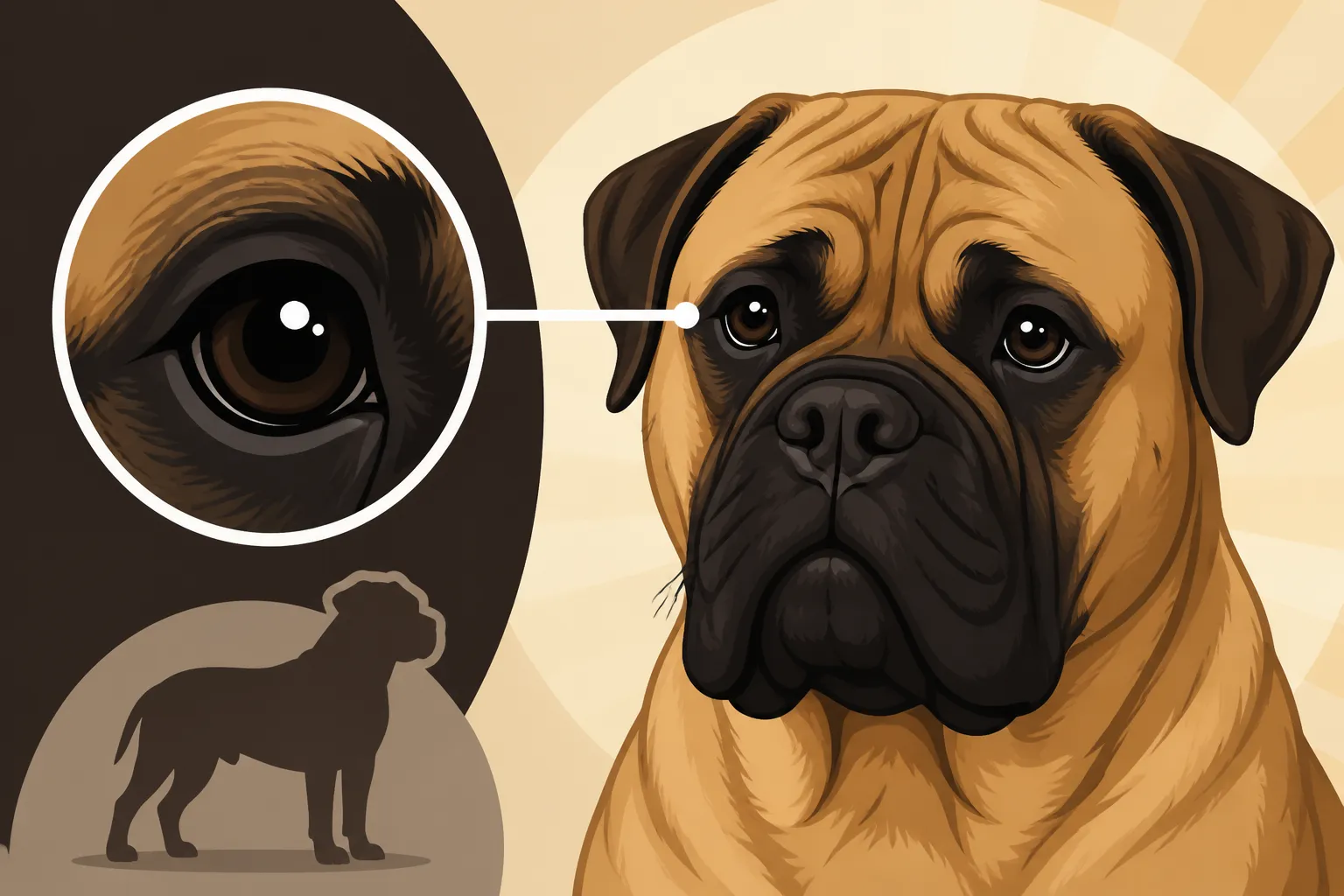
Why a Bullmastiff’s Eyes Are Dark
A Bullmastiff’s dark eyes are part of the breed’s familiar, steady expression, but it can be hard to tell what “dark” means when a puppy’s eyes are still changing or the light makes them look lighter than usual. This guide explains the breed’s expected eye color, how to distinguish normal variation from a problem, and what changes deserve a veterinary check.
What dark eyes mean in the Bullmastiff
The breed’s expected eye color
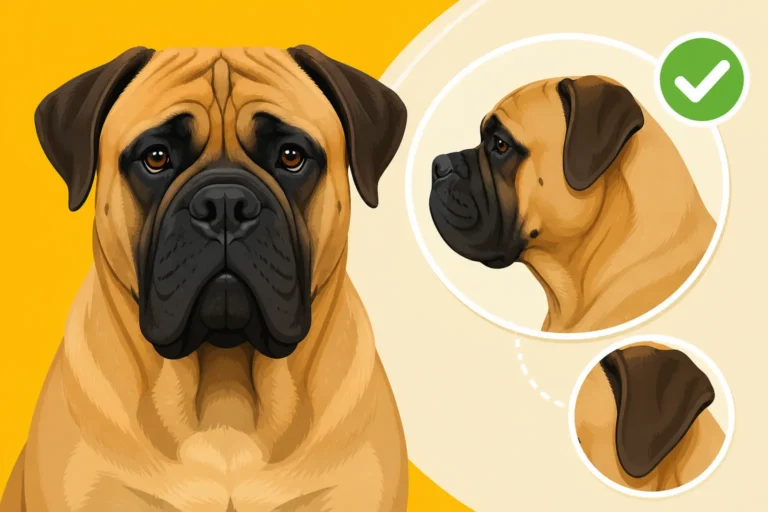
Bullmastiffs are expected to have dark eyes, generally in shades of brown. The aim is a deep, harmonious expression rather than a pale or strikingly light-eyed look. Eye color is one part of the breed’s overall appearance, alongside the broad head, dark facial mask, and characteristic expression. For the relationship between the mask and the face, see The Black Mask Every Bullmastiff Must Have.
“Dark” does not mean that every Bullmastiff’s eyes must look identical. One dog’s irises may appear deep brown, while another’s look more like warm chestnut in bright daylight. The coat color, lighting, and the dark pigment around the eyes can all affect how the eye color appears to us. A close-up taken in direct sun may make brown irises look lighter than they do indoors.
The important distinction is between normal brown variation and eyes that appear unusually pale, yellowish, or otherwise unlike the dog’s usual color. A single photograph is not a reliable way to judge this. If you are comparing a puppy with the breed standard, consider the eyes in ordinary, indirect light and look at the dog as a whole rather than relying on a flash photo.
Why eye color matters in breed appearance
The Bullmastiff’s dark eyes contribute to its characteristic expression: alert, composed, and attentive without looking harsh. They also sit within a face with substantial pigment, including the black mask. The visual effect is cohesive, which is why a very light eye can look especially noticeable against a dark mask.
Breed appearance is not the same thing as health. A dark-eyed Bullmastiff can still develop an eye condition, and an eye that seems lighter than expected does not by itself establish a medical problem. Color is one feature to assess, not a substitute for checking whether the eyes are comfortable, clear, and functioning normally.
If you are comparing eye shades or wondering whether a lighter color is considered acceptable, Whether a Bullmastiff Can Have Light Eyes offers a closer look at that specific question. For appearance, it is also useful to understand What a Bullmastiff's Black Mask Should Look Like, since facial pigment can influence how the eyes seem at a glance.
How a Bullmastiff puppy’s eyes change
Eye color can look different in early puppyhood
Puppies are not always born with the eye color they will have as adults. In early life, the iris may look blue-gray or lighter than the mature eye, and pigment can develop as the puppy grows. The pace and final shade vary, so a young puppy’s early appearance is not necessarily its adult eye color.
This can create confusion for a new owner. A puppy may look different from the adult Bullmastiffs in photos, or its eyes may seem to change from week to week as the color deepens. That does not automatically mean anything is wrong. What matters is whether both eyes look comfortable and clear, and whether the puppy is behaving normally.
Avoid trying to predict the final shade from one image or a brief visit. Ask the breeder what they have observed in the puppy and, if you are choosing a puppy for show or breeding prospects, discuss the relevant breed standards with an experienced, responsible breeder. Eye color alone should never outweigh temperament, health, and appropriate health screening. What a Bullmastiff Breeder Should Have Screened can help you think about the wider health picture.
How to assess the eyes without overreading them
Look at your puppy’s eyes in soft daylight, not under a camera flash or a bright lamp. Check whether the two eyes appear similar in color and whether the pupils look like they respond normally to changes in light. You do not need to shine a light directly into the puppy’s eyes; simply observe them during ordinary daily activity.
Also pay attention to comfort. A puppy that is squinting, rubbing its face, keeping one eye closed, or producing persistent discharge needs more attention than a puppy whose brown eyes look a little lighter in a photograph. If there is sudden swelling, cloudiness, obvious pain, or a rapid change in appearance, contact a veterinarian promptly rather than waiting for the color to settle.
Try taking occasional photos from a similar distance and in similar lighting. This can help you notice a genuine change over time instead of mistaking a sunny-day reflection for a change in pigment. The goal is not to inspect the puppy constantly; it is to know what is normal for that individual dog so a meaningful difference is easier to recognize.
Eye color versus eye health
Signs that deserve a veterinary check
A dark iris is not a guarantee that an eye is healthy. Eye problems may affect the eyelids, the surface of the eye, or structures inside the eye without changing the iris color at first. Watch for repeated squinting, redness, excessive tearing, thick or discolored discharge, pawing at the face, sensitivity to light, or one eye looking different from the other.
A new cloudy or blue-white appearance on the eye’s surface is different from a naturally lighter iris. So is a change in pupil size, a visible injury, or sudden trouble navigating familiar spaces. Those changes call for veterinary advice, particularly if they appear quickly or seem painful. Don’t use human eye drops or leftover medication unless a veterinarian specifically directs you to do so.
Some Bullmastiffs have eyelid or facial features that can irritate the eye. Entropion, for example, involves an eyelid rolling inward so that hairs or lashes rub against the eye. Persistent tearing and squinting are not simply cosmetic issues to shrug off. Learn more in Entropion in a Bullmastiff, and ask your veterinarian to examine your dog if you see signs of irritation.
A simple routine for checking your dog’s eyes
Once your Bullmastiff is comfortable being handled, make a brief eye check part of normal grooming. Look at each eye in good light and notice whether it appears clear, open, and similar to the other. Check for discharge around the corners and look at the surrounding skin for redness or irritation. Keep the check gentle; do not pull the eyelids open or touch the eyeball.
If your dog has mild debris on the fur around the eye, wipe the surrounding area carefully with a clean, soft, damp cloth. Use a different clean part of the cloth for the other eye, and avoid rubbing across the eye itself. If you prefer a packaged wipe, check the label carefully. Chewy may offer pet eye-care wipes, but use only products intended for the area and follow the label; a wipe is for gentle external cleaning, not for treating an eye problem.
The same caution applies to grooming products and household remedies. Scented wipes, soaps, disinfectants, and products meant for skin elsewhere on the body may irritate the delicate area around the eyes. If you are unsure whether a product is suitable, ask your veterinary clinic before using it. For more on ordinary eye cleaning, see Whether a Bullmastiff's Eyes Need Wiping.
| What you notice | What it may mean | What to do |
|---|---|---|
| Brown eyes that look lighter in bright sun | A lighting effect or normal variation in appearance | Recheck in soft, indirect light |
| A young puppy’s eyes changing shade as it grows | Developing pigment may be involved | Observe comfort and clarity; ask the breeder or vet if concerned |
| Mild debris on the fur near the eye | Surface dirt or ordinary discharge | Gently wipe the surrounding fur with a clean, damp cloth |
| Repeated squinting, pawing, or redness | Possible irritation, injury, or another eye problem | Contact a veterinarian for advice |
| Sudden cloudiness, swelling, unequal pupils, or apparent pain | A potentially urgent change | Seek veterinary care promptly |
Keeping dark eyes comfortable as your Bullmastiff grows
Grooming around the face without irritating the eyes
Bullmastiffs can collect moisture or debris around the muzzle and facial folds, so face care is about keeping the skin clean and dry without getting cleaning products into the eyes. Use a soft cloth and gentle movements, and stop if your dog pulls away, squints, or seems uncomfortable. Regular, calm handling also makes it easier to notice a change before it becomes a struggle to examine the face.
If you shop for grooming supplies through Chewy, look for products specifically labeled for use around a dog’s face, and read the directions before buying. A product marketed for general coat cleaning is not automatically appropriate near the eyes. Keep wipes, shampoos, and sprays away from the eyeball, and avoid applying anything to irritated skin without veterinary guidance.
For dogs that tear frequently, wiping the fur may help keep it clean, but it will not correct the cause of persistent tearing. Eyelid shape, irritation, allergies, and other issues can all contribute. If the area is repeatedly wet, stained, red, or smelly, ask your veterinarian to assess it rather than simply cleaning more often. Why a Bullmastiff's Eyes Water discusses that concern in more detail.
When routine care is not enough
A quick look during grooming is useful, but it does not replace a veterinary examination. Mention eye color or appearance at your dog’s regular wellness visits, especially if you have noticed a change, ongoing tearing, or repeated irritation. A veterinarian can examine the eye and eyelids directly and decide whether further evaluation is needed. For more context on routine checks, see Whether a Bullmastiff's Eyes Should Be Checked Yearly.
If your Bullmastiff suddenly keeps an eye closed, rubs at it persistently, or seems distressed, don’t wait for the next scheduled appointment. Eye discomfort can be hard to judge from the outside, and prompt assessment is safer than assuming it is just dust or a minor scratch. When you call the clinic, describe when the change began, whether it affects one or both eyes, and whether there is discharge, redness, or a change in behavior.
Chewy can be a convenient place to look for ordinary grooming supplies, but a retailer cannot diagnose the reason for a change in eye color or discomfort. Use shopping tools for routine care items, and use your veterinary clinic for symptoms, treatment decisions, or questions about a product’s safety. The best routine is simple: notice what is normal for your dog, keep the surrounding face clean without irritating the eyes, and seek help when the eye itself changes or seems uncomfortable.
Disclaimer
This article is for general informational purposes only and does not constitute professional advice. Laws, prices and regulations vary by location and change over time. Consult a qualified professional for guidance on your specific situation.