Why a Bullmastiff’s Eyes Water
It can be quite alarming to see your big, beloved Bullmastiff with watery eyes, especially when those gentle giants are usually so stoic. You might find yourself constantly wiping away tears or noticing staining around their eyes, wondering if it's just a minor irritation or something more serious that needs your attention. This comprehensive guide will walk you through the common reasons why your Bullmastiff's eyes might be watering, from everyday environmental factors to potential health concerns, and offer practical steps you can take to keep their eyes clear and comfortable.
Understanding Normal vs. Excessive Tear Production
First, let's talk about what's considered "normal." Just like humans, dogs produce tears to lubricate their eyes and flush out small irritants. A little moisture in the corners of your Bullmastiff's eyes, especially after a nap or on a windy day, isn't usually a cause for concern. Their deep-set eyes and often slightly loose lower eyelids can sometimes make them prone to a bit more natural tearing than some other breeds, simply due to the way their eyes are constructed.
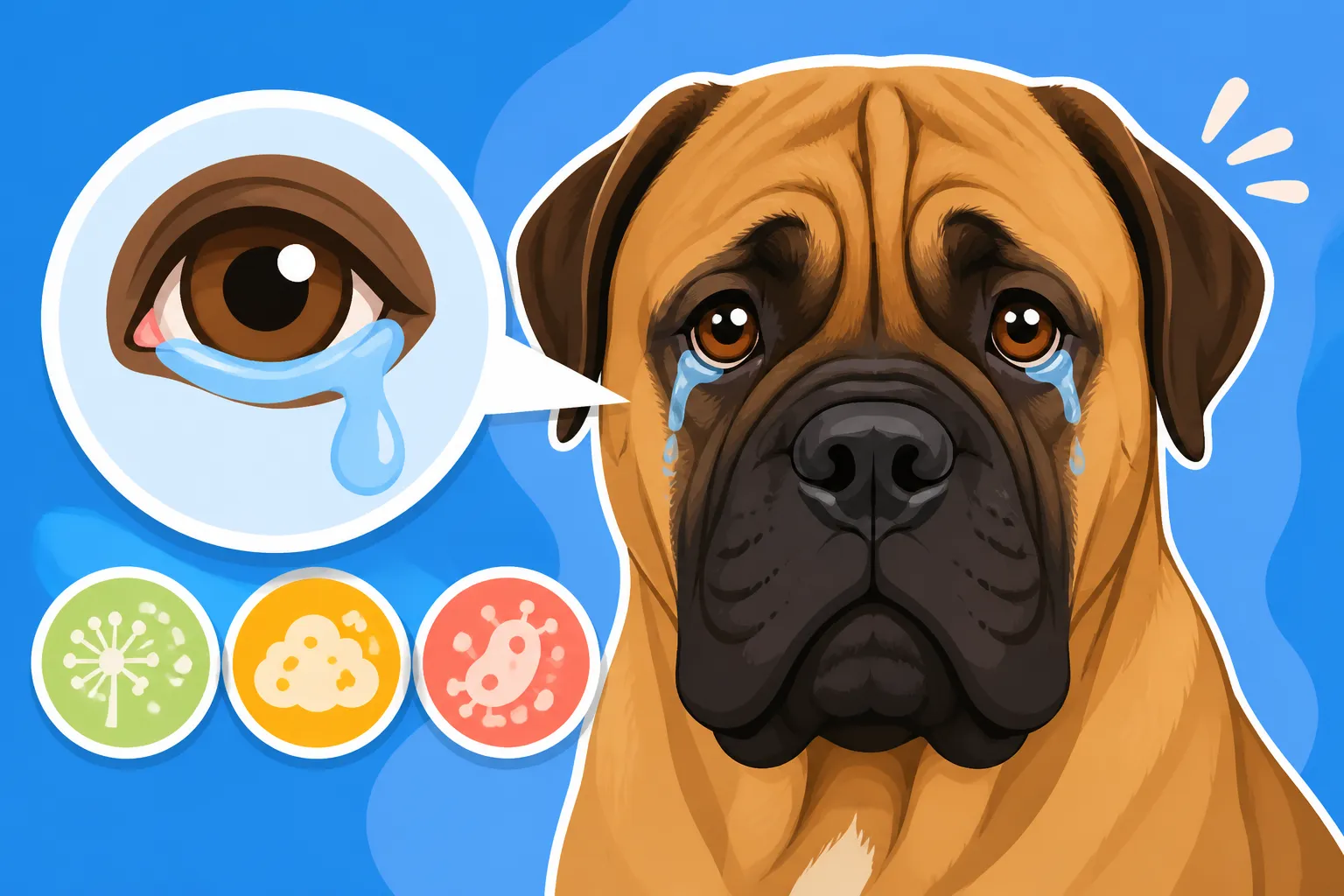
However, when you start noticing a persistent wetness, a significant increase in tear volume, or dark, reddish-brown stains accumulating under their eyes (often called epiphora or tear staining), that's when it's time to pay closer attention. This excessive tearing is usually a symptom of an underlying issue, whether it's something easily fixable at home or a condition requiring veterinary intervention. It's frustrating to constantly be cleaning your dog's face, only for the staining to return, and you want to know you're doing right by your Bullmastiff.
The Role of Pigment and Tear Stains
Those reddish-brown streaks you often see are caused by porphyrins, iron-containing molecules that are excreted in tears, saliva, and urine. When these porphyrins are exposed to light and air, they oxidize and turn a reddish-brown color, creating those noticeable stains. It's not just "dirt" – it's actually a chemical reaction! Some Bullmastiffs, particularly those with lighter fawn or red coats, will show these stains more prominently than their brindle counterparts. It's important to understand that the staining itself isn't harmful, but it's a visual cue that there's an ongoing issue of excessive tearing. Persistent moisture can also create a breeding ground for yeast and bacteria, leading to secondary skin infections in the facial folds around the eyes.
How Your Bullmastiff's Face Anatomy Plays a Part
Bullmastiffs have those wonderfully expressive, sometimes deeply wrinkled faces, which are part of their charm. However, these unique facial structures can sometimes contribute to eye-watering issues. Their jowls, their eye set, and the depth of their skull can all affect how tears drain and how easily irritants reach the eye. A Bullmastiff's eyelids might also be looser than average, which can lead to specific problems we'll discuss. This isn't a design flaw, but simply a characteristic that makes them a bit more prone to certain issues, and something every Bullmastiff owner should be aware of.
Common Reasons for Watery Eyes
Many instances of watery eyes in Bullmastiffs aren't dire emergencies, but they certainly warrant your attention and some simple home care. These are the "everyday" culprits that can make your gentle giant look like they're having a weepy moment.
Environmental Irritants and Allergies
Think about how your own eyes water when you're caught in a gust of wind, or when pollen counts are high. Dogs experience similar environmental sensitivities.
Dust, Pollen, and Wind Exposure
A Bullmastiff spending time outdoors in a dusty yard, rooting around in the garden, or simply going for a walk on a windy day can easily get tiny particles or allergens in their eyes. Even indoor dust, cleaning product fumes, or smoke from a fireplace can be irritants. Their short coat doesn't offer much protection around the face, leaving their eyes more exposed. If you notice their eyes tearing up after a specific activity or when they're in a particular environment, an environmental irritant is a strong suspect. For example, if you've just swept the house and your Bullmastiff then has watery eyes, it's a good bet the dust is to blame. Similarly, if spring brings a lot of tearing, seasonal allergies are likely at play.
Food and Environmental Allergies
Just like us, dogs can suffer from allergies, and watery eyes can be a prominent symptom. These can be environmental allergies (like to grass, dust mites, or pollen) or even food allergies. If your Bullmastiff also shows other signs of allergies, such as itchy skin, ear infections, or paw licking, then allergies become a more likely cause for their watery eyes. Identifying allergens can be a long process, but it's crucial for their comfort. Sometimes, simply switching to a novel protein diet or a limited ingredient formula, perhaps from a brand like Ollie or other premium pet food providers, can make a noticeable difference if food is the culprit. Observing when the tearing occurs, and whether it coincides with specific exposures, is key.
Minor Scratches and Foreign Objects
Our Bullmastiffs are curious creatures, and sometimes their explorations can lead to minor eye mishaps.
Eyelash or Hair Irritation
Sometimes, a stray eyelash growing in an odd direction (distichiasis or ectopic cilia) can constantly rub against the surface of the eye, causing irritation and excessive tearing. Similarly, if your Bullmastiff has longer hair around their eyes, or if it's not trimmed regularly, strands can poke and irritate the sensitive eye surface. While Bullmastiffs typically have very short coats, individual variations can occur, and sometimes even the short, stiff hairs from their muzzle can curl back and bother their eyes. Keeping the hair around their eyes neatly trimmed is a simple preventative step.
Dust, Debris, and Minor Scratches
It's all too easy for a tiny piece of debris – a bit of dirt, a small seed, or even a piece of their own dry food kibble – to get caught under an eyelid. This foreign object acts like a persistent irritant, causing the eye to water profusely in an attempt to flush it out. Sometimes, these irritants can cause a minor scratch or abrasion on the cornea. While many minor irritations will resolve on their own, persistent pawing at the eye, redness, or squinting warrants a closer look from you and potentially your vet. A quick flush with a sterile saline solution (purchased from a pet store or human pharmacy, ensuring it's plain saline without added medications) can sometimes help dislodge a visible foreign object. You can often find appropriate solutions on Amazon or Chewy.
When to Consult Your Veterinarian
While some watery eye issues are easily resolved, others signal a need for professional veterinary attention. It's vital to recognize the signs that mean "call the vet" rather than "wait and see."
Eyelid Abnormalities: Entropion and Ectropion
These are common in breeds with certain facial structures, and Bullmastiffs can unfortunately be prone to them.
Entropion: Inward-Rolling Eyelids
Entropion is a condition where a portion of the eyelid, usually the lower one, rolls inward, causing the eyelashes and surrounding hair to rub against the cornea. Imagine having a stiff hair constantly poking your eye – it's incredibly irritating and painful, leading to excessive tearing, redness, squinting, and potential corneal damage over time. This is particularly common in Bullmastiffs due to their skin elasticity and facial structure. You might notice your Bullmastiff frequently blinking or rubbing their eye. This isn't just about comfort; persistent rubbing can lead to ulcers and even vision impairment if left untreated. Whether a Bullmastiff's Eyelids Roll Inward is a common concern among owners.
Ectropion: Outward-Rolling Eyelids
Less common for persistent tearing in Bullmastiffs compared to entropion, ectropion is when the eyelid rolls outward, exposing the delicate inner membrane. While it doesn't cause constant irritation from rubbing lashes, it leaves the eye more vulnerable to environmental irritants, dust, and dryness, which can also lead to compensatory tearing. The exposed tissue can also dry out and become inflamed, leading to discomfort. Both entropion and ectropion often require surgical correction to prevent long-term damage and discomfort for your dog.
Tear Duct Issues
The tear ducts are responsible for draining excess tears away from the eye, and if they're not functioning correctly, tears will simply spill over onto the face.
Blocked Tear Ducts
Just like a clogged drain in your sink, a dog's tear ducts can become blocked. This obstruction prevents tears from draining properly through the small openings (puncta) in the corner of the eye and down into the nasal cavity. When tears can't drain, they accumulate and spill over the eyelid, causing persistent wetness and staining. Blockages can be caused by inflammation, infection, scar tissue, or even genetic predisposition. Your vet can perform a simple test, called a fluorescein dye test, to see if the tears are draining correctly. Flushing the ducts under anesthesia is sometimes an option, and your vet can advise on the best course of action.
Eye Infections and Inflammation
These are often acutely painful and require prompt veterinary intervention.
Conjunctivitis and Other Infections
Conjunctivitis, or "pink eye," is an inflammation of the conjunctiva, the membrane lining the inside of the eyelids and covering the white part of the eyeball. It can be caused by bacterial or viral infections, allergies, or irritants. In addition to watery eyes, you'll likely see redness, swelling of the eyelids, and possibly a discharge that can be clear, mucousy, or pus-like. Other infections, like those caused by yeast, can also occur, especially in the moist skin folds around the eyes due to persistent wetness. Prompt diagnosis and treatment with appropriate eye drops or ointments, often prescribed by a vet, are essential to clear up the infection and alleviate discomfort.
Corneal Ulcers
A corneal ulcer is an open sore on the surface of the eye. These are extremely painful and can be caused by trauma (like a scratch from a branch or another dog's claw), foreign objects, or chronic irritation from conditions like entropion. Symptoms include intense pain (squinting, pawing at the eye), excessive tearing, redness, and sometimes a cloudy appearance to the cornea. If you suspect a corneal ulcer, it is an emergency that needs immediate veterinary attention to prevent further damage, infection, or even vision loss.
Other Health Conditions
While less common, other systemic health issues can manifest with watery eyes.
"Cherry Eye" Prolapse
This condition, formally known as nictitans gland prolapse, is where the gland of the third eyelid pops out and becomes visible as a red, swollen mass in the inner corner of the eye, resembling a small cherry. While not directly a cause of watery eyes in the same way as entropion, the exposed and irritated gland often leads to significant tearing as the eye tries to protect itself, along with redness and discomfort. Cherry Eye in a Bullmastiff is something many owners encounter. It typically requires surgical correction to reposition the gland and often to tack it back into place, preventing recurrence and maintaining tear production, which is crucial for long-term eye health.
| Symptom / Observation | Potential Cause (Common) | Potential Cause (Serious) | What to Do | Urgency |
|---|---|---|---|---|
| Mild, occasional wetness | Wind, dust, minor irritants | – | Wipe with damp cloth, monitor. | Low |
| Persistent staining & wetness | Allergies, minor hair irritation | Blocked tear ducts, entropion | Gentle daily cleaning, trim hair, consider allergy factors. If no improvement, vet visit. | Medium (if no other symptoms) |
| Redness, swelling, discharge | Conjunctivitis (allergies) | Infection (bacterial/viral) | Vet visit to diagnose and get appropriate eye drops. | High (especially if discharge is thick) |
| Squinting, pawing, pain | Foreign object, scratch | Corneal ulcer, severe entropion | IMMEDIATE vet visit. | VERY High (emergency) |
| Visible red lump in eye corner | – | "Cherry eye" prolapse | Vet visit for diagnosis and discussion of surgical correction. | High |
| Inward-rolling eyelid | – | Entropion | Vet visit. Often requires surgery. | High |
Home Care and Prevention Strategies
While you should always consult your vet for persistent or worsening eye issues, there are many things you can do at home to help manage and prevent watery eyes in your Bullmastiff.
Daily Eye Cleaning Routine
Consistency is key when it comes to keeping your Bullmastiff's eyes healthy and clean.
Gentle Wipes and Washes
Establish a daily routine of gently wiping around your Bullmastiff's eyes. Use a soft, damp cloth or a pet-specific eye wipe designed to clean and soothe. Many excellent products are available on platforms like Chewy or Amazon. Always wipe away from the eye, from the inner corner outwards, using a fresh part of the cloth or a new wipe for each eye to avoid spreading any potential infection. Be particularly mindful of What to Clean a Bullmastiff's Wrinkles With if they have deep facial folds, as moisture trapped in these areas can lead to skin irritation and secondary issues. Keeping these folds dry and clean is paramount to preventing eye problems that stem from surrounding skin irritation.
Managing Tear Stains
For existing tear stains, consistent cleaning is crucial. There are many over-the-counter tear stain removers available, but always check with your vet before using any product directly on or near the eye. Some of these products contain mild bleaching agents or antibiotics, and you want to ensure they are safe for your specific Bullmastiff and won't mask a more serious underlying issue. Natural remedies often involve gentle cleansing and keeping the area dry. Always ensure the skin beneath the stained fur is dry after cleaning to prevent yeast or bacterial growth, which thrive in moist environments.
Environmental Control and Grooming
Sometimes, small changes in your home environment or grooming habits can make a big difference.
Reducing Allergens and Irritants
If you suspect environmental allergies, consider using an air purifier indoors, vacuuming regularly with a HEPA filter, and washing your Bullmastiff's bedding frequently. If outdoor allergens are the issue, a quick wipe down of their face and paws after coming inside can help remove pollen. Avoid using strong air fresheners, diffusers, or cleaning chemicals that produce heavy fumes around your dog, as these can easily irritate their sensitive eyes and respiratory system. If you change your Bullmastiff's diet, consider consulting with your vet first to see if a sensitive stomach formula or a different protein source might alleviate potential food allergy symptoms, which can include watery eyes.
Regular Grooming for Eye Health
While Bullmastiffs are relatively low-maintenance when it comes to coat care, regular attention to the hair around their eyes is important. Even short hairs can cause irritation if they grow into the eye. A quick, careful trim with blunt-nosed scissors (or a visit to a professional groomer) to keep the hair around their eyes clear can prevent a lot of discomfort. Always be extremely careful when trimming near the eyes, and never attempt it if your dog is fidgety or you're unsure. You might also find helpful grooming tools and guides on Amazon or Chewy to assist you. This attention to detail is part of a holistic approach to your Bullmastiff's health, ensuring their comfort and reducing the chances of common irritations.
When to Seek Immediate Veterinary Care
You're your Bullmastiff's best advocate, and recognizing red flags is crucial. Don't hesitate to call your veterinarian if you observe any of the following:
- Sudden onset of severe tearing or pain: If your Bullmastiff is suddenly squinting, pawing at their eye, or seems to be in intense discomfort.
- Redness, swelling, or a visible injury: Any signs of inflammation, trauma, or a foreign object you cannot easily remove.
- Thick, colored discharge: Yellow, green, or copious white discharge usually indicates an infection.
- Cloudiness or changes in eye color: This can signal serious corneal issues or internal eye problems.
- A visible lump or change in eye structure: Like the sudden appearance of "cherry eye" or an eyelid that has clearly rolled inward.
- Lack of improvement: If home care measures haven't resolved the issue within a day or two, or if symptoms worsen.
Remember, your Bullmastiff can't tell you what's wrong, so it's up to you to observe and act. A quick vet visit for an eye issue can often prevent a minor problem from escalating into a serious one that could impact their vision or cause lasting pain. Regular How Often a Bullmastiff Needs a Wellness Exam includes a basic eye check, but don't wait for the annual check-up if you see concerning signs. Early intervention is always best when it comes to your Bullmastiff's precious eyes.
Disclaimer
This article is for general informational purposes only and does not constitute professional advice. Laws, prices and regulations vary by location and change over time. Consult a qualified professional for guidance on your specific situation.