How Many Cups a Day an Adult Bullmastiff Eats
Figuring out exactly how much to feed a giant breed like a Bullmastiff can feel like a guessing game, especially when every dog food bag seems to give you a different, often confusing, range. It’s a real challenge to ensure they get enough fuel for their massive bodies without accidentally tipping them into unhealthy weight gain or, conversely, leaving them feeling hungry. This guide is here to cut through the confusion and help you determine the ideal daily food intake for your adult Bullmastiff, ensuring they stay healthy, happy, and at their best weight.
Understanding Your Bullmastiff's Unique Nutritional Needs
When you bring a Bullmastiff into your home, you're not just getting a big dog; you're adopting a breed with specific needs that differ significantly from smaller, more active, or less muscular dogs. Their sheer size and relatively sedate nature as adults mean their metabolism and caloric requirements need careful consideration. Ignoring these unique traits can lead to a host of health issues down the road.
Why "One Size Fits All" Doesn't Work for Bullmastiffs
Bullmastiffs are built for power, not endurance. Their ancestry as gamekeeper's night dogs meant they needed bursts of strength to hold a poacher, not hours of chasing. This history contributes to a generally lower activity level compared to many other working breeds. Their broad heads, muscular bodies, and deep chests come with their own set of considerations. For instance, their tendency towards certain health conditions means that maintaining a lean body weight isn't just a suggestion, it's a critical part of their long-term well-being. A Bullmastiff's joints, already under immense pressure from their weight, can suffer greatly from even a few extra pounds.
Furthermore, a Bullmastiff's growth plate closure and skeletal development in puppyhood are also unique, requiring a specific large-breed puppy food designed for slow, steady growth. While this article focuses on adults, understanding their formative years helps underline that their nutritional journey is distinct from the get-go. Even as adults, their metabolism might not be as revved up as a Border Collie's, meaning they can put on weight more easily if not managed correctly. We often fall into the trap of thinking a big dog needs more of everything, but with Bullmastiffs, it's about the right amount and right quality.
Key Factors Influencing Daily Food Intake
Determining the exact number of cups for your Bullmastiff isn't a simple equation. It's a dynamic process influenced by several crucial factors that can change throughout their adult life. These factors demand your attention and may require you to adjust their food portions over time.
Firstly, age plays a significant role. A young adult Bullmastiff (say, between 1 and 3 years old, as they're still mentally and physically maturing) might have slightly higher caloric needs than a truly senior Bullmastiff over the age of eight. As they age, their metabolism often slows down, and their activity levels naturally decrease. Similarly, their activity level is paramount. A Bullmastiff that enjoys daily, moderate walks and some playtime in the yard will need more calories than one who primarily lounges on the couch. However, remember that Bullmastiffs are not high-energy dogs; excessive exercise, especially in warm weather, can be dangerous for them.
Weight and muscle mass are obvious influencers. A 130-pound male Bullmastiff with good muscle tone will require more food than a 100-pound female with a leaner build. It's not just about the number on the scale, but the quality of that weight. Health conditions can also drastically alter caloric needs. For instance, a Bullmastiff diagnosed with Hypothyroidism in a Bullmastiff might struggle with weight gain and require dietary adjustments alongside medication. Conversely, a dog recovering from surgery or managing certain illnesses might need temporary caloric boosts. Finally, whether your Bullmastiff is spayed or neutered can affect their metabolism, often leading to a tendency to gain weight more easily. This hormonal shift reduces energy requirements, meaning you'll likely need to reduce their food intake compared to an intact dog of the same size and activity level. Always keep an eye on these variables, because your dog's ideal daily meal isn't set in stone.
Deciphering the Dog Food Bag: More Than Just a Guideline
Most dog food bags provide a feeding guide, usually based on your dog's weight. While these charts offer a starting point, relying on them exclusively for a breed like the Bullmastiff can lead to unintended consequences. They are often generalized across many breeds and activity levels, and frankly, some brands err on the side of recommending more food, which can be problematic for a breed predisposed to joint issues and a shorter lifespan when overweight.
The Trouble with Manufacturer's Feeding Charts
You've probably seen it: a huge range on the bag, like "feed 4 to 8 cups for dogs weighing 100-150 lbs." This broad spectrum can leave you scratching your head, wondering if your 120-pound Bullmastiff needs four cups or eight. The truth is, these charts are designed to cover a wide variety of dogs, and they rarely account for the specific metabolic rate or typical activity level of a giant, more sedentary breed like the Bullmastiff. What might be appropriate for an active, leaner breed of similar weight could be far too much for your stocky, lower-energy Bullmastiff.
Another critical point is that not all dog foods are created equal in terms of calorie density. A cup of a premium, high-quality kibble designed for large breeds might pack significantly more calories than a cup of a lower-quality, filler-heavy food. If you switch brands, even if you keep the volume of food the same, you could inadvertently be overfeeding or underfeeding your dog calorically. This is a common frustration for many owners, leading to a cycle of weight gain or confusion. It emphasizes why simply scooping out the recommended number of cups from the bag without understanding the underlying caloric content or your dog's individual needs is a recipe for trouble.
Calculating Caloric Needs: A Better Approach
Instead of relying solely on the feeding chart, a more accurate approach involves understanding your Bullmastiff's actual caloric needs. This might sound intimidating, but it's simpler than it seems and provides a much more personalized feeding plan. The basic idea is to calculate your dog's estimated Daily Energy Requirement (DER), which is based on their Resting Energy Requirement (RER) adjusted for factors like activity level, age, and spay/neuter status.
First, you need to find the caloric content of your dog food. This is usually listed on the bag in kcal/cup (kilocalories per cup) or kcal/kg. Once you have this number, you can better estimate how many cups correspond to your Bullmastiff's target daily calories. A common guideline for an adult, spayed/neutered dog is roughly 25-30 calories per pound of ideal body weight. So, a 120-pound Bullmastiff with a moderate activity level might need around 3000-3600 calories per day. However, this is still a rough estimate. For less active Bullmastiffs, you might aim for the lower end of that range, while a slightly more active dog might be at the higher end.
The best approach is always to consult your veterinarian. They can help you calculate a more precise caloric target based on your Bullmastiff's exact weight, body condition, and health status. They can even provide you with a specific "multiplier" to use with the RER formula, which helps tailor the calorie count to your individual dog. This veterinary guidance, combined with your understanding of your dog's daily routine and the food's calorie density, will put you on the right path.
Practical Guidelines for Feeding Your Adult Bullmastiff
Now that we understand the nuances, let's talk about the practical application. While there's no single magic number, we can establish a realistic starting point and, more importantly, a method for continuous adjustment. Remember, the goal is always to keep your Bullmastiff at a healthy, lean weight for their longevity and quality of life. Keeping a Bullmastiff Lean Is the Best Thing You Can Do is more than just a catchy phrase; it's a vital health directive.
The "Sweet Spot" for Most Adult Bullmastiffs
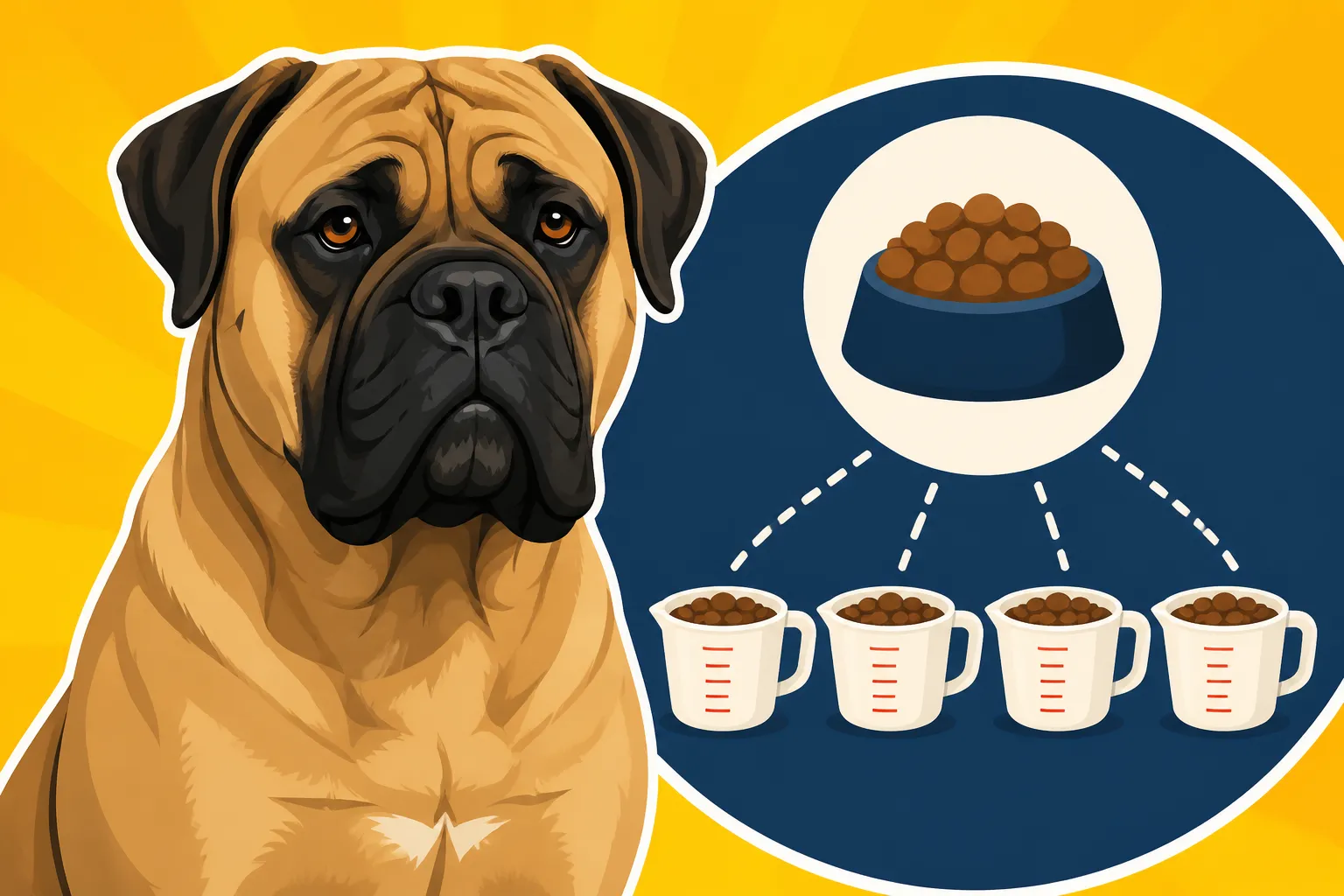
For most adult Bullmastiffs, a realistic starting point for daily food intake falls somewhere in the 4 to 8 cups per day range. This wide range exists because of the factors we've already discussed: gender, exact weight, metabolism, and activity level. A less active female Bullmastiff weighing around 100-110 pounds might thrive on 4-5 cups per day, while a more active, larger male Bullmastiff, perhaps closer to 130 pounds, might need 6-8 cups. It's crucial to understand this is a starting point and requires observation and adjustment.
For a Bullmastiff, especially with their predisposition to joint issues like Hips and Elbows Under a Hundred and Thirty Pound Bullmastiff, maintaining a lean body condition is paramount. This often means feeding slightly less than what the general guideline on a dog food bag suggests for a dog of their weight. We want them to have visible tuck-up and palpable ribs without being bony. Many Bullmastiffs are naturally quite mellow indoors; their "activity" often consists of short bursts of play rather than sustained exercise. This lower typical activity level means their caloric needs are often lower than owners anticipate for such a large dog. Don't fall into the trap of overfeeding simply because they look big and powerful. That power needs to be healthy, not burdened by excess weight.
Monitoring Body Condition and Adjusting Portions
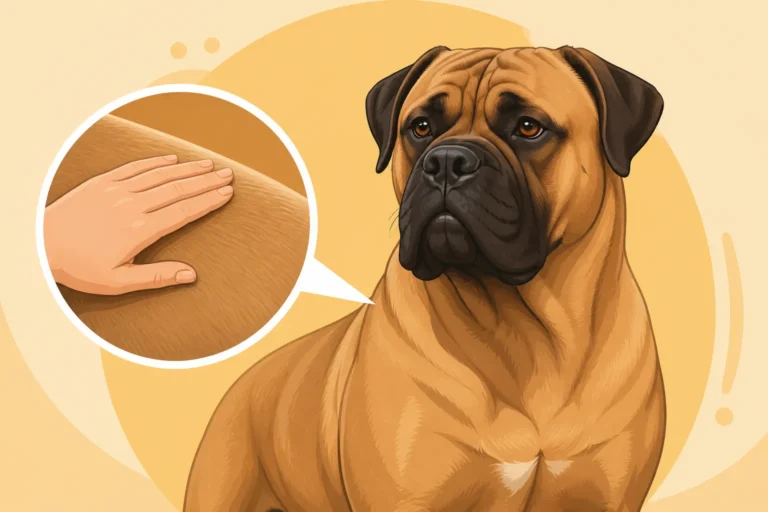
The best way to know if you're feeding the right amount is to regularly assess your Bullmastiff's body condition. This isn't about the number on the scale as much as it is about what you can feel and see. You want to be able to feel their ribs without pressing hard, and they should have a discernible waist when viewed from above. From the side, there should be a slight tuck-up in their abdomen, not a straight line or sag.
Here's a simple guide to help you:
| Body Condition Score | Description | How It Feels | Adjustment Needed |
|---|---|---|---|
| Too Thin | Ribs, spine, pelvic bones easily visible from a distance. No fat. | Prominent ribs with no fat covering. | Increase food gradually; consult vet to rule out underlying issues. |
| Ideal | Ribs easily felt, not seen, with minimal fat. Visible waist from above, abdominal tuck from side. | Ribs easily palpable with slight pressure. | Maintain current portion. |
| Overweight | Ribs difficult to feel due to fat covering. Waist barely visible or absent. Abdominal tuck missing. | Ribs require firm pressure to feel. | Reduce food slightly; increase appropriate exercise; monitor. See Signs a Bullmastiff Is Overweight. |
| Obese | Heavy fat deposits over chest, spine, and tail base. No waist or abdominal tuck. | Ribs very difficult or impossible to feel. | Significant dietary changes and vet consultation crucial for a Bullmastiff. |
Perform this check regularly, perhaps weekly, along with a quick visual check daily. If you notice changes, adjust their food by small increments (e.g., a quarter-cup less or more per day) over a few weeks, and then re-evaluate. It’s a marathon, not a sprint. Remember to factor in any treats, as those calories add up quickly!
Choosing the Right Food and Meal Frequency
When it comes to the food itself, always opt for high-quality, large breed adult formulas. These foods are specifically formulated with the right balance of protein, fat, and minerals to support the musculoskeletal health of larger dogs. They tend to have appropriate calcium and phosphorus ratios to prevent issues, even in adults. Look for reputable brands with meat as the first ingredient and avoid excessive fillers. Many great options are available from online retailers like Chewy, which offers a wide selection and often subscription services to make sure you never run out. Some owners also explore fresh food options, with services like Ollie providing pre-portioned, human-grade meals that can be tailored to your Bullmastiff's specific needs and caloric targets. Amazon also carries a range of trusted kibble brands, making it easy to compare and select.
As for meal frequency, it's generally recommended to feed adult Bullmastiffs two to three times a day. This is particularly important for breeds prone to bloat, or Gastric Dilatation-Volvulus (GDV), a life-threatening condition. Splitting their daily caloric intake into smaller, more frequent meals reduces the amount of food in their stomach at any one time, potentially lowering the risk of bloat. Meal Timing and Bloat in a Bullmastiff explains this further. A morning meal, an afternoon meal, and perhaps a smaller evening meal can work well. This also helps with digestion and keeps them feeling more satisfied throughout the day. Consistency is key, so try to feed them at roughly the same times each day.
Common Feeding Pitfalls and How to Avoid Them
Even with the best intentions, it's easy to fall into common feeding traps that can negatively impact your Bullmastiff's health. Understanding these pitfalls is the first step toward preventing them and ensuring your gentle giant lives the healthiest life possible.
The Dangers of Overfeeding and Underfeeding
The most significant pitfall for Bullmastiffs is undoubtedly overfeeding. It’s easy to do, especially with their pleading eyes and impressive size, making us think they must need more. However, excess weight puts enormous strain on their joints, exacerbating conditions like hip and elbow dysplasia, which are already prevalent in the breed. An overweight Bullmastiff is also at higher risk for heart disease, diabetes, and even certain types of cancer. It shortens their lifespan and severely impacts their quality of life, leading to decreased mobility, pain, and a reduced ability to enjoy walks or playtime. When you consider that The Median Bullmastiff Lives Eight and a Half Years, every effort to prolong those precious years is worth it.
While less common, underfeeding also has its dangers. An underweight Bullmastiff can lack essential nutrients for proper organ function, muscle maintenance, and immune system health. They might appear lethargic, have a dull coat, or be more susceptible to illness. In growing puppies, underfeeding can stunt growth and cause developmental problems, though for adults, it's usually less about growth and more about maintaining vitality. It's a delicate balance, which is why regular body condition checks are so vital. If you find your Bullmastiff is consistently too thin despite adequate feeding, a vet visit is imperative to rule out underlying medical conditions.
Treats, Table Scraps, and Supplements
Ah, treats! We all love to spoil our Bullmastiffs, but treats are often where a well-intentioned diet goes awry. Those seemingly small cookies, dental chews, or bits of cheese add up quickly. It's crucial to factor treats into your Bullmastiff's daily caloric intake. If you're using treats for training, choose low-calorie options or break larger treats into tiny pieces. A good rule of thumb is that treats should make up no more than 10% of their daily calories. If you're giving a lot of treats, you’ll need to adjust their main meals accordingly.
Table scraps are a definite no-go. While a small piece of plain, cooked meat occasionally might seem harmless, many human foods are unhealthy or even toxic for dogs. Rich, fatty foods can cause pancreatitis, while things like onions, garlic, grapes, and chocolate are outright poisons. Even seemingly benign foods can lead to an upset stomach or contribute to weight gain. It also teaches them to beg, which isn't a behavior you want to encourage in a dog of this size.
When it comes to supplements, always consult your veterinarian before adding anything to your Bullmastiff's diet. While some supplements, like Whether a Bullmastiff Needs Joint Supplements, might be beneficial, particularly as they age or if they have known joint issues, others might be unnecessary or even harmful if given in incorrect dosages. Your vet can advise on whether supplements are appropriate for your individual dog, considering their diet, age, and health status. Remember, a balanced, high-quality dog food should provide the majority of the nutrients your Bullmastiff needs, making widespread supplementation often redundant for healthy dogs.
Disclaimer
This article is for general informational purposes only and does not constitute professional advice. Laws, prices and regulations vary by location and change over time. Consult a qualified professional for guidance on your specific situation.