What a Bullmastiff Puppy Should Weigh by Month
Bringing home a Bullmastiff puppy is an exciting, joyous time, but it often comes with a unique set of worries, especially when you start looking at those tiny paws and wondering how they'll ever support such a massive future dog. Many new owners stress about whether their puppy is growing at the right pace – are they too big, too small, or just right? This comprehensive guide is here to walk you through the typical month-by-month weight expectations for your Bullmastiff puppy, offering peace of mind and practical advice for ensuring healthy development.
Understanding Bullmastiff Growth Rates: More Than Just Numbers
When you're raising a giant breed like a Bullmastiff, growth isn't just about hitting certain numbers on the scale; it's about a careful, balanced progression that protects their developing bones and joints. Unlike smaller breeds that can often handle rapid growth spurts without significant issues, a Bullmastiff's sheer size and weight put immense strain on their skeletal structure if they grow too quickly. This can lead to serious, lifelong orthopedic problems.
It's tempting to want your puppy to grow into that magnificent adult Bullmastiff as fast as possible, but for their long-term health, restraint is key. Their bones, ligaments, and growth plates (the soft, developing areas at the ends of long bones) are incredibly vulnerable during their first couple of years. Over-nutrition or excessive, high-impact exercise can cause these delicate structures to develop abnormally, potentially leading to conditions like hip or elbow dysplasia. This isn't just an abstract concern; it's a very real threat that careful management can mitigate.
Why Steady Growth is Crucial for Giant Breeds
Imagine trying to build a skyscraper without letting the concrete cure properly between floors – that's essentially what happens when a giant breed puppy grows too fast. Their bones aren't given enough time to strengthen and calcify adequately to support the rapidly increasing body mass. This disproportionate growth can lead to painful, debilitating conditions. For a Bullmastiff, whose weight can easily exceed 100 pounds before their first birthday, this risk is amplified. We're talking about conditions that can require expensive surgeries, lifelong medication, and severely impact their quality of life.
The consequences of overly rapid growth aren't always immediately obvious. A puppy might seem perfectly fine and robust, but underlying structural damage could be setting in. Later in life, sometimes even after they've finished growing, these issues can manifest as arthritis, lameness, and chronic pain. As a Bullmastiff owner, you want to set your dog up for a lifetime of comfort and mobility, not a future riddled with orthopedic challenges. Therefore, understanding and actively managing their growth rate is one of the most important responsibilities you have.
The "Slow and Steady Wins the Race" Philosophy
This mantra should be at the heart of your Bullmastiff puppy-raising approach. The goal isn't to create the biggest puppy on the block, but the healthiest. A Bullmastiff puppy might take up to three years to fully mature, both physically and mentally, and allowing them to fill out gradually is paramount. This means resisting the urge to overfeed them or push them into strenuous activities too soon. Think of it as a marathon, not a sprint. Their skeletal system needs time to catch up with their rapidly expanding size.
This philosophy extends beyond just food and exercise. It influences your choice of food, the frequency of meals, and how you interact with your growing puppy. You're aiming for lean and athletic, not chunky and robust, especially during the critical first year. Many owners are surprised by how lean a growing Bullmastiff should appear, often feeling like they're "underfed" compared to other breeds or even what they might expect from a "mastiff type." But a visible waist and palpable ribs are generally good signs of healthy growth, not deprivation. For more on this, check out Keeping a Bullmastiff Lean Is the Best Thing You Can Do.
Bullmastiff Puppy Weight Chart: Month by Month Expectations
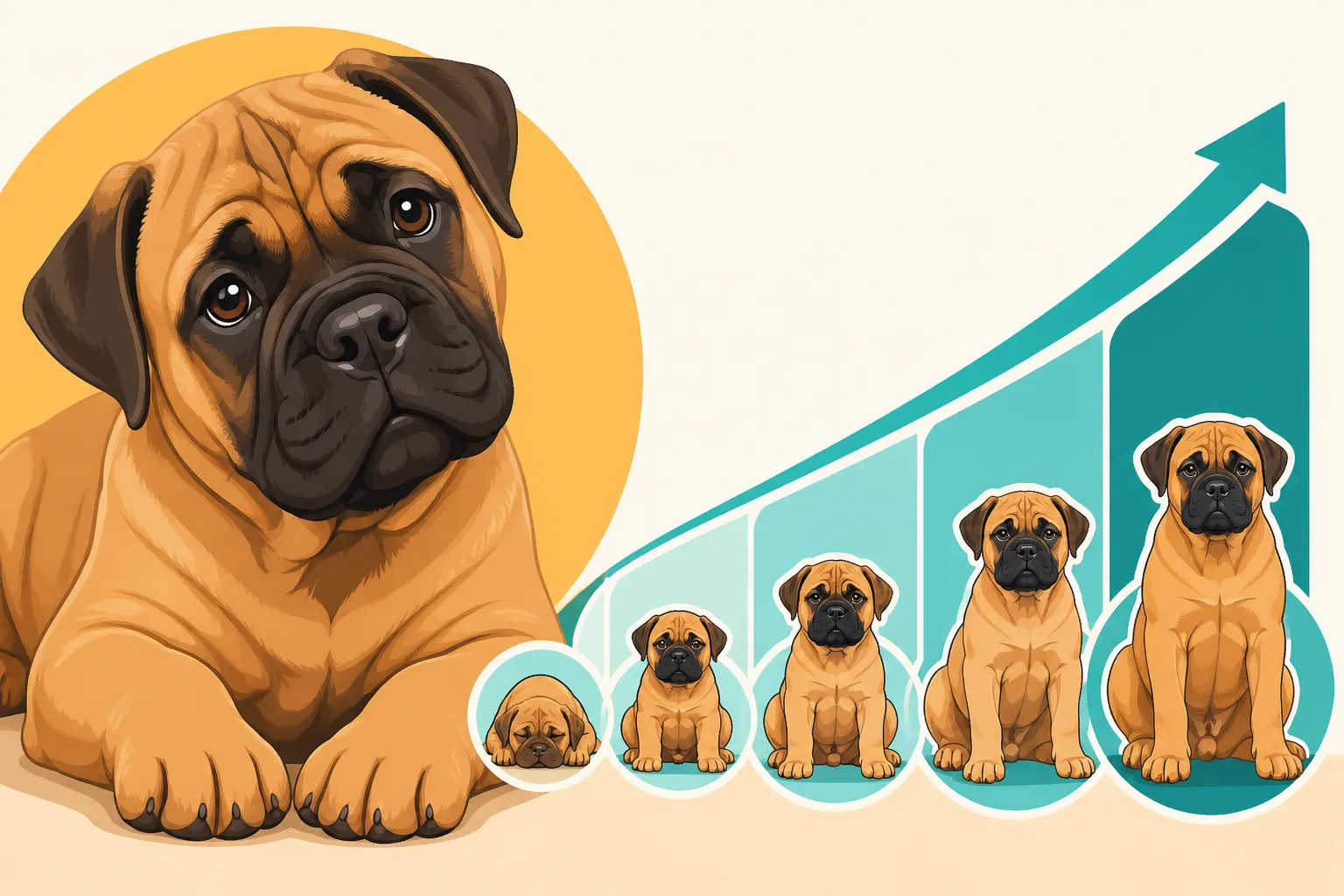
It's important to remember that these are average ranges, and individual puppies will vary based on genetics, gender, and overall health. A Bullmastiff puppy's weight is a guideline, not a strict rule. Don't panic if your pup is a little outside these ranges, but use them as a tool for discussion with your veterinarian. Generally, male Bullmastiffs tend to be larger and heavier than females at maturity, and this difference often starts to become apparent as they grow.
From Wee Pup to Wobbly Toddler: 8 Weeks to 6 Months
This is the period of most rapid growth for your Bullmastiff puppy. They will seemingly double in size overnight, and it's exhilarating to watch. However, as we discussed, this is also the most critical time to monitor their growth and ensure it's steady, not explosive.
- 8 Weeks (2 Months): A Bullmastiff puppy at this age typically weighs between 15-25 pounds. They're still very much in their "puppy fluff" phase, with large paws they're still learning to coordinate. This is generally the age they come home, and the world is a giant, exciting place to explore.
- 3 Months: By now, your pup will have grown considerably, often weighing in the range of 25-40 pounds. Their personality is starting to shine through, and they're gaining confidence. They're still mostly leg, but their chest is beginning to broaden.
- 4 Months: Expect weights to be between 40-55 pounds. At this stage, they're active, curious, and still very much a puppy, though their size can already be surprising to visitors. You'll notice their energy levels are high, but they also crash hard for naps.
- 5 Months: Your Bullmastiff puppy will likely weigh between 55-70 pounds. The growth spurt is very evident now, and you might start to feel their strength on the leash. They're quickly outgrowing beds and crates, and their appetite will match their growth.
- 6 Months: By half a year old, a Bullmastiff puppy will often weigh 70-90 pounds. This marks the transition into adolescence. While they still have plenty of growing to do, the most intense period of rapid weight gain is starting to slow down. They might look a bit lanky or "leggy" at this stage, which is perfectly normal as their frame stretches out before filling in. For insights into their development during this time, you might read What a Bullmastiff Puppy Is Like at Nine Months.
Adolescent Awkwardness to Young Adult Bulk: 7 Months to 18 Months
After the initial explosion of growth, this phase sees a more consistent, albeit still substantial, gain. They're building muscle and their bone structure is solidifying.
- 7-9 Months: During these months, expect their weight to increase to 90-110 pounds. They are officially "teenagers," full of energy, testing boundaries, and still prone to puppy antics, but with the body of a much larger dog. Their coordination improves, but they can still be clumsy giants. This is when you really start appreciating the need for early leash training!
- 10-12 Months: As they approach their first birthday, most Bullmastiffs will weigh between 110-125 pounds. Females might be nearing their adult height and weight, while males will continue to grow for a bit longer. They're becoming more self-assured, and their protective instincts may start to become more noticeable.
- 13-18 Months: In this period, weights typically fall between 120-135 pounds, with males often at the higher end. The rapid upward trajectory on the scale has mostly tapered off, and now it's about filling out. Their chests will broaden, and their musculature will become more defined. They're still considered juveniles in many respects, but their physical presence is undeniable. This is an important time to continue joint support and appropriate exercise as their growth plates are still closing. You can learn more by checking out When a Bullmastiff's Growth Plates Close.
The Finishing Touches: 18 Months to 3 Years
While they may look like adults at 18 months, Bullmastiffs, particularly males, aren't truly "finished" until they are two to three years old. This final stage is less about significant weight gain and more about muscle development, chest deepening, and overall body maturity.
- 18 Months – 2 Years: During this time, Bullmastiffs typically reach their full height and often weigh between 120-140 pounds. Females generally settle into their mature weight, while males continue to add muscle and depth. This is when they transition from lanky adolescents to truly powerful, imposing dogs. You’ll notice their bodies filling out, gaining that characteristic Bullmastiff bulk and presence. It's truly incredible to see them transform.
- 2-3 Years: Many Bullmastiffs, especially males, will put on the last few pounds of muscle and depth during this period, often reaching their final adult weight of 120-150+ pounds. They achieve their full, majestic presence. This is when their powerful musculature truly defines them. While the scale might not show dramatic jumps, their physical appearance will continue to mature, resulting in that impressive, confident Bullmastiff silhouette. This final stage of development is crucial for their overall robustness. For more on this, consider reading When a Bullmastiff Fills Out.
Here's a handy table to summarize the general weight ranges:
| Age | Approximate Weight Range (lbs) | Notes |
|---|---|---|
| 8 Weeks | 15-25 | Puppy often comes home at this age. Rapid growth just beginning. |
| 3 Months | 25-40 | Noticeable growth spurts. Still mostly clumsy. |
| 4 Months | 40-55 | Energy levels high; growing out of puppy accessories. |
| 5 Months | 55-70 | Strength on leash becoming apparent. Appetites increasing significantly. |
| 6 Months | 70-90 | Adolescence begins. Growth rate starts to moderate, but still substantial gains. May appear lanky. |
| 7-9 Months | 90-110 | Teenage phase. Body starts to fill out more. Continued supervision during exercise is vital to protect joints. |
| 10-12 Months | 110-125 | Approaching one year. Females may be close to adult weight. Males continue to add size. |
| 13-18 Months | 120-135 | Growth plates closing. More focus on muscle development and solidifying frame. |
| 18 Months – 2 Years | 120-140 | Reaching full height. Filling out and gaining depth. Males continue to mature. |
| 2-3 Years | 120-150+ | Final stage of maturity, particularly for males adding muscle and breadth. Achieves full adult presence. |
Factors Influencing Your Bullmastiff Puppy's Weight
While the chart above gives you a good idea of what to expect, it's crucial to understand that several factors can influence your individual puppy's growth trajectory. No two Bullmastiffs are exactly alike, and genetics, diet, and activity all play a significant role. It's not just about the breed standard; it's about the unique combination of these elements in your dog's life.
Sometimes, owners fixate on the numbers, but a healthy, active puppy with a good body condition score might be perfectly fine outside the average range. The key is balance and working with your vet to ensure their overall well-being. Don't let the scale be your sole guide; look at the whole picture of their health and development.
Genetics and Parental Lines
Just like people, dogs inherit traits from their parents, and size is a big one. If your Bullmastiff puppy comes from lines where the parents are on the smaller end of the breed standard, your pup is likely to be a bit smaller too. Conversely, if both parents are large, well-boned examples of the breed, your puppy will probably follow suit. A reputable breeder should be transparent about the size and weight of their breeding dogs, as well as the health history of their lines. They can offer insights into what to expect from a particular litter.
Beyond just size, genetics also dictate bone structure and predisposition to certain orthopedic conditions. This is why good breeders conduct health screenings on their breeding stock for things like hip and elbow dysplasia. While these screenings don't guarantee your puppy won't develop problems, they significantly reduce the risk. It's a foundational element of responsible breeding, and it directly impacts how well your puppy's skeletal system can handle its impressive growth.
Nutrition and Feeding Practices
This is arguably the most controllable factor in your Bullmastiff puppy's growth. Feeding a high-quality, large breed specific puppy food is absolutely essential. These formulas are specially designed with lower calcium and phosphorus levels compared to regular puppy foods, which helps prevent too-rapid bone growth and reduces the risk of developmental orthopedic diseases. Brands like Purina Pro Plan Large Breed Puppy or Royal Canin Giant Puppy formulas are often recommended by veterinarians for this reason. You can find these and other suitable options on platforms like Chewy or Amazon, making it convenient to get the right nutrition delivered.
Portion control is equally vital. Resist the urge to "free-feed" your Bullmastiff puppy or let them eat as much as they want. Follow the feeding guidelines on your chosen food bag, but always adjust based on your puppy's individual body condition, not just their weight. A puppy who looks too lean might need a little more, while a chunky one needs less. It’s also generally recommended to feed large breed puppies 2-3 meals a day to help manage caloric intake and reduce the risk of bloat. For more in-depth advice on this topic, check out Why a Bullmastiff Puppy Needs Large Breed Food and Feeding a Bullmastiff Puppy So It Grows Slowly.
Exercise and Activity Levels
Appropriate exercise is crucial for healthy development, but too much, or the wrong kind, can be detrimental. For a Bullmastiff puppy, the focus should be on short, controlled play sessions and gentle walks on soft surfaces, especially during their first year. High-impact activities like jumping, long runs on pavement, or excessive stair climbing should be avoided. Their growth plates are still open and vulnerable, and repetitive stress can cause damage.
Think about what activities are natural and safe. Structured walks on a leash in the park, sniffing around the yard, or playing with appropriate toys are perfect. Avoid forcing them to keep up on long hikes or runs until they are fully mature, typically around 18-24 months. Even then, ease them into more strenuous activities. A tired puppy isn't necessarily a healthy puppy if that tiredness comes from overexertion on developing joints. To understand the limits, refer to The Exercise Limit for a Bullmastiff Puppy.
When to Be Concerned About Your Puppy's Weight
It's easy to get anxious when your Bullmastiff puppy doesn't seem to fit neatly into the typical weight ranges. While some variation is normal, there are definite red flags that warrant a conversation with your veterinarian. Being observant and proactive can make a huge difference in catching potential issues early, which is always the best course of action. Trust your gut; if something feels off, it probably is.
One of the greatest benefits of having a close relationship with your vet is their ability to assess your puppy's growth objectively, accounting for their specific breed, genetics, and lifestyle. They can provide professional guidance that goes beyond general charts, offering tailored advice for your unique Bullmastiff.
Underweight Concerns
If your Bullmastiff puppy consistently falls below the expected weight range, or if you can easily see their ribs, hip bones, and vertebrae without any fat covering, it's time to investigate. Being underweight can signal several issues. Perhaps they're not getting enough calories for their energy level, or maybe the food isn't digestible enough for them. It could also be a sign of parasites, malabsorption issues, or other underlying health problems that prevent them from utilizing nutrients properly.
A lack of appetite, lethargy, or poor coat condition alongside low weight are serious indicators that something is amiss. Don't just try to increase their food without a vet check. A professional diagnosis is crucial to rule out medical conditions. Your vet can perform fecal tests, blood work, and a thorough physical exam to pinpoint the cause and recommend the appropriate course of action, which might involve a different diet, deworming, or other treatments. You might also want to read Signs a Bullmastiff Puppy Is Not Thriving.
Overweight Concerns
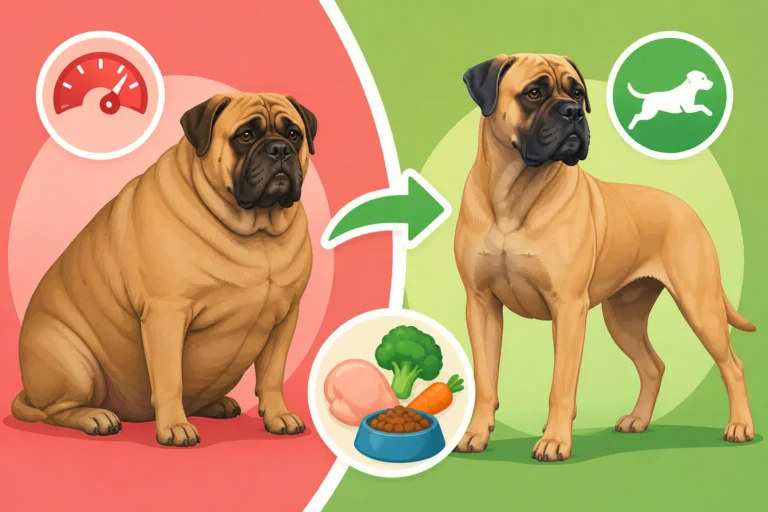
Just as being underweight is a problem, carrying too much weight, especially during the crucial growth phase, is arguably an even greater risk for a giant breed like a Bullmastiff. Excess weight puts immense strain on their developing joints, exacerbating any genetic predispositions to conditions like hip or elbow dysplasia. It forces their skeletal system to bear more load than it's designed for at that stage, leading to abnormal development and lifelong pain.
An overweight Bullmastiff puppy might look "chunky" or "robust," but this is a false indicator of health. You should be able to feel their ribs easily without pressing hard, and they should have a discernible waist when viewed from above. If you're struggling to feel ribs or if they look round rather than lean, it's critical to adjust their diet and exercise immediately. Your vet can help you create a controlled weight loss plan, usually by slightly reducing caloric intake and increasing appropriate, low-impact exercise. Do not let your puppy become overweight; the long-term consequences are severe. For a deeper dive into this, see Signs a Bullmastiff Is Overweight.
The Importance of Regular Vet Check-ups
Regular veterinary visits are your best defense against both underweight and overweight issues, as well as a host of other health concerns. Your vet is a trained professional who can objectively assess your Bullmastiff puppy's growth curve, body condition, and overall health. They'll measure your puppy's weight, check their conformation, and discuss their diet and exercise routine with you. These check-ups are not just for vaccinations; they are vital opportunities to monitor growth and catch any potential problems early.
During these visits, don't hesitate to voice any concerns you have, no matter how small they seem. A good veterinarian will appreciate your attentiveness and work with you to ensure your Bullmastiff is on a healthy track. They can also provide guidance on specific feeding amounts, exercise limits, and when to transition from puppy food to adult large breed food. Establishing this open communication early on is invaluable for the lifespan and well-being of your giant breed companion.
Practical Tips for Monitoring Your Bullmastiff's Growth
Being a Bullmastiff owner means becoming a keen observer of your dog's physical condition. It's not just about looking at a number on a scale; it's about understanding what your dog's body is telling you. Regular monitoring, combined with hands-on assessment, will empower you to make informed decisions about their care and ensure they develop into a healthy, robust adult.
This proactive approach means you'll be able to react quickly if you notice anything amiss, rather than waiting until a problem becomes more significant. It’s an ongoing process, not a one-time check, and it will be part of your routine throughout their growth.
Regular Weigh-ins and Growth Records
Making regular weigh-ins a part of your routine is incredibly helpful. If you have a large enough scale at home, that's ideal. Otherwise, most veterinary clinics are happy for you to pop in periodically to use theirs, especially during puppyhood. Weigh your Bullmastiff puppy at least once a month, and keep a simple record. Note their weight, age, and any significant observations. This creates a personal growth chart that you and your vet can reference.
Seeing the progression over time can highlight if they're gaining too quickly, too slowly, or hitting healthy plateaus. It’s a fantastic visual tool that helps confirm you’re on the right track or identifies trends that need attention. This kind of data can be invaluable for making informed decisions about diet adjustments or activity levels. Don't be afraid to keep a simple notebook or a spreadsheet; those numbers tell a story. You can compare it to How Fast a Bullmastiff Puppy Grows to see if your pup is on par.
The Rib Test and Body Condition Scoring
Beyond the scale, your hands are one of the best tools for assessing your Bullmastiff's weight. This is known as the "rib test" and is a key part of body condition scoring. Run your hands along your puppy's sides. You should be able to easily feel their ribs, almost like feeling the knuckles on your hand, without having to press hard through a layer of fat. If you can see their ribs clearly, they might be too lean. If you have to press to feel them, they're likely carrying too much weight.
Additionally, observe your puppy from above and from the side. From above, they should have a discernible waist or "tuck" behind their ribs. From the side, their belly should tuck up slightly, not hang low. These visual and tactile cues are often more telling than a single number on a scale, especially as Bullmastiffs mature and their frame broadens. Learn more about how to do this effectively with How to Feel a Bullmastiff's Ribs.
Adjusting Food and Exercise as They Grow
Your Bullmastiff puppy's needs will change dramatically as they grow from a tiny fluffball to a formidable adult. What worked at 3 months won't necessarily be right at 9 months or 18 months. You'll need to continuously adjust their food intake based on their energy levels, body condition, and activity. It's a dynamic process, not a static one. As they approach maturity, their growth will slow, and their caloric needs per pound of body weight will decrease.
This means gradually transitioning them from large breed puppy food to a high-quality large breed adult food, typically around 12-18 months of age, depending on the specific food and your vet's advice. Consult the packaging guidelines for adult food, but again, always prioritize their body condition. Similarly, their exercise needs will evolve. While still protecting their joints, they'll gradually be able to handle longer, more moderate walks as they mature. Always err on the side of caution with giant breeds, prioritizing joint health over pushing them physically. This constant monitoring and adjustment are key to raising a healthy Bullmastiff.
Disclaimer
This article is for general informational purposes only and does not constitute professional advice. Laws, prices and regulations vary by location and change over time. Consult a qualified professional for guidance on your specific situation.