The Exercise Limit for a Bullmastiff Puppy
Bringing home a Bullmastiff puppy is an incredibly exciting time, full of wobbly paws, adorable wrinkles, and boundless enthusiasm. However, many new owners, eager to bond and burn off puppy energy, inadvertently push their large-breed pups too hard, setting them up for joint problems later in life. This guide will walk you through the crucial exercise limits for your growing Bullmastiff, helping you provide appropriate physical activity without risking their delicate developing bones and joints.
Understanding the Unique Needs of a Bullmastiff Puppy's Growing Body
It's easy to look at a sturdy Bullmastiff puppy and assume they can handle robust play, but their impressive size is actually a bit of a trick. While they're big, they're also growing incredibly fast, and this rapid growth makes their bodies, especially their joints and growth plates, surprisingly fragile. Unlike smaller breeds, which mature much quicker, a Bullmastiff takes a long time to fully develop, often not reaching full physical maturity until they are well over eighteen months, sometimes even two or three years old.
The Role of Growth Plates in Puppy Development
Imagine tiny areas of cartilage at the ends of your puppy's long bones – these are the growth plates. They are essentially the factories that produce new bone cells, allowing your puppy's legs to lengthen as they grow. Until these growth plates "close" or ossify (turn into solid bone), they are incredibly vulnerable to injury. High-impact activities, repetitive jumping, long runs, or strenuous play can cause micro-traumas or even fractures to these delicate plates. A damaged growth plate might close prematurely, leading to a limb that is shorter or crooked, which can cause lifelong lameness and pain. This is why limiting intense exercise is paramount; you're literally protecting the future structure of your dog's skeleton. We talk more about this in When a Bullmastiff's Growth Plates Close.
Why "More Is Not Always Better" for Large Breeds
The common misconception is that a tired dog is a good dog, and while mental stimulation certainly helps, physical exhaustion is not the goal for a Bullmastiff puppy. Their sheer body weight, even as a pup, puts significant stress on their developing joints. Activities that might be perfectly fine for a lighter, faster-maturing breed can be detrimental to a Bullmastiff. Think about the physics: a 60-pound Bullmastiff puppy landing from a jump exerts far more force on its joints than a 10-pound terrier puppy doing the same. It’s not just about energy expenditure; it’s about protecting the cartilage and ligaments that are still forming. Over-exercising can exacerbate conditions like Hip Dysplasia in a Bullmastiff and elbow dysplasia, which Bullmastiffs are already genetically predisposed to. A slow, steady approach to growth and exercise is truly the kindest and most responsible path you can take.
Safe Exercise Guidelines for Bullmastiff Puppies by Age
Navigating the right amount of exercise for a Bullmastiff puppy can feel like a minefield, but it doesn't have to be. The key is moderation, observation, and understanding that "exercise" isn't just about walks or runs. It's about appropriate movement and mental engagement.
Birth to Four Months: Gentle Exploration and Socialization
In these very early weeks, your Bullmastiff puppy's exercise needs are incredibly basic. They spend most of their time eating, sleeping, and playing in short bursts with their littermates or, once they come home, with you. Think of these as self-directed play sessions rather than structured workouts.
- Puppy Play: Short, frequent play sessions in a safe, contained area are perfect. This might involve chasing a soft toy, gentle tug-of-war (be mindful of their baby teeth!), or exploring new textures on the floor. These activities help them develop coordination and strength naturally.
- Short Potty Breaks and Explorations: Take your puppy outside for frequent potty breaks. These moments offer a chance to explore the yard or a quiet patch of grass, sniffing new smells and getting accustomed to the big wide world, but they shouldn't be long, purposeful walks yet.
- Supervised Interactions: If you have other calm, vaccinated dogs, brief, supervised play is good for socialization. Ensure the play isn't overly rough or sustained. Remember, puppies tire quickly and need ample rest. For mental development, consider gentle, positive-reinforcement training sessions, perhaps through an online program like BAXTER & Bella, which emphasizes engagement over strenuous physical activity. These early positive experiences are vital for building a confident, well-adjusted dog.
Four to Six Months: Structured Walks and Controlled Play
As your Bullmastiff puppy grows a bit, they'll have more stamina, but their growth plates are still wide open. This is the age to introduce very short, structured walks and continue with supervised, controlled play.
- The Five-Minute Rule (with a caveat): A common guideline for puppies is five minutes of structured exercise per month of age, twice a day. So, a four-month-old puppy might get 20 minutes of walking, twice a day. For a Bullmastiff, while this rule is a good starting point, always err on the side of caution. If your pup seems tired, stiff, or reluctant to move, cut the session short.
- Leash Manners: These walks are less about covering distance and more about teaching leash manners. Practice walking nicely on a loose leash, stopping and starting, and getting used to the sights and sounds of your neighborhood. A comfortable, well-fitting harness, like those available on Amazon designed for large breeds, can help prevent strain on their neck and back as they learn.
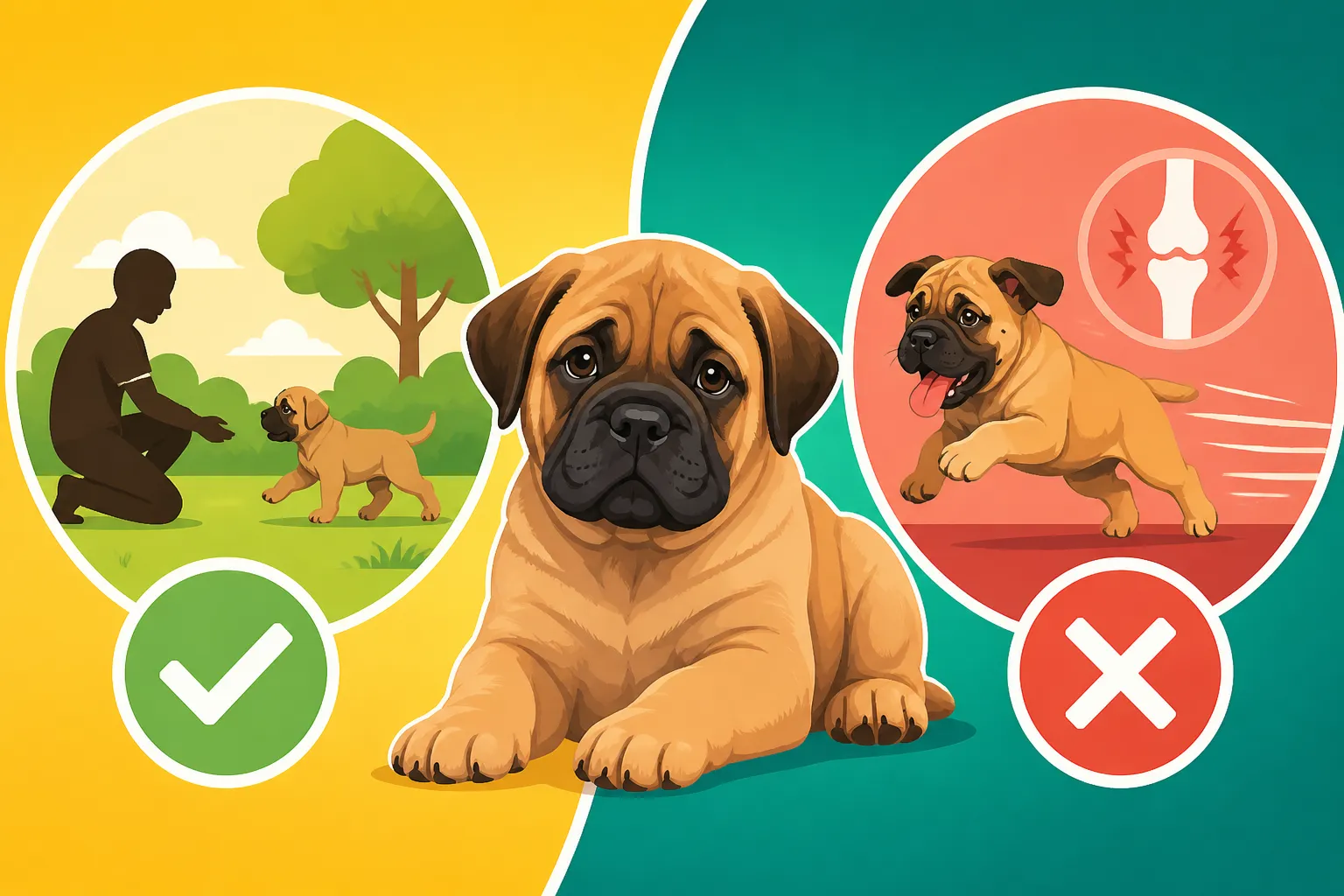
- Avoid High-Impact: Steer clear of long hikes, jogging, agility equipment, or jumping on and off furniture. Keep play sessions flat and supervised. Fetch is okay, but keep throws short and infrequent to avoid sudden stops and turns.
Six to Twelve Months: Increasing Stamina, Still Caution First
Your Bullmastiff puppy will be growing rapidly during this phase, often looking gangly and uncoordinated. They'll have bursts of energy, but their bones are still maturing. Consistency and caution remain key.
- Gradual Increase in Activity: You can slowly increase the duration of your structured walks, still using the five-minute-per-month guideline as a maximum. For a seven-month-old, that's up to 35 minutes, twice a day. Focus on flat, even surfaces. Why a Bullmastiff Puppy Should Not Run on Concrete is a good read on this topic.
- Moderate Play: Continue with moderate, supervised play. This might include gentle wrestling on the grass, short games of fetch, or exploring new, safe environments like a quiet park. The goal is engagement, not intense cardio.
- Mental Stimulation is Key: At this age, a Bullmastiff puppy can have a lot of energy that needs an outlet, but it doesn't all have to be physical. Puzzle toys, scent games, and continued obedience training are excellent ways to tire them out mentally without taxing their developing joints. Consider more advanced online training sessions through platforms like BAXTER & Bella to keep their minds sharp and engaged.
Twelve to Eighteen+ Months: Approaching Maturity
Even at a year old, your Bullmastiff is still very much a "teenager" in terms of physical development. While their growth plates may be nearing closure, their bones and connective tissues are still strengthening. When a Bullmastiff Finishes Maturing delves into this more.
- Controlled Exercise Expansion: You can gradually introduce slightly longer walks and more varied terrain. However, still avoid forced, repetitive running (like jogging alongside you for miles) or competitive dog sports that involve high jumps or sharp turns.
- Weight Management: Keeping your Bullmastiff lean during this period is one of the most important things you can do for their joint health. Excess weight puts immense strain on developing hips and elbows. Regularly check their body condition and adjust food intake as needed. We discuss this more in Feeding a Bullmastiff Puppy So It Grows Slowly and Keeping a Bullmastiff Lean Is the Best Thing You Can Do.
- Listen to Your Dog: Every Bullmastiff is an individual. Observe your dog closely during and after exercise. Any limping, stiffness, reluctance to move, or changes in gait should be a red flag to scale back activity and consult your veterinarian.
Here's a quick summary table for age-appropriate exercise:
| Age of Bullmastiff Puppy | Recommended Exercise Type | Duration (per session, twice daily) | Activities to Avoid | Focus |
|---|---|---|---|---|
| 0-4 Months | Self-directed play, short potty explorations | 5-10 minutes | Long walks, forced running, jumping, rough play | Rest, gentle exploration, early socialization |
| 4-6 Months | Short, structured walks, controlled flat play | 15-30 minutes | High-impact activities, stairs (excessive), long fetch | Leash manners, basic obedience, discovery |
| 6-12 Months | Moderate walks, gentle play, mental challenges | 30-45 minutes | Forced running, intense dog park play, agility | Stamina building, continued training, mental enrichment |
| 12-18+ Months | Longer walks, varied terrain, sustained play | 45-60 minutes | Repetitive hard impact, competitive high-impact sports | Gradual strength, joint protection, maturity |
Signs of Over-Exercising and How to Avoid It
Recognizing when your Bullmastiff puppy is being over-exercised is critical for their long-term health. They can be stoic, and sometimes their exuberance in the moment masks underlying fatigue or discomfort. Being a vigilant owner means knowing what to look for and proactive steps to keep them safe.
Subtle and Obvious Indicators of Trouble
It's not always an obvious yelp of pain or a dramatic collapse. Often, the signs are more subtle, especially in a breed known for its "game face."
- Limping or Stiffness: This is the most direct sign. Watch for even a slight favouring of a leg after a walk or play session. It might appear after they've rested and then try to get up again. Early morning stiffness, or difficulty getting up after a nap, can also be a red flag.
- Reluctance to Move: If your puppy, usually eager for an outing, seems hesitant to get up, go for a walk, or join in play, it could mean they're sore. They might try to tell you with a soft grunt or by simply moving away from the leash.
- Excessive Panting or Lagging Behind: While normal panting during exercise is expected, if your puppy is panting heavily after minimal exertion, struggling to keep up, or falling behind you on a walk, they might be overexerted or even overheating. Bullmastiffs are particularly susceptible to overheating due to their brachycephalic (short-nosed) structure, so pay extra attention in warm weather. You can read more about this in Why a Bullmastiff Overheats So Easily.
- Changes in Behavior: An overtired or sore puppy might become irritable, snappy, or overly lethargic. They might withdraw, lose interest in food, or even exhibit increased destructive chewing as a stress-relief mechanism.
- Puppy "Zoomies" Followed by Crash: While zoomies are normal puppy behavior, if they seem to occur more frequently after exercise, it might be a sign they're overstimulated and then crash hard, rather than winding down gently.
Proactive Steps to Prevent Over-Exertion
Prevention is always better than treatment, especially when it comes to the long-term health of your Bullmastiff's joints.
- Stick to Age-Appropriate Limits: As outlined above, always err on the side of less, especially during the crucial first 18 months. Short, frequent sessions are always better than one long, intense burst of activity.
- Choose Appropriate Surfaces: Whenever possible, walk and play on soft surfaces like grass, dirt trails, or sand. Avoid prolonged exercise on hard surfaces like concrete, asphalt, or pavement, which offer no shock absorption and can jar delicate joints. This is a critical point we highlight in Why a Bullmastiff Puppy Should Not Run on Concrete.
- Incorporate Rest Breaks: Even during a short walk, allow your puppy to pause, sniff, and rest. If playing, enforce breaks by redirecting them to a chew toy or a short training exercise.
- Monitor Temperature and Hydration: Always be aware of the weather. Bullmastiffs can overheat quickly. Carry water for them on walks, and ensure they have constant access to fresh water at home. During hot weather, restrict outdoor activity to early mornings or late evenings.
- Invest in Quality Joint Support: While not a license to over-exercise, providing good nutrition and potentially a veterinarian-approved joint supplement (after your vet advises it) can support healthy joint development. Look for supplements that contain glucosamine and chondroitin, often available on Amazon or through pet supply stores, though always discuss with your vet first.
- Regular Vet Check-ups: Your veterinarian can monitor your puppy's growth and development, checking for any early signs of joint issues. Don't hesitate to bring up any concerns about your puppy's gait or activity levels.
Enrichment and Mental Stimulation for a Growing Bullmastiff
A Bullmastiff puppy has a busy brain that needs just as much, if not more, exercise than their body. Providing ample mental stimulation is paramount for a well-adjusted dog and helps prevent boredom-related destructive behaviors, especially when physical activity needs to be limited.
Brain Games that Tire Them Out
Mental work can be surprisingly tiring for dogs, often more so than physical exercise. These activities engage their problem-solving skills, memory, and natural instincts.
- Puzzle Feeders and Snuffle Mats: Instead of just putting their food in a bowl, make them work for it. Puzzle feeders, many of which are readily available on Amazon, require your puppy to manipulate parts to get their kibble. Snuffle mats engage their powerful sense of smell, turning mealtime into a fun "hunt." This slows down eating (which can help with bloat prevention, a concern for Bullmastiffs) and provides a satisfying mental workout.
- Scent Games: Hide treats or toys around the house and encourage your puppy to find them. Start easy in one room, then gradually increase the difficulty and spread the items across multiple rooms. This taps into their natural scenting abilities and builds confidence.
- Training Sessions: Even short, 5-10 minute training sessions multiple times a day can be incredibly stimulating. Teach new cues, practice existing ones, or work on tricks. Positive reinforcement methods keep it fun and engaging. Programs like BAXTER & Bella offer structured curricula that are perfect for keeping a puppy's mind busy. When to Start Training a Bullmastiff Puppy emphasizes the importance of these early sessions.
Controlled Socialization and Exposure
Socialization is another form of mental enrichment that doesn't necessarily require strenuous physical activity. Exposing your Bullmastiff puppy to new sights, sounds, people, and well-behaved dogs in a controlled, positive manner is crucial for their development into a confident adult.
- Puppy Classes: A well-run puppy class focuses on socialization and basic obedience in a safe environment. Ensure the class emphasizes positive reinforcement and manages play sessions carefully to prevent overly rough interactions, especially for large breeds.
- Controlled Outings: Take your puppy to quiet parks, pet-friendly stores (if allowed and safe), or simply sit on a bench in a public area. Let them observe the world around them from a distance, rewarding calm behavior. These are not opportunities for uncontrolled romping, but for observation and positive association.
- Meeting New People: Invite calm, dog-savvy friends and family to your home. Supervise interactions closely, ensuring your puppy has positive experiences without being overwhelmed. Proper socialization helps ensure your Bullmastiff grows into a reliable guardian who can discern friend from foe, rather than being fearful or overly reactive.
By prioritizing mental enrichment and controlled, age-appropriate physical activity, you're not just preventing injuries; you're building a strong foundation for a healthy, happy, and well-behaved Bullmastiff that will be a joy to live with for all their years, Caring for a Bullmastiff Past Six included. Remember, their short puppyhood is fleeting, but the impact of proper care during this time lasts a lifetime.
Disclaimer
This article is for general informational purposes only and does not constitute professional advice. Laws, prices and regulations vary by location and change over time. Consult a qualified professional for guidance on your specific situation.