When to Start Training a Bullmastiff Puppy
Bringing home a Bullmastiff puppy is incredibly exciting, but it often comes with a looming question: When exactly do I start training this adorable, rapidly growing bundle of wrinkles? It’s a common worry because you know they’re going to be huge, and the thought of a 130-pound untrained dog can be daunting. This guide is here to reassure you that the best time to start is almost immediately, laying out a realistic, empathetic, and effective approach to training your Bullmastiff puppy from the moment they step through your door.
The First Steps: Training Starts the Moment They Arrive
Many new puppy owners feel like they need to wait a few weeks for their new Bullmastiff puppy to "settle in" before starting any serious training. While it's true they need time to adjust to their new environment, the truth is, every single interaction you have with your puppy from day one is a form of training. They're tiny sponges, soaking up information about their world, about you, and about what's expected of them. Delaying formal training isn't just a missed opportunity; it can actually make things harder down the line as unwanted behaviors become ingrained.
Embracing "Passive" Training from Day One
Think about it: every time your puppy has an accident inside, they're learning where not to go, but they're also learning that inside is an option if you don't redirect them. Every time they jump up and get attention (even negative attention), they're learning that jumping gets them noticed. This isn't about being strict or robotic; it's about being mindful and consistent. From the absolute moment you bring your little Bullmastiff home, you should be gently guiding them towards the behaviors you want to see. This includes teaching them where to potty, where to sleep, and how to interact politely with people. Even just consistently using their name and rewarding them with a treat or praise when they look at you is a foundational piece of training.
Establishing Routine and Structure
Bullmastiff puppies thrive on routine. They feel secure when they know what to expect. Establishing a predictable schedule for feeding, potty breaks, playtime, and rest is one of the most powerful training tools you have in those early days. For instance, waking up, going straight outside for a potty break, then breakfast, followed by a short play, and then a nap in their crate. This consistency helps them understand the flow of the day and internalizes good habits. Without a routine, puppies can become anxious or develop their own, less desirable, schedules. This structured approach helps prevent those "naughty" behaviors that often stem from confusion or boredom.
Early Socialization: More Than Just Playing with Other Dogs
Socialization is a massive, often misunderstood, part of puppy training, and for a Bullmastiff, it's absolutely critical. It's not just about letting your puppy romp with every dog they meet at the park. It's about carefully and positively exposing them to a vast array of sights, sounds, smells, people, and experiences during their critical developmental window, which typically closes around 16 weeks of age. For a breed as powerful and potentially protective as a Bullmastiff, missing this window can have lifelong consequences for their temperament and how they react to the world.
The Critical Socialization Window
This window is essentially your puppy's brain hardwiring how it perceives the world. Experiences during this time shape whether they'll grow up to be confident and calm, or fearful and reactive. Think about exposing them to different flooring textures, people in hats, people with umbrellas, children of various ages, loud noises like vacuums or sirens (from a safe distance), riding in the car, and even just calmly observing different dogs and animals from afar. The goal isn't necessarily interaction with all of these things, but rather passive, positive exposure so they learn these things are normal and not scary. A treat-filled car ride to a busy park where you just sit and people-watch can be invaluable. This really complements the guidance you'll find in The First Year With a Bullmastiff Puppy.
Controlled and Positive Exposure
Crucially, every new experience should be positive. Pair new sights and sounds with high-value treats and praise. If your puppy seems overwhelmed or scared, you've gone too far too fast. Retreat to a comfortable distance and try again later, or with less intensity. Avoid forcing interactions. For example, if you introduce them to a friendly, calm adult dog, make sure both are on leash initially, and the interaction is short, sweet, and supervised. Puppy classes are excellent for structured, safe socialization with other puppies and people, but always check the quality of the class. They should prioritize positive reinforcement and controlled interactions. Consider online resources like BAXTER & Bella for virtual puppy training that emphasizes early, positive socialization even before your puppy is fully vaccinated for outdoor group classes.
Foundation Obedience: Laying the Groundwork for a Gentle Giant
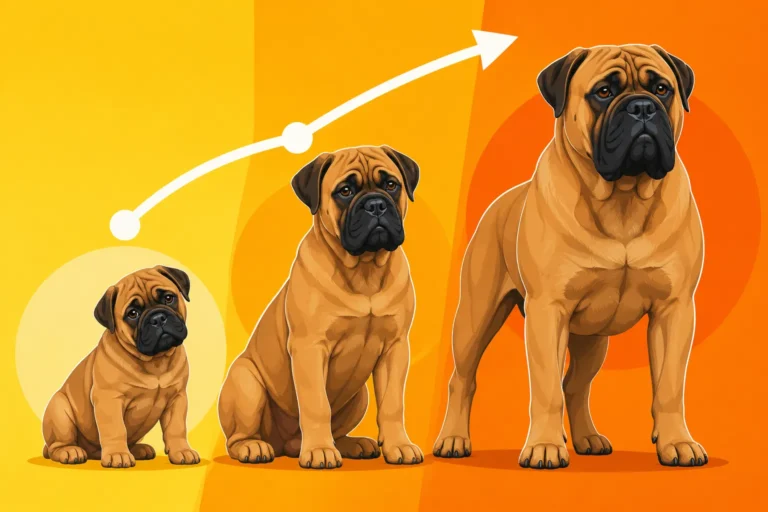
Once your Bullmastiff starts getting bigger, their strength becomes a real factor. This is why it’s imperative to instill basic obedience commands when they are small and manageable. A Bullmastiff puppy might be cute now, but imagine them at 100+ pounds pulling on the leash or jumping on visitors. Starting early sets the stage for a well-behaved adult. This stage of training is explored in greater detail in Why a Bullmastiff Must Be Trained Before It Is Strong.
Essential Commands to Teach Early
Focus on these core commands:
- Sit: A fundamental command that can be used in many situations, like waiting for food or greeting people politely.
- Stay: Incredibly important for safety, especially around open doors or busy streets.
- Come (Recall): Potentially life-saving. Practice this in increasingly distracting environments.
- Down: A calm position, useful for settling in public or at home.
- Leave It: Teaches your puppy to ignore tempting (and potentially dangerous) items.
- Loose Leash Walking: This is non-negotiable for a large breed. Start with short walks, rewarding often when the leash is slack. Teaching a Bullmastiff to Walk on Leash provides more insight into this crucial skill.
The Power of Positive Reinforcement
Bullmastiffs are sensitive dogs, despite their tough appearance. Harsh corrections or punishment can damage your bond and make them shut down or become fearful. Positive reinforcement—rewarding desired behaviors with treats, praise, or toys—is by far the most effective approach. This is highlighted further in What Motivates a Bullmastiff. They want to please you, but they also have a strong will and can be deliberate in their actions. Making training a fun, rewarding game keeps them engaged. Short, frequent training sessions (5-10 minutes, several times a day) are much more effective than one long, boring session. This keeps their attention and prevents them from getting overwhelmed.
Crate Training as a Foundation
Crate training is an invaluable tool for Bullmastiff puppies. It provides them with a safe, den-like space, aids in house-training, and can prevent destructive chewing when you can't supervise them directly. Introduce the crate positively, making it a comfortable place with soft bedding and toys. Never use the crate as punishment. Feed meals in the crate, and give special chew toys (like a KONG stuffed with peanut butter, available on Amazon) to make it a desirable place. Understanding What a Crate for a Bullmastiff Costs can help you choose the right size from the start.
Here's a quick look at common training milestones:
| Age of Bullmastiff Puppy | Key Training Focus | Common Challenges |
|---|---|---|
| 8-10 Weeks | House-training, Name recognition, Handling, Socialization, Crate Training | Nipping, chewing, whining in crate, potty accidents |
| 10-16 Weeks | Basic commands (sit, stay, come), Leash manners, Continued socialization | Fear periods, increasing stubbornness, testing boundaries |
| 4-6 Months | Refining commands, Impulse control, Advanced socialization | Adolescent energy, selective hearing, jumping, mouthing |
| 6-12 Months | Consistency, Proofing commands in distractions, Managing adolescence | Leash pulling, dog-dog interactions, "teenage" rebellions |
Navigating Puppyhood Milestones and Challenges
Bullmastiff puppies, like all puppies, go through various developmental stages, each bringing its own set of behaviors and training considerations. Understanding these stages helps you anticipate challenges and respond appropriately, rather than getting frustrated. Remember, they aren't fully mature until they are about three years old, as discussed in When a Bullmastiff Finishes Maturing.
The Nipping and Chewing Phase
Oh, the sharky puppy phase! All puppies nip and chew, and a Bullmastiff puppy's jaws can feel surprisingly strong even when they're tiny. This isn't aggression; it's how they explore their world and how they play with littermates. Your job is to teach them bite inhibition – that human skin is sensitive and teeth should never touch it. When they nip too hard, yelp loudly, pull your hand away, and ignore them for 10-20 seconds. If they continue, calmly put them in a brief "time out" (in their crate or a puppy-proofed area). Always redirect chewing to appropriate chew toys. You'll want a variety of durable toys, which can easily be found on Amazon, to keep them engaged and away from your furniture.
Fear Periods and Environmental Proofing
Puppies often go through one or more "fear periods" (typically around 8-11 weeks and then again during adolescence, sometimes later). During these times, a previously unbothered puppy might suddenly become scared of something new or even familiar. It's crucial to be supportive and reassuring, but avoid over-comforting, which can inadvertently reinforce the fear. Instead, calmly expose them to the scary stimulus from a distance, pairing it with high-value treats. The goal is to build confidence that new things are okay. This is where your comprehensive socialization efforts really pay off. If your Bullmastiff has encountered many different things positively, they're more likely to weather a fear period without long-term issues.
The Adolescent "Testing" Phase
Around 6 months, and sometimes lasting well into their second year, your Bullmastiff will hit adolescence. This is often when owners start feeling frustrated. Your previously well-behaved puppy might suddenly seem to "forget" commands, become more stubborn, or test boundaries. They might decide that sitting or coming when called isn't always worth their time, as detailed in How Stubborn a Bullmastiff Is. This isn't malicious; it's a normal part of development as they gain independence and mature. During this time, you'll need to double down on consistency, patience, and positive reinforcement. Revisit basic commands in varied environments, ensuring they are rock-solid even with distractions. This is also when some same-sex aggression can start to surface, so How a Bullmastiff Accepts a New Dog can be a valuable read if you're introducing new canine companions.
The Importance of Consistency and Patience
Training a Bullmastiff is a marathon, not a sprint. Their deliberate nature means they often pause to "think" before obeying, which some might interpret as stubbornness. It's really just their process. Your unwavering consistency and endless patience are the most powerful tools you possess.
Everyone Must Be on Board
For consistent training, everyone in the household needs to be on the same page. If one person allows the puppy to jump on them, but another corrects it, the puppy receives mixed signals and won't understand what's expected. Hold a family meeting to discuss rules, commands, and expectations. Decide on command words (e.g., "sit" vs. "butt down"), acceptable behaviors, and how to respond to unwanted ones. This unified front ensures your Bullmastiff gets clear guidance.
Professional Guidance Can Be Invaluable
While you can achieve a lot with self-training, especially with resources like online courses from BAXTER & Bella, a professional dog trainer, particularly one experienced with large guardian breeds like Bullmastiffs, can be an incredible asset. They can help you troubleshoot specific behavioral issues, teach you advanced techniques, and provide tailored advice for your dog's unique personality. Whether it's group classes or private sessions, a good trainer offers an objective perspective and can help bridge communication gaps between you and your Bullmastiff. Remember, training is as much about training the human as it is the dog!
Celebrate the Small Victories
There will be days when you feel like you're making no progress, or even going backward. But every small victory—a successful potty break outside, a few seconds of eye contact, a loose-leash walk for even a block—is a step in the right direction. Celebrate these moments. Your Bullmastiff is a magnificent, loyal companion who will give you years of joy. Investing the time and effort into early and consistent training ensures those years are filled with well-behaved, confident companionship, rather than frustration and chaos. It's a commitment, but one that is absolutely worth it for such a noble breed.
Disclaimer
This article is for general informational purposes only and does not constitute professional advice. Laws, prices and regulations vary by location and change over time. Consult a qualified professional for guidance on your specific situation.