Whether a Bullmastiff Knocks Over Toddlers
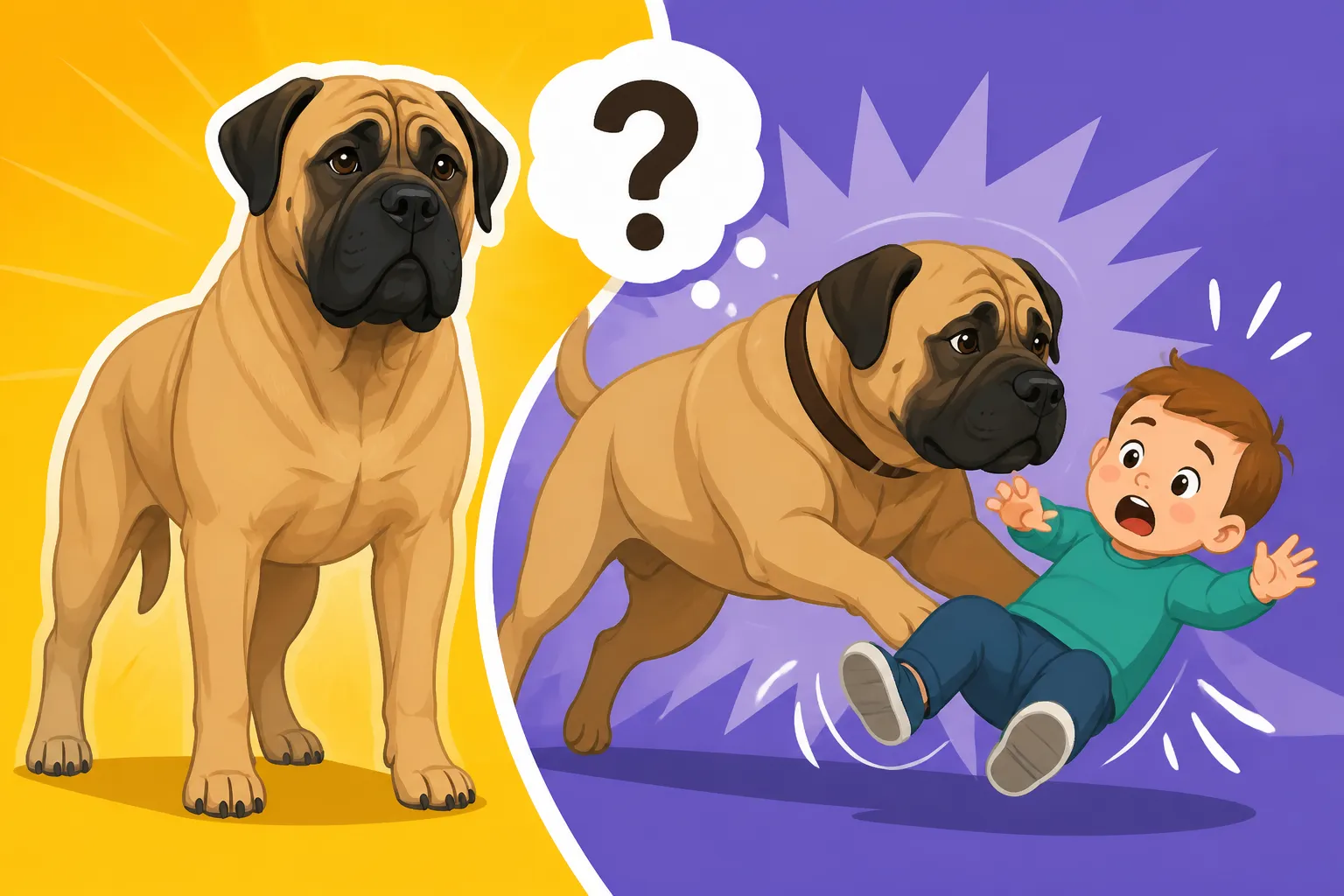
It’s a common, completely understandable fear that many parents of young children have, especially when considering a large, powerful breed like a Bullmastiff: will this gentle giant accidentally knock over my precious toddler? The image of a playful, unaware 130-pound dog barreling through the living room, sending a small child sprawling, is enough to give anyone pause. This guide is here to tackle that concern head-on, exploring the realities of Bullmastiffs and young children, and offering practical strategies to ensure harmony and safety in your home.
Understanding the Bullmastiff's Nature and Size
Bullmastiffs are undeniably impressive dogs, built with substantial bone and muscle. Their very presence commands respect, and it's natural to wonder how such a large animal can coexist gracefully with the often-unpredictable movements of a toddler.
Their Imposing Stature and Physical Presence
When you stand next to a fully grown Bullmastiff, you truly appreciate their size. They can easily weigh over 100 pounds, sometimes reaching 130 pounds or more, and stand over two feet tall at the shoulder. This isn't a small terrier that can be easily picked up or redirected with a gentle nudge. Their sheer mass means that any unintended contact carries a significant impact, especially for someone as small and fragile as a toddler. Picture your Bullmastiff stretching, shaking, or simply changing direction quickly – that's a lot of momentum. It's not about malice; it's simply physics.
Moreover, their size means they take up a lot of space. A Bullmastiff navigating a narrow hallway or a crowded room needs careful consideration. Even when lying down, they often sprawl, taking up a significant footprint, which can become a tripping hazard for little legs. This is why understanding their physical presence is key to preventing accidental bumps and tumbles, rather than assuming their calm nature will entirely override their sheer bulk.
The Gentle Giant Stereotype: Is It True?
The phrase "gentle giant" is often associated with Bullmastiffs, and for good reason. Many Bullmastiffs are known for their calm, affectionate, and patient dispositions, especially with their families. They often bond deeply with children, showing remarkable tolerance and a protective instinct. They're typically not a breed prone to frantic, high-energy bursts indoors, preferring to lounge near their people. This inherent calm can certainly reduce the likelihood of truly chaotic interactions.
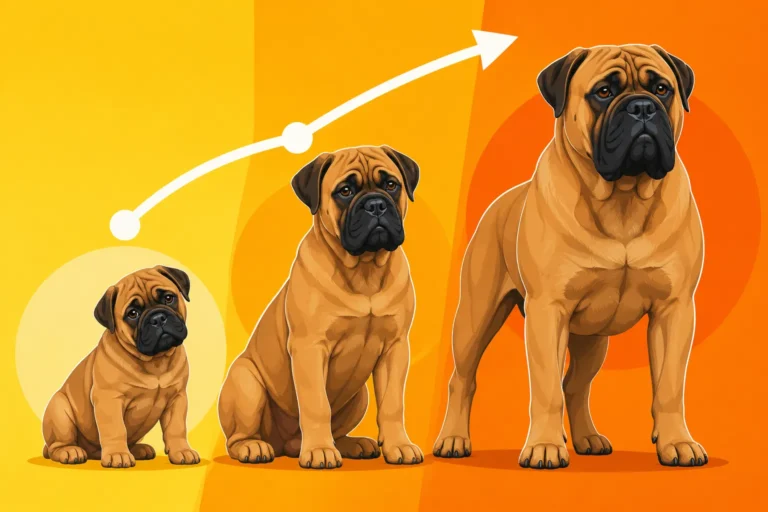
However, it's crucial to remember that "gentle giant" is a general temperament, not a guarantee against all accidents. Even the gentlest dog can be momentarily clumsy, forget its size, or get overexcited. A Bullmastiff puppy, even with its inherent calm, is still a large, quickly growing creature learning its own body and surroundings. It's a bit like a well-meaning but incredibly strong teenager learning to navigate a china shop. Their heart might be pure, but their physical presence demands respect and proactive management from us as owners.
Natural Instincts Around Vulnerable Family Members
Bullmastiffs were originally bred to guard estates, catching and holding poachers without inflicting harm. This historical role cultivated a deep sense of protectiveness and an instinct to be aware of their surroundings, particularly those they consider part of their "flock." This often extends to children. Many Bullmastiffs instinctively understand that young children are vulnerable and often display remarkable patience and gentleness around them. They might lean into them gently, keep a watchful eye, or even tolerate clumsy petting with stoic grace.
However, this protective instinct doesn't mean they always know how to physically avoid stepping on or bumping a child. It's a mental awareness, not always a physical finesse. They might try to place themselves between a child and a perceived threat (like a stranger at the door), inadvertently nudging a child out of the way. This inherent guarding tendency, while admirable, still requires us to teach them appropriate physical boundaries and behaviors around the smallest family members. For more on their interactions with kids, check out A Bullmastiff With Children.
The Reality of a Bullmastiff's Interactions with Small Children
It’s easy to imagine worst-case scenarios, but what does a typical day look like for a Bullmastiff living with toddlers? The truth is, most incidents aren't intentional aggression but rather a result of a large dog's natural exuberance or lack of spatial awareness combined with a small child's unpredictability.
Accidental Collisions: More Common Than Aggression
When a Bullmastiff and a toddler collide, it's almost always an accident. Bullmastiffs are not typically known for being aggressive towards family members, especially children. However, their sheer size means that even a playful nudge, an enthusiastic tail wag, or a quick change of direction can send a toddler tumbling. Think about a Bullmastiff getting up from a nap, stretching out, and not realizing a toddler has crawled right into its path. Or a child running past, startling the dog, which then shifts quickly.
These are not acts of malice, but simply physics at play. A Bullmastiff might try to navigate around a child, but if the child moves unexpectedly, the dog might not have time to react, leading to an accidental bump. Their heavy paws can also be a concern. A Bullmastiff stepping on a child's foot during an excited greeting, for example, could easily cause injury. It’s these common, everyday moments where vigilance and training become absolutely essential.
Enthusiastic Greetings and Playfulness
Bullmastiffs, despite their calm demeanor, can be incredibly enthusiastic, especially when greeting their favorite people. Imagine coming home after a long day – your Bullmastiff is likely to greet you with a body wiggle, a deep groan, and perhaps a desire to lean all 100+ pounds into you. While this is endearing for an adult, it's a huge challenge for a toddler. That happy lean, meant to show affection, could easily unbalance a small child.
Their playfulness, while often gentle, can also be a factor. A Bullmastiff might attempt a clumsy play bow or paw at a toy, not realizing a child is too close. They also love to play tug-of-war, and their strength in this game means a toddler trying to participate could easily be pulled over. It's critical to teach both the dog and the child appropriate ways to interact during playtime to prevent these kinds of accidents. This is particularly relevant when you consider How a Bullmastiff Behaves With Children.
Understanding a Bullmastiff's Energy Levels
While Bullmastiffs aren't usually hyperactive, especially once past puppyhood, they do have bursts of energy. A young Bullmastiff might still have puppy zoomies, where they run around the house in wide circles, often oblivious to obstacles. Even an older, calmer Bullmastiff can get a sudden burst of energy if startled, excited by a squirrel outside the window, or if someone rings the doorbell.
These moments of elevated energy are when the risk of a toddler being knocked over increases significantly. It's not about a constantly bouncing dog, but about managing those occasional, unpredictable bursts. Owners need to be aware of these potential energy spikes and have strategies in place to manage them, perhaps by redirecting the dog or ensuring the child is in a safe, separate area. Knowing How Much Exercise a Bullmastiff Needs can help manage these energy levels effectively, ensuring they're calm when indoors with children.
Mitigating the Risk: Training and Management Strategies
The key to a safe and harmonious household with a Bullmastiff and toddlers lies in proactive training and diligent management. It’s about teaching the dog how to exist safely in a home with tiny humans, and teaching the humans how to interact respectfully with a large dog.
Early Socialization and Exposure
Starting early is paramount. A Bullmastiff puppy needs to be socialized to a wide variety of sounds, sights, people, and experiences, including gentle exposure to children. This doesn't mean letting toddlers swarm a puppy, but rather controlled, positive interactions where the puppy learns that children are a normal, non-threatening part of its world. This might involve observing children from a distance, having calm, supervised interactions with slightly older, responsible children, and receiving treats for calm behavior around them. The goal is to build a foundation of positive association.
A well-socialized Bullmastiff is more likely to be calm and tolerant, rather than fearful or overexcited, when encountering children. Enrolling in puppy classes can be incredibly beneficial. Brands like BAXTER & Bella offer online puppy training programs that can guide new owners through crucial socialization steps from the comfort of their home, emphasizing positive reinforcement and gradual exposure. It’s about creating a well-adjusted adult dog.
Teaching Calmness and Impulse Control
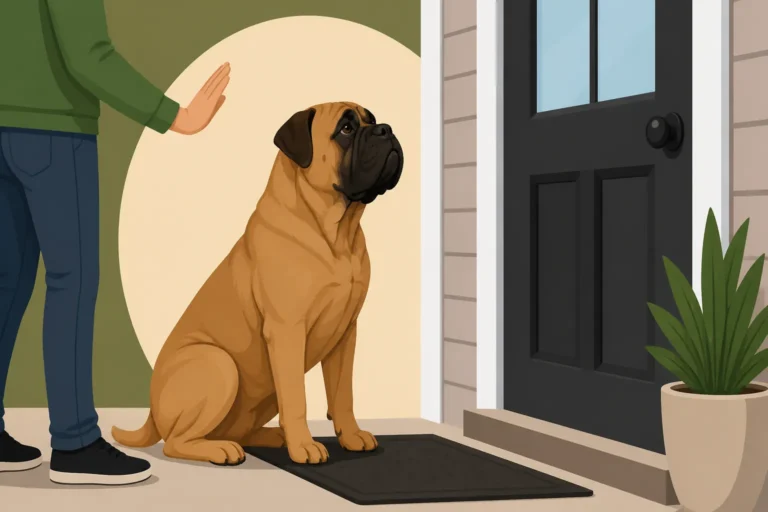
Training your Bullmastiff in basic obedience commands is non-negotiable, but more specifically, focusing on impulse control is vital. Commands like "sit," "stay," "down," and "off" are essential. "Off" is particularly useful for teaching the dog not to jump up, whether on people or furniture. Teaching a solid "place" command, where your Bullmastiff goes to a designated spot (like a large dog bed) and remains there until released, can provide a safe zone for both dog and child. This is especially useful when toddlers are active or when visitors arrive.
Reward calm behavior constantly. If your Bullmastiff is lying quietly while a toddler plays nearby, toss a treat or offer gentle praise. This reinforces the idea that calm around children is rewarding. Consistency is key here; every family member must be on the same page with training and expectations. Even teaching something like Teaching a Bullmastiff Not to Jump Up can prevent many accidental bumps.
The Importance of Leash Manners, Even Indoors
Many people think of leashes only for walks outside, but a leash can be an invaluable management tool indoors, especially in homes with toddlers. A leash, even a short one attached to your belt or held in hand, allows you to gently guide and redirect your Bullmastiff away from a child, or to keep them close to you when you need to navigate through a shared space. It offers control without physical struggle, which is crucial with a dog of this size.
This isn't about punishment; it's about clear communication and prevention. For example, if your toddler is playing on the floor and your Bullmastiff gets up from a nap, you can use the leash to guide your dog around the child instead of letting them navigate on their own, risking a clumsy step. It’s also excellent for managing those enthusiastic greetings at the door. Think of it as an extension of your control, ensuring that your Bullmastiff understands personal space, not just outside, but within the home too. This ties into the broader challenge of Training a Bullmastiff That Weighs More Than You Do.
Creating a Safe Environment for Both Dog and Child
Safety isn't just about training the dog; it's about structuring the environment and educating everyone in the household. It requires constant awareness and practical adjustments to daily life.
Supervision is Non-Negotiable
This is perhaps the most critical rule: never leave a Bullmastiff unsupervised with a toddler. Never. No matter how well-behaved your dog is, how gentle their temperament, or how well-trained they are, accidents can happen in an instant. A sudden noise, an unexpected movement from the child, or even just the dog shifting its weight can lead to an accidental bump or fall. It only takes a second for a toddler to fall and hit their head, or for a dog to unintentionally step on a tiny hand.
Supervision means actively watching their interactions, being present in the same room, and being ready to intervene at any moment. This doesn't mean hovering over them every second, but rather maintaining a clear line of sight and being attentive. If you need to step away for even a moment—to answer the phone, grab something from the kitchen, or use the restroom—either bring the child with you or separate the dog and child into different safe areas. This is why the question of Whether a Bullmastiff Should Be Left With Children is met with a resounding "no" for unsupervised time.
Designated Safe Spaces for Everyone
Establishing clear "safe zones" for both your Bullmastiff and your toddler is a game-changer. For your Bullmastiff, this could be a large, comfortable crate or a designated dog bed in a quiet corner that is always off-limits to the child. Teach your dog that this is their sanctuary, a place where they can retreat and be undisturbed. A sturdy dog gate, easily found on platforms like Amazon, can section off a part of a room or a doorway to give your Bullmastiff a break from constant toddler attention.
Similarly, create a safe space for your toddler. This could be a playpen, a gated-off room, or an area elevated out of reach. This ensures that when you can't actively supervise, both dog and child are safely separated. These zones reduce stress for everyone, allowing the dog to rest without worry and the child to play safely. It helps prevent accidental encounters when attention is diverted.
Teaching Children How to Interact Respectfully
While much of the focus is on dog training, it's equally important to teach toddlers how to behave around a large dog. This is an ongoing process as they grow and understand more. Start with gentle touches – teaching them to pet "nice" on the back or shoulder, rather than grabbing ears, tail, or face. Emphasize that dogs need their space, especially when eating, sleeping, or playing with their toys. Never allow a child to climb on a sleeping Bullmastiff or pull its fur.
It’s also important to teach children not to run screaming at the dog, or to surprise them. Show them how to move calmly and speak in a gentle voice. Use simple rules like "gentle hands" and "no yelling." As they get older, explain body language signs of a dog that might be uncomfortable (like lip-licking, yawning, or turning their head away). This mutual respect creates a foundation for a positive relationship and is fundamental for How a Bullmastiff Behaves With Children.
When to Seek Professional Guidance
Even with the best intentions and consistent effort, sometimes you might encounter challenges that feel overwhelming. That’s perfectly normal, and knowing when to call in a professional can make all the difference in creating a safe home for everyone.
Recognizing Warning Signs
It's vital for every Bullmastiff owner, especially those with young children, to be fluent in dog body language. While accidental bumps are the primary concern, you should always be aware of any signs of stress or discomfort from your dog. These aren't necessarily signs of aggression, but they are indicators that your dog is feeling overwhelmed or unhappy and needs space.
Look for subtle cues like lip licking, yawning (when not tired), turning the head away, avoiding eye contact, tail tucked, ears back, stiff body posture, or a low growl. A dog showing these signs is communicating that it's uncomfortable and that the interaction needs to stop. Any growl, even a soft one, should be taken seriously as a warning. If you see these consistently around your toddler, or if your Bullmastiff starts actively trying to avoid your child (not just moving away, but actively hiding or retreating), it's a strong signal that professional intervention is needed to prevent more serious issues.
The Role of a Certified Professional Dog Trainer
If you're struggling with consistent training, managing specific behaviors like jumping, or simply feel unsure about how to navigate dog-child interactions safely, a certified professional dog trainer can be an invaluable resource. Look for trainers who use positive reinforcement methods and have experience with large breeds and family dynamics. Avoid any trainer who suggests punitive methods or advises leaving a dog and child unsupervised.
A good trainer can assess your specific household dynamics, observe your Bullmastiff's behavior, and help you implement a tailored training plan. They can teach you techniques for impulse control, loose-leash walking (even indoors!), and how to reinforce calm behavior. They can also help you interpret your dog's body language more accurately and suggest environmental modifications. Think of them as a coach who empowers you with the knowledge and tools to succeed. Organizations like BAXTER & Bella also offer virtual coaching sessions that can be incredibly helpful for troubleshooting specific issues from home.
Ongoing Training and Behavioral Check-ups
Bringing a Bullmastiff into a home with children isn't a "one-and-done" training endeavor. It's an ongoing commitment throughout your dog's life. As your Bullmastiff matures and as your children grow and change, so too will the dynamics of your household. What worked for a crawling baby might not be enough for a boisterous preschooler. Your Bullmastiff also goes through different life stages, from the energetic puppy phase (The First Year With a Bullmastiff Puppy is a great resource here) to adolescence (When a Bullmastiff Finally Settles Down delves into their maturity) and then into their senior years.
Regular refreshers on obedience, continuing to reinforce good manners, and periodic "behavioral check-ups" (either with a trainer or simply by observing your dog critically) can help maintain a safe and happy environment. Stay observant of your Bullmastiff's comfort levels. The peace of mind that comes from knowing you’ve provided consistent training and a safe environment is truly priceless.
Below is a table summarizing key safety strategies for Bullmastiffs and toddlers:
| Aspect | Description | Actionable Strategy |
|---|---|---|
| Size & Strength | Bullmastiffs are large and powerful; accidental bumps can easily unbalance a small child. | Train "off" for jumping, "sit/stay" for greetings. Use a leash indoors for guidance. |
| Enthusiasm | Happy wiggles, leans, and clumsy play can overwhelm toddlers. | Teach a solid "place" command for high-traffic moments. Redirect overly excited greetings with a toy or calm interaction. |
| Spatial Awareness | Dogs don't always know how much space they take up or precisely where tiny feet are. | Supervise all interactions. Use gates to create physical barriers when active supervision isn't possible. |
| Unpredictability | Toddlers can move suddenly, make loud noises, or invade a dog's personal space without warning. | Educate children on gentle interaction, respecting boundaries, and approaching calmly. |
| Protective Instincts | While often gentle, a Bullmastiff's guarding nature might lead to them "body blocking" or nudging a child away from a perceived threat. | Ensure early, positive socialization. Reinforce calm behavior around children; manage high-stress situations (e.g., visitors) by separating dog and child. |
| Stress & Discomfort | Subtle signs like lip-licking, yawning, or head turns indicate a dog needs space. | Learn canine body language. Immediately separate dog and child if stress signals are observed. Seek professional help for persistent issues. |
Disclaimer
This article is for general informational purposes only and does not constitute professional advice. Laws, prices and regulations vary by location and change over time. Consult a qualified professional for guidance on your specific situation.