Teaching a Bullmastiff Not to Jump Up
One of the most common, and frankly, most frustrating challenges of owning a magnificent, large breed like a Bullmastiff is teaching them that four paws belong on the floor, not on your chest! When you have a hundred-plus-pound dog launching themselves at you or your guests in an enthusiastic greeting, it's not just annoying; it can be genuinely dangerous. This guide is here to walk you through understanding why your gentle giant might be jumping, and more importantly, how to kindly and effectively teach them better manners so everyone can enjoy their calm presence.
Understanding Why Your Bullmastiff Jumps
It's easy to get frustrated when your Bullmastiff springs up, but understanding the root cause of the behavior is the first step toward changing it. They aren't doing it to be naughty; it almost always stems from a place of excitement, seeking attention, or simply not knowing any better.
Seeking Attention and Greetings
For a Bullmastiff, jumping up is often their way of saying, "Hello! I'm so happy to see you!" or "Hey, look at me!" They might be trying to get closer to your face for a lick, or they've learned that jumping elicits a reaction – any reaction – from you. Even if that reaction is pushing them away or scolding them, in their mind, it's still attention.
Think about it: when they were a tiny puppy, a little hop might have been adorable and met with coos and pets. We inadvertently teach them this behavior when they're small and cute, and then as they grow into massive adults, it suddenly becomes a problem. This is why The First Year With a Bullmastiff Puppy is so critical for establishing good habits. They just want to engage with you at eye level, and since our eye level is much higher than theirs, they compensate by trying to bridge that gap. This can be especially true when new people arrive. A Bullmastiff can be quite reserved around strangers, but once they accept someone, their greetings can be enthusiastic. Consider how How a Bullmastiff Greets a Stranger can quickly escalate if not managed.
Overexcitement and Lack of Impulse Control
Another major factor in jumping is sheer overexcitement. Bullmastiffs, despite their calm demeanor indoors, can get incredibly worked up when stimulated. Visitors arriving, the sound of the doorbell, or even just you returning home after a long day can send them into a frenzy. In these moments of high arousal, their natural impulse control goes right out the window.
They haven't learned to manage that burst of energy in a more appropriate way. It's not about being disobedient; it's about not having the tools to channel that excitement. This is where consistent training comes in. We need to teach them an alternative behavior for those high-energy moments. They might be a deliberate breed, often pausing to "decide whether you are worth it" before obeying a cue, as explored in The Bullmastiff That Pauses to Decide Whether You Are Worth It, but this deliberation can actually be harnessed for training better impulse control. It means they can learn, but it requires patience and clarity from us.
Laying the Foundation: Preventative Measures and Early Training
Preventing jumping is always easier than trying to stop a long-established habit, especially with a dog as large and powerful as a Bullmastiff. Starting early and being consistent are your best friends here.
Teaching the "Four on the Floor" Rule
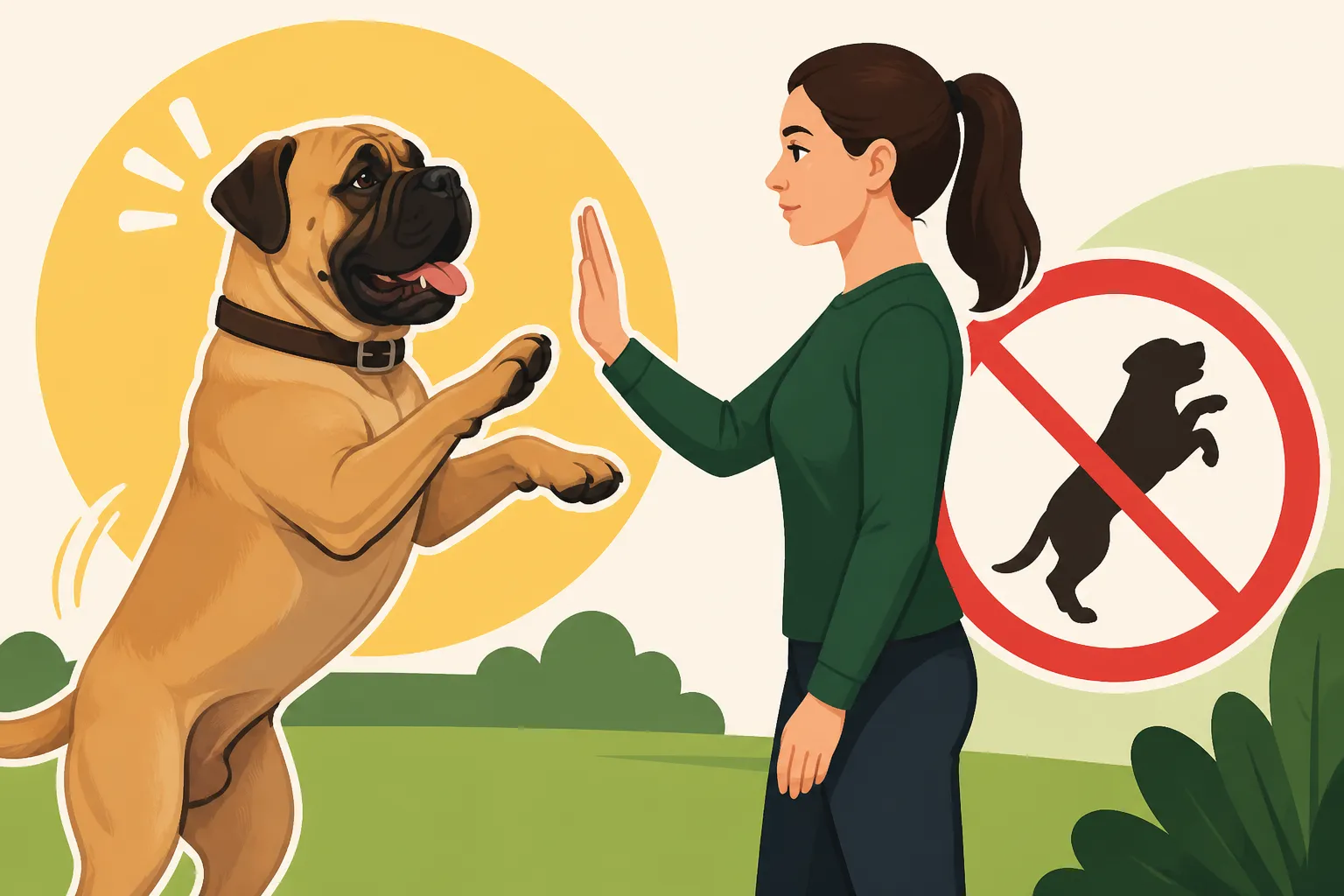
This is the golden rule. From the moment your Bullmastiff puppy comes home, or as soon as you decide to tackle the jumping behavior, "four on the floor" needs to be non-negotiable. This means any attention – petting, praise, treats, eye contact – is only given when all four paws are firmly on the ground.
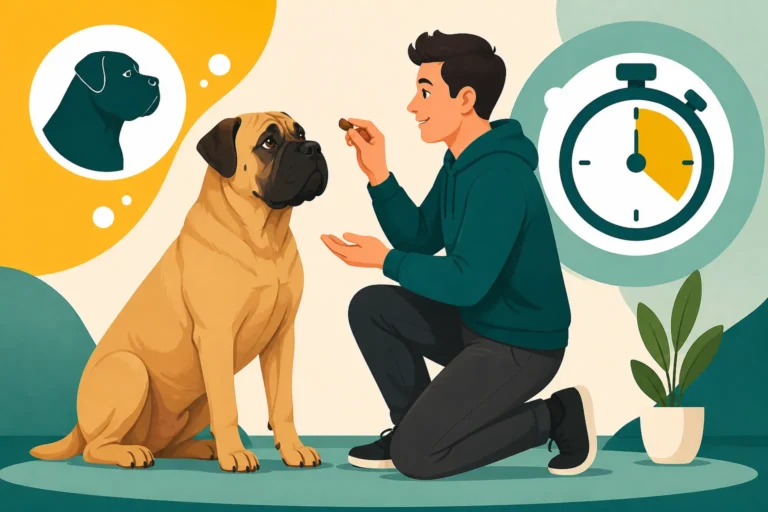
If your Bullmastiff so much as lifts a paw, all attention immediately stops. Turn your back, cross your arms, and become a "tree." As soon as their paws are back on the ground, even for a split second, you can calmly give them attention and reward them. The timing here is crucial. You want to reward the instant they are performing the desired behavior. Many owners find clicker training helpful for marking this precise moment, but even a verbal marker like "yes!" followed by a treat works wonders. This also means you need to avoid Why a Bullmastiff Cannot Be Physically Made to Do Anything; forcing them down often just teaches them to resist.
Harnessing Basic Obedience Cues
Strong foundation behaviors like "sit," "stay," and "place" are invaluable in preventing jumping. If your Bullmastiff knows how to sit reliably, you can ask for a sit before they even have a chance to jump up.
- "Sit": Practice this frequently in various environments and with different distractions. When someone approaches, ask for a sit. When you walk through the door, ask for a sit. Reward heavily for a calm sit.
- "Stay": Once they can sit, add a "stay." This helps build their impulse control.
- "Place": This is a fantastic cue for Bullmastiffs. Teach them to go to a designated "place" (like a comfy bed or mat, perhaps a sturdy orthopedic bed you can find on Amazon) and stay there until released. This is particularly useful when guests arrive. You can direct them to their "place" before the excitement escalates.
- Leash Management: Even within your home, having your Bullmastiff on a leash when expecting visitors can be a game-changer. It gives you a physical way to manage their movement and prevent jumping, allowing you to calmly redirect them into a sit or down position. A good, sturdy leash is essential when you're dealing with Training a Bullmastiff That Weighs More Than You Do.
Remember, How Trainable a Bullmastiff Is might surprise some people; they are quite intelligent but can be incredibly stubborn. This means clear, consistent commands and finding What Motivates a Bullmastiff are key. Often, it’s a high-value treat or a favorite toy.
Practical Strategies for Managing Jumping in Real-Life Scenarios
Even with a good foundation, real-life situations can throw a wrench in your plans. Here’s how to handle common scenarios.
Greeting Guests at the Door
This is often the biggest hurdle. The doorbell rings, and your Bullmastiff transforms into a jumping bean.
- Pre-emptive Action: Before guests arrive, have your Bullmastiff on a leash, or in their "place." You can even practice doorbell drills where you ring the bell, ask for a sit/stay, and reward them before anyone actually enters.
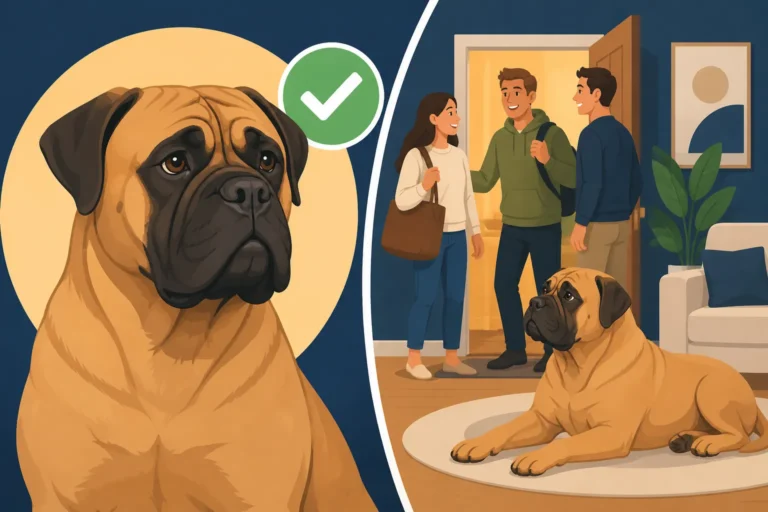
- Controlled Entry: When guests arrive, keep your Bullmastiff on a leash. Ask your guest to completely ignore your dog until all four paws are on the floor. No eye contact, no petting, no talking. As soon as your Bullmastiff is calm and sitting, then your guest can offer a calm pet or even a treat. This requires educating your guests, but it’s crucial for consistent training. Explain to them, "Please don't acknowledge him until he's sitting calmly. Otherwise, he thinks jumping works."
- Using a Barrier: A baby gate (again, a heavy-duty one from Amazon is a good idea for a Bullmastiff) can be invaluable. Keep your Bullmastiff behind the gate while you greet your guests. Once the initial excitement has died down, you can slowly introduce your Bullmastiff, still on a leash, asking for a sit before allowing interaction.
When You Come Home
Returning home after work can be a whirlwind of excitement for your Bullmastiff, often leading to exuberant jumping.
- The "Ignore and Reward Calm" Approach: When you walk through the door, completely ignore your dog until they have all four paws on the floor and are calm. Don't speak, don't make eye contact, don't touch. Turn your back if they jump. The moment they settle, even for a second, offer calm praise and a quiet pet.
- Redirection: If ignoring isn't quite cutting it, try redirection. As you walk in, before they can even think about jumping, immediately ask for a "sit" or a "down." Reward this calm behavior heavily. You are essentially interrupting the impulse to jump and offering an alternative, desired behavior.
- Establish a Routine: Sometimes, creating a consistent routine helps. For example, always have them sit by the door when you enter, get their leash, and go directly outside for a potty break before any indoor greetings happen. This shifts their focus.
Dealing with Jumping on Other People (Walks, Public)
Jumping on strangers or friends while out on a walk is not only embarrassing but can also be dangerous if your Bullmastiff bowls someone over.
- Leash Control is Paramount: A strong, well-fitting harness or a flat collar with a sturdy leash is vital. When you see someone approaching, anticipate your Bullmastiff's excitement. Keep them close to you on a short leash.
- Ask for a Sit: As people approach, calmly ask your Bullmastiff to "sit" or "heel." Reward heavily for compliance. If the person wants to greet your dog, ask them to wait until your dog is sitting calmly, with all four paws on the ground.
- The Turn-Away Tactic: If your Bullmastiff attempts to jump, immediately turn and walk in the opposite direction. This takes away the opportunity for them to interact with the person they are trying to jump on. Only approach the person again once your dog is walking calmly by your side. This teaches them that jumping equals no interaction. This needs to be consistent, which is a major part of Teaching a Bullmastiff to Walk on Leash.
Here's a quick comparison of common reactions and effective alternatives:
| Common (Ineffective) Reaction | What it Communicates to the Dog | Effective Strategy | What it Communicates to the Dog |
|---|---|---|---|
| Pushing dog down | "You're touching me! This is attention!" | Turn your back, ignore | "Jumping means no attention." |
| Scolding/Yelling | "You're paying attention to me! Yay!" | Ask for a calm 'sit' | "Calm behavior gets rewards." |
| Making eye contact | "You see me! I'm getting noticed!" | Break eye contact | "No jumping, no recognition." |
| Petting them while they're up | "This is how you get pets!" | Pet only when calm | "Four paws on the floor gets pets." |
| Letting guests roughhouse | "This is fun!" | Educate guests, manage interaction | "We greet calmly here." |
Consistency, Patience, and Advanced Scenarios
Teaching a Bullmastiff not to jump up is not a one-and-done lesson. It requires unwavering consistency from every member of the household and a good dose of patience.
The Power of Unwavering Consistency
Every single person who interacts with your Bullmastiff needs to be on the same page. If one person allows jumping "just this once," it sends a mixed message and undermines all your hard work. This can be especially challenging in a busy home, but it's absolutely vital.
It might feel repetitive, and you might even wonder Why a Bullmastiff Ignores a Cue It Knows, but they are constantly testing boundaries and learning what works and what doesn't. Each time they jump and get any form of positive reinforcement (even inadvertent attention), it reinforces the behavior. Each time they jump and get no reinforcement, and calm behavior gets rewarded, you are closer to success. Think of it as slowly chipping away at a deeply ingrained habit. This breed is known for its deliberate nature, but also for being How Stubborn a Bullmastiff Is, which means you'll need to be even more stubborn and consistent!
Addressing Relapse and Difficult Situations
Even the best-trained Bullmastiffs can have a "relapse," especially in highly stimulating environments or with new people who don't follow the rules. Don't get discouraged!
- Go Back to Basics: If jumping resurfaces, don't panic. Simply revert to the foundational training. Keep them on a leash indoors if necessary, go back to ignoring, and reward calm sits with high-value treats.
- High-Value Rewards: Sometimes, you need to up your game with rewards. Small pieces of cheese, cooked chicken, or a favorite squeaky toy might be more motivating than their regular kibble.
- Professional Help: If you're finding it impossible to make progress, consider consulting a professional dog trainer. They can offer personalized advice, help identify specific triggers, and teach you advanced techniques. Online resources like BAXTER & Bella offer structured programs that can guide you through training challenges at your own pace, providing expert advice right in your living room. A professional can also help you with Why Harsh Correction Fails on a Bullmastiff and guide you towards positive reinforcement.
Socializing for Success
A well-socialized Bullmastiff is generally a more confident and calmer dog. While you want to prevent jumping, you still want your dog to be comfortable and polite around new people and other dogs.
- Controlled Introductions: Introduce your Bullmastiff to new people and environments gradually and positively. Always supervise interactions, keeping your dog on a leash if necessary, and ensure all interactions are calm and positive.
- Positive Experiences: Make meeting new people a pleasant experience, associated with calm behavior and treats, rather than a wild, jumping free-for-all. Over time, your Bullmastiff will learn that calm greetings yield positive results, making interactions much more enjoyable for everyone involved. For a breed that was "bred to hold a man, not bite him," as discussed in A Bullmastiff Was Bred to Hold a Man, Not Bite Him, their natural inclination is often more about control than aggression, but uncontrolled jumping can still be intimidating.
Ultimately, teaching your Bullmastiff not to jump is a marathon, not a sprint. It takes dedication, understanding, and consistent effort, but the reward of having a polite, calm, and respected companion is absolutely worth it.
Disclaimer
This article is for general informational purposes only and does not constitute professional advice. Laws, prices and regulations vary by location and change over time. Consult a qualified professional for guidance on your specific situation.