Whether a Bullmastiff Can Live in Arizona or Florida
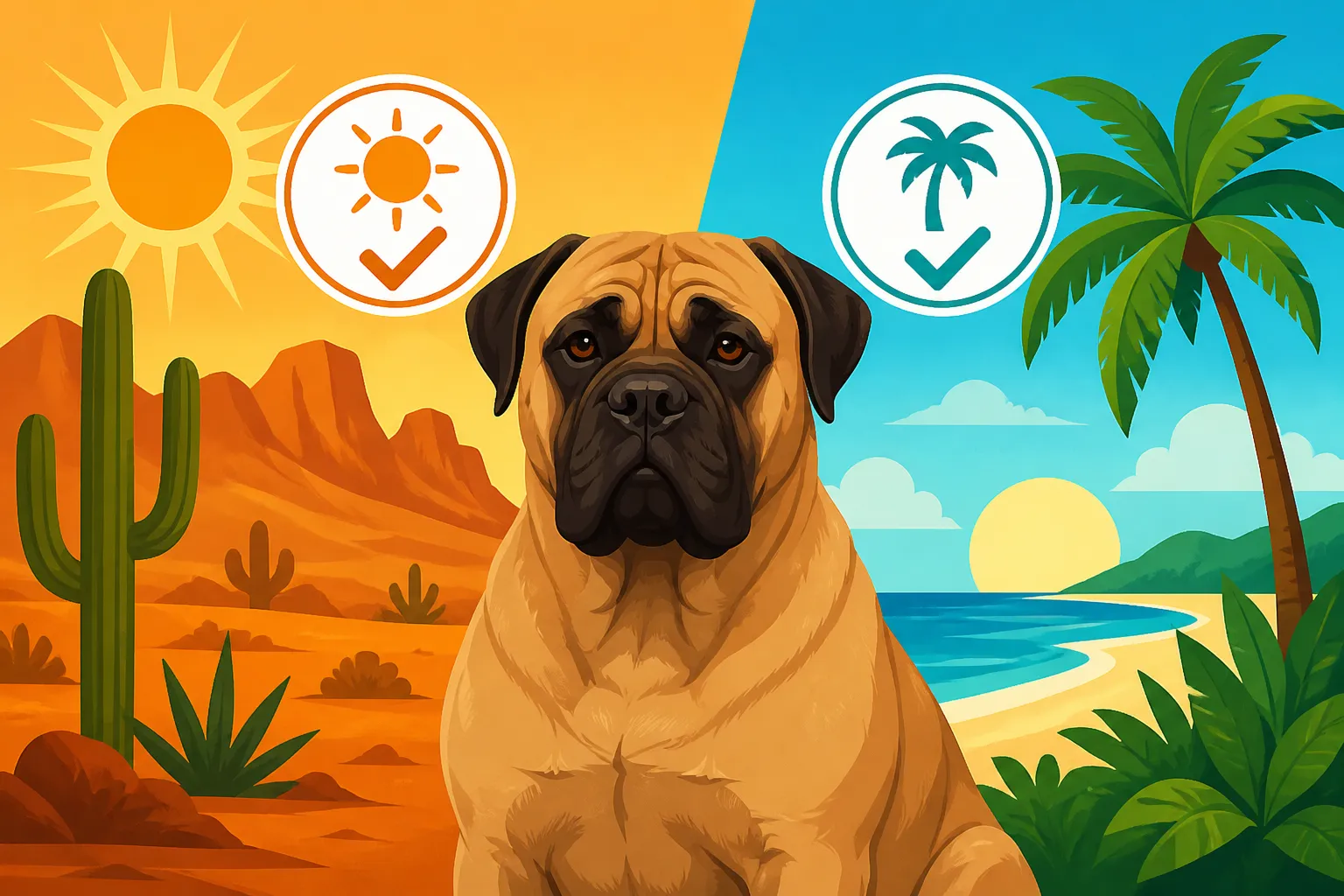
A Bullmastiff can live in Arizona or Florida, but neither state is a place to treat summer heat casually. Phoenix’s intense sun and Florida’s humid afternoons create different risks for a large, short-muzzled dog. This guide explains how to adapt walks, housing, travel, and emergency plans so your Bullmastiff can stay safer and more comfortable.
Can a Bullmastiff Handle Arizona or Florida
Arizona heat is dry but still dangerous
Dry air can make heat feel less oppressive to people, but it does not make Arizona safe for a Bullmastiff to exercise outdoors in summer. In Phoenix and Tucson, intense sun, hot pavement, and exposed yards can put a dog at risk even when the air feels manageable to a person. Asphalt and other surfaces can become much hotter than the air, and a dog’s paws are in direct contact with them.
Arizona’s climate varies considerably by elevation. A Bullmastiff living in Flagstaff may face cooler conditions than one in the Phoenix metro area, but warm weather still calls for sensible precautions. Do not assume that a shaded patio or a brief backyard break is automatically safe during the hottest part of the day. Shade can reduce direct sun, but it does not remove heat or guarantee that a dog can cool down.
A Bullmastiff’s heavy build and relatively short muzzle make it harder to cope with heat than many people expect. The breed can enjoy outdoor time in suitable conditions, but strenuous activity in hot weather is a poor bet. For more detail on the breed’s heat sensitivity, see Why a Bullmastiff Overheats So Easily and Whether a Bullmastiff Can Live in a Hot State.
Florida humidity creates a different challenge
Florida’s heat is often paired with high humidity, including in cities such as Miami, Tampa, Orlando, and Jacksonville. Dogs cool themselves largely by panting. When the air is humid, panting may be less effective at releasing body heat, so a Bullmastiff can struggle even when the temperature does not seem extreme to you.
That can make an ordinary outing feel deceptively risky. A dog might start a walk happily, then slow down, pant heavily, or seem reluctant to continue once the heat and humidity build. Treat those changes as a reason to stop and head indoors—not as stubbornness to overcome. A short walk in Florida’s cooler morning hours can be safer than a longer outing later in the day.
Arizona and Florida both require heat-aware routines, but the emphasis differs. In Arizona, direct sun and very hot outdoor surfaces are major concerns. In Florida, humidity can make cooling down more difficult, even in shade. In either state, a climate-controlled home and a plan to limit outdoor activity during hot conditions matter more than simply choosing a shaded route.
| Climate concern | Arizona | Florida | Practical response |
|---|---|---|---|
| Strong sun | A major concern, especially in exposed areas | Still important, even with cloud cover | Favor shade and avoid midday outings |
| Hot ground | Pavement and other surfaces can heat quickly | Paved areas can also become uncomfortable | Use grass where safe and keep outings brief |
| Humidity | Often lower in desert areas, though conditions vary | Often high and can make cooling harder | Watch breathing and energy, not just the temperature |
| Indoor cooling | Essential during hot spells | Essential during hot, humid spells | Keep a cool indoor retreat available |
| Outdoor exercise | Best limited to cooler periods | Best limited to cooler, less humid periods | Turn back at the first sign of distress |
Make the Home Safe Before Summer Arrives
Air conditioning should be part of the plan
For a Bullmastiff in either state, dependable indoor cooling is a basic part of responsible summer care. The dog should be able to come inside to a cool area whenever outdoor conditions are uncomfortable. A fan may help air circulate, but it should not be treated as a substitute for a cool indoor environment during dangerous heat. Learn more in Whether a Bullmastiff Needs Air Conditioning.
Think through the whole day, not just the hours when you are home. If you work outside the home, consider what the indoor temperature will be while you are away, whether the cooling system is reliable, and what you will do during a power interruption. A dog left in a closed room that heats up can be at risk even if the home felt comfortable when you left.
Give your Bullmastiff access to fresh water and a comfortable resting spot away from direct sunlight. Some dogs like a cool floor; others prefer a supportive bed. A cooling mat may be worth trying, but it is an extra comfort item, not a replacement for shade, water, or air conditioning. Chewy is one place owners may browse for cooling mats, sturdy water bowls, and other basic supplies; check product instructions and supervise your dog when introducing anything new.
Treat the yard as a supervised space
A fenced yard does not make hot-weather outdoor time safe by itself. A Bullmastiff may lie in the sun, follow you outside, or remain near a door without showing an obvious need to come in until it is already uncomfortable. Supervise outdoor breaks, make sure water and shade are available, and bring your dog indoors promptly when conditions are hot or humid.
Avoid leaving a Bullmastiff outside for extended periods in summer, even if the yard has a covered area. Shade shifts as the sun moves, and a sheltered spot can still be hot and poorly ventilated. More guidance is available in Whether a Bullmastiff Should Be Left Outside in Summer.
Set up your home so returning inside is easy. Keep the route to the door clear, and avoid leaving your dog on a balcony or in a sunroom that may heat up. If you use a dog door, make sure your Bullmastiff can freely reach a cool indoor area rather than being limited to an exposed outdoor space. For basic supplies, Chewy may offer options such as portable water bowls or cooling accessories, but no accessory makes prolonged exposure safe.
Adjust Walks, Play, and Everyday Errands
Choose timing and routes carefully
In hot weather, take walks during the coolest practical part of the day, often early in the morning. Evening may be cooler than midday, but pavement and walls can retain heat after the sun has gone down. Check conditions at your dog’s level and choose a route with shade, grass, and an easy way to return home.
Keep walks shorter and more relaxed than you might in mild weather. Let your Bullmastiff set the pace, and turn around if breathing becomes unusually heavy, your dog lags behind, or it seeks shade. Bring water when you leave home, but remember that offering water does not make a hot walk safe. For more seasonal planning, see When to Walk a Bullmastiff in Summer and What Temperature Is Dangerous for a Bullmastiff.
Do not plan a long hike or a hard play session simply because your dog seems eager at the start. Bullmastiffs can be enthusiastic without having the build or heat tolerance for sustained exertion in hot conditions. Keep fetch and rough play for cooler weather, and give your dog an indoor alternative such as a calm training game when outdoor exercise is not sensible.
Make car trips and errands conservative
A parked car can become dangerous quickly in warm weather. Never leave your Bullmastiff alone in a vehicle while you run into a store, even if you expect to be away only briefly or have cracked the windows. If an errand cannot include your dog safely, leave the dog at home in a cool environment.
For necessary trips, cool the car before your dog gets in, plan a direct route, and avoid leaving the dog unattended at stops. Bring water and take breaks when appropriate. A Bullmastiff may take up a great deal of space, so make sure the dog can settle safely without blocking the driver or interfering with seatbelts and other restraints.
Travel plans should include your destination’s climate, not just the forecast at home. A summer visit to a beach town in Florida may involve high humidity and hot sand; a road trip across Arizona may mean long stretches of exposed pavement and limited shade. Before you go, identify pet-friendly indoor places to cool down and veterinary clinics along the route. Chewy can be useful for finding travel basics such as collapsible bowls, but pack the supplies before the trip rather than relying on a last-minute stop.
Recognize Heat Stress and Know What to Do
Watch for changes in breathing and behavior
Heavy panting can happen after activity, but it should not be dismissed when it is intense, persistent, or paired with other changes. Warning signs can include excessive drooling, weakness, unsteady movement, vomiting, confusion, or collapse. A Bullmastiff that suddenly refuses to walk or seems unusually distressed in the heat needs immediate attention.
Heat-related illness can worsen quickly. If you suspect overheating, stop activity and move your dog to a cooler place. Use cool—not ice-cold—water to help cool the dog while contacting a veterinarian or emergency clinic for instructions. Do not wait to see whether severe symptoms resolve on their own. Read Signs a Bullmastiff Has Heatstroke and How to Cool a Bullmastiff Down before an emergency, so the steps are familiar.
Keep your veterinarian’s number and the nearest emergency clinic’s contact information easy to find. If you live outside a major city, identify an emergency option before the hottest part of the year; a long drive can complicate an already stressful situation. Ask your regular veterinarian which symptoms call for immediate transport and what cooling steps they recommend while you are on the way.
Build a routine that prevents avoidable exposure
Prevention is mostly a matter of making the safer choice before your dog is uncomfortable. Keep strenuous activity for cooler conditions, make indoor cooling reliable, and do not leave your Bullmastiff in a vehicle or outside without supervision. If your dog has a medical condition, is recovering from illness, or has previously struggled in warm weather, ask your veterinarian how to tailor the routine.
Use a simple check before every outing: Is the air comfortable for a short walk? Is the ground cool enough for paws? Is there shade along the route? Can you get back indoors quickly? If the answer to any of these is no, choose an indoor activity instead. A skipped walk is far better than pushing through heat stress.
So, can a Bullmastiff live in Arizona or Florida? Yes, provided the dog lives primarily in a cool indoor environment and outdoor time is planned around the weather. Arizona’s dry heat and Florida’s humidity present different problems, but both call for the same steady judgment: limit exposure, watch your dog closely, and take signs of distress seriously.
Disclaimer
This article is for general informational purposes only and does not constitute professional advice. Laws, prices and regulations vary by location and change over time. Consult a qualified professional for guidance on your specific situation.