Whether a Bullmastiff Can Live in a Hot State
Oh, the dream of living in a sunny state with your beloved Bullmastiff by your side. It sounds idyllic, doesn't it? But for anyone who cherishes these magnificent, loyal companions, the reality of a hot climate can be a source of constant worry and even heartbreak. The truth is, a Bullmastiff's unique physiology makes them incredibly vulnerable to heat, and simply packing up and moving to, say, Arizona or Florida without serious precautions can put your furry family member in grave danger. This guide is here to walk you through the very real challenges and the essential, non-negotiable adaptations required to give your Bullmastiff a fighting chance in a hot state.
The Bullmastiff's Innate Struggle with Heat
Let's be brutally honest: Bullmastiffs were not designed for scorching temperatures. They are descendants of working dogs from England, a land known more for its perpetual drizzle than its blazing sun. Their very build, which makes them such imposing and protective guardians, unfortunately, works against them when the mercury rises.
Brachycephalic Challenges and Breathing
One of the most significant strikes against a Bullmastiff in a hot climate is their brachycephalic (short-nosed) head structure. While not as extreme as a Bulldog or Pug, their shorter muzzle and often narrower windpipes mean they struggle to cool themselves effectively. Dogs don't sweat all over like humans do; their primary method of cooling down is panting. When a Bullmastiff pants, they are trying to evaporate moisture from their tongue, mouth, and upper respiratory tract.
Think about it: a shorter, more constricted airway means each breath is less efficient at moving air, and therefore less efficient at releasing heat. They have to work harder, panting faster and more intensely, just to achieve the same cooling effect as a longer-nosed breed. This extra effort generates even more internal heat, creating a vicious cycle. On a mild day, you might notice your Bullmastiff panting gently after a short walk. Imagine the immense effort and struggle on a humid, 90-degree day. This is a battle their bodies are ill-equipped to win, and it's a primary reason why Why a Bullmastiff's Short Muzzle Cannot Cool It is such a critical topic for prospective owners.
Thick Coat and Body Mass Insulation
Beyond their respiratory challenges, Bullmastiffs carry another significant disadvantage: their sheer size and thick, dense coat. Despite being short, their fur acts like an insulating layer, trapping heat against their body. This might be wonderful for warding off a chill on a cold English night, but it's a nightmare under a blazing sun.
Consider their substantial body mass. A typical adult Bullmastiff can weigh anywhere from 100 to 130 pounds, sometimes more. This large body takes a tremendous amount of energy to cool once it starts heating up. It's like trying to cool down a massive engine; it holds heat longer and requires more active intervention. Unlike smaller, leaner dogs with thinner coats, a Bullmastiff can't just quickly dissipate heat. Every ounce of their majestic frame becomes a thermal burden, making them susceptible to overheating with alarming speed. You might think, "Well, they'll just stay in the shade," but the ambient air temperature alone, combined with their internal heat generation, can be enough to push them into dangerous territory.
Understanding What "Hot State" Really Means for a Bullmastiff
When we talk about "hot states," it's not just about a high number on the thermometer. For a Bullmastiff, the real danger lies in a combination of factors, where humidity often plays a far more insidious role than raw temperature alone.
Temperature vs. Humidity: The Silent Killer
Many people focus solely on the temperature reading, but for brachycephalic breeds like Bullmastiffs, humidity is often the true silent killer. Dogs cool themselves through evaporative cooling when they pant. When the air is saturated with moisture (high humidity), the evaporation process is severely hindered. The moisture from their panting simply can't evaporate into the already-moist air as effectively. This means their body struggles to release heat, causing their internal temperature to rise rapidly, even if the actual air temperature isn't astronomically high.
For instance, an 85-degree Fahrenheit day in a dry desert climate like Phoenix, Arizona, while still dangerous, might allow for slightly more efficient cooling than a 78-degree day in a swampy, humid climate like parts of Florida or Louisiana. In the latter, the feeling of oppressive mugginess translates directly to a Bullmastiff's inability to cool down. The moisture in the air prevents their natural cooling mechanism from working properly. It's crucial to understand that Why Eighty Degrees Is Dangerous for a Bullmastiff isn't just a guideline; it's a serious warning that includes consideration for humidity levels. Always check the heat index, which combines temperature and humidity, for a more accurate picture of how your dog experiences the weather.
Microclimates and Environmental Considerations
Even within a "hot state," the specific environment your Bullmastiff is in can make a world of difference. A shaded, grassy backyard is vastly different from a sun-baked concrete patio, which can absorb and radiate heat for hours. Asphalt and concrete can reach temperatures far exceeding the air temperature, potentially burning paw pads and radiating heat up into your Bullmastiff's body.
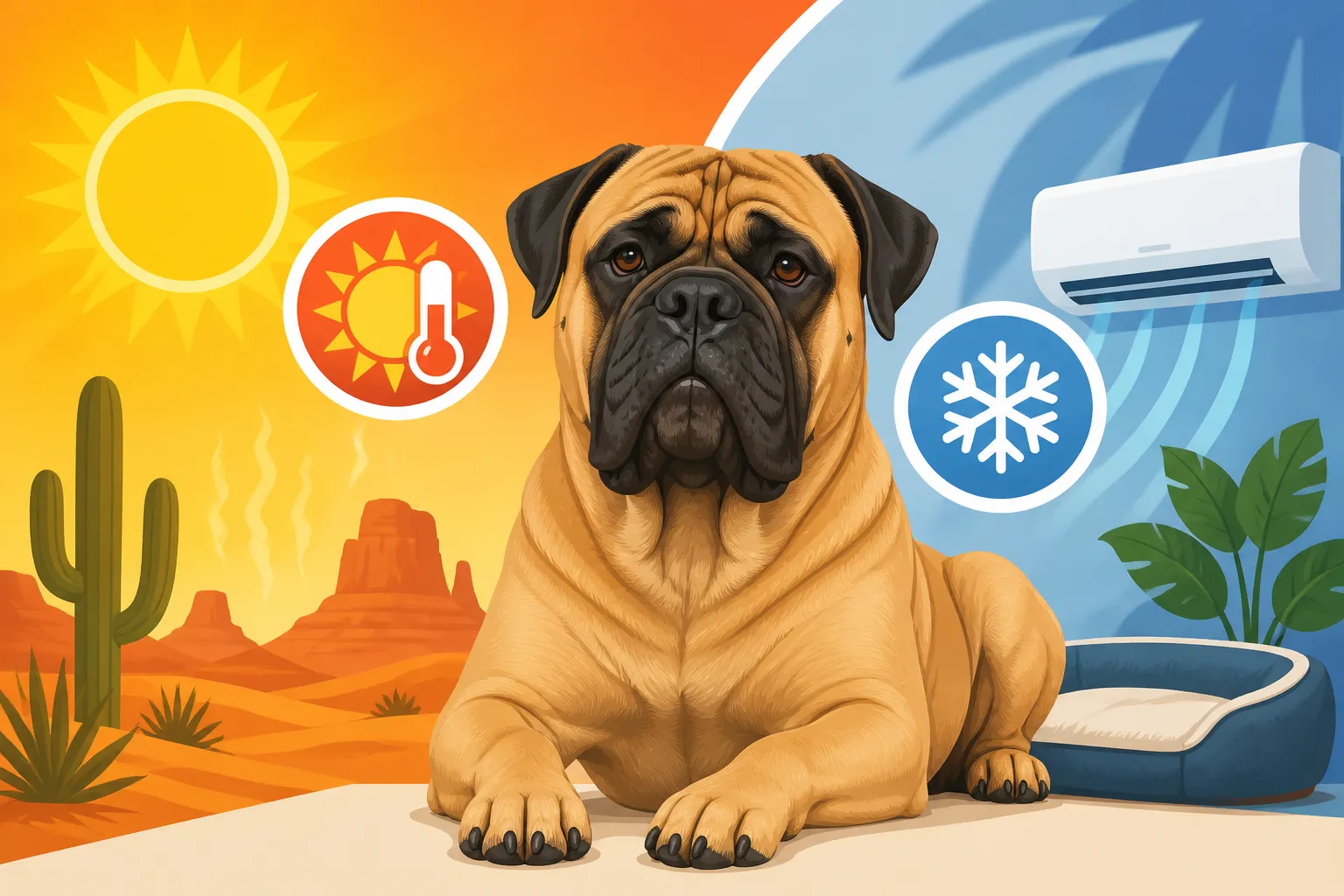
This means that living in a hot state with a Bullmastiff absolutely requires an indoor-centric lifestyle. Consistent access to air conditioning is not a luxury; it's a medical necessity. Letting a Bullmastiff "just hang out" in a yard, even if it's partly shaded, during peak summer hours is a recipe for disaster. The air itself can be too hot, and direct sun exposure, even for short periods, can be lethal. Think about how hot the interior of a car gets; a Bullmastiff can overheat incredibly fast, even with the windows cracked, as explored in How Fast a Bullmastiff Overheats in a Car. Every surface they walk on, every ray of sun they encounter, contributes to their heat load.
Adapting Life for a Bullmastiff in Warm Climates
So, you live in a hot state, or you're considering moving there, and you have a Bullmastiff. It's not impossible, but it demands an entirely different approach to daily life. This isn't about making minor tweaks; it's about a complete lifestyle overhaul for your dog's safety and well-being.
Essential Management Strategies and Schedule Adjustments
The days of leisurely midday walks are gone. In a hot climate, your Bullmastiff's exercise and outdoor relief schedule must revolve entirely around the coolest parts of the day – usually dawn and dusk. Even then, exercise should be minimal and closely monitored. Short, purposeful potty breaks are okay, but anything more strenuous risks overheating. Mental stimulation, through puzzle toys and indoor training sessions, becomes paramount to keep their minds engaged without overexerting their bodies.
Consider cooling accessories, but use them wisely. Cooling vests can offer some relief, but they need to be kept wet and cool to be effective and shouldn't give a false sense of security. Cooling mats can be great for lying down indoors. However, no amount of cooling gear can replace sensible management. A short, quiet walk at 6 AM when it's 70 degrees Fahrenheit is entirely different from one at 9 AM when it's already 85 degrees. Understanding When It Is Too Hot to Walk a Bullmastiff is crucial for preventing emergencies. Proactive care is key, and having robust pet insurance like Healthy Paws can provide peace of mind for the inevitable vet visits that come with owning a large breed, especially one in a challenging climate.
Creating a Safe, Cool Home Environment
As mentioned, air conditioning is not optional; it's a fundamental requirement. Your Bullmastiff needs to live in a consistently air-conditioned environment. If your power goes out, you need an immediate plan to get your dog to a cooler location, such as a friend's house, a hotel, or even a local cooling center. This is why addressing Whether a Bullmastiff Needs Air Conditioning is so vital for their health.
Beyond air conditioning, think about creating micro-environments within your home that promote cooling. Ceramic tiles, if you have them, can offer a cool spot to lie. Some owners even use large, shallow wading pools outdoors during the coolest parts of the day, strictly supervised, allowing their Bullmastiff to splash and cool their belly and paws. Always ensure fresh, cool water is available at all times, in multiple spots, both inside and out. Adding ice cubes to their water bowl can encourage drinking and provide a slight cooling effect. Just remember that even a shaded outdoor area will still be subject to the ambient air temperature and humidity, so outdoor time should still be limited and monitored. For those considering an older Bullmastiff, this care becomes even more critical, as explored in Caring for an Aging Bullmastiff.
Recognizing and Responding to Heatstroke Symptoms
One of the most terrifying aspects of owning a Bullmastiff in a hot climate is the speed at which heatstroke can set in and the severity of its consequences. They don't have a slow build-up; things can go from bad to critical in a matter of minutes.
Early Warning Signs Not to Miss
Bullmastiffs are notoriously stoic, and they often try to hide discomfort or pain until it's quite advanced. This makes it incredibly important for owners to be vigilant about any changes in behavior or physical signs, especially during warm weather. Early signs of overheating or impending heatstroke can be subtle:
- Excessive Panting: While all dogs pant, pay attention to the intensity. Is it louder, more rapid, or more labored than usual? Is there foam around the mouth?
- Profuse Drooling: Increased saliva production is a sign their body is working hard to cool itself.
- Red Gums: While normally a healthy pink, gums can become bright red or even bluish as heatstroke progresses.
- Lack of Coordination: Your Bullmastiff might stumble, appear weak, or be reluctant to move.
- Lethargy or Restlessness: They might seem unusually tired, or conversely, agitated and unable to get comfortable.
- Vomiting or Diarrhea: These can be later signs and indicate severe internal distress.
Never underestimate these signs. If you see them, act immediately. This proactive observation is essential to ensuring a good quality of life and potentially extending their lifespan, which for a Bullmastiff, averages around The Median Bullmastiff Lives Eight and a Half Years. These early indicators are crucial, as detailed in Signs a Bullmastiff Has Heatstroke.
Immediate Actions and Veterinary Emergency
If you suspect your Bullmastiff is overheating or experiencing heatstroke, every second counts. This is not a "wait and see" situation; it's an emergency.
Here’s what you need to do, immediately:
- Move to a Cooler Location: Get your Bullmastiff indoors, into an air-conditioned space, or at least into deep shade.
- Apply Cool Water: Do not use ice-cold water, as this can cause blood vessels to constrict, trapping heat. Instead, use cool (not cold) tap water to wet their coat, especially concentrating on their armpits, groin, belly, and paw pads. You can use a hose or wet towels.
- Use a Fan: If available, direct a fan onto their wet body to aid evaporative cooling.
- Offer Small Amounts of Water: If they are conscious and able to drink, offer small sips of cool (not cold) water. Do not force them to drink.
- Seek Veterinary Care IMMEDIATELY: Even if your dog seems to be recovering, internal damage from heatstroke can be severe and require professional medical intervention. Call your vet or the nearest emergency veterinary clinic while you are en route to let them know you are coming and what the situation is. They can advise you on immediate steps and prepare for your arrival. Remember, early intervention can make the difference between life and death. Understanding What to Do When a Bullmastiff Overheats is vital for every owner. In these emergency situations, having pet insurance like Healthy Paws can significantly reduce the financial stress of emergency care, allowing you to focus purely on your dog's recovery.
Here's a quick comparison of what different hot climates mean for a Bullmastiff:
| State/Region Example | Typical Summer Conditions | Bullmastiff Suitability (with extreme caution) | Key Challenges |
|---|---|---|---|
| Arizona (Phoenix) | High temperatures (100-115°F+), very low humidity. | Low | Extreme dry heat, burning pavement, constant indoor AC needed. |
| Florida (Miami) | High temperatures (90-95°F), very high humidity. | Very Low | High humidity severely limits cooling, constant indoor AC needed, mold/mildew. |
| Texas (Houston) | High temperatures (95-100°F), high humidity. | Very Low | Intense heat and humidity, similar to Florida challenges. |
| California (Inland Valleys) | High temperatures (90-105°F), moderate to low humidity. | Low | Heat spikes, potential for heatstroke during even moderate exercise. |
| Pacific Northwest (Summer) | Moderate temperatures (75-85°F), low humidity. | Moderate | Less extreme, but still requires vigilance on hotter days. |
Ultimately, owning a Bullmastiff in a truly hot state like Arizona or Florida means accepting that their life will be almost entirely indoors during several months of the year. Their exercise will be restricted to short, early morning or late-night outings, and constant vigilance will be your new normal. It’s a huge commitment, and one that requires careful consideration for the well-being of your magnificent companion. For more guidance on managing heat risks, refer to Whether a Bullmastiff Should Be Walked in Summer.
Disclaimer
Please remember that this article provides general information and recommendations. Every Bullmastiff is an individual, and health situations can vary. Always consult with a qualified veterinarian for personalized advice regarding your dog's health, care, and specific needs, especially if you live in or are considering moving to a hot climate.