When to Walk a Bullmastiff in Summer
Oh, the summer! For many of us, it conjures images of long, leisurely walks, sunshine, and warm breezes. But if you're a Bullmastiff owner, those same images probably bring a cold sweat to your brow because you know all too well the unique challenges our big, beautiful dogs face when the temperatures climb. Deciding when it's safe to walk your Bullmastiff in the summer isn't just a matter of convenience; it's a critical decision for their health and safety, and this guide is here to help you navigate those tricky, hot months with confidence.
Understanding Your Bullmastiff's Vulnerability to Heat
It's not just about their size; several factors make Bullmastiffs particularly susceptible to overheating, far more so than many other breeds. Ignoring these unique traits can quickly turn a seemingly innocent stroll into a dangerous emergency. We love our big, muscular companions, but we have to acknowledge their physical limitations, especially concerning heat.
Brachycephalic Features and Breathing Difficulties
One of the primary reasons Bullmastiffs struggle in the heat is their brachycephalic (short-nosed) head structure. While not as extreme as a Bulldog or Pug, their muzzle is still shorter and wider than many breeds, which affects their ability to cool themselves efficiently. Dogs primarily regulate their body temperature through panting. This process allows them to evaporate moisture from their tongues and respiratory tracts, effectively dissipating heat. However, a shorter muzzle means a more restricted airway and less surface area for effective heat exchange. This is why you might hear a Bullmastiff snorting, snoring, or breathing heavily even when not exerting themselves much in warm weather. Their body has to work harder to move air, which ironically generates more heat internally. This inherent challenge means that even a moderate temperature that feels pleasant to a human can be taxing for a Bullmastiff, making every summer walk a careful calculation. Why a Bullmastiff's Short Muzzle Cannot Cool It is a topic worth exploring further.
Thick Coat and Insulating Body Mass
Beyond their facial structure, Bullmastiffs boast a dense, short coat that, while wonderful for protection in cooler climates, acts as an insulating layer when it's hot. Coupled with their immense body mass, this creates a significant challenge for heat dissipation. Think about trying to cool down a large, well-insulated thermal mass – it takes a lot of effort. Their musculature, which makes them such powerful guardians, also holds heat, and their relatively low surface area to volume ratio compared to leaner breeds means they don't shed heat as easily through their skin. This combination of factors means heat builds up quickly in a Bullmastiff's body, and it takes a long time for that heat to dissipate once it's accumulated. This is why even a short period of activity in unsuitable conditions can rapidly lead to distress.
Predisposition to Overheating and Heatstroke
Due to these physiological characteristics, Bullmastiffs have a high predisposition to overheating and, consequently, heatstroke. What Temperature Is Dangerous for a Bullmastiff is a question every owner needs to know the answer to. They don't have the same cooling mechanisms as other dogs, and they can't sweat efficiently like humans. Their internal temperature can rise to dangerous levels much faster than you might expect, sometimes even before you, as their owner, feel truly hot. This isn't just about discomfort; it's a life-threatening situation. Signs can be subtle at first, like heavier panting or a slight reluctance to move, but they can quickly escalate to weakness, collapse, and organ damage. It's crucial for owners to be hyper-vigilant and proactive, understanding that our Bullmastiffs aren't built for prolonged exposure to summer heat.
Identifying the Right Time for Walks in Summer
Given their vulnerability, simply "going for a walk" in the summer needs a strategic approach. It's about finding those narrow windows of opportunity when conditions are genuinely safe for your Bullmastiff. This often means adjusting your schedule dramatically from what you might be used to in cooler months.
Temperature and Humidity: The Deadly Duo
The most crucial factors to consider are air temperature and humidity. While many people focus solely on the temperature, humidity plays an equally, if not more, significant role in a dog's ability to cool down. When humidity is high, the air is already saturated with moisture, making it much harder for your Bullmastiff to cool themselves through evaporative panting. The "feels like" temperature for a human often gives a good indication, but for a Bullmastiff, the effect is even more pronounced.
As a general rule of thumb, if the combined temperature (in Fahrenheit) and humidity percentage add up to more than 150, it's already a high-risk situation for most dogs, and for a Bullmastiff, that threshold is even lower. Some experts suggest that anything over 80 degrees Fahrenheit, especially with high humidity, is outright dangerous. Even temperatures in the mid-70s with significant humidity can be problematic. Always check the forecast for both figures before you even consider stepping outside. A brisk morning at 65 degrees with low humidity might be perfect, while a cloudy afternoon at 75 degrees with 80% humidity is a definite no-go. You need to be aware of When It Is Too Hot to Walk a Bullmastiff.
The Best Times: Early Morning and Late Evening
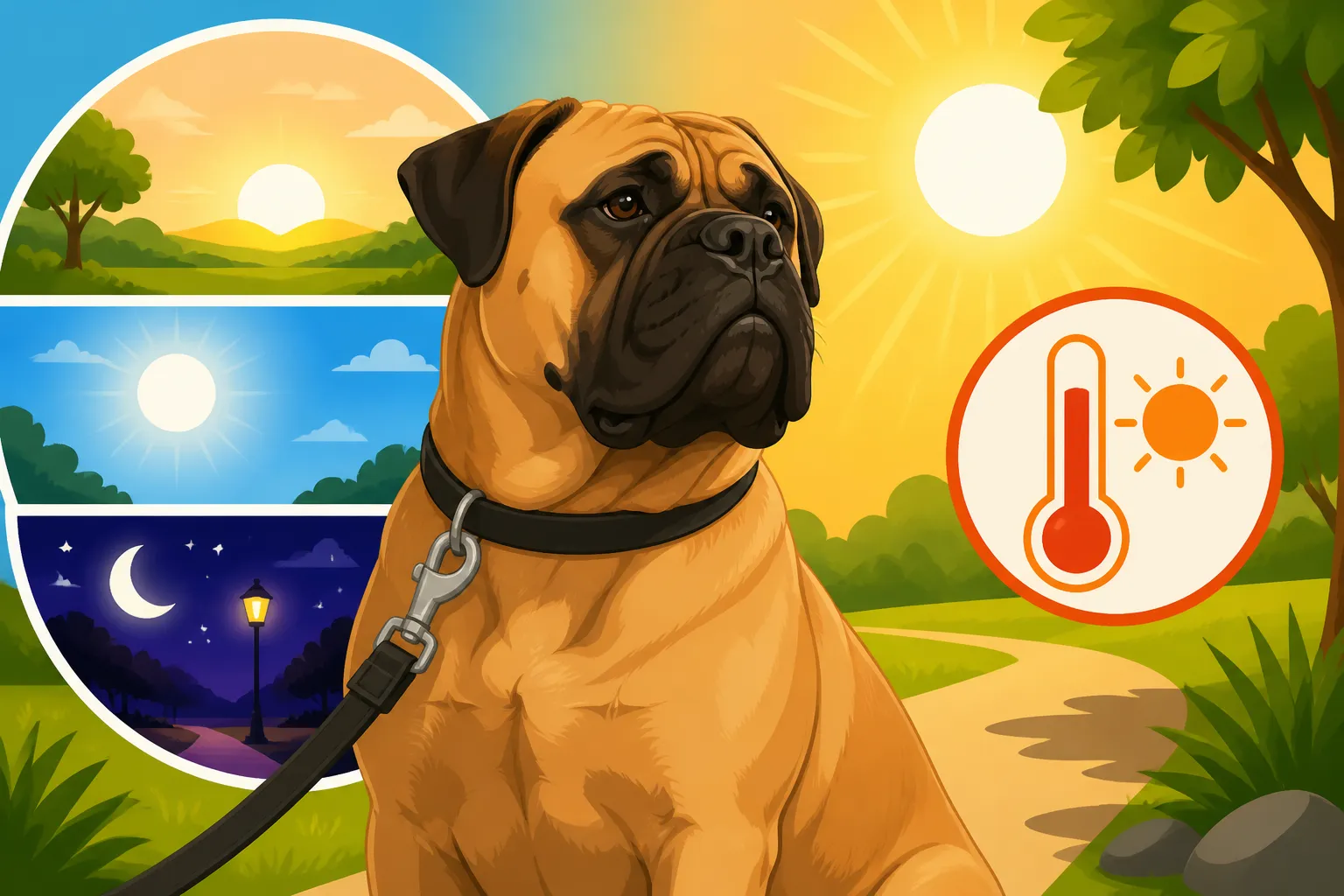
This means that during peak summer, your Bullmastiff's walks will almost certainly be relegated to the very early morning hours or late evening, well after the sun has set.
- Early Morning: Think sunrise, or even before it. The coolest part of the day is typically just before the sun comes up. Aim for walks between 5 AM and 7 AM, depending on your local climate and how quickly the sun heats things up. This gives you the benefit of cooler ambient air and still-cool ground surfaces.
- Late Evening: Once the sun has been down for a few hours, the air temperature will start to drop, and more importantly, the pavement and other surfaces will have had time to cool off. This usually means after 9 PM, possibly even later in very hot climates. Never assume that just because the sun is down, the ground is cool.
Remember, the goal isn't just comfort; it's safety. These windows might feel inconvenient, but they are absolutely essential for preventing heat-related emergencies.
Pavement Temperature: A Silent Danger
Even if the air feels mild, the ground surface can be scorching hot, causing painful burns to your Bullmastiff's paw pads. Asphalt, concrete, and even dark-colored artificial turf can absorb and retain heat for hours after the sun has gone down or on a cloudy day. A good test is to place the back of your hand on the pavement for five to seven seconds. If it's too hot for your hand, it's too hot for their paws. This simple test is critical for determining How Fast a Bullmastiff Overheats in a Car (as cars heat up quickly too) or just whether the ground is safe for a walk. Early morning walks are often safer in this regard because the ground has had all night to cool. In the evening, even if the air is cooler, the sun-baked pavement can still be dangerously hot.
Consider walking on grass whenever possible, as it doesn't absorb and retain heat like hard surfaces. If grass isn't an option, you might need to invest in dog booties, though many Bullmastiffs find these awkward, and they shouldn't be relied upon as a primary solution for walking on extremely hot surfaces. They're more of a short-term aid for marginally warm pavement.
| Temperature (Fahrenheit) | Humidity (Approximate) | Pavement Check | Risk Level for Bullmastiff | Recommendation |
|---|---|---|---|---|
| Below 70 | Any | Not critical | Low | Generally safe |
| 70-75 | Low (below 40%) | Essential | Moderate | Proceed with caution, short walks |
| 70-75 | High (above 40%) | Essential | High | Consider alternatives, very short bathroom breaks only |
| 76-80 | Any | Essential | Very High | Avoid walks, only essential bathroom breaks on grass |
| Above 80 | Any | Essential | Extreme, life-threatening | Do not walk, stay indoors with AC |
Recognizing and Responding to Overheating
Even with the best precautions, accidents can happen, or conditions can change rapidly. Knowing the signs of overheating and how to respond immediately is paramount for any Bullmastiff owner. These big dogs can go from appearing fine to critical very quickly.
Early Warning Signs of Heat Stress
Your Bullmastiff won't always give you a dramatic collapse right away. There are usually subtle cues that they're struggling. Pay close attention to:
- Excessive Panting: While all dogs pant, overheating Bullmastiffs will pant much harder, faster, and more deeply than normal. Their breathing might sound labored or raspy.
- Bright Red Gums or Tongue: The normal healthy pink of their gums and tongue might turn a deeper, almost cherry-red color as their body struggles with heat.
- Thick, Ropy Saliva: Their drool might become thicker and more profuse than usual, often appearing foamy around their mouth. This is a sign their body is working hard to cool itself through evaporation.
- Weakness or Lethargy: They might become unusually tired, slow down significantly, or even appear disoriented. They may refuse to continue walking or seek shade more often.
- Stumbling or Uncoordinated Movement: As overheating progresses, their nervous system can be affected, leading to a drunken gait or difficulty standing.
It's tempting to push them "just a little further," but with a Bullmastiff, these early signs are a blaring alarm. At the first sign, stop immediately. You need to know Signs a Bullmastiff Has Heatstroke so you can react quickly.
Immediate Actions for an Overheating Bullmastiff
If you suspect your Bullmastiff is overheating, don't delay – immediate action is crucial.
- Get to Shade and Stop All Activity: Move your Bullmastiff to the coolest, shadiest spot you can find right away. Discontinue the walk entirely.
- Offer Water: Allow them to drink small amounts of cool (not ice cold) water. Don't force them to drink, and be careful not to let them gulp too much too quickly, as this can lead to bloat.
- Apply Cool Water: This is key for What to Do When a Bullmastiff Overheats. Use cool (again, not ice cold) water on their body. Focus on areas where blood vessels are close to the surface: their ears, paw pads, inner thighs, and armpits. You can use a wet towel, a hose with a gentle stream, or even your hands. Avoid drenching them completely or using ice-cold water, as this can cause blood vessels to constrict, hindering the cooling process, or even induce shock.
- Fan Them: If possible, create airflow over their wet body. This helps with evaporative cooling. A small portable fan, a piece of cardboard, or even vigorously fanning them with your hands can make a difference.
- Seek Veterinary Attention: Even if your Bullmastiff seems to recover, it's vital to contact your vet immediately. Heatstroke can cause internal damage that isn't immediately apparent. Your vet may recommend bringing them in for assessment, fluids, and monitoring. How to Cool a Bullmastiff Down methods should always be followed by a vet check.
Remember, time is of the essence when it comes to heatstroke. A quick response can literally save your Bullmastiff's life.
Alternatives to Traditional Walks for Summer Exercise
When the heat makes traditional walks unsafe, it doesn't mean your Bullmastiff should become a couch potato. They still need mental and physical stimulation. We just have to get a little creative and provide alternatives that keep them safe and cool. This often means embracing indoor activities or very specific outdoor options.
Indoor Enrichment and Play
Your home, especially if air-conditioned, becomes your primary exercise zone during summer.
- Puzzle Toys and Treat Dispensers: These are fantastic for mental stimulation. Fill KONGs with frozen peanut butter or plain yogurt, or use snuffle mats with kibble. Brands like Chewy offer a wide array of options, from beginner-friendly to advanced puzzles, that can keep your Bullmastiff engaged for considerable time without physical exertion. This provides a "job" for their brain and tires them out mentally, which is just as important as physical exercise.
- Indoor Obedience and Training Sessions: Short, fun training sessions can be a great way to bond and provide mental exercise. Practice commands like "sit," "stay," "down," "recall" from across the room, or even teach new tricks. Bullmastiffs are intelligent, even if sometimes stubborn, and appreciate the interaction. What Motivates a Bullmastiff is usually food, so use high-value treats to keep them engaged during these sessions.
- Gentle Play: A game of tug-of-war (with rules, of course!) or indoor fetch with a soft toy can be fun, but keep it brief and calm. Avoid anything that encourages them to get too rambunctious or out of breath. The goal is engagement, not intense cardio.
Water Activities (With Caution)
Water can be a great way to cool down, but it's not without its own set of precautions for a Bullmastiff.
- Kiddie Pools: A shallow kiddie pool filled with a few inches of cool water in a shaded area can be a godsend. Many Bullmastiffs enjoy wading, splashing, and even lying down in the cool water. Ensure the water is fresh and clean, and supervise them at all times. This provides a fun way to cool their core body temperature without the risks of deep water.
- Sprinklers or Misters: A gentle stream from a sprinkler or a mister can be a fun, cooling game. Again, keep it brief and in the shade.
- Swimming (Extreme Caution): While some Bullmastiffs might tolerate water, they are not naturally built for swimming. Their heavy, muscular bodies and short muzzles make them poor swimmers and they can tire very quickly. If you consider swimming, it must be in a shallow, controlled environment, with a well-fitting life vest, and constant, direct supervision. Never assume they can swim well or let them near deep water unsupervised. The risk of accidental drowning is significant.
Evening Strolls and Hydration Support
Even when you do manage a short, safe walk during the cooler evening hours, proper hydration is key.
- Bring Water: Always carry plenty of water and a collapsible bowl for your Bullmastiff. Offer water frequently, even on short walks. Products from Amazon or Chewy include portable water bottles specifically designed for dogs, making it easier to ensure they stay hydrated on the go.
- Consider Hydration Supplements or Wet Food: For dogs who don't drink enough, or on very warm days, you might consult your vet about hydration-boosting treats or wet food options. Some brands like Ollie offer fresh food that has a naturally higher moisture content, which can contribute to overall hydration. This isn't a replacement for water but can supplement their intake.
- Keep it Short and Sweet: Even if the temperature is marginal, keep walks incredibly short – just enough for a bathroom break and a quick sniff around. Save longer explorations for cooler seasons. Pay attention to how your dog is breathing and acting; if they seem at all stressed, cut the walk even shorter.
By focusing on these alternative strategies and being extremely mindful of the weather, you can ensure your Bullmastiff stays happy, healthy, and safe throughout the summer months. Their well-being depends on your careful planning and vigilance.
Disclaimer
This article is for general informational purposes only and does not constitute professional advice. Laws, prices and regulations vary by location and change over time. Consult a qualified professional for guidance on your specific situation.